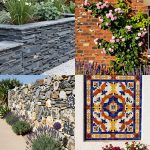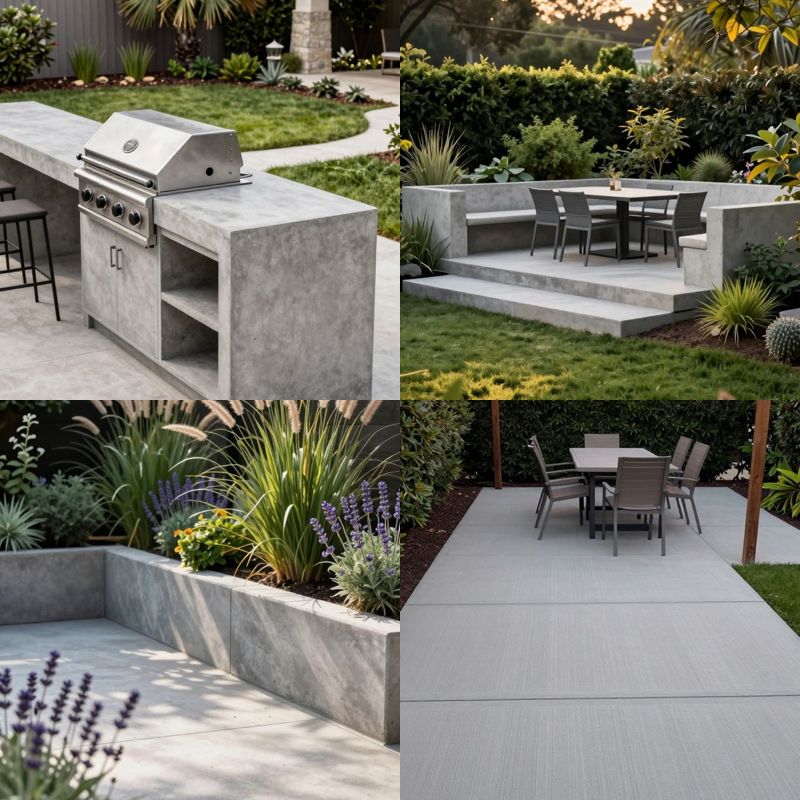
Your backyard is just sitting there, judging you. You know it, I know it, and honestly, it deserves better. If you’ve been dreaming of a sleek, modern outdoor space that actually gets used instead of ignored, a cement patio might be exactly what you need. I transformed my own sad patch of grass into a stunning cement patio last year, and I genuinely regret not doing it sooner. Let’s talk about 14 ideas that could completely change how you feel about your outdoor space.
1. Polished Concrete with a Seamless Finish
If you want that crisp, ultra-modern look, polished concrete is your best friend. The smooth, glossy surface reflects light beautifully and makes any outdoor space feel bigger and more intentional. It pairs perfectly with minimalist furniture and clean-lined planters. Think of it as the little black dress of patio finishes.
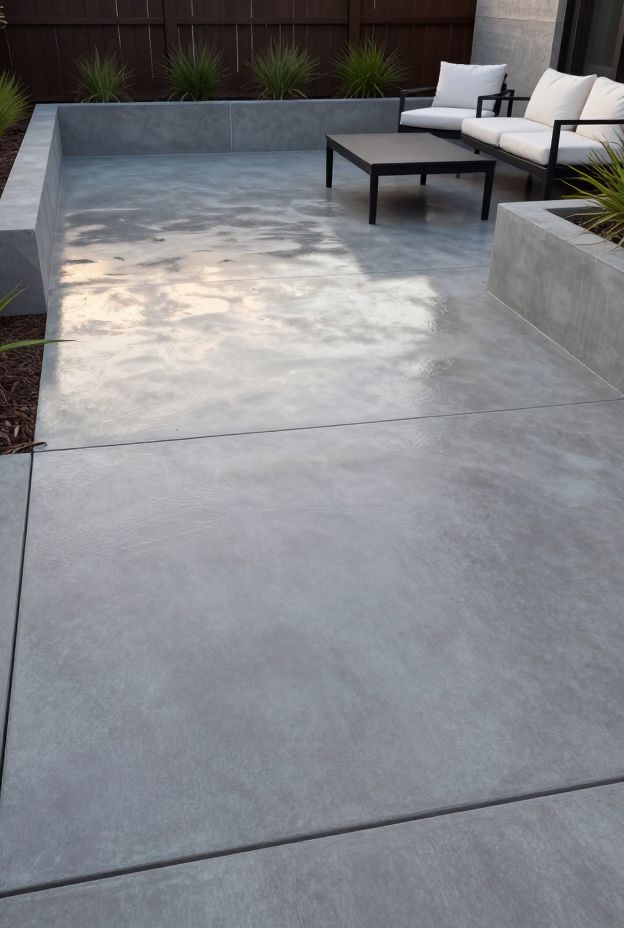
The best part? Polished concrete is surprisingly low maintenance. A quick sweep and occasional hose-down keeps it looking sharp year-round. It does get slippery when wet, though, so add a non-slip sealer if you live somewhere rainy.
2. Stamped Cement for Texture and Visual Interest
Stamped cement patios let you fake the look of stone, brick, or wood without the sky-high price tag. The stamps press patterns into the wet concrete before it cures, creating texture that genuinely looks like the real thing. IMO, a cobblestone stamp pattern hits the sweet spot between rustic charm and modern appeal.
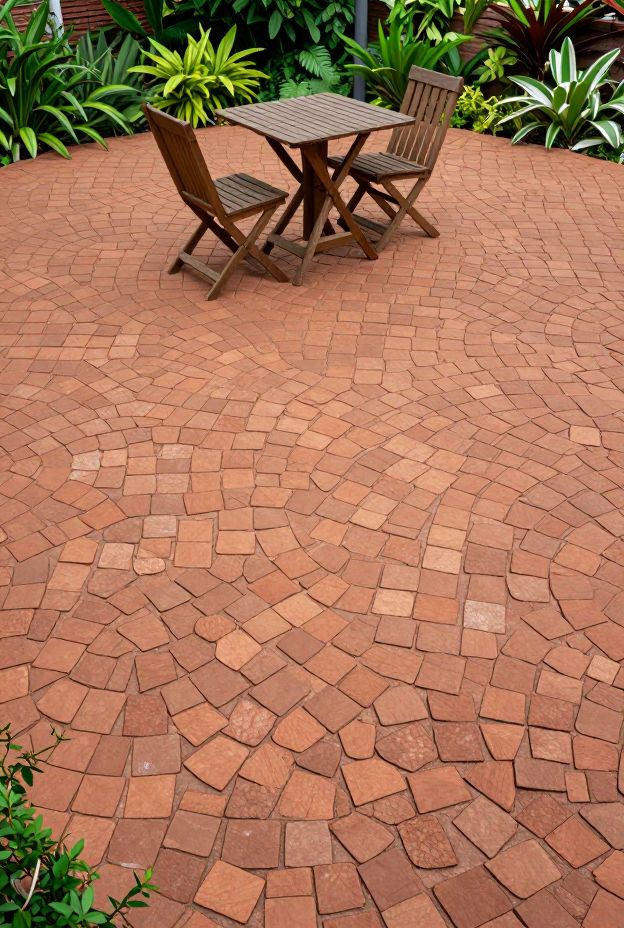
You can customize the color, too, by adding pigment directly into the mix. This means your patio can complement your home’s exterior perfectly. Just keep in mind that stamped concrete needs resealing every couple of years to maintain that crisp pattern.
3. Exposed Aggregate Cement Patio
Want texture and grip without sacrificing style? Exposed aggregate concrete removes the smooth top layer to reveal pebbles, stones, and sand embedded in the mix. The result is a naturally textured surface that looks organic and earthy while still feeling modern. It’s also one of the most slip-resistant options available, which is a huge plus around pools.
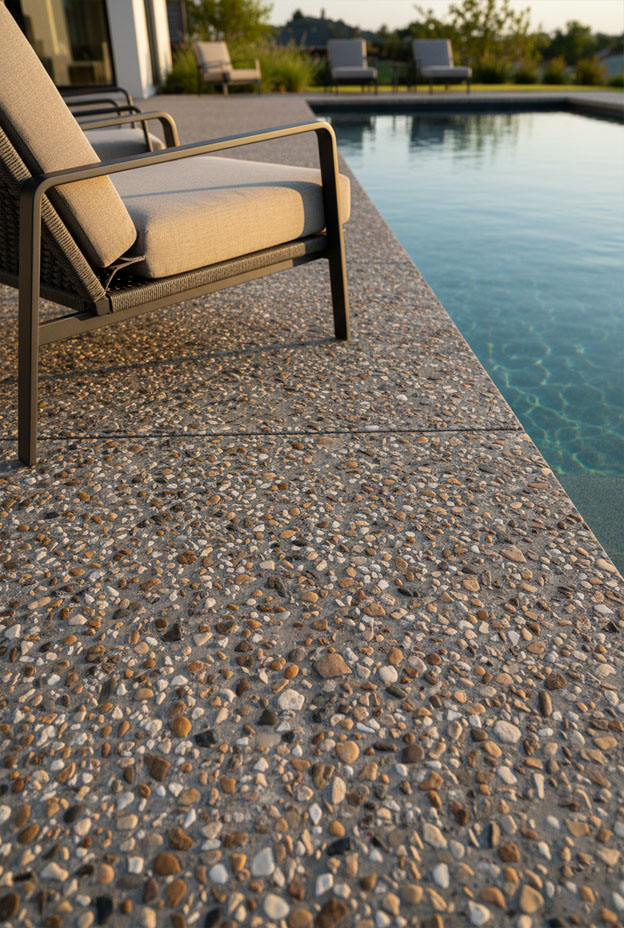
The color variations from the natural aggregate give your patio a one-of-a-kind look that plain concrete just can’t match. Every slab ends up slightly different, almost like a fingerprint. If you want something that feels custom without a custom price, this is a solid choice.
4. Broom-Finished Cement for a Classic Clean Look
Sometimes simple is just better. A broom-finished cement patio uses a stiff broom dragged across fresh concrete to create subtle linear texture. It’s the most common residential patio finish for a reason: it’s affordable, durable, and looks clean without trying too hard. Ever wondered why so many gorgeous outdoor entertaining spaces use this finish? It’s because it works with practically every design style.
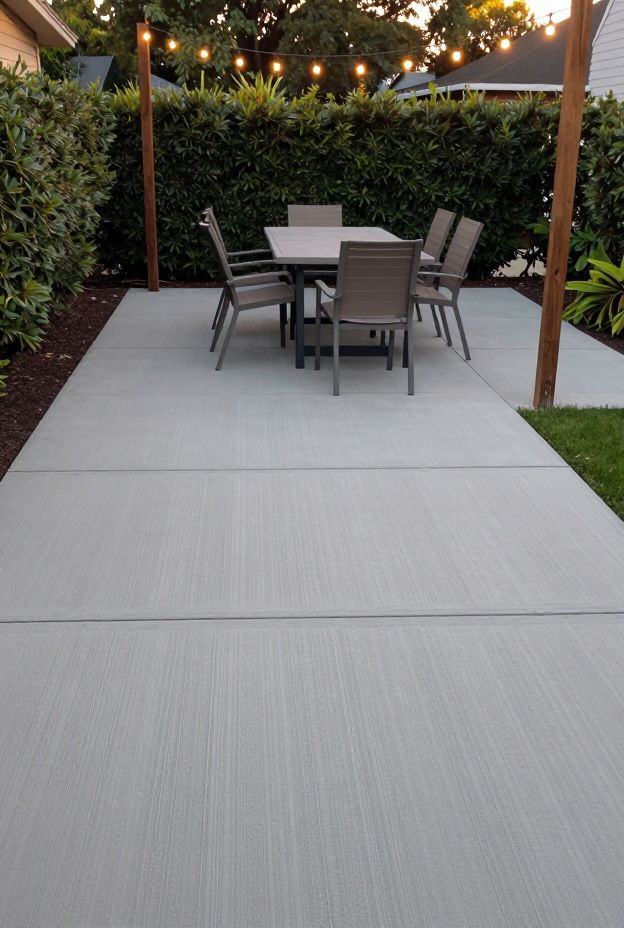
The textured surface also provides excellent traction, making it safe for kids, pets, and barefoot summer evenings. You can dress it up with outdoor rugs, string lights, and statement furniture to give it personality. The finish itself becomes the neutral backdrop that lets everything else shine.
5. Cement Patio with Geometric Inlays
This is where things get really fun. Geometric inlays involve cutting patterns or shapes into the concrete and filling them with contrasting materials like gravel, tile, or even colored concrete. Think bold hexagons, sleek chevron lines, or a sunburst pattern at the center of your entertaining area. The visual impact is seriously stunning.
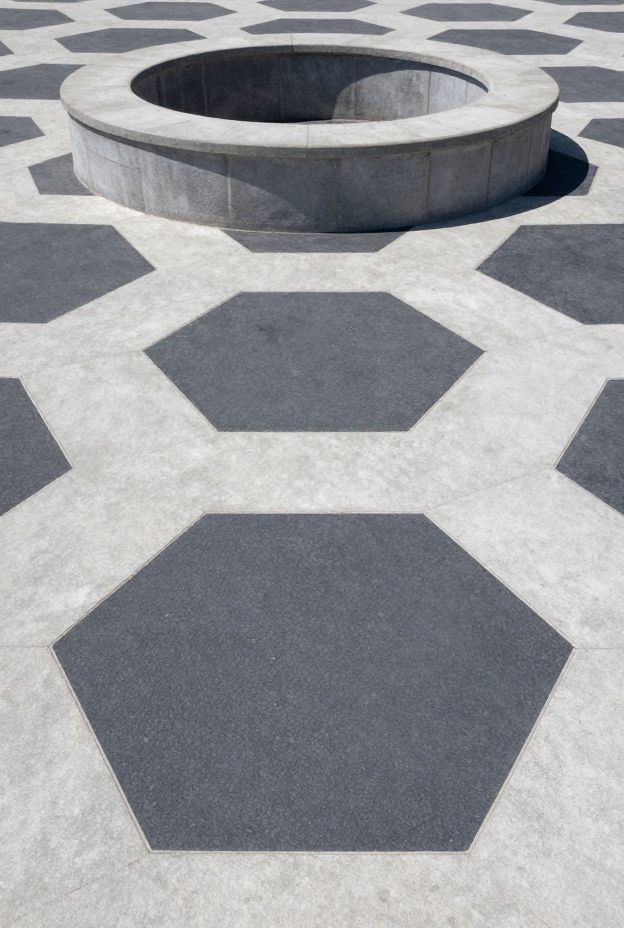
This approach works especially well for larger patios that need visual zones to feel intentional rather than overwhelming. A geometric inlay naturally defines a seating area or dining space without needing walls or barriers. It’s functional art, basically.
6. Stained Concrete Patio for a Pop of Color
Plain grey concrete is fine, but stained concrete is a whole other level. Acid stains or water-based stains penetrate the surface to create rich, variegated color that looks almost marbled. Earth tones like terracotta, slate blue, and warm ochre work brilliantly for modern outdoor spaces. The stain becomes part of the concrete rather than sitting on top, so it won’t peel or flake.
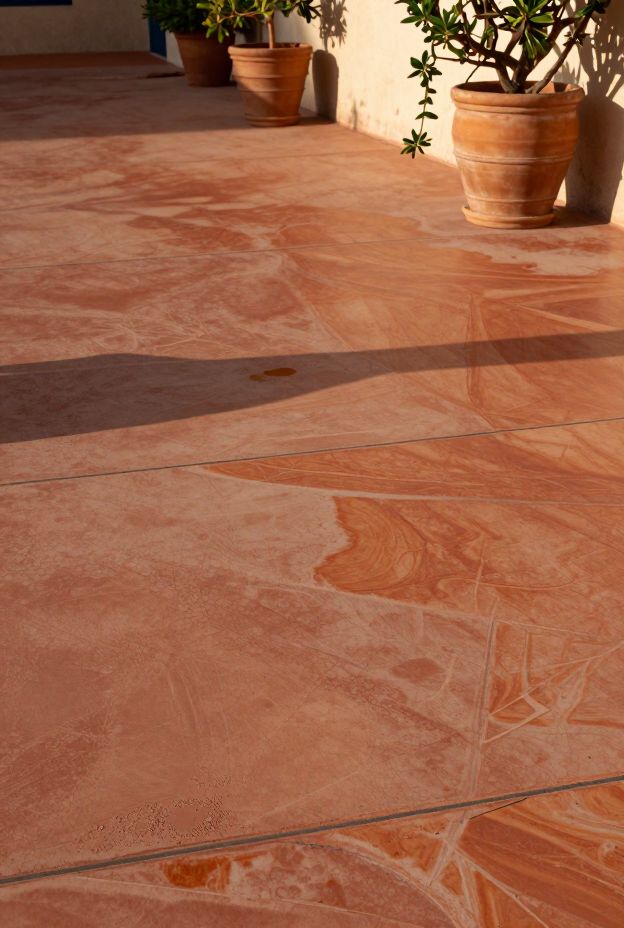
FYI, the final color will look different from the sample chip at the store because each slab absorbs the stain uniquely. That variation is actually a feature, not a bug. It gives your patio that custom, hand-crafted quality that makes guests ask who designed it.
7. Cement Pavers Instead of Poured Slabs
Cement pavers give you all the durability of concrete with added flexibility in design. Because each paver is laid individually, you can create intricate patterns, curves, and multi-level surfaces that poured concrete can’t easily achieve. They’re also easier to repair since you can replace a single cracked paver rather than patching an entire slab. That alone makes them worth considering.
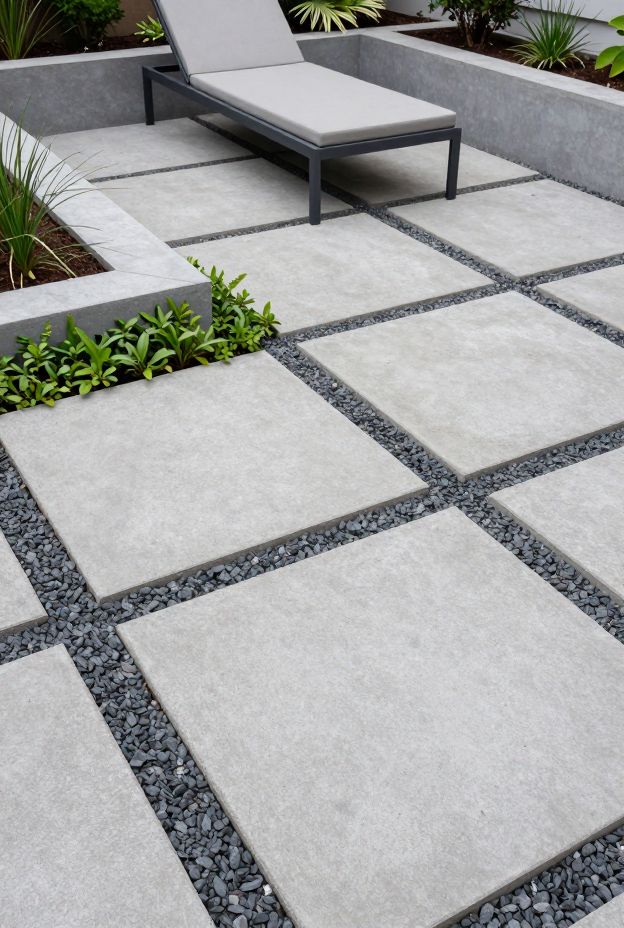
Large-format pavers in a staggered layout look particularly modern and sophisticated. Pair them with wide gravel joints or low-growing ground cover between the pavers for a natural, organic feel that still reads as intentional and clean.
8. Cement Patio with Built-In Fire Pit Surround
A patio without a fire feature in 2026 feels like a missed opportunity, honestly. Building a fire pit surround directly into your cement patio creates a seamless, architectural look that pre-made metal fire pits can’t replicate. The concrete handles heat well and ties the whole design together.
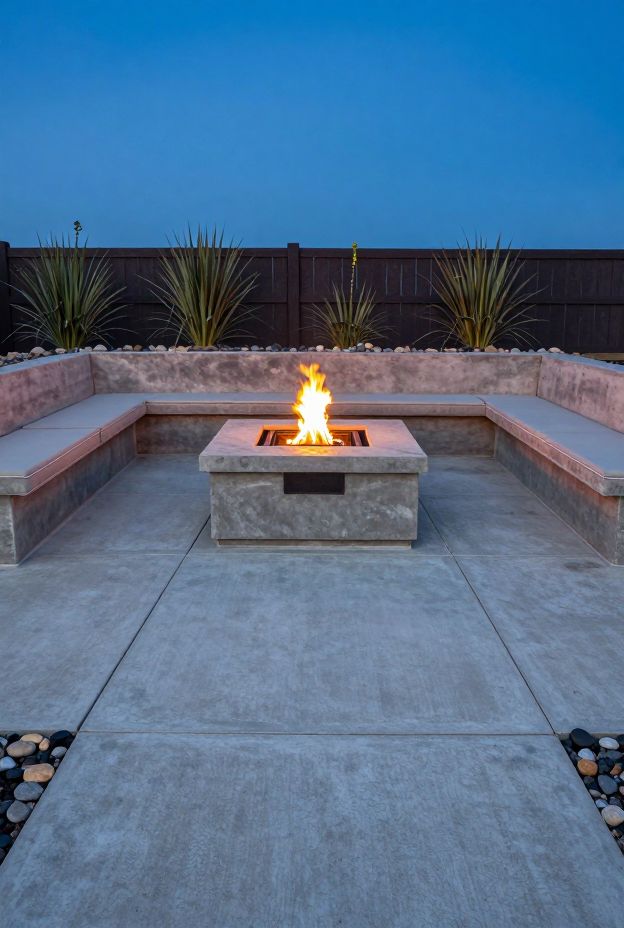
You can go circular, square, or rectangular depending on your space. A sunken fire pit area with a step down from the main patio level adds drama and creates a natural gathering spot. Add some built-in concrete bench seating around it and you’ve got a legitimate outdoor living room.
9. Raised Cement Patio for Multi-Level Drama
A flat patio is great, but a raised cement patio adds architectural interest that flat slabs simply can’t deliver. Elevating the patio by even one or two steps creates a distinct zone that feels purposeful and designed. It also gives you a great vantage point to actually enjoy your yard rather than just standing in the middle of it.
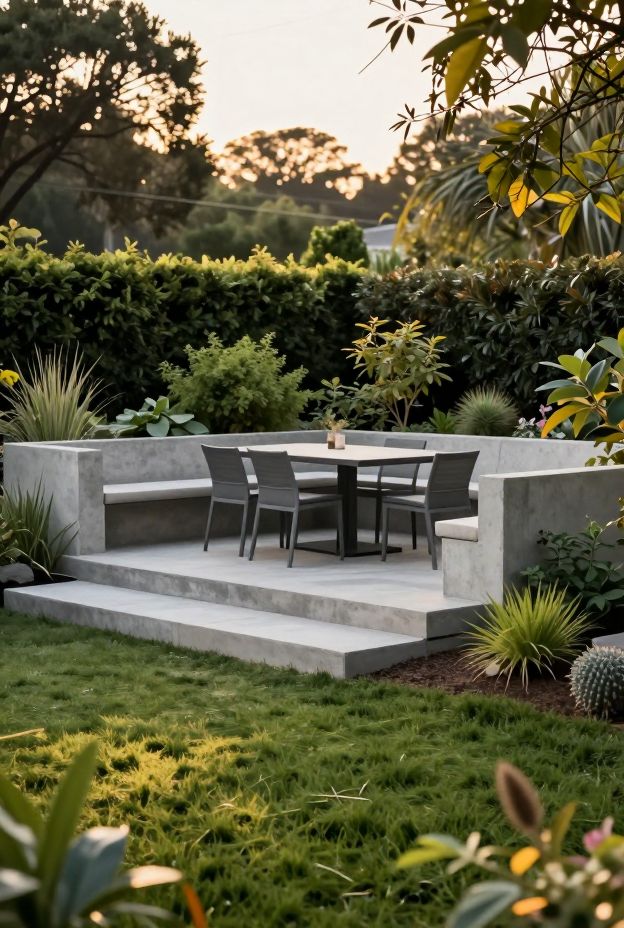
Raised patios work especially well on sloped properties where leveling the ground would otherwise be complicated and expensive. The retaining walls required to support the raised area can also serve as built-in seating or planters, doubling their function and saving space.
10. Cement Patio with Integrated Planters
One of my favorite design moves is integrating planters directly into the patio structure. Concrete raised bed planters built into the patio edges soften the hardscape and bring life to what could otherwise feel like a grey, sterile space. They also define the boundaries of the patio naturally without needing fencing or walls.
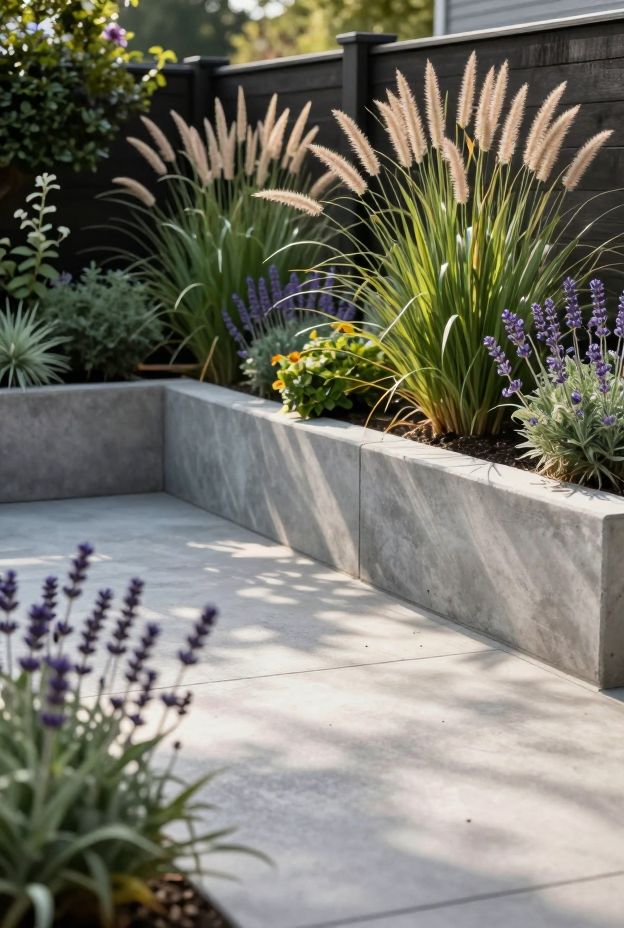
Tall ornamental grasses, lavender, or compact shrubs work especially well in integrated planters because they add height and movement. The contrast between the rigid concrete and soft, flowing plants is genuinely satisfying to look at. It’s one of those details that makes a patio feel like it was professionally designed.
11. Cement and Wood Combination Patio
Mixing materials is one of the smartest things you can do in outdoor design. A cement and wood combination patio balances the cool, industrial feel of concrete with the warmth and texture of wood decking. The two materials play off each other perfectly, creating contrast that feels intentional and high-end.
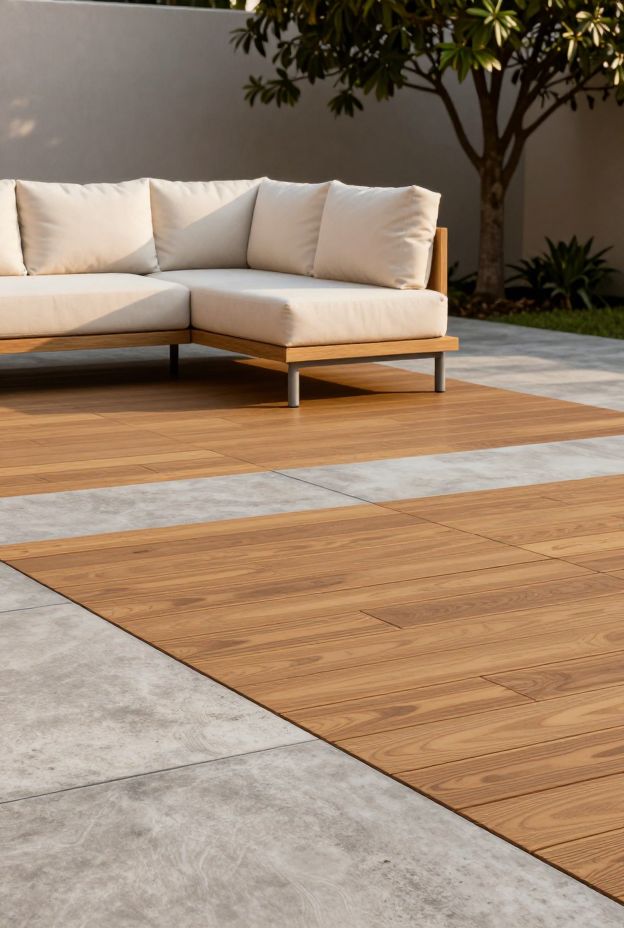
You can use composite wood for better weather resistance, especially in Singapore’s humidity :). Alternate concrete slabs with wood planks in a grid pattern, or use wood as the border framing a central concrete area. Either way, the combination feels warm, modern, and incredibly livable.
12. Colored Concrete Borders and Banding
You don’t need to stain the entire patio to make a visual statement. Colored concrete borders or banding use contrasting concrete colors to frame the patio or divide it into zones. A dark charcoal border around a lighter grey center, for example, creates a clean, graphic look that feels sophisticated without being over the top.
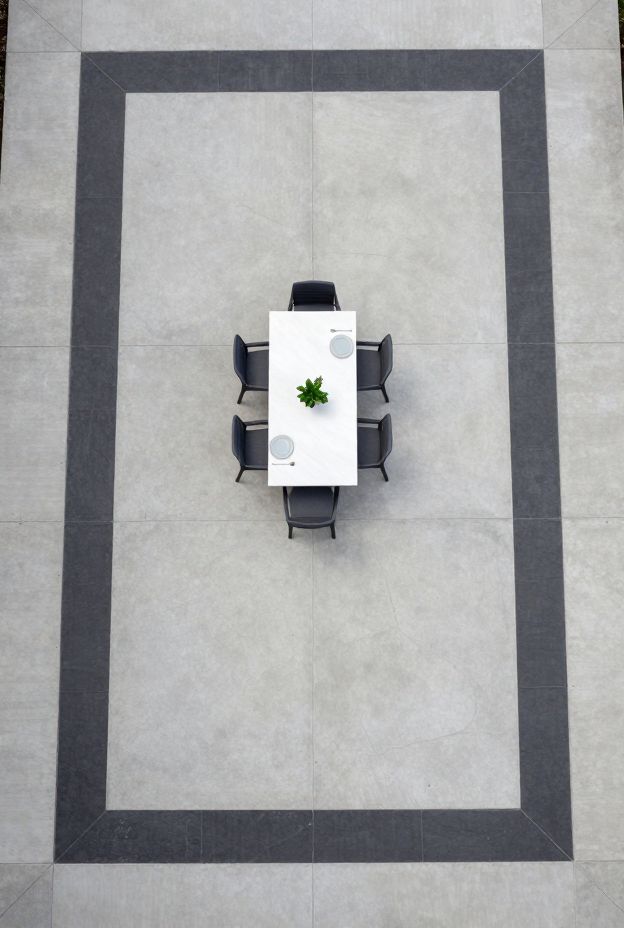
Banding also works well to break up large patio areas so they don’t feel like one endless grey plain. You can use the bands to subtly indicate different use zones, like separating the dining area from the lounge section, without needing physical barriers that chop up the space.
13. Cement Patio with Outdoor Kitchen Counter Integration
If you entertain regularly, building a concrete outdoor kitchen counter directly into your patio design is a game-changer. Concrete countertops are heat-resistant, durable, and can be molded into any shape you need. They also look genuinely stunning alongside a built-in grill, sink, and mini fridge setup.
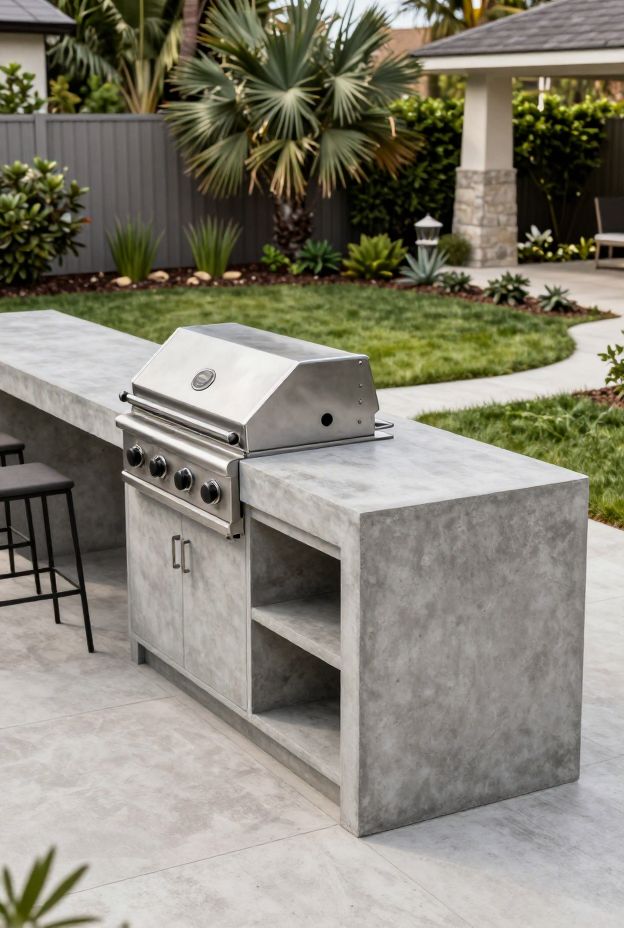
The key is to design the kitchen zone as part of the patio layout from the beginning, not as an afterthought. Running utility lines during the pour stage is far cheaper and cleaner than doing it after the concrete has cured. Good planning here saves serious headaches and money later.
14. Minimalist Cement Patio with Negative Space
Here’s a concept that surprises most people: sometimes the best patio design uses deliberate negative space. A minimalist cement patio leaves open areas of gravel, ground cover, or exposed soil around and within the concrete to create breathing room. The result feels calm, curated, and surprisingly luxurious.
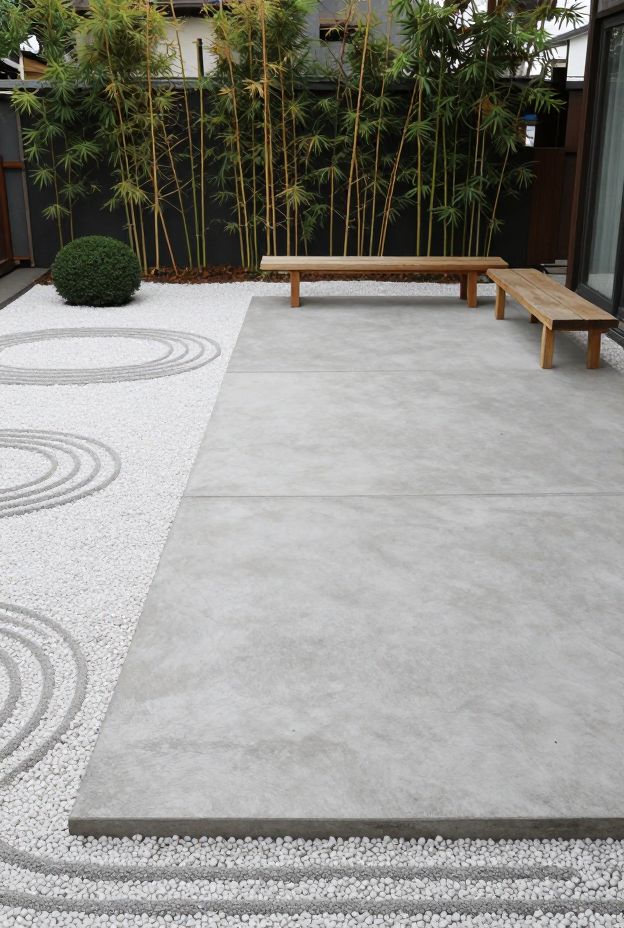
Japanese-inspired garden design uses this principle brilliantly, and it translates incredibly well to modern outdoor spaces. A few large concrete stepping pads surrounded by pea gravel, or a clean rectangular patio bordered by a zen gravel garden, looks like something out of a design magazine. Less really can be more :).
Final Thoughts: Your Cement Patio is Waiting
So there you have it: 14 genuinely stunning ways to create a sleek, modern outdoor space using cement. From polished concrete to minimalist negative space designs, every option on this list offers something unique depending on your taste, budget, and yard size. The best patio is the one you actually spend time on, so pick the idea that excites you most and go for it.
Start with a clear vision of how you want to use the space, then let that guide your finish, layout, and material choices. Whether you go bold with geometric inlays or keep it clean and simple with a broom finish, cement gives you a foundation that lasts decades and looks better with age. Your backyard deserves the upgrade. What are you waiting for?