Weeds are basically that one uninvited guest who shows up, refuses to leave, and somehow multiplies overnight. Sound familiar? If your garden beds look more like a weed convention than a curated landscape, mulch might just be your new best friend. I’ve been gardening for years, and the single biggest upgrade I ever made was getting serious about mulching. Not only does it keep those pesky weeds in check, but it also makes your whole yard look polished and intentional. Let’s get into 13 brilliant mulch landscaping ideas that actually work.
1. Classic Wood Chip Mulch for Garden Beds
Wood chips are the OG of mulching materials, and honestly, they earn that status every single season. They suppress weeds by blocking sunlight, retain moisture like a champ, and slowly break down to feed your soil. I’ve used wood chips around my rose beds for three years running, and the difference in weed pressure is genuinely night and day.
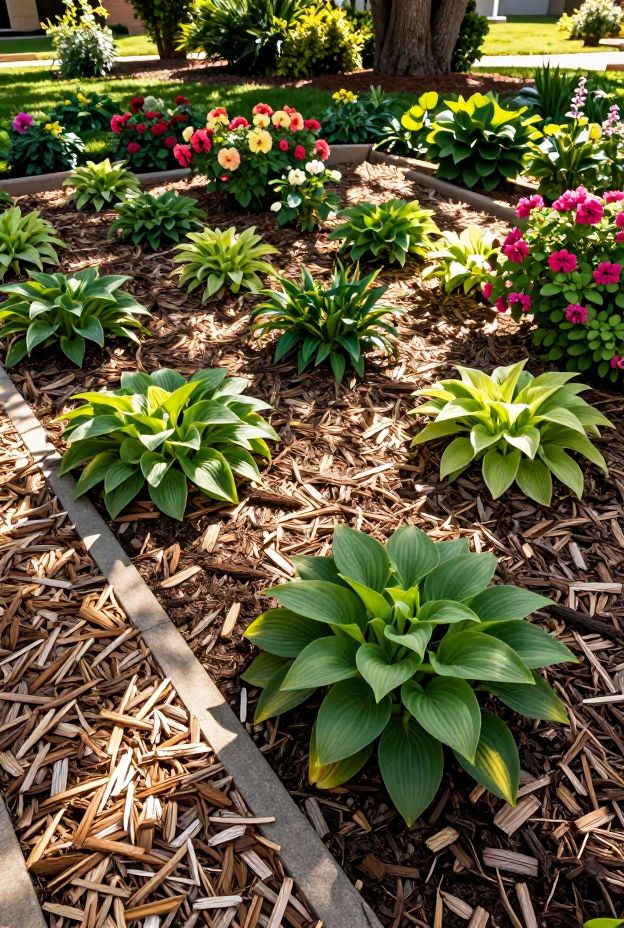
You can score free wood chips from local tree trimming services — they often need to dump them somewhere, so it’s a win-win. Aim for a 3-inch layer to get proper weed suppression without smothering your plants.
- Best for: flower beds, vegetable gardens, tree rings
- Lasts: 1-2 years before needing a top-up
- Bonus: improves soil structure as it decomposes
2. Rubber Mulch Around Play Areas and Pathways
Okay, rubber mulch isn’t everyone’s cup of tea aesthetically, but hear me out. Rubber mulch lasts up to 10 years, doesn’t attract pests, and stays put even in heavy rain. If you’ve got a kids’ play area or a high-traffic pathway, it’s actually a really smart call.
It doesn’t break down into the soil, which means you’re not enriching the ground, but for purely functional areas, that trade-off is totally worth it. Just keep it away from edible garden beds.
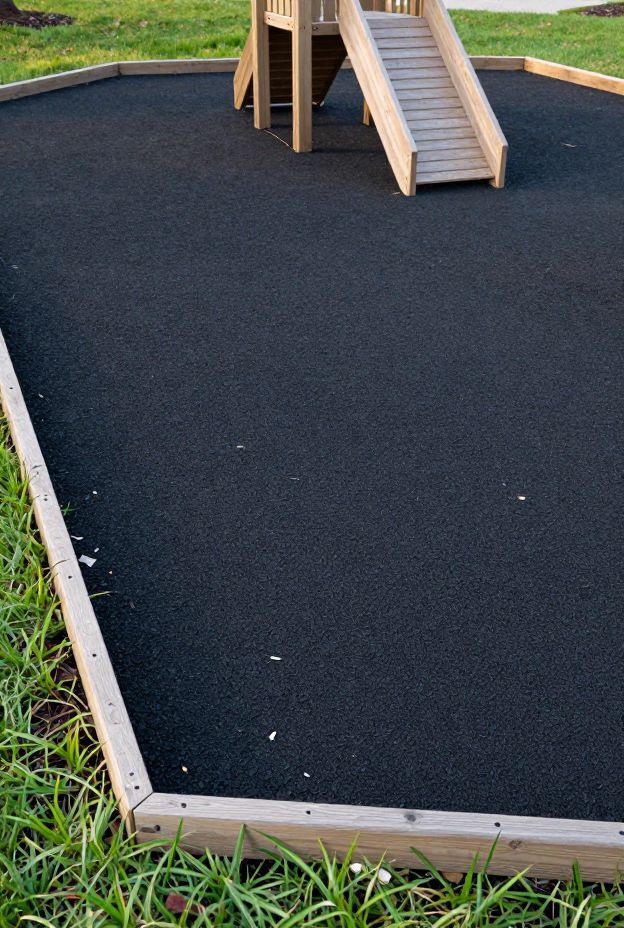
- Best for: play areas, driveways, non-garden pathways
- Lasts: up to 10 years
- Color options: black, brown, red, and more
3. Straw Mulch for Vegetable Gardens
Straw mulch is the unsung hero of the vegetable patch. It keeps soil temperature stable, retains moisture, and breaks down to feed your plants by the end of the season. I use it every summer around my tomatoes and squash, and it makes a huge difference in reducing how often I need to water.
One thing to watch out for — make sure you’re buying straw, not hay. Hay is full of seeds, and you’ll basically be planting a new weed garden. FYI, that’s a mistake you only make once 🙂
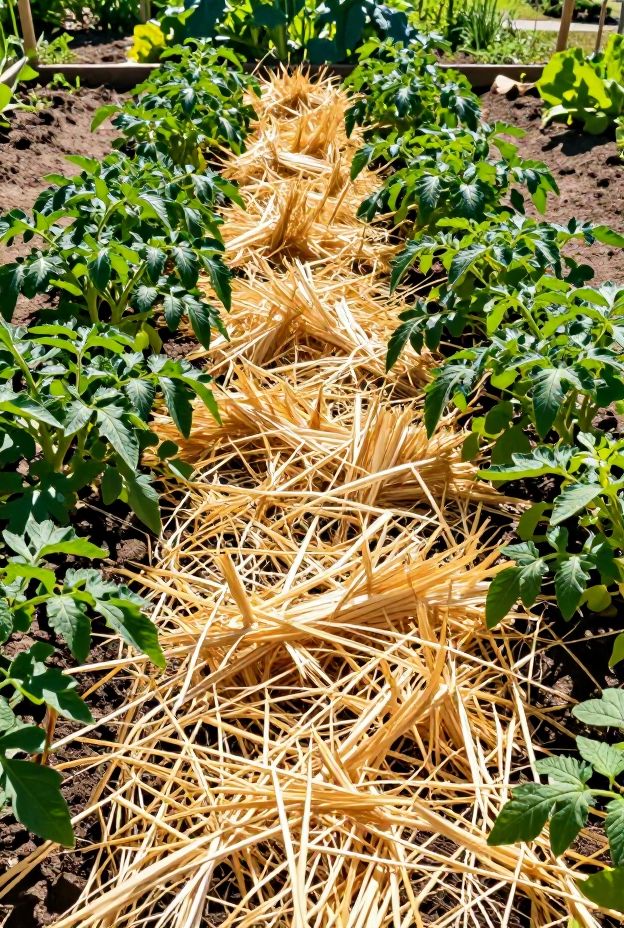
- Best for: tomatoes, squash, peppers, strawberries
- Lasts: one growing season
- Apply at: 3-4 inches deep
4. Colored Mulch for Curb Appeal
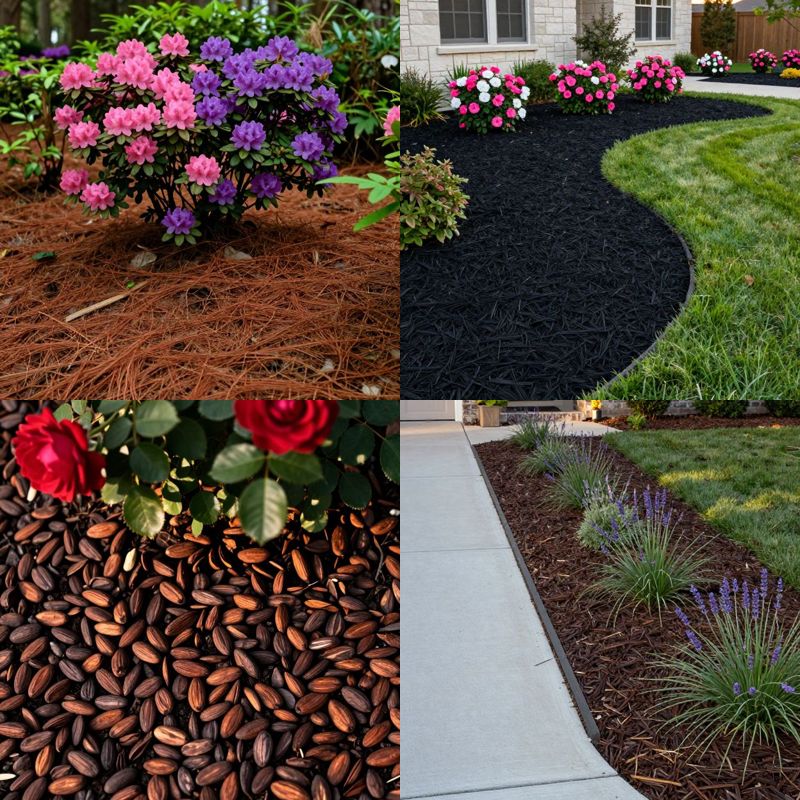
Want your front yard to look like it belongs in a home design magazine? Colored mulch is one of the easiest curb appeal upgrades you can make. Red, brown, or black dyed mulch creates a strong visual contrast against green plants and light-colored hardscaping. It’s basically the eyeliner of landscaping.
Most colored mulches are dyed with vegetable-based or iron oxide dyes, making them safe for your plants and soil. They do fade over time from sun exposure, so you’ll want to refresh them each season to keep that sharp look.
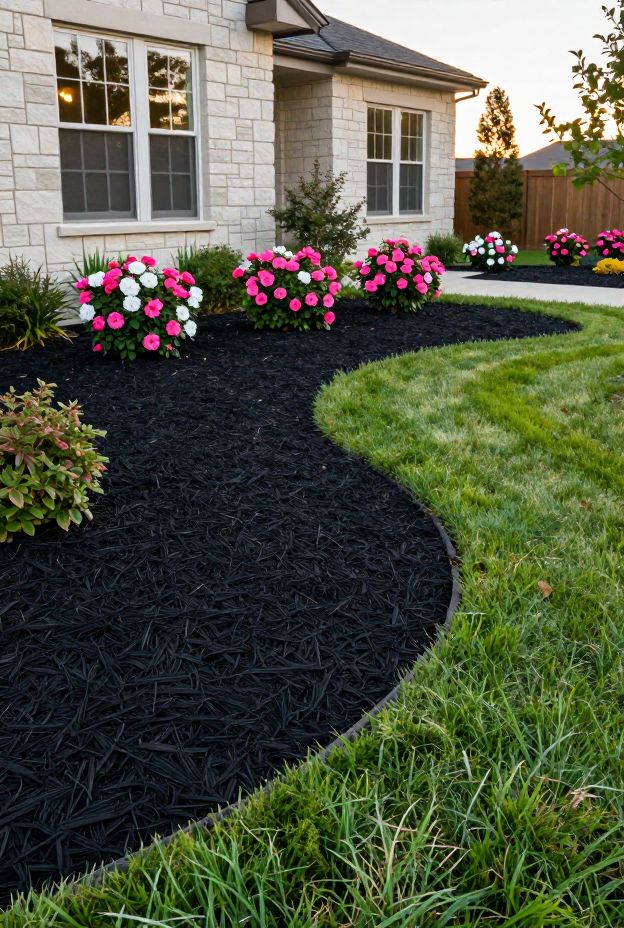
- Popular colors: black, red, brown
- Best contrast: black mulch with light pavers or green hedges
- Refresh every: 1 season for best appearance
5. Pine Needle Mulch for Acid-Loving Plants
If you grow blueberries, azaleas, rhododendrons, or camellias, pine needle mulch is practically made for you. Pine needles lower the soil pH slightly as they decompose, which is exactly what acid-loving plants need to thrive. Plus, they look beautiful and natural under larger shrubs.
They’re also surprisingly good at staying in place on slopes — they interlock naturally and don’t wash away as easily as chips or shredded bark. If you have pine trees on your property, you’ve basically got a free mulch supply waiting for you.
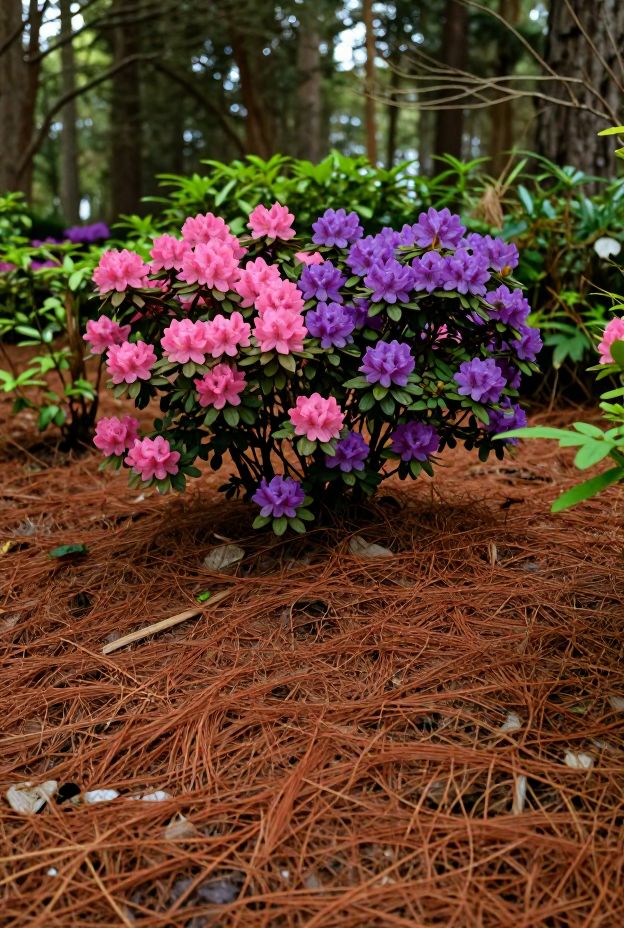
- Best for: blueberries, azaleas, hollies, rhododendrons
- pH effect: mildly acidic
- Great for: sloped garden beds
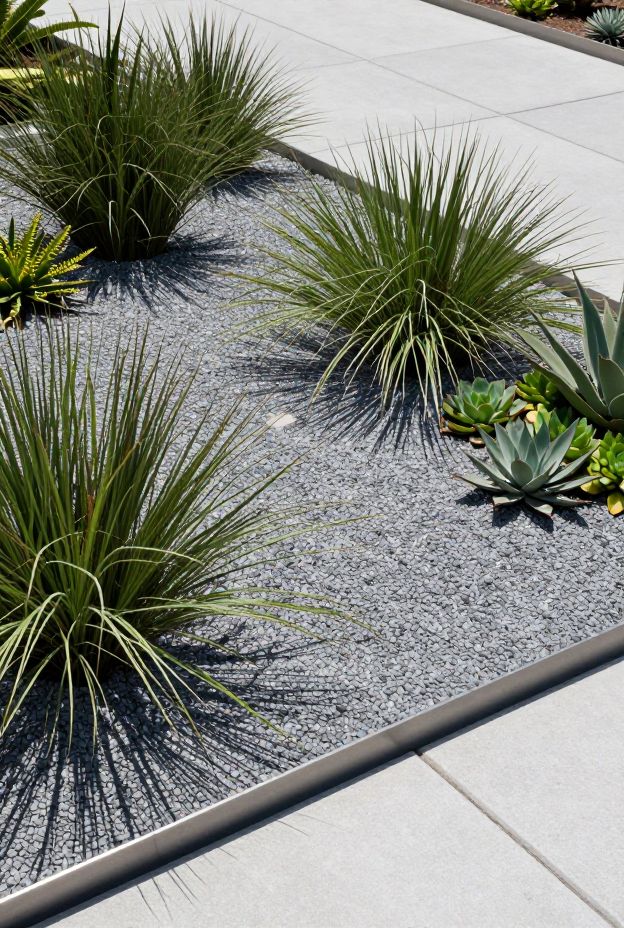
6. Gravel and Stone Mulch for Low-Maintenance Landscaping
For the spots where you just want things to look clean without babysitting them, gravel and stone mulch delivers effortless, long-term results. It doesn’t decompose, doesn’t blow away, and frankly looks incredibly modern around ornamental grasses, succulents, and drought-tolerant plants.
The one catch? It absorbs and radiates heat, so it’s not ideal for moisture-sensitive plants. But for xeriscaping or Mediterranean-style gardens, it’s an absolute game changer. Lay a weed barrier fabric underneath for maximum weed suppression.
- Best for: succulents, ornamental grasses, rock gardens
- Lasts: indefinitely
- Pairs well with: weed barrier fabric, drought-tolerant plants
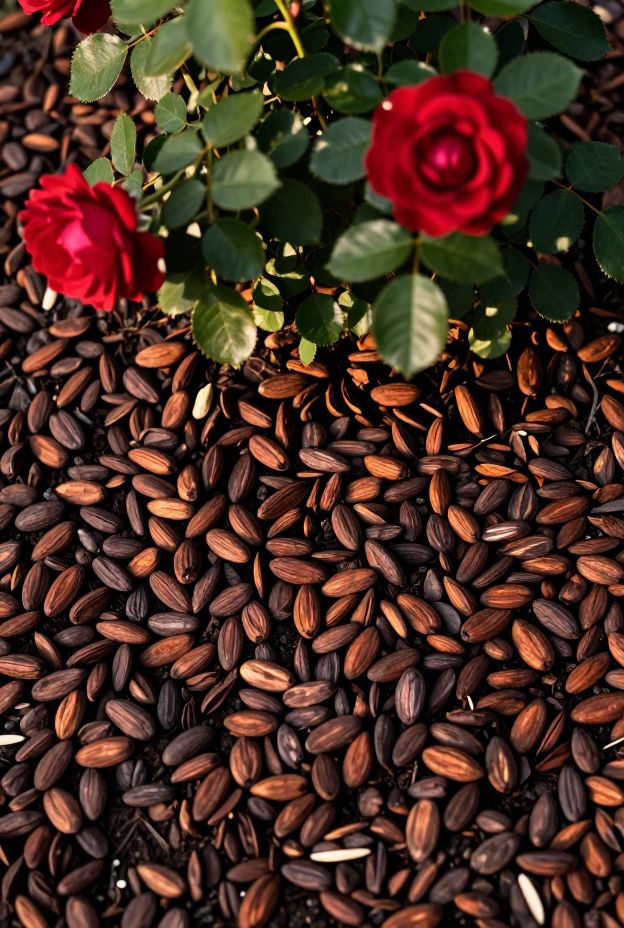
7. Cocoa Shell Mulch for a Fragrant Garden
Imagine your garden smelling faintly of chocolate. That’s cocoa shell mulch, and yes, it’s as delightful as it sounds. Cocoa shells form a lightweight, breathable mat that locks out weeds and slowly releases nutrients as it breaks down. It’s IMO one of the most underrated mulch types out there.
There’s one very important caveat though: cocoa mulch is toxic to dogs. If you have furry family members who roam the yard, skip this one entirely. For pet-free gardens, it’s an absolute treat.
- Best for: ornamental beds, rose gardens
- Scent: chocolatey for the first few weeks
- Important: not safe for dogs
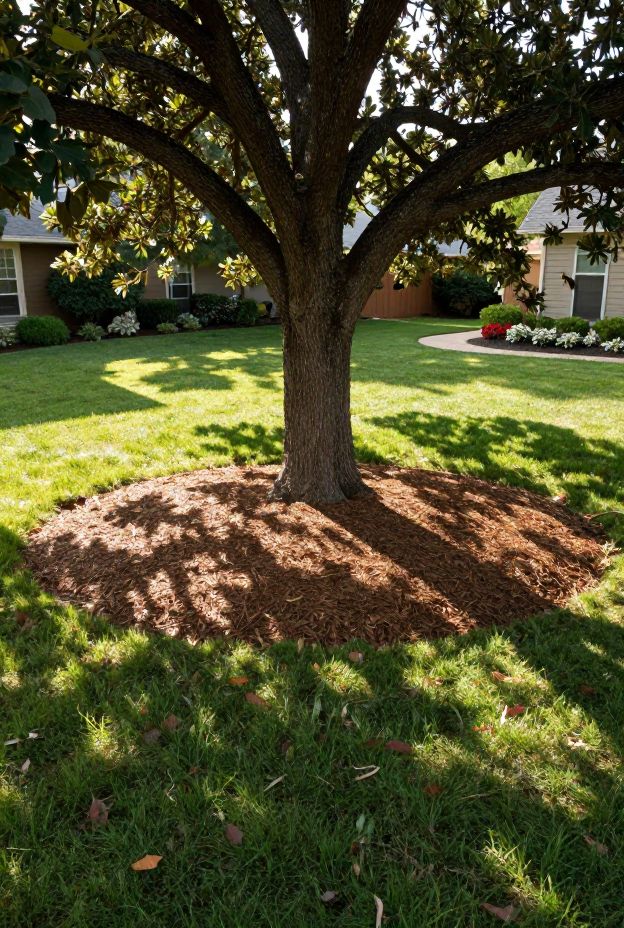
8. Shredded Bark Mulch for Tree Rings
Ever seen a sad, weed-choked ring around a tree trunk and thought, there has to be a better way? There is. Shredded bark mulch creates a clean, defined ring that protects the tree’s root zone, retains moisture, and keeps lawn mowers from damaging the bark. It’s a simple touch that makes a huge visual impact.
One rule to live by: never pile mulch up against the trunk itself. That “mulch volcano” look isn’t just ugly — it traps moisture and causes rot. Keep a small gap between the mulch and the trunk.
- Best for: individual trees, shrub rings
- Apply: 2-4 inches deep, away from trunk
- Lasts: 1-2 years
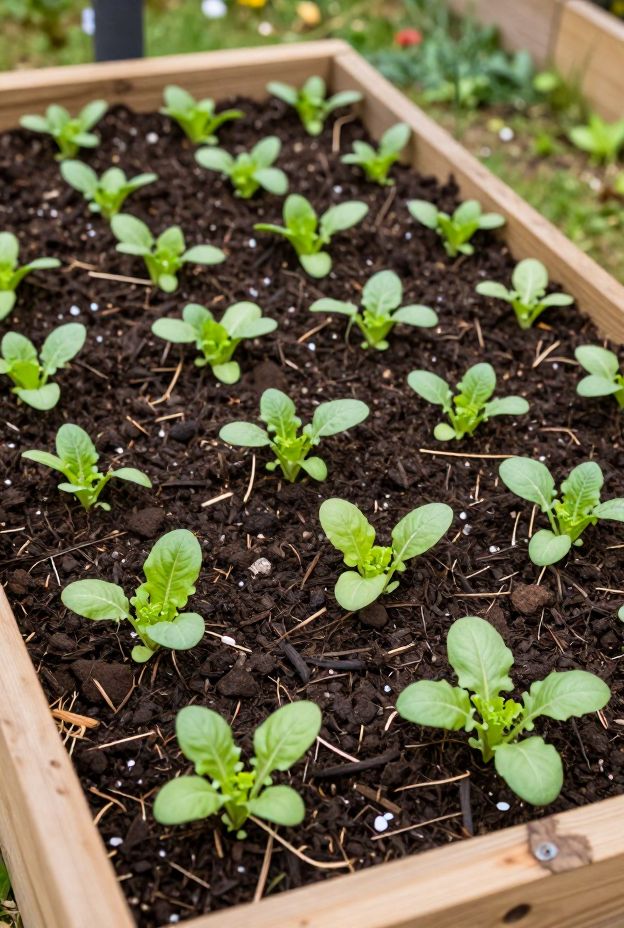
9. Compost Mulch to Feed and Protect
Compost mulch pulls double duty — it suppresses weeds and pumps nutrients directly into your soil as it breaks down. If you make your own compost at home, using it as a mulch layer is one of the best investments you can make for your garden’s long-term health.
It doesn’t last as long as wood-based mulches, so you’ll need to refresh it more frequently. But the soil improvement you get in return is genuinely worth the extra effort. Pair it with a thicker top layer of bark or straw for even better weed control.
- Best for: vegetable gardens, annual beds
- Nutrient value: high
- Combine with: straw or bark for better coverage
10. Landscape Fabric with Mulch Topping
Using landscape fabric beneath a layer of mulch is one of the most effective weed-suppression combos out there. The fabric blocks light and creates a physical barrier, while the mulch on top holds it in place, adds aesthetic appeal, and prevents UV degradation of the fabric. It’s layered defense at its finest.
Go with a woven geotextile fabric rather than the cheap plastic sheeting — plastic doesn’t breathe and suffocates your soil over time. The woven stuff lets water and air through while still blocking weeds.
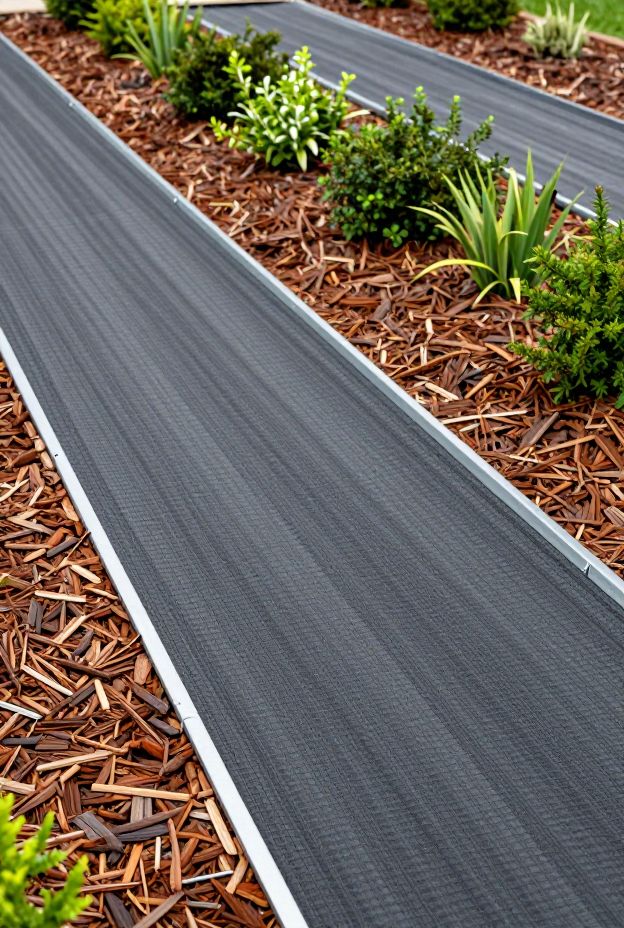
- Best fabric type: woven geotextile
- Best paired mulch: gravel, bark chips
- Weed suppression level: very high
11. Mulched Pathways for Structure and Style
Mulch doesn’t just belong in garden beds — mulched garden pathways add a natural, cohesive feel to your whole landscape design. Wood chips or pea gravel between rows of plants or raised beds create a clean, intentional look while keeping your feet dry and weed-free.
It’s a low-cost way to add serious structure to your garden without hardscaping. Line the path edges with timber or brick borders for a super polished finish that honestly looks like way more effort than it is.
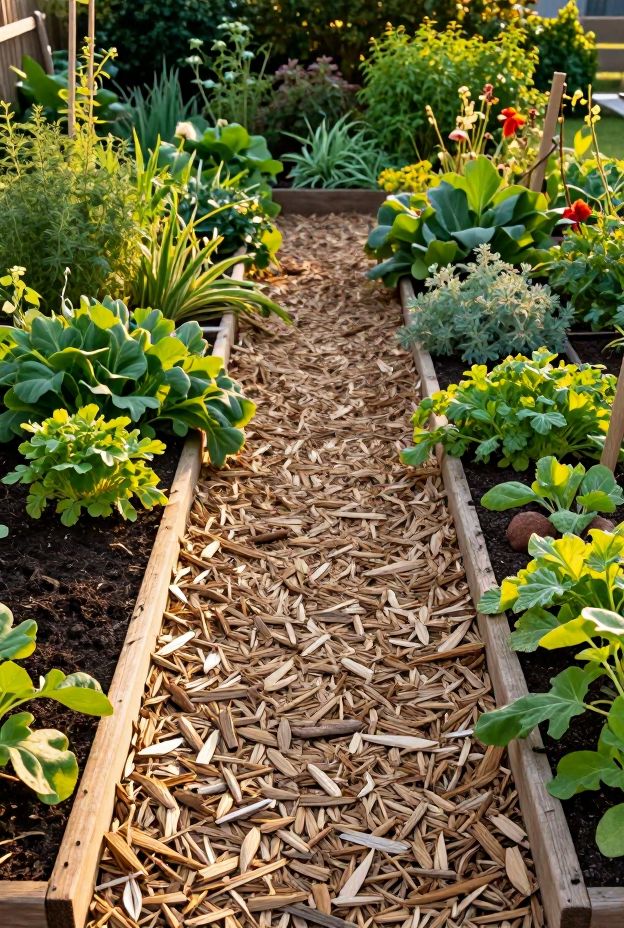
- Best materials: wood chips, pea gravel, bark
- Edge with: timber, bricks, or steel edging
- Depth: 3-4 inches for comfort underfoot
12. Seasonal Color Mulch Swaps for Year-Round Appeal
Here’s a trick most casual gardeners never think about: changing up your mulch color seasonally to complement what’s blooming. Light golden straw looks stunning behind deep purple autumn plants. Black mulch makes spring tulips pop. It’s a small change with a surprisingly big visual payoff.
You don’t need to remove all the old mulch — just rake it back a bit and add a fresh top layer of the new color or texture. This also gives you a chance to check on soil health and pull any sneaky weeds that managed to break through.
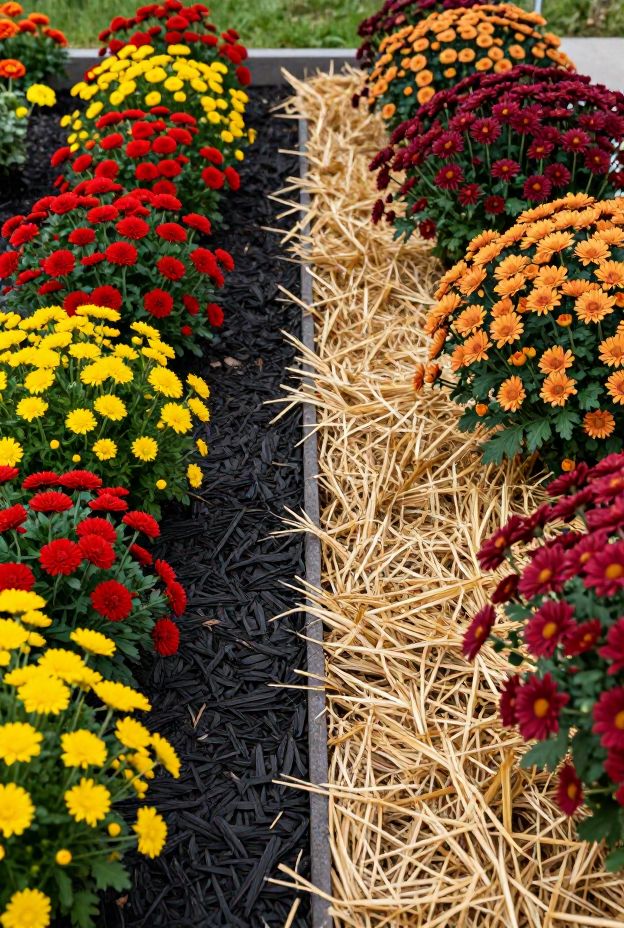
- Spring/Summer: black or dark brown for contrast with bright blooms
- Autumn: golden straw or light bark to complement warm tones
- Winter: thick bark for insulation and clean appearance
13. Mulch Borders Around Driveways and Walkways
One of the fastest ways to elevate your home’s curb appeal is adding a clean mulch border along your driveway or front walkway. It frames the entrance to your home, defines the planting beds, and immediately makes the property look more maintained. It’s the kind of thing neighbors notice without knowing exactly why the house looks so good.
Use a half-moon edger to cut a crisp border into the lawn, fill it with dark-colored mulch, and you’ve basically just given your home a facelift for the cost of a bag of mulch. Pair it with some low ornamental grasses or seasonal flowers for a complete, polished look 🙂
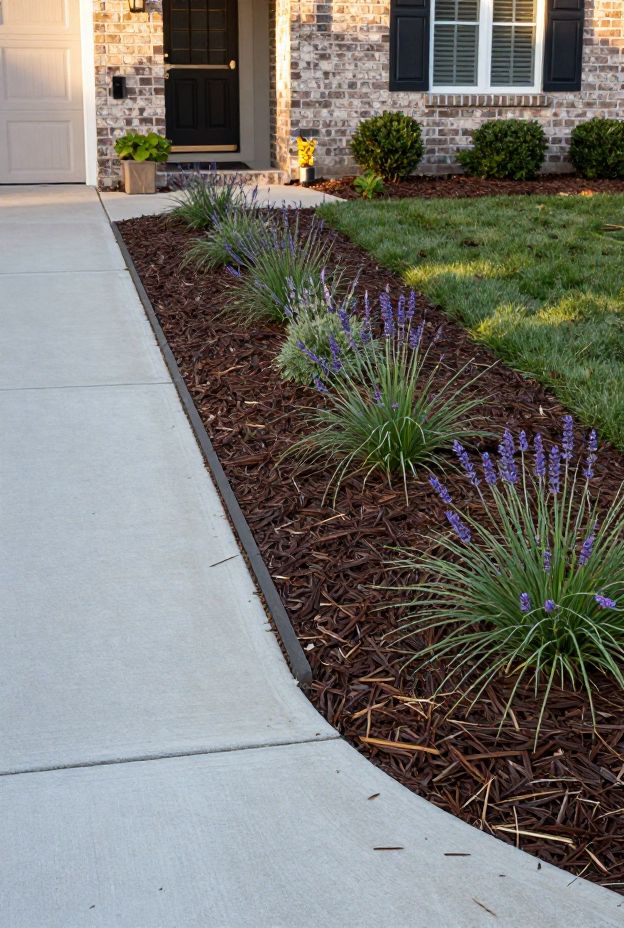
- Best mulch color: dark brown or black for contrast
- Define edges with: metal edging or a clean spade cut
- Add plants: ornamental grasses, lavender, boxwood hedges
Final Thoughts on Mulch Landscaping
Mulch is honestly one of those gardening tools that does a ton of heavy lifting without demanding much in return. It suppresses weeds, locks in moisture, feeds your soil, and makes your whole yard look intentional and cared for. And with these 13 ideas, you’ve got options for every style, budget, and garden type.
Whether you’re going for a low-maintenance gravel xeriscape or a lush, layered cottage garden, there’s a mulch strategy that fits. Start with one or two ideas, see the difference it makes, and build from there. Your future, weed-free self will seriously thank you.