Look, I get it. You walk past your front yard every single day, and every single day you think, “Ugh, this looks so… blah.” Small front yards can feel like an impossible puzzle. You want curb appeal, you want drama, but you’re working with maybe 200 square feet and a budget that doesn’t include hiring a landscape architect. Been there, done that, got the overgrown grass to prove it.
Here’s the good news: small spaces can pack serious punch when you know the right tricks. I’ve spent years experimenting with my own tiny front yard (and trust me, I’ve made some hilarious mistakes along the way), and I’ve learned that size literally doesn’t matter when you’ve got the right ideas. Ready to transform that sad patch of dirt into something that makes your neighbors double-take? Let’s go.
1. Layer Your Plants Like You’re Frosting a Cake
Ever wonder why professional landscapers’ work always looks so… intentional? It’s all about layering different heights. Think of it like creating depth in a painting, but with actual living things that won’t judge your artistic skills.
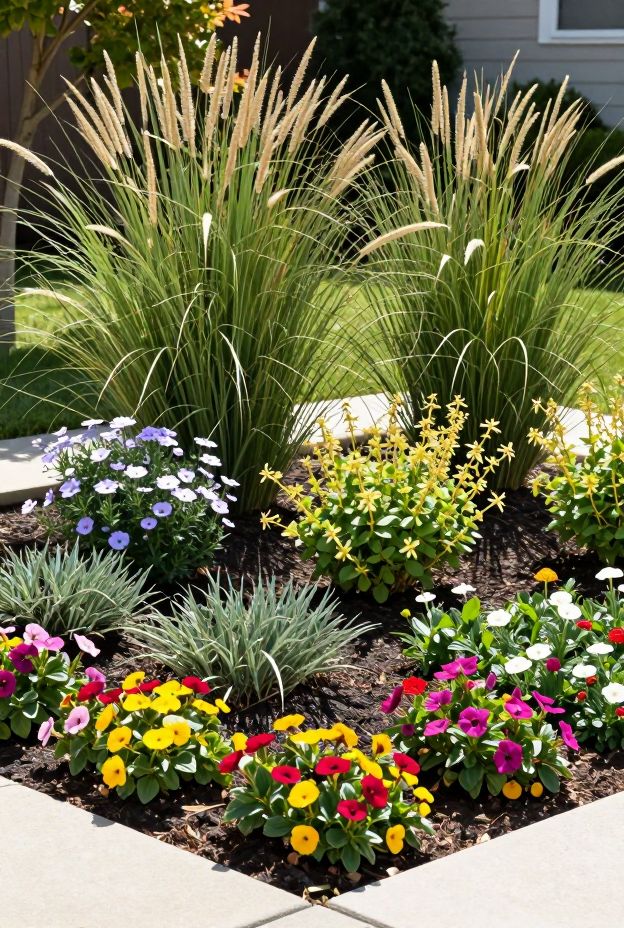
Start with a tall anchor plant in the back (maybe a decorative grass or a small ornamental tree), then work your way down with medium-height shrubs, and finish with ground cover or flowers up front. This creates visual interest without cluttering your space. I learned this the hard way after planting everything the same height and ending up with what basically looked like a green pancake. Not cute.
Pro tip: Use odd numbers when grouping plants. Three looks intentional. Two looks like you ran out of money halfway through. Seven looks like you know what you’re doing.
2. Go Vertical With Climbing Plants
When you’re short on square footage, the only way is up, baby. Vertical gardens and climbing plants are absolute game-changers for small spaces. Install a simple trellis or arbor near your entrance, and let climbing roses, clematis, or jasmine do their thing.
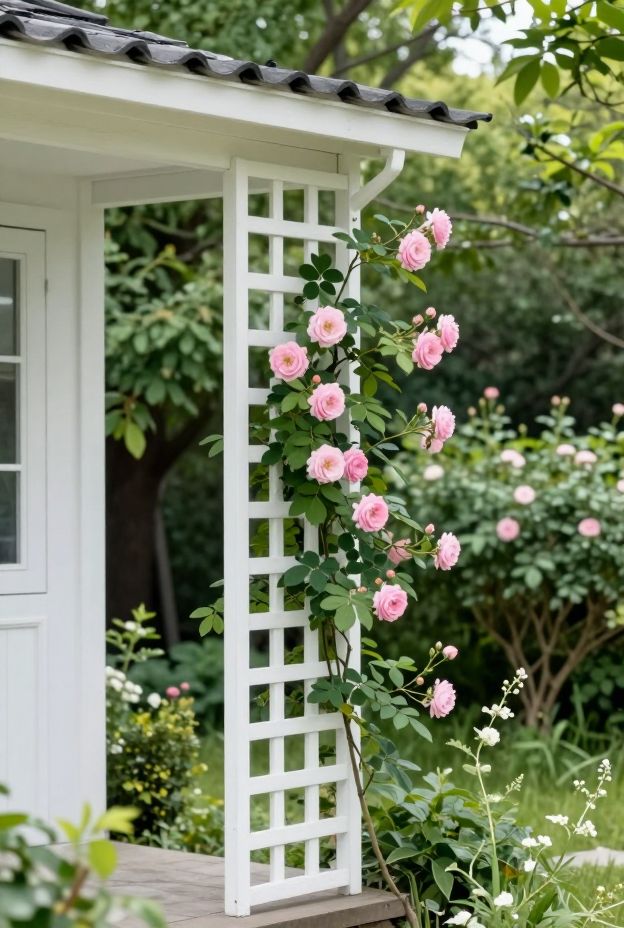
Not only does this add height and drama, but it also draws the eye upward, making your entire front yard feel bigger. Plus, there’s something seriously satisfying about watching vines slowly take over a structure. It’s like having your own tiny jungle, minus the humidity and mosquitoes.
3. Create a Focal Point (Because Every Story Needs a Hero)
Your front yard needs a star. Something that immediately catches attention and gives the whole space purpose. This could be:
- A stunning container garden with bold, colorful plants
- A small water feature or fountain
- An architectural plant like a Japanese maple
- A sculptural element or decorative boulder
- A beautifully designed front door with contrasting paint
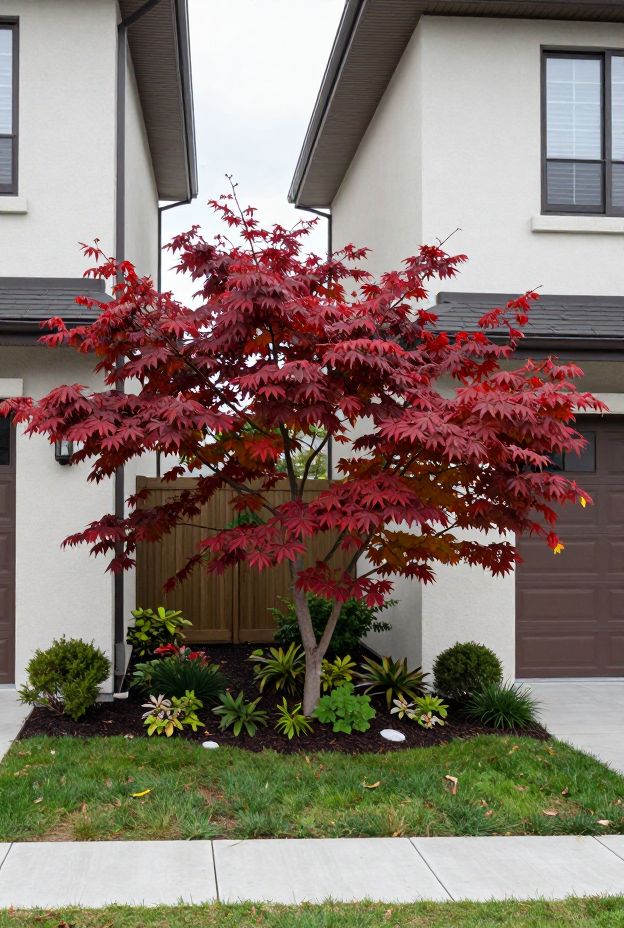
I went with a bright blue front door surrounded by white hydrangeas, and honestly? Best decision ever. It’s like my house finally has a personality beyond “generic suburban dwelling.”
4. Edge Your Beds Like Your Life Depends On It
Want to know the easiest way to make your landscaping look 100% more professional? Clean, defined edges. Seriously, this is the secret sauce that separates “trying” from “nailed it.”
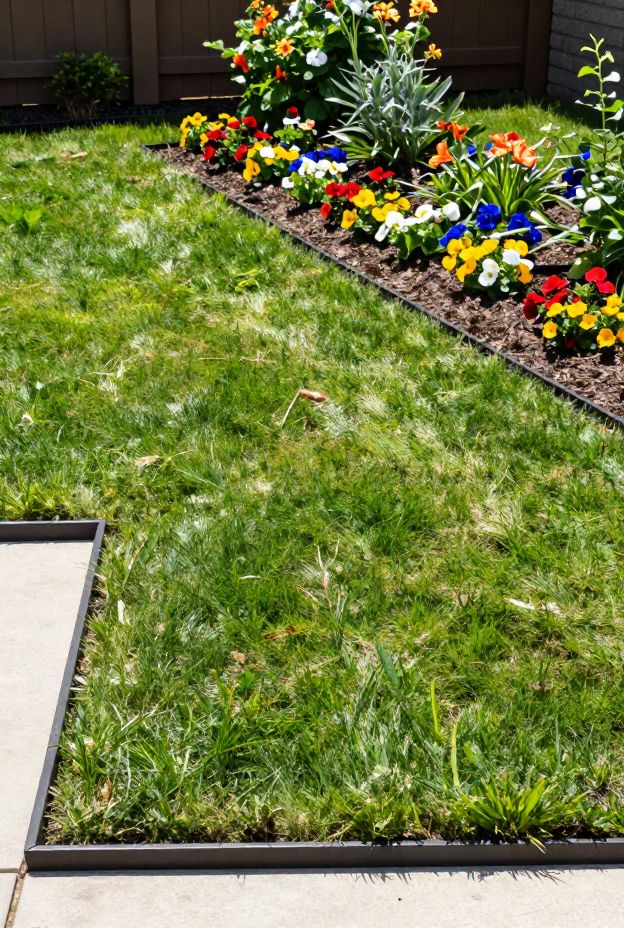
You can use metal edging, stone borders, or even just a sharp spade to create clean lines between your lawn and garden beds. The contrast instantly makes everything look more intentional and polished. It’s like the landscaping equivalent of putting on eyeliner. Suddenly everything just… pops.
5. Embrace Symmetry for Instant Elegance
Symmetrical designs are foolproof. Flank your front door with matching planters, place identical shrubs on either side of your walkway, or mirror your plant beds on both sides of your entrance. Symmetry reads as intentional to our brains, even if you basically just copy-pasted your design.
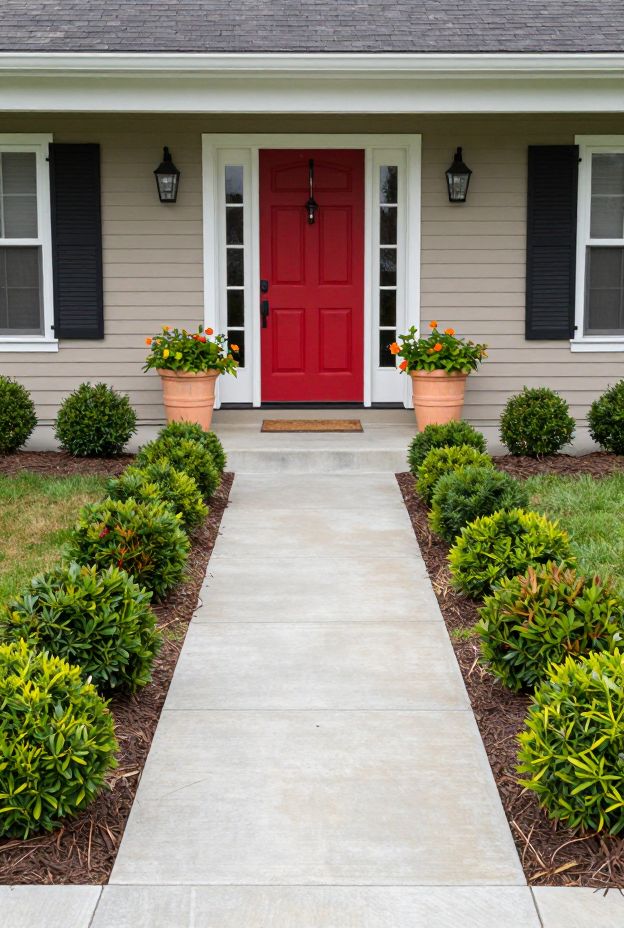
IMO, this is especially great if you’re not super confident in your design skills yet. When in doubt, match things up, and you’ll automatically look like you know what you’re doing. 🙂
6. Add Landscape Lighting for Drama
Here’s something most people don’t think about until it’s too late: your landscaping disappears after sunset. All that hard work becomes invisible the second the sun goes down. Not on my watch.
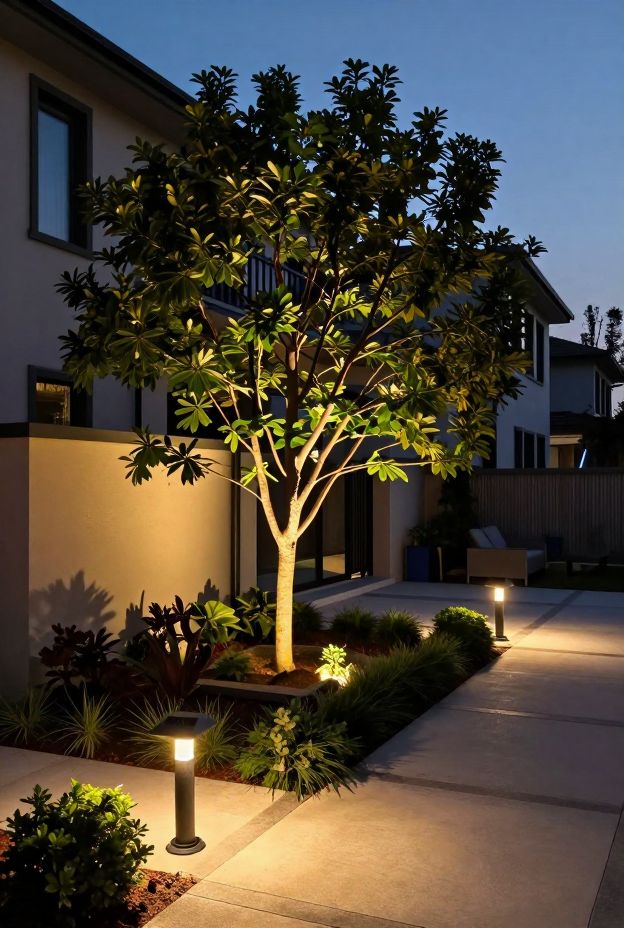
Install some solar path lights, uplight your trees or architectural plants, or add spotlights to your focal point. Landscape lighting doesn’t just extend your curb appeal into the evening hours. It also adds safety and makes your home feel more welcoming. Plus, walking up to a beautifully lit front yard after a long day? Chef’s kiss.
7. Use Containers Strategically
Don’t sleep on container gardens. Large pots filled with bold plants can completely transform a space without any permanent commitment. You can move them around until you find the perfect spot, swap out seasonal plants, and experiment with color schemes.
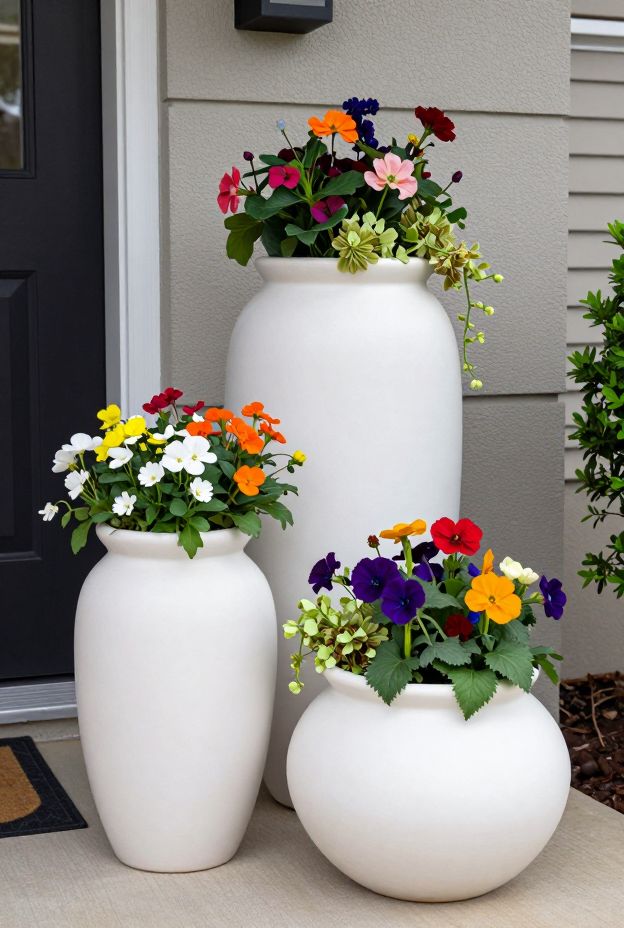
I’ve got three massive planters flanking my walkway, and I change them out every season. Spring tulips, summer petunias, fall mums, winter evergreens. It keeps things fresh without requiring a total landscape overhaul every few months.
Container pro tips:
- Bigger is always better. Go large or go home.
- Group containers in odd numbers for visual interest
- Mix heights and textures within each container
- Don’t forget drainage holes (learned this one the expensive way)
8. Replace Grass With Ground Cover
Real talk: grass is overrated. It’s high maintenance, requires constant watering, and in small front yards, it often just looks… sad. Why not replace some (or all) of that lawn with low-maintenance ground cover?
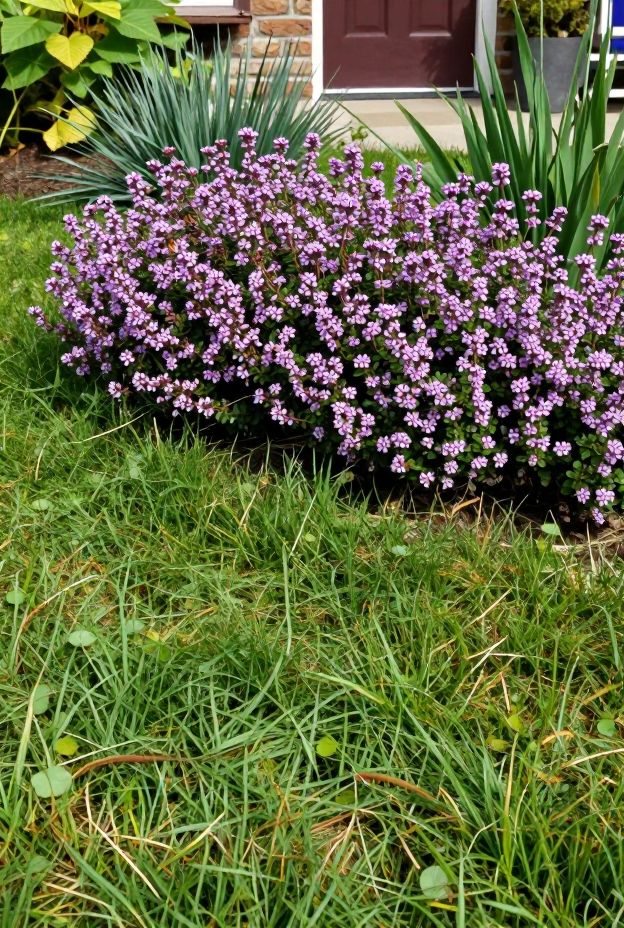
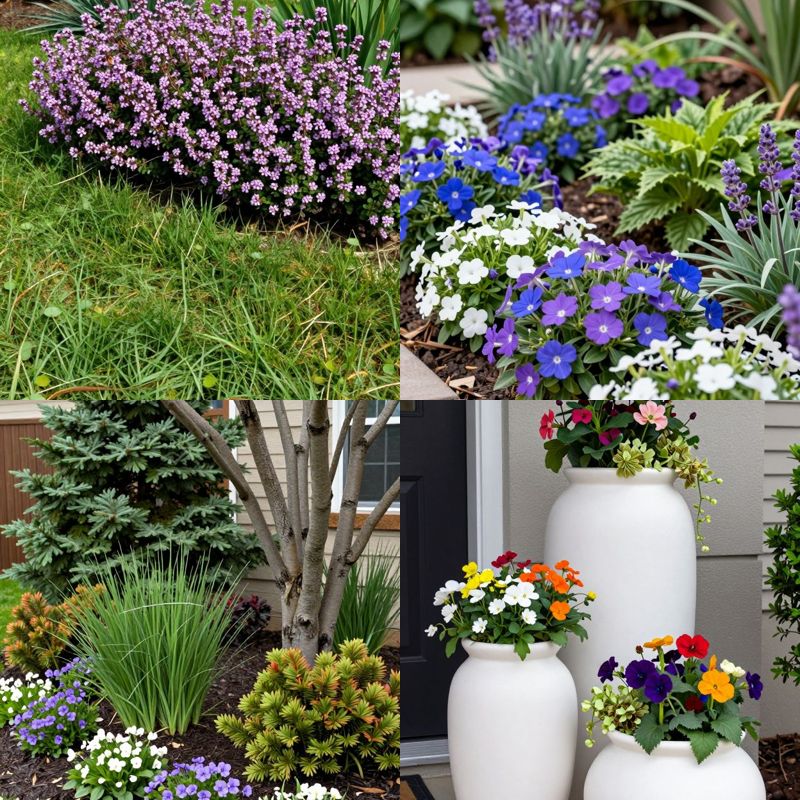
Options like creeping thyme, clover, or sedum look lush, require way less water, and you never have to mow them. Plus, many ground covers attract pollinators, so you’re basically helping save the bees while also reducing your weekend chores. Win-win.
9. Create a Defined Pathway
Even if your front yard is tiny, a proper walkway makes a massive difference. It guides visitors to your door (groundbreaking, I know), but more importantly, it creates structure and flow in your landscape design.
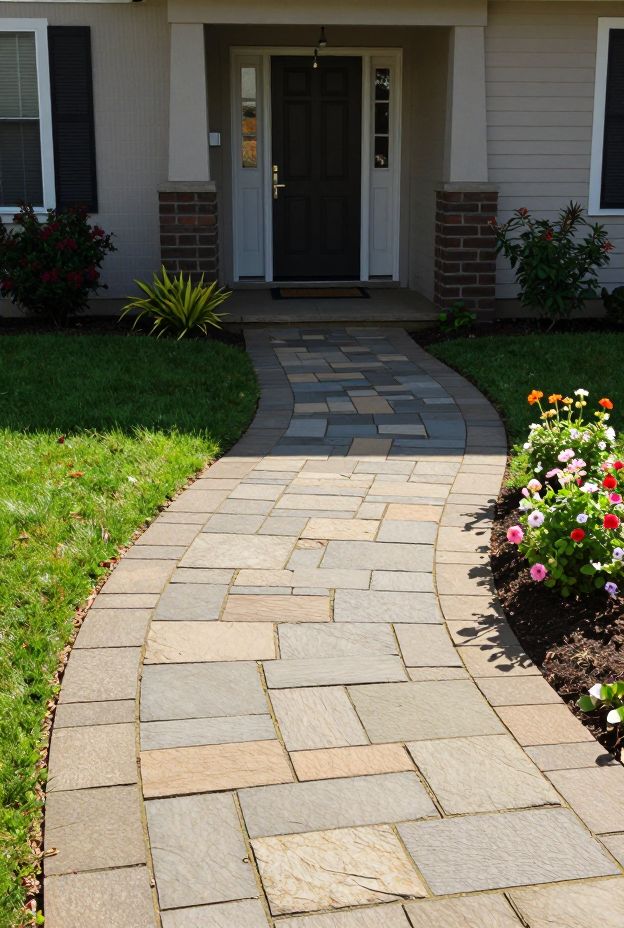
You can use pavers, stepping stones, gravel, brick, or even wood rounds. Whatever matches your home’s style. I went with irregular flagstone because I wanted that casual, natural look, and honestly, the compliments haven’t stopped. Who knew rocks could be so exciting?
10. Add Mulch for That “Finished” Look
Mulch is basically the finishing powder of landscaping. It covers up bare soil, suppresses weeds, retains moisture, and makes everything look cohesive and complete. A fresh layer of mulch instantly upgrades any garden bed.
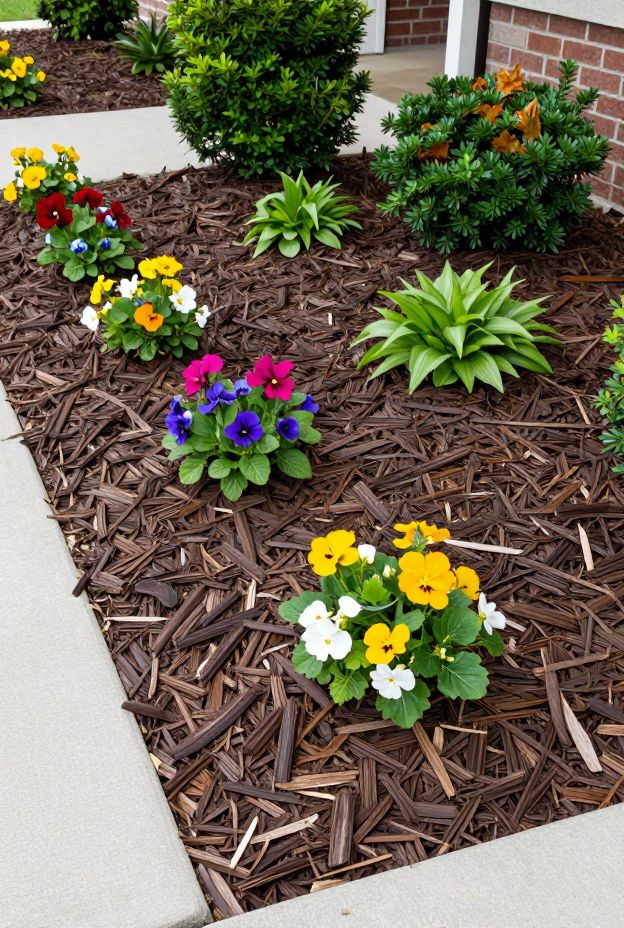
Choose between organic options like wood chips or bark (which break down and enrich your soil) or inorganic options like river rocks or rubber mulch (which last longer but don’t add nutrients). FYI, I refresh my mulch every spring, and it’s like giving my front yard a mini makeover for under $50.
11. Plant for Year-Round Interest
Don’t be that person whose front yard only looks good for six weeks in summer. Strategic plant selection ensures something is always happening in your landscape. Choose plants with different bloom times, interesting bark, colorful fall foliage, or winter berries.
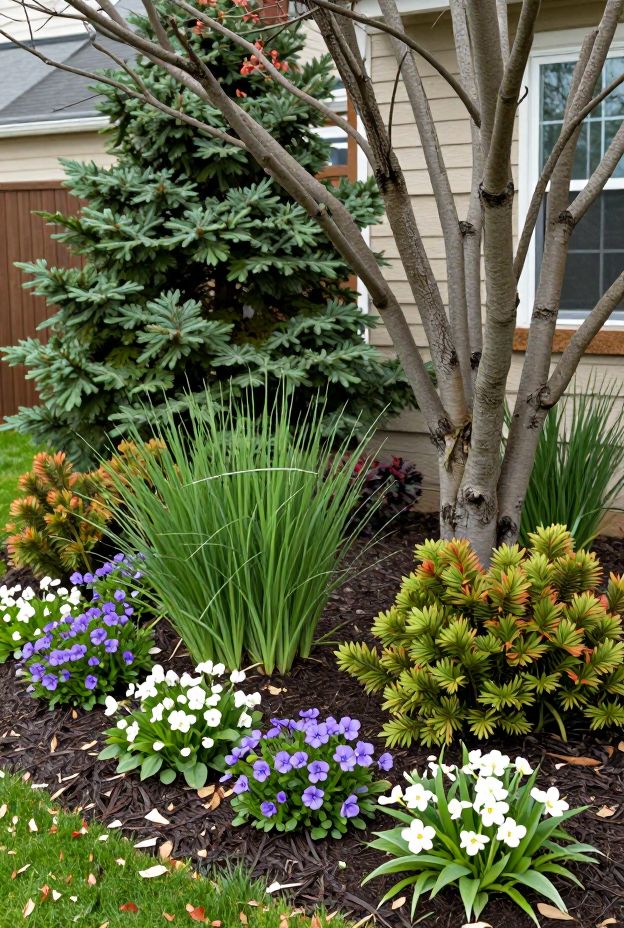
My formula: spring bulbs, summer perennials, fall mums and ornamental grasses, plus evergreens for winter structure. This way, my front yard never goes completely dormant and sad-looking. Mother Nature might be taking a break, but my curb appeal isn’t.
12. Incorporate Hardscaping Elements
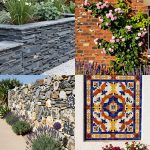
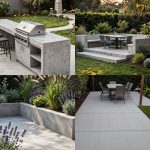
Plants are great, but hardscaping adds permanent structure and reduces maintenance. Think decorative rocks, a small retaining wall, a stone border, or even a simple bench. These elements provide visual interest year-round and give your landscape “bones” that look good even in winter.
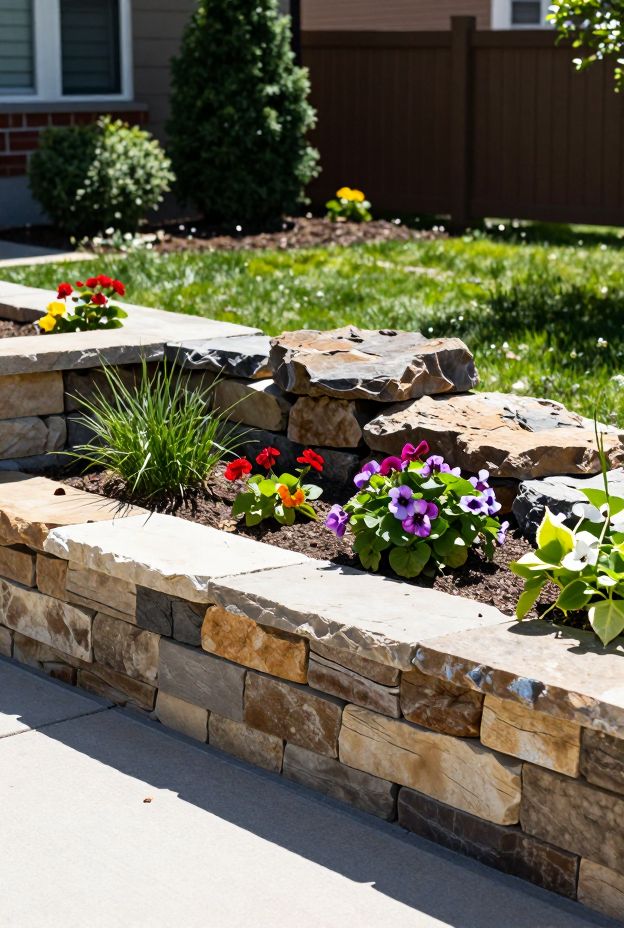
I added a small stone wall along one side of my yard to create a raised bed, and the dimension it adds is honestly incredible. Plus, it solved my drainage issues, which was an unexpected bonus. Functional AND pretty? Yes, please.
13. Frame Your House Number
Okay, this might sound minor, but hear me out. Making your house number a design feature is such an underrated move. Install attractive numbers with good lighting, maybe add a small planter box beneath them, or create a dedicated “address garden” nearby.
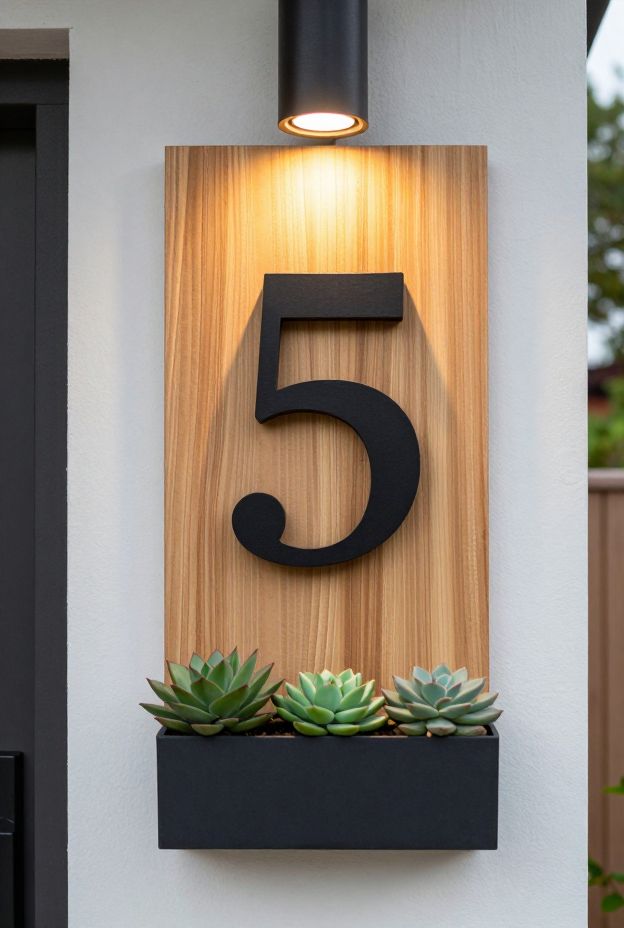
It’s practical (delivery drivers will actually find your house) and adds architectural interest. I mounted oversized modern numbers on a piece of contrasting wood and surrounded the base with low-growing succulents. Cost: $40. Impact: People literally stop to take photos. :/
14. Use Color Psychology to Your Advantage
Different colors create different moods, and you can use this to your advantage in a small space. Warm colors (reds, oranges, yellows) make spaces feel energetic and welcoming, while cool colors (blues, purples, whites) create a calming, spacious feeling.
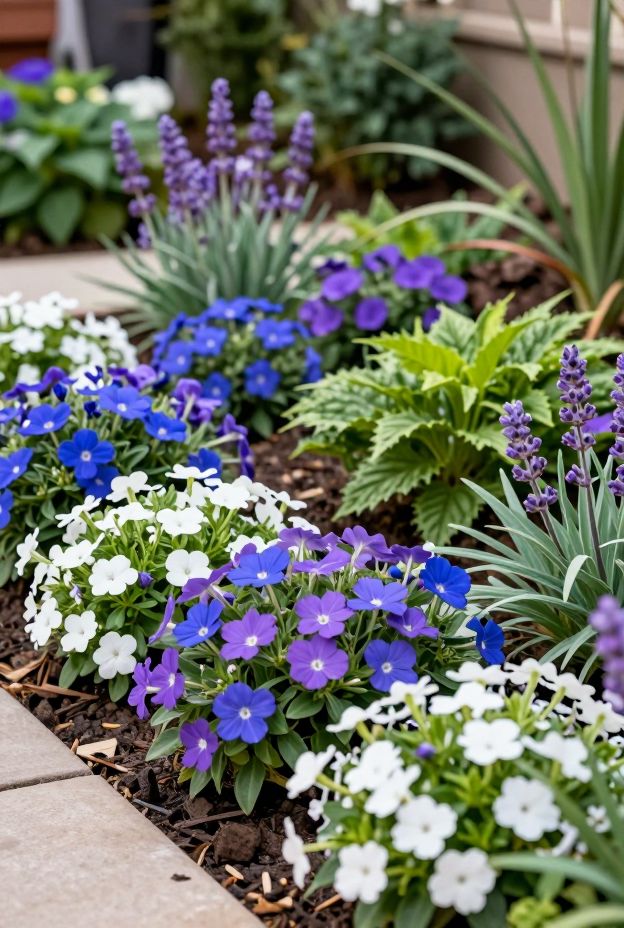
In small front yards, cool colors can actually make the space feel larger because they recede visually. But honestly? Use colors you love. Your front yard should make YOU happy every time you pull into the driveway. Life’s too short for boring landscaping.
Quick color tips:
- Stick to 2-3 main colors for cohesion
- Use white flowers as “neutral” connectors between bold colors
- Consider your house color when choosing plants
- Don’t forget about foliage color (it’s there longer than flowers)
Final Thoughts: Small Space, Big Personality
Look, transforming your small front yard doesn’t require a massive budget or a degree in landscape architecture. It just takes a little planning, some strategic plant choices, and the willingness to experiment. Will you make mistakes? Probably. I’ve killed more plants than I care to admit, and I once accidentally created a mosquito breeding ground with poor drainage. We learn, we adapt, we become better plant parents.
The beauty of working with a small space is that changes don’t take forever or cost a fortune. You can try something, see how it works, and pivot if needed. Start with one or two ideas from this list, see how they transform your space, then build from there. Before you know it, you’ll be that house on the block that everyone slows down to admire.
Now get out there and show that front yard who’s boss. Your neighbors are waiting to be impressed. 🙂