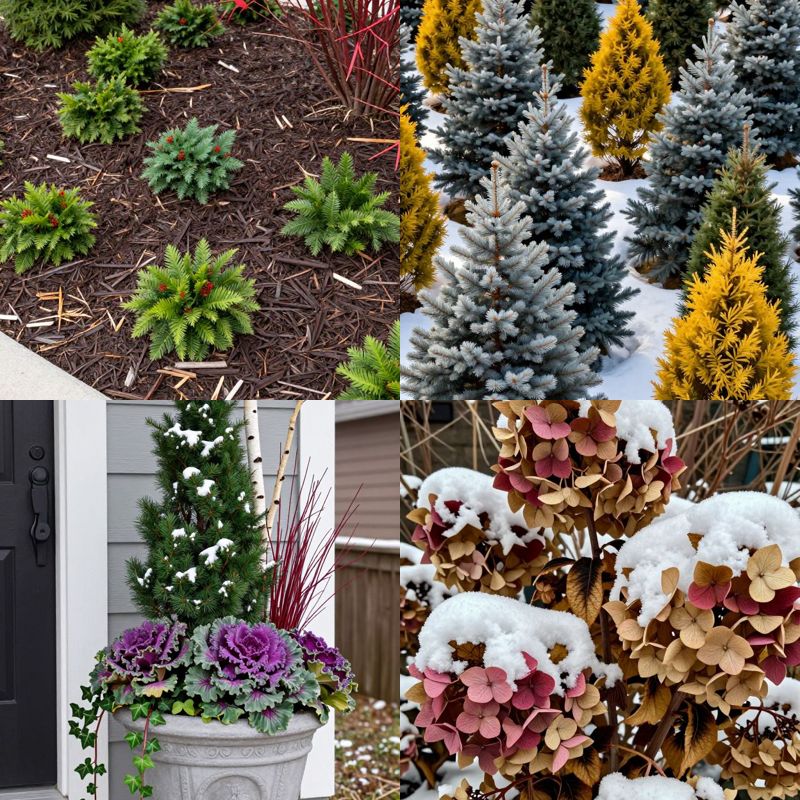
Winter doesn’t mean your yard has to look like a sad, brown wasteland. I’m always shocked when people just give up on their gardens once the first frost hits, like they’ve completely forgotten that color can exist when it’s cold outside. Your landscape can stay vibrant and interesting all winter long if you know the right tricks to pull off.
After years of experimenting with my own winter garden (and a few epic fails, I’ll admit), I’ve figured out what actually works. These 13 ideas will transform your yard from drab to fab, even when everything else is frozen solid. Ready to be the envy of your neighborhood? 🙂
1. Plant Evergreens for Year-Round Structure
Evergreens are your winter landscape’s best friend. They provide that essential backbone when everything else has dropped its leaves and gone dormant. I use a layering technique that makes the garden look intentional rather than random.
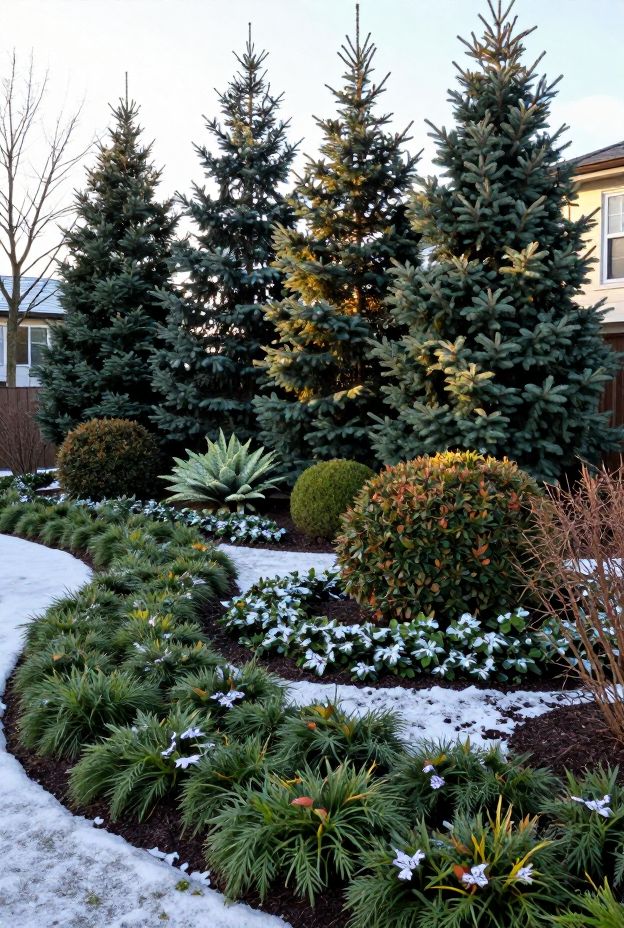
Start with tall conifers like pines and spruces in the background, add mid-sized shrubs like boxwood or yews in the middle, and finish with low-growing ground covers up front. This creates depth and keeps your eye moving through the space naturally.
The best part? You set it up once and it works for you year after year. No replanting, no fussing, just reliable green structure when you need it most.
2. Add Colorful Stem Shrubs
Red twig dogwood is an absolute showstopper in winter. The stems turn this brilliant fire-engine red that practically glows against snow or a gray sky. I planted a few Arctic Fire varieties along my back fence, and they’re the first thing visitors comment on.
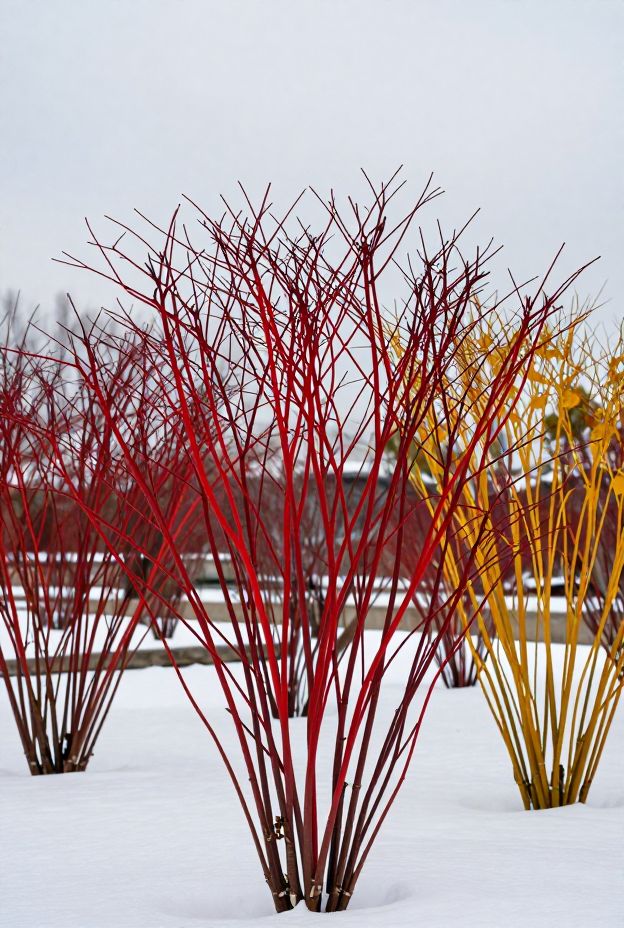
Don’t stop at red though. Yellow twig dogwood offers bright golden stems, and some willows have gorgeous orange and purple tones. These deciduous shrubs lose their leaves but reveal their true beauty when bare.
Pro tip: Cut back about a third of the oldest stems each spring. This encourages new growth, and younger stems have the most vibrant winter color.
3. Plant Winter-Blooming Beauties
Yes, some plants actually bloom in winter, and they’re not just tiny boring things either. Witch hazel produces these spidery, fragrant flowers in shades of yellow, orange, and red right in the middle of winter. It’s like the plant forgot what season it is.
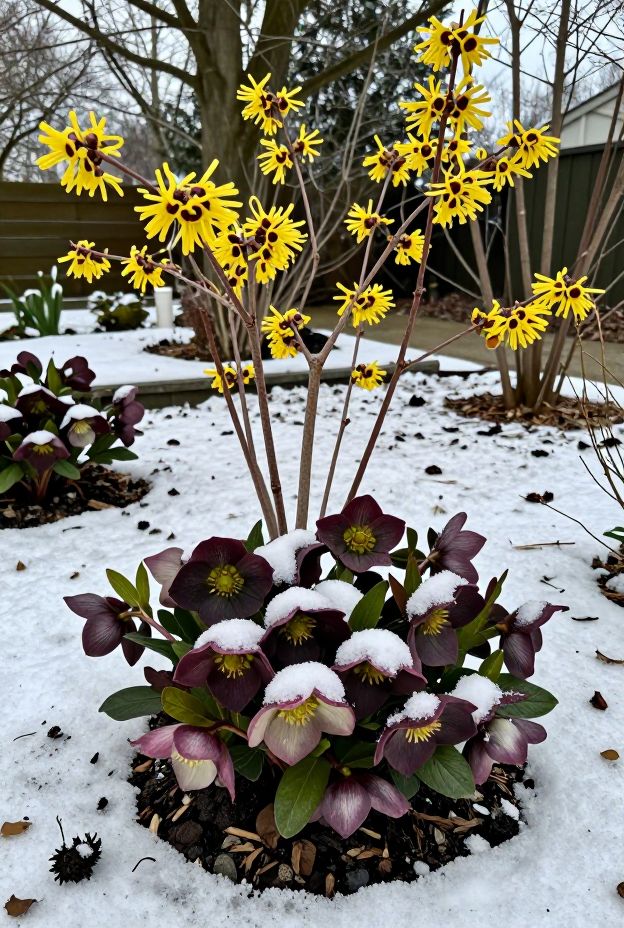
Hellebores (also called Christmas or Lenten roses) are another favorite of mine. They pop up through snow with gorgeous cup-shaped flowers in white, pink, purple, and even near-black shades. These tough perennials laugh at cold weather.
Winter jasmine is also worth mentioning. Its bright yellow flowers can bloom for up to 8 weeks, giving you serious bang for your buck when color is scarce.
4. Let Ornamental Grasses Stand Tall
Here’s where beginners make a huge mistake: they cut back their ornamental grasses in fall. Don’t do it! Those dried seed heads and feathery plumes look absolutely magical covered in frost or snow.
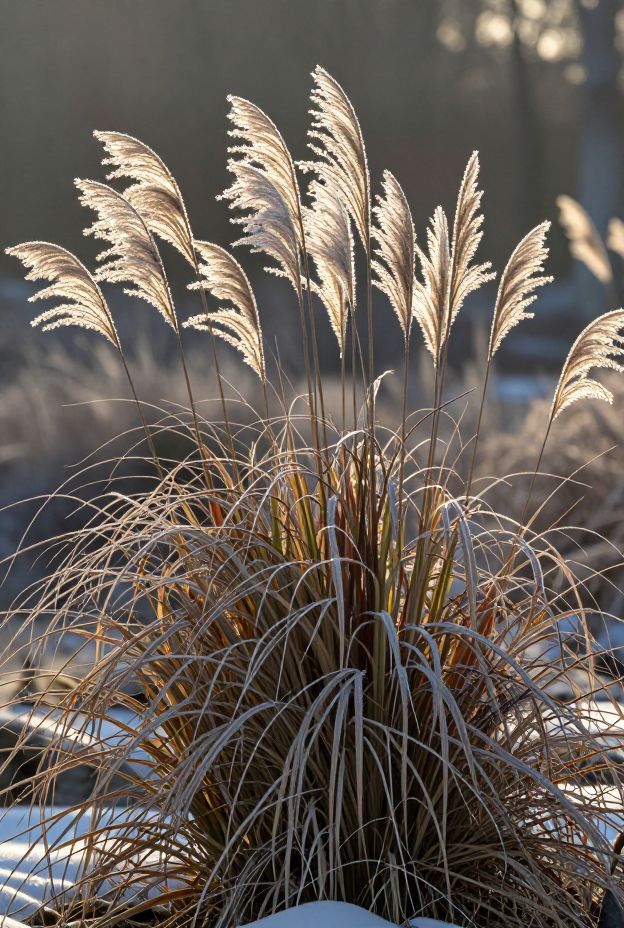
Switch grass and fountain grass add movement and texture to your winter landscape. They catch the light beautifully and sway in winter breezes, bringing life to an otherwise static scene.
I leave mine standing until early spring, and honestly, they might look better in winter than they did in summer. The tan and gold tones warm up the cold landscape perfectly.
5. Choose Trees with Stunning Bark
Ever noticed how certain trees become sculptures in winter? That’s the magic of ornamental bark. River birch has this gorgeous peeling bark in shades of salmon, cream, and cinnamon that becomes the focal point once leaves are gone.
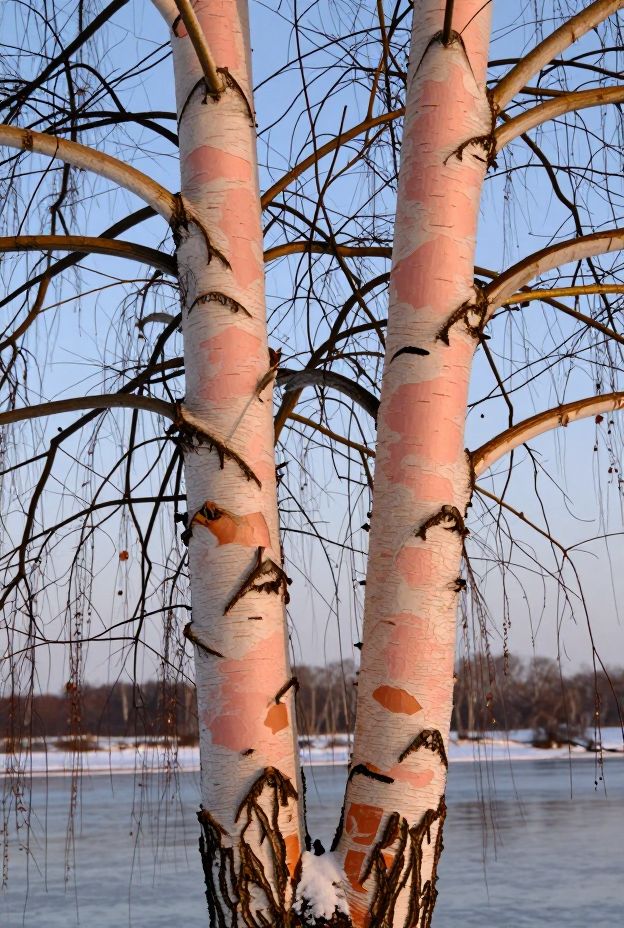
Amur chokecherry offers shredding, tawny-orange bark that practically glows. Paperbark maple (if you can find one) has this incredible cinnamon-colored exfoliating bark that demands attention. These trees work hard year-round but really shine in winter.
Plant them where you’ll see them from windows or walkways. Why hide that beauty in the back corner?
6. Add Berry-Producing Shrubs
Berries are like little jewels scattered across your winter landscape. Winterberry holly is covered in bright red berries that persist through winter, and birds love them too. Just remember you need both male and female plants for berry production.
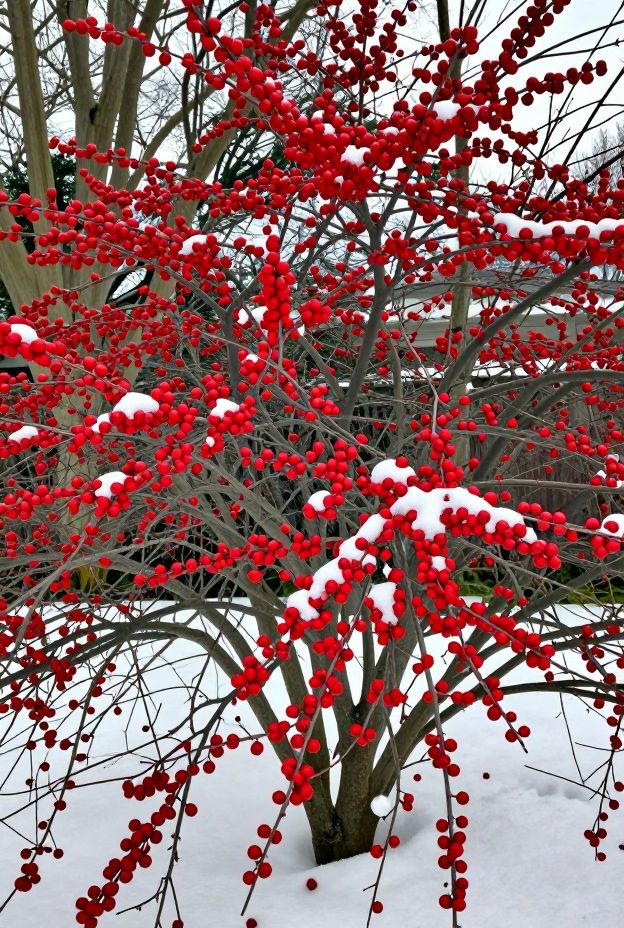
American highbush cranberry holds onto its vibrant red berries until late winter because they get sweeter as temperatures drop. Pyracantha offers clusters of orange to red berries that create stunning displays against evergreen foliage.
FYI, these plants do double duty by providing food for wildlife when natural sources are scarce. You’ll get more bird activity, which adds even more life to your garden.
7. Create Colorful Winter Containers
Window boxes and planters don’t have to sit empty all winter. I fill mine with mini conifers, colorful stems, and evergreen foliage to create living arrangements that last for months.
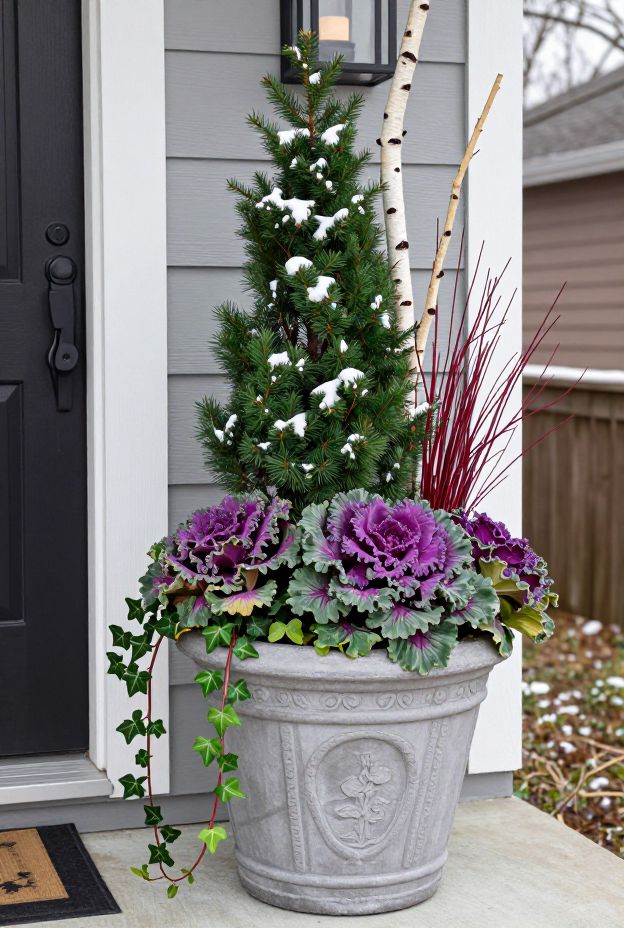
Use frost-resistant containers like fiberglass or heavy-duty plastic. Combine different textures: spiky junipers with trailing ivy, dwarf spruce with coral bells, ornamental kale with evergreen sedges. Add some birch branches or red twig cuttings for height.
These containers frame your entrance and make your home look welcoming even in the dead of winter. You can even tuck in some early-blooming bulbs that’ll surprise you come late winter.
8. Use Strategic Landscape Lighting
This is where you can get really creative. Winter means more darkness, but that just gives you more opportunities to show off your landscape with lighting. Uplighting a tree with interesting bark creates dramatic shadows and highlights texture.
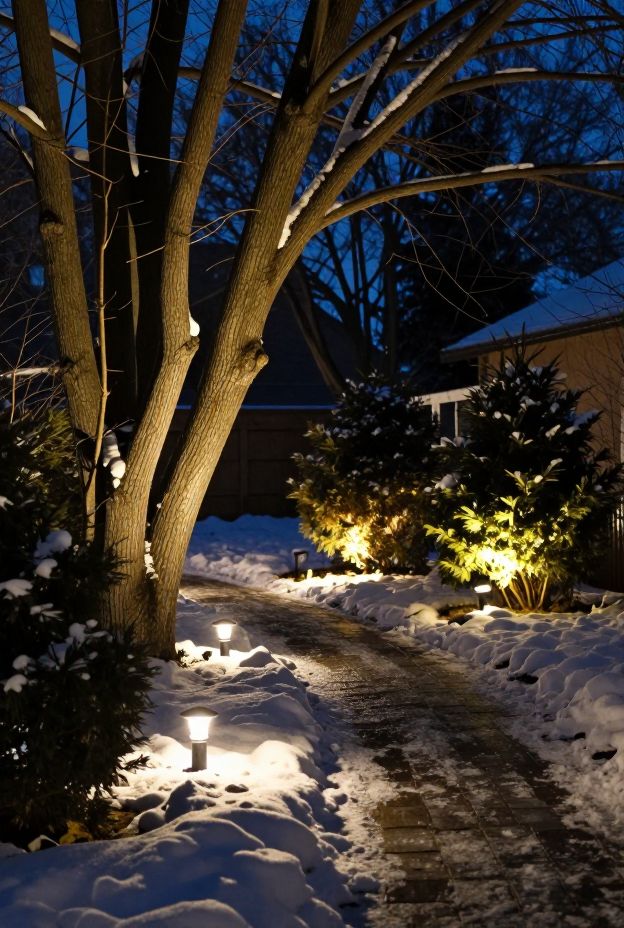
String solar lights through evergreen shrubs or wrap them around branches for a magical glow. Spotlight your colorful stem shrubs so they shine at night. Path lights keep walkways safe while adding ambient warmth.
I’m obsessed with how lighting transforms the garden into something completely different after dark. It’s like having two gardens in one.
9. Plant Colorful Conifers
Not all evergreens are boring dark green. Blue spruce adds silvery-blue tones that stand out beautifully, especially against snow. Golden varieties of juniper, cypress, and arborvitae bring warm yellow-green shades to the winter palette.
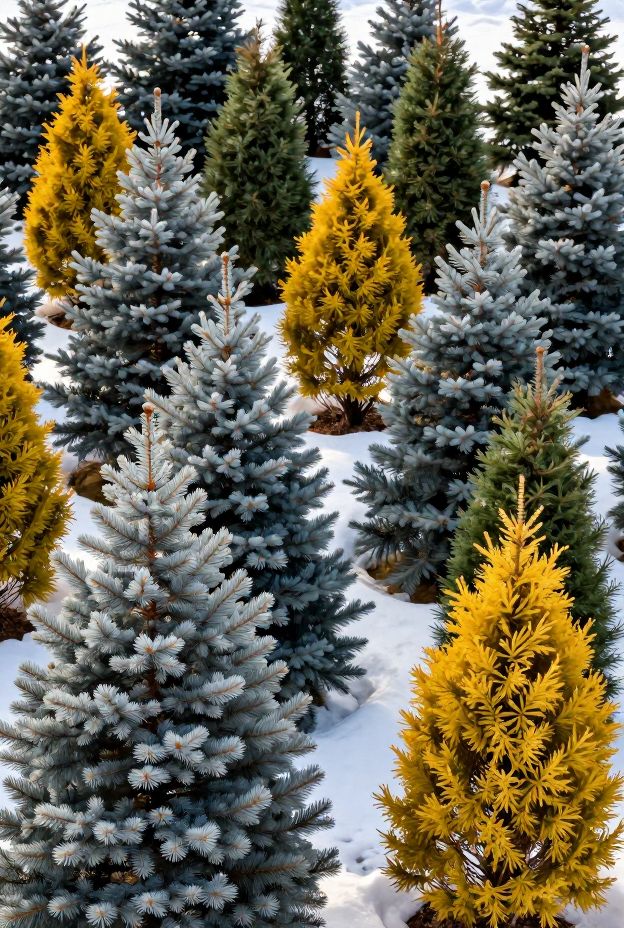
I planted a ‘Soft Serve’ false cypress that looks like a soft-serve ice cream cone (hence the name) with its twisted golden foliage. It’s weird and wonderful and totally eye-catching.
Mix these colored varieties with traditional green evergreens to create contrast and visual interest. Your landscape becomes a tapestry of colors rather than just different shades of green.
10. Leave Dried Hydrangea Blooms
Those big, showy hydrangea flowers don’t have to be deadheaded in fall. Panicle hydrangeas like ‘Limelight’ or ‘Fire Light’ have sturdy stems that hold up dried blooms all winter long. They age into beautiful papery flowers in shades of pink, tan, and burgundy.
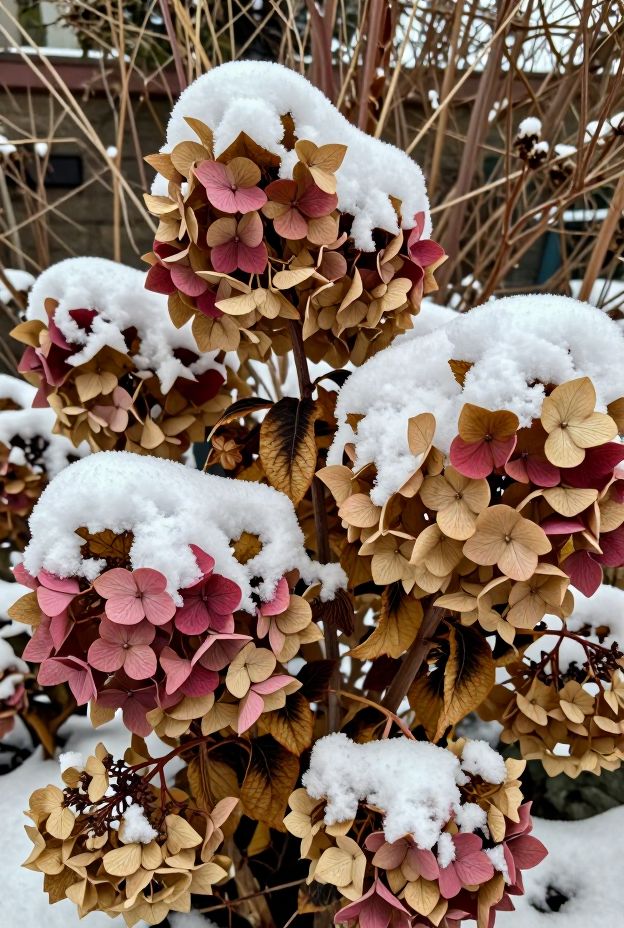
When snow caps these dried blooms, it looks like nature made frosted art installations just for you. Plus, the flower heads provide texture and structure when most perennials have disappeared underground.
Cut them back in early spring before new growth starts. Until then, let them work their winter magic.
11. Refresh Your Mulch
I know, I know. Mulch sounds boring, right? But hear me out. Fresh dark mulch in late fall makes everything else pop against it. Your evergreens look greener, your stems look brighter, and your whole landscape looks more polished.
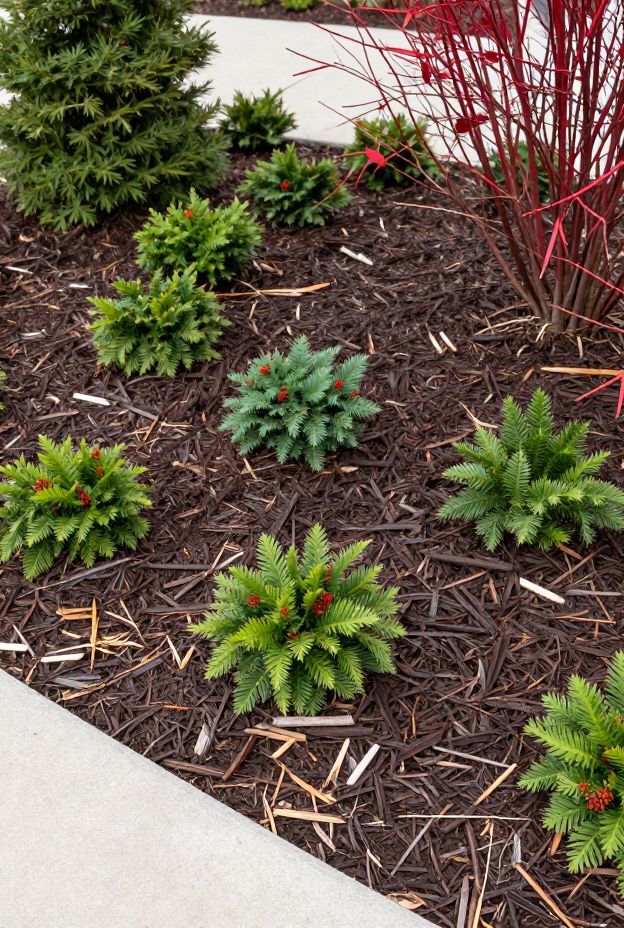
A 2-3 inch layer also protects plant roots from freeze-thaw cycles and retains moisture. Choose dark brown or black mulch for maximum contrast. The difference is subtle but really effective.
It’s such a simple upgrade that makes your whole yard look more intentional and well-maintained. Sometimes the smallest details have the biggest impact.
12. Plant Boxwood for Classic Structure
Boxwood is the workhorse of winter landscapes. ‘Green Velvet’ and ‘North Star’ varieties hold their emerald color beautifully through cold months and provide crisp architectural form. They’re cold hardy, pest resistant, and incredibly versatile.
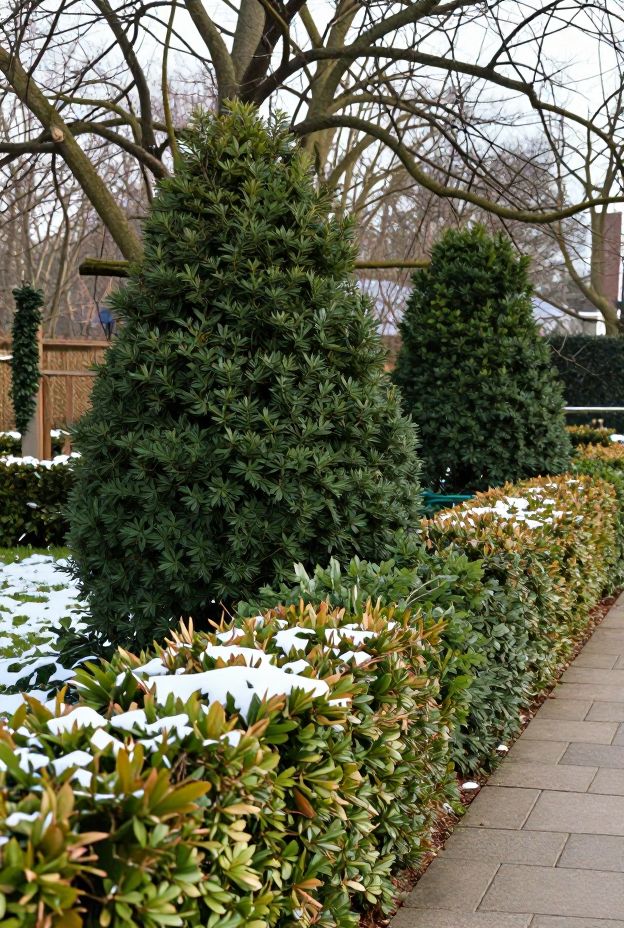
Use them for hedges, as foundation plants, or as specimens in containers. They provide that formal garden look even when everything around them is dormant. IMO, every winter landscape needs at least a few boxwoods anchoring the design.
These shrubs maintain their shape well and require minimal pruning. They’re the low-maintenance overachievers of the plant world.
13. Pair Cool and Warm Colors
Here’s a design trick that elevates your winter landscape: contrast cool-toned evergreens with warm-toned elements. Blue-green conifers look stunning next to red twig dogwood. Silvery artemisia or lamb’s ear pairs beautifully with golden grasses or amber bark.
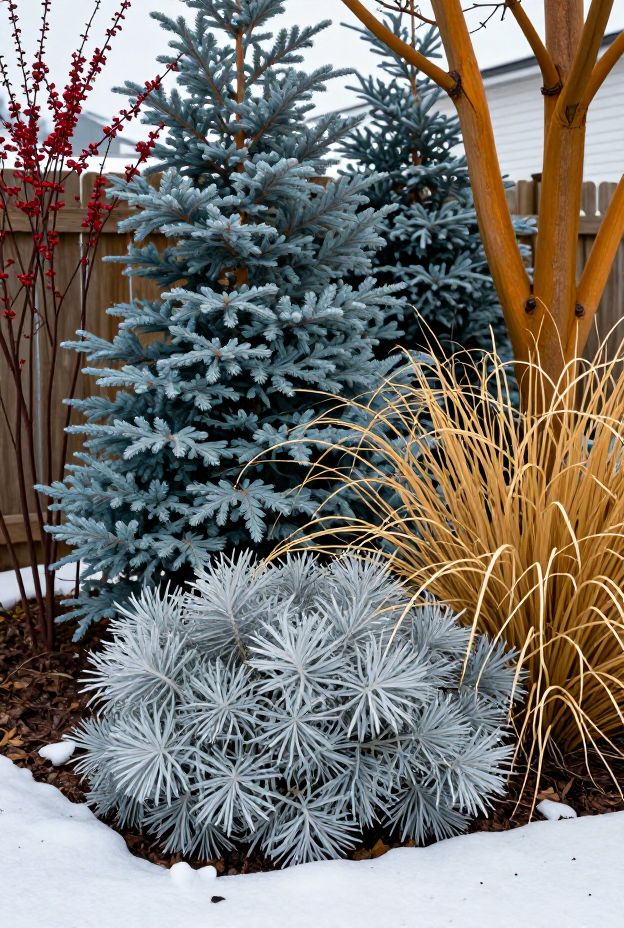
This color temperature contrast makes everything stand out more, especially when winter light goes flat and gray. Your plants won’t just blend into the background anymore. They’ll actually command attention.
Think about how these colors interact when you’re planning placements. A little intentional pairing goes a long way toward creating a winter landscape that looks professionally designed.
Winter gardening is all about celebrating what thrives in cold weather rather than mourning what’s gone dormant. With these 13 ideas, your yard will stay colorful, interesting, and beautiful even when temperatures drop. Your neighbors might actually ask if you hired a landscape designer (you can just smile and keep your secrets :). Now get out there and start planning your winter wonderland!