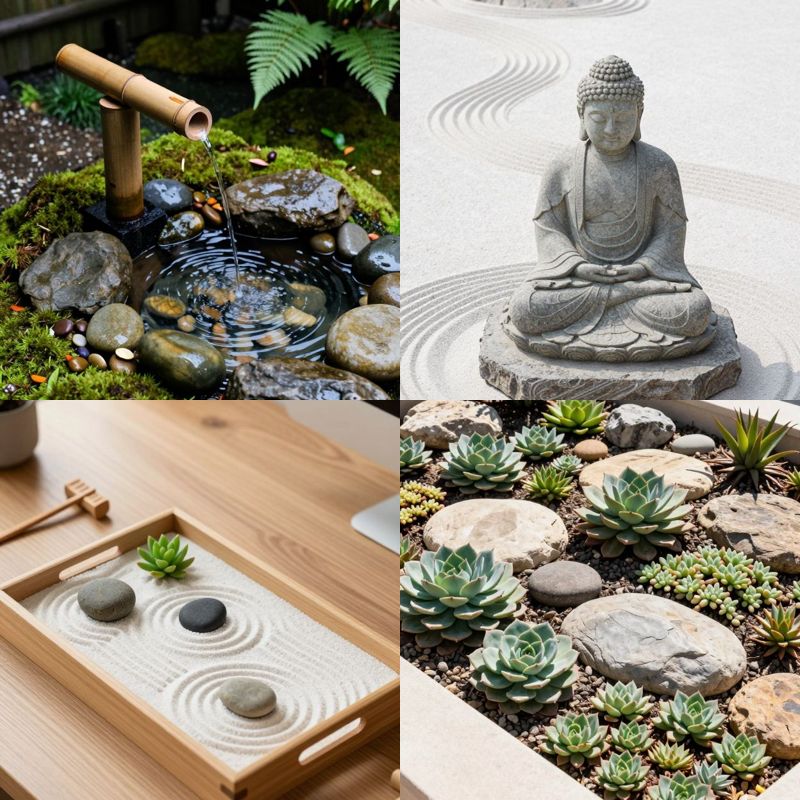
I’ll be honest with you—life’s chaos can feel overwhelming sometimes. Between work deadlines, endless notifications, and that never-ending mental to-do list, finding peace seems like a luxury we can’t afford. But here’s the thing: creating a zen garden for meditation doesn’t require a massive backyard or a fortune. I’ve experimented with various setups over the years, and trust me, even the smallest corner can become your personal sanctuary. Ready to transform your space into a mindfulness haven? Let’s explore some seriously calming zen garden ideas that actually work.
1. The Classic Rock and Gravel Garden
You can’t talk about zen gardens without mentioning the OG design—rocks and gravel. This traditional Japanese karesansui (dry landscape) uses carefully placed stones and raked gravel patterns to represent water and islands. The act of raking itself becomes a meditative practice, which is honestly pretty genius when you think about it.
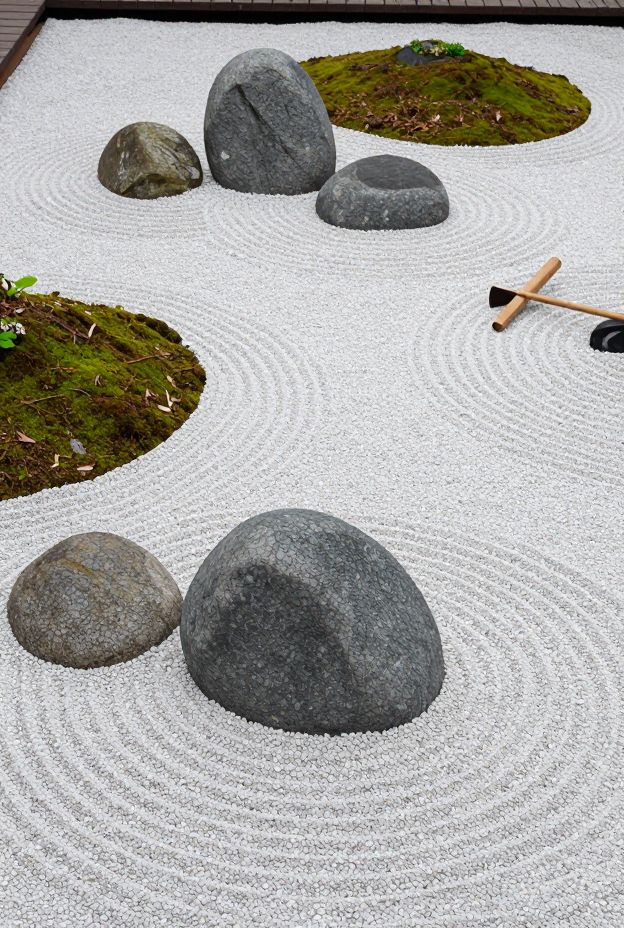
I set up my first rock garden in a wooden tray on my balcony, and the repetitive motion of creating patterns in the sand instantly cleared my head. It’s like adult coloring books but way more Zen. The key here is choosing the right rocks—go for smooth river stones or weathered granite that speak to you aesthetically.
For your space, consider these elements:
- Fine white or grey gravel for the base (easier to rake than sand)
- 3-5 larger rocks positioned asymmetrically
- A small wooden rake for creating patterns
- Optional moss accents around the stones for contrast
2. Miniature Tabletop Zen Garden
Don’t have outdoor space? No problem. A miniature tabletop zen garden fits perfectly on your desk, windowsill, or meditation corner. These compact versions deliver the same calming benefits without requiring any serious commitment or space.
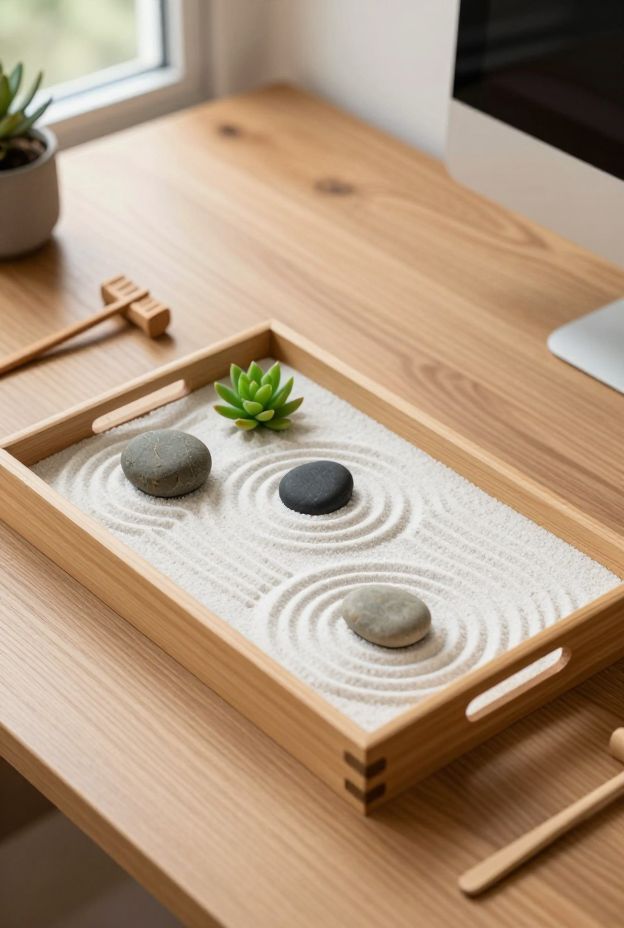
I keep one next to my laptop, and whenever I feel stressed (which, let’s be real, is often), I spend five minutes creating new patterns. It’s become my go-to stress reliever during tight deadlines. You can buy pre-made kits or DIY your own using a shallow wooden tray, play sand, and small decorative elements.
Here’s what makes them perfect:
- Portable and space-efficient
- Low maintenance (literally just rake it)
- Affordable to create or purchase
- Instant meditation tool during work breaks
3. Water Feature Zen Garden
Ever noticed how the sound of flowing water instantly relaxes you? Adding a small fountain or water basin to your zen garden creates that soothing auditory element that masks background noise and enhances meditation. IMO, this is one of the best investments you can make for a mindfulness space.
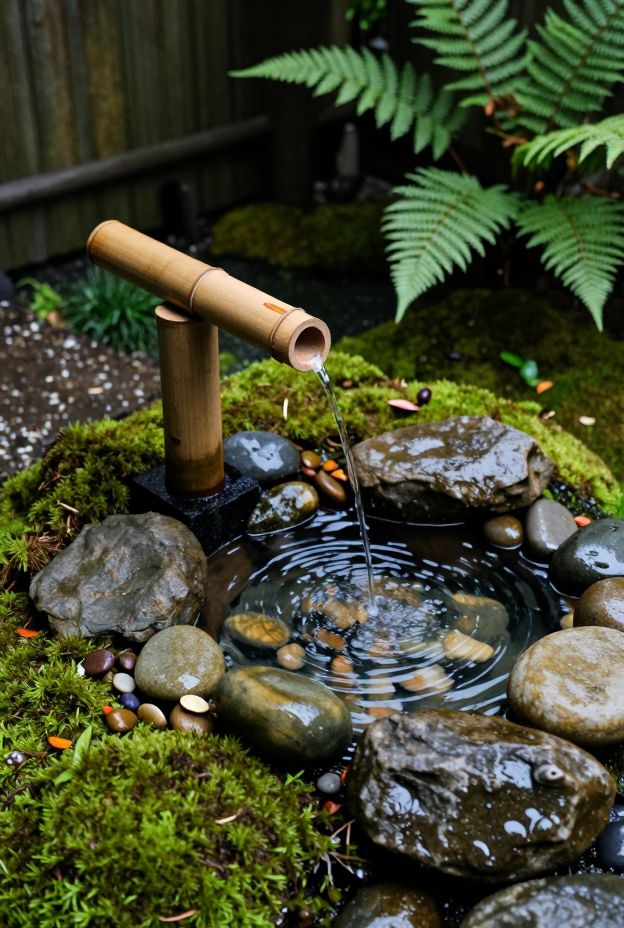
I installed a simple bamboo fountain in my garden corner, and the gentle trickling sound transformed the entire atmosphere. The water element also attracts birds, adding another layer of natural ambiance. Just make sure you have access to electricity for the pump, or opt for solar-powered versions.
Consider these water feature options:
- Bamboo spout fountains (tsukubai style)
- Stone basin water features
- Small cascading waterfalls
- Reflecting pools with floating candles
4. Moss Garden Meditation Path
Moss is ridiculously underrated in garden design. A soft moss garden with stepping stones creates a lush, green meditation path that feels almost otherworldly. Walking barefoot on moss? Pure bliss. It’s like nature’s carpet, except way cooler.
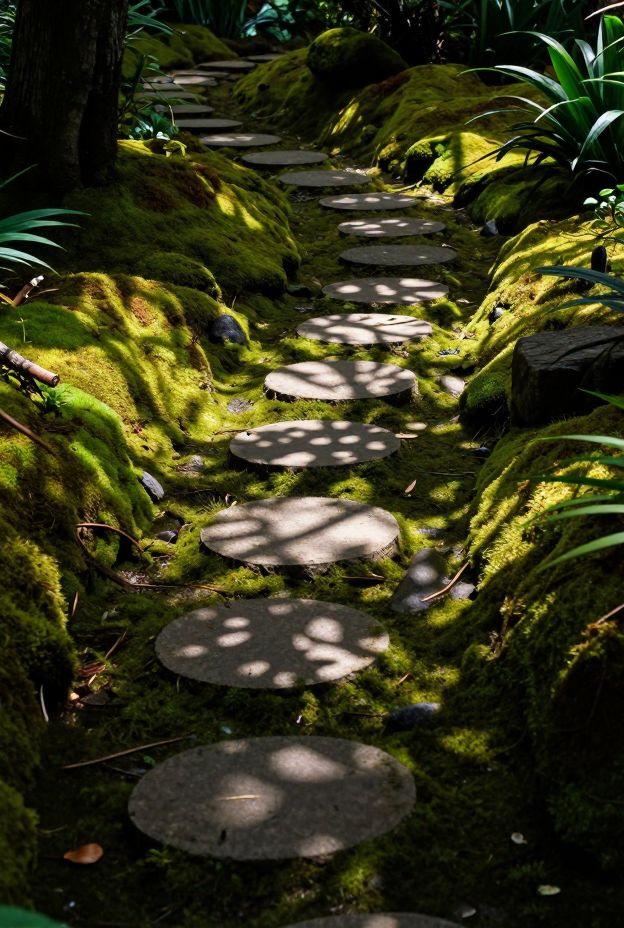
Creating a moss garden requires patience (it takes time to establish), but the results are worth it. I started small with a shaded corner, and now it’s my favorite spot for walking meditation. The soft texture and vibrant green color have this calming effect that’s hard to explain until you experience it yourself.
Tips for growing moss successfully:
- Choose shaded areas with consistent moisture
- Start with native moss varieties for easier maintenance
- Mist regularly until established
- Add flat stepping stones for a meditative walking path
5. Bamboo Grove Sanctuary
Want to feel like you’re in a secluded Asian forest? Plant some bamboo as a natural privacy screen and sound buffer. The gentle rustling of bamboo leaves creates white noise that’s perfect for meditation. Plus, bamboo grows fast, so you’ll have a mature grove before you know it.
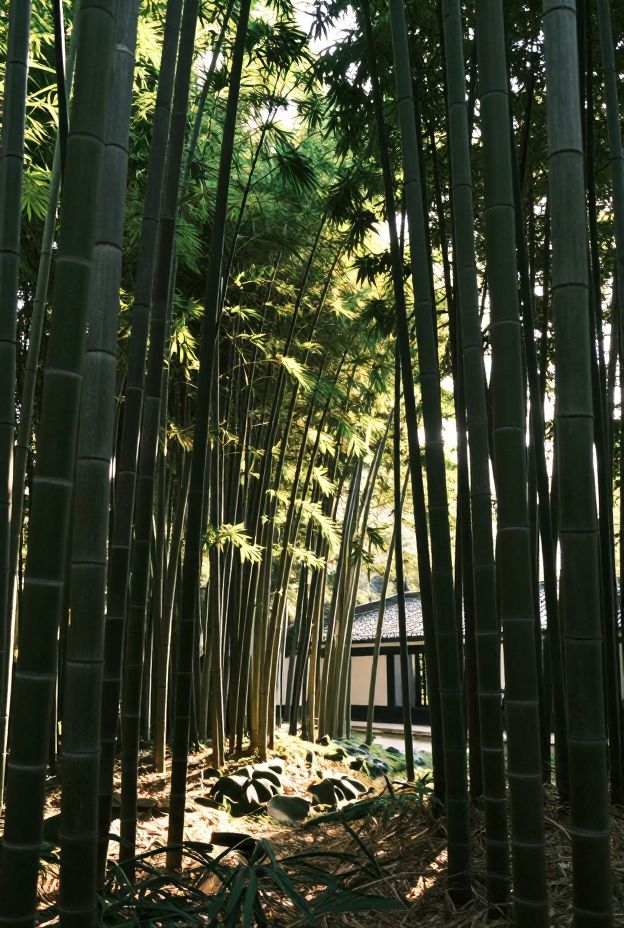
I planted clumping bamboo (not the invasive running kind—learn from other people’s mistakes :/) along my fence line, and it transformed my boring backyard into a private retreat. The vertical lines of bamboo stalks also add visual interest and create natural boundaries for your meditation space.
Bamboo Selection Guide
- Clumping varieties only (unless you enjoy endless bamboo removal)
- Black bamboo for dramatic visual impact
- Golden bamboo for bright, cheerful vibes
- Container planting if ground space is limited
6. Stone Lantern Focal Point
A traditional Japanese stone lantern (tōrō) serves as both a sculptural focal point and symbolic light source in your zen garden. These lanterns represent enlightenment in Buddhist tradition, making them perfect for meditation spaces. Are they necessary? No. Do they elevate the entire aesthetic? Absolutely.
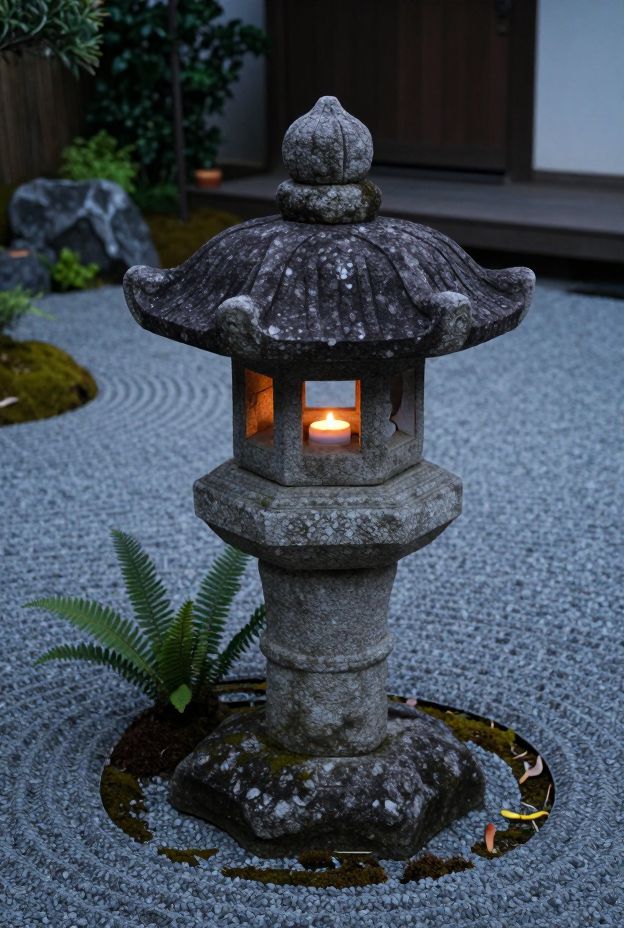
I positioned a granite lantern at the end of my meditation path, and it naturally draws the eye, creating a destination for contemplative walks. You can place a small candle or LED light inside for evening meditation sessions, adding a warm, peaceful glow.
Placement considerations:
- Position near water features or at path intersections
- Choose granite or concrete for weather resistance
- Consider height relative to surrounding plants
- Create a gravel base for stability
7. Raked Gravel Circle Mandala
Here’s something different: instead of traditional linear raking patterns, create circular mandala designs in your gravel. The circular motion of raking from center outward becomes a moving meditation itself, and the resulting patterns are visually stunning.
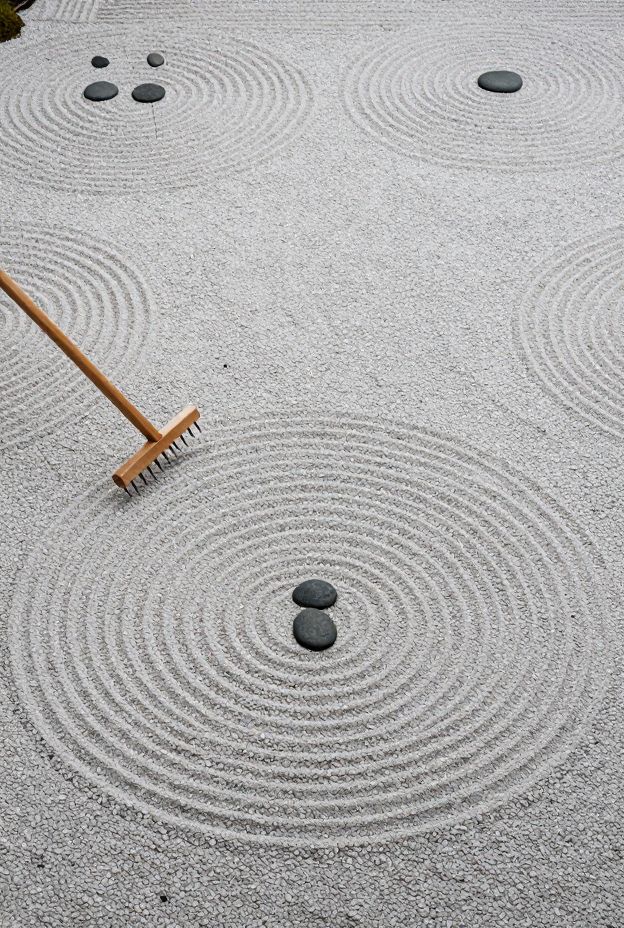
I dedicate about 15 minutes each morning to creating new mandala patterns, and it’s become my favorite ritual. There’s something therapeutic about the repetitive circular motion—it quiets mental chatter better than almost anything else I’ve tried. Each day brings a new design, and honestly, that impermanence is part of the beauty.
8. Bonsai Tree Collection Display
Bonsai trees embody patience, care, and mindfulness—everything a meditation practice represents. Creating a dedicated bonsai display area within your zen garden adds living art that requires daily attention and nurturing. It’s meditative maintenance, if that makes sense.
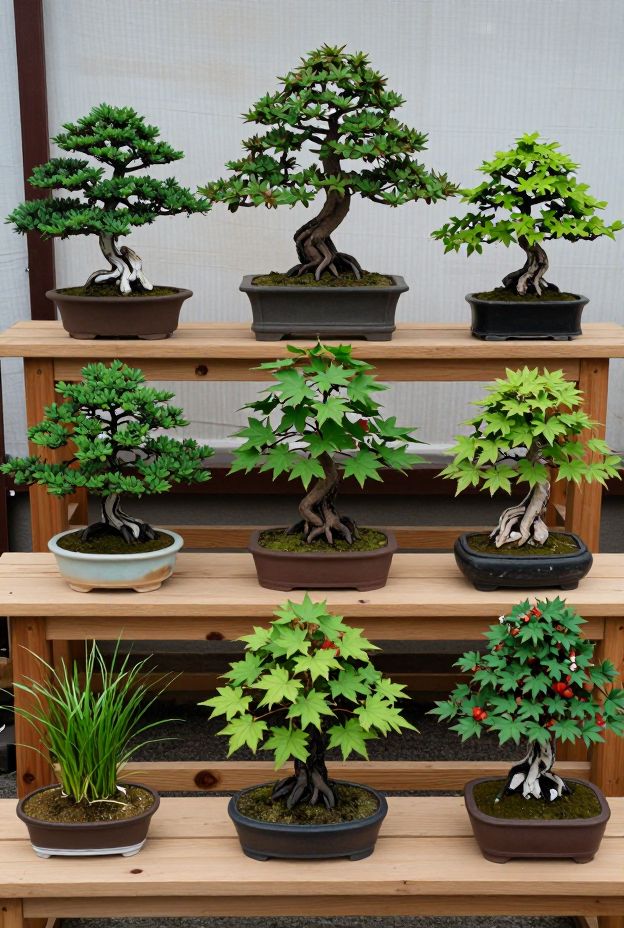
I started with one juniper bonsai and now have five trees on custom-built shelves. Pruning, wiring, and watering my bonsai collection forces me to slow down and be present. Plus, they’re conversation starters when guests visit (though let’s be real, zen gardens aren’t about impressing others).
Bonsai display tips:
- Use wooden benches or stone platforms for elevation
- Group odd numbers (3, 5, 7) for visual balance
- Mix deciduous and evergreen varieties
- Include accent plants like small ferns or grasses
9. Sand Garden with Buddha Statue
A weathered Buddha statue surrounded by raked sand creates an instant meditation focal point. The statue serves as a visual anchor during seated meditation, helping maintain focus when your mind starts wandering (which, let’s face it, happens to everyone).
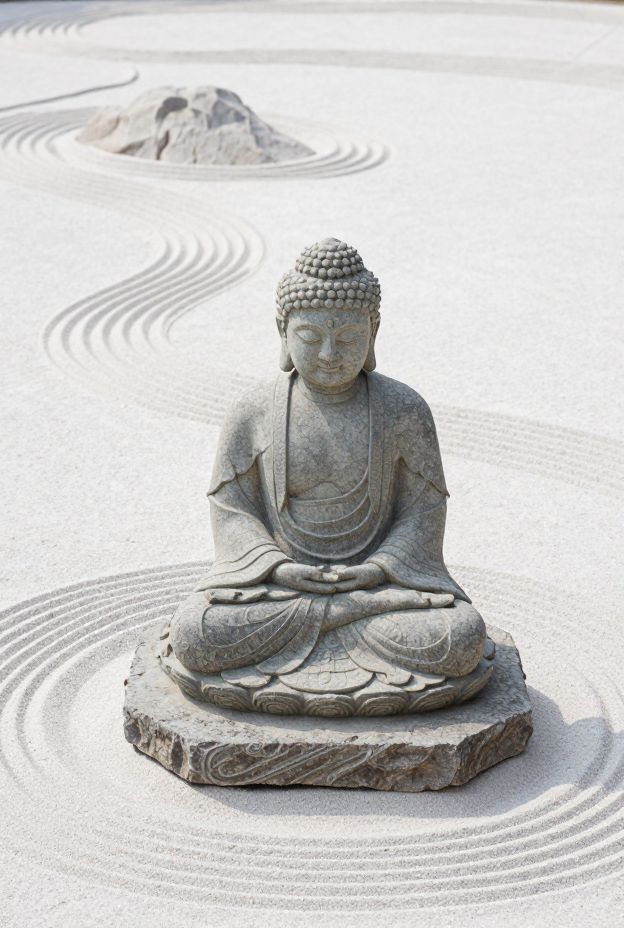
I chose a sitting Buddha in the meditation pose for my sand garden, positioning it on a slightly elevated stone platform. The surrounding raked patterns flow around the statue like water, creating movement and stillness simultaneously. FYI, the statue doesn’t need to be expensive—I found mine at a garden center for under $50.
10. Enclosed Courtyard Garden
If you’re serious about creating a dedicated meditation space, consider an enclosed courtyard design with walls or tall hedges. This setup eliminates visual distractions and creates a private sanctuary that feels completely separate from the outside world.
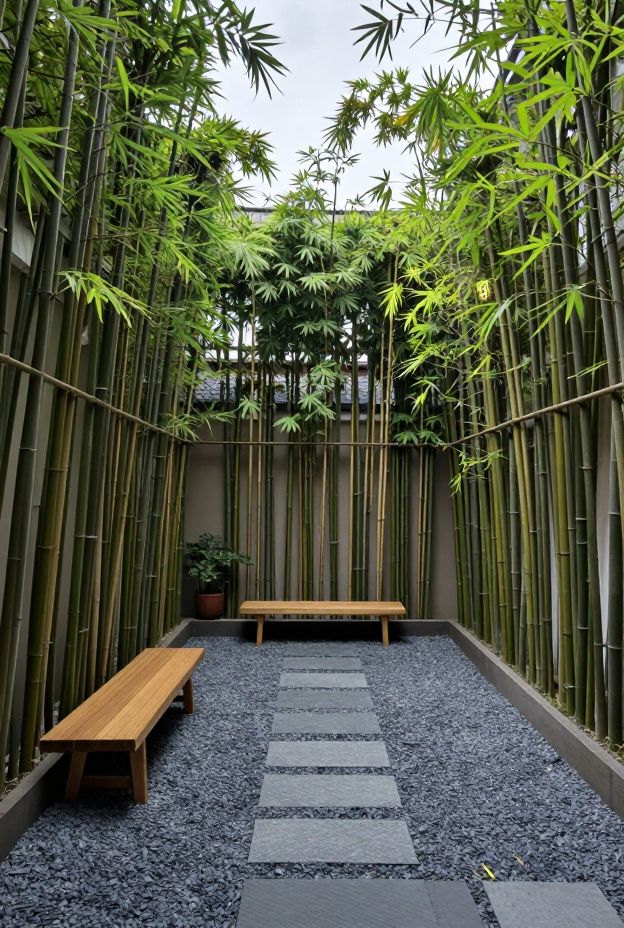
My friend converted her side yard into an enclosed zen courtyard, and the transformation is incredible. High bamboo fencing blocks neighboring views, while strategically placed mirrors reflect sky and greenery, making the small space feel larger. She added a simple seating area, some potted plants, and gravel pathways—that’s it. Sometimes less really is more.
Design elements for enclosed spaces:
- Privacy screening (fencing, hedges, or bamboo)
- Single entrance/exit for intentional transitions
- Minimal color palette (greens, greys, whites)
- Comfortable seating for extended meditation
11. Low-Maintenance Succulent Rock Garden
Not everyone has time for high-maintenance gardens (guilty here). A zen garden featuring succulents and rocks delivers aesthetic beauty and mindfulness benefits without demanding constant attention. These drought-tolerant plants practically take care of themselves.
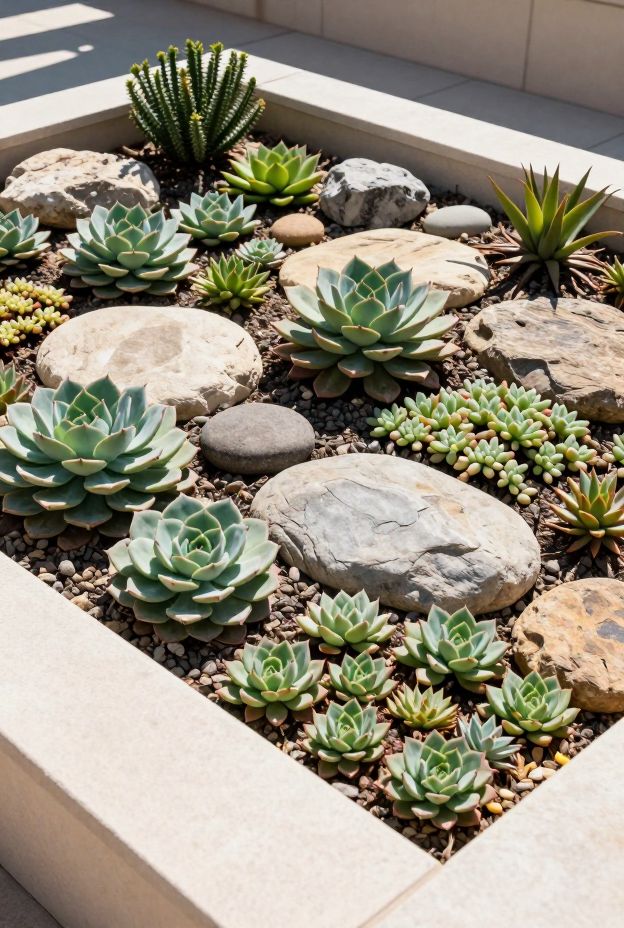
I arranged various succulent varieties among smooth river rocks in a raised bed, creating layers of texture and form. The geometric patterns of succulent rosettes echo the careful arrangement of traditional zen gardens, while requiring maybe 30 minutes of maintenance monthly. Perfect for busy people who still want a meditation space.
Best succulents for zen gardens:
- Echeveria varieties for rosette shapes
- Sedum ground covers for texture
- Aloe plants for vertical interest
- Jade plants for bonsai-like structure
Conclusion
Creating a zen garden for meditation doesn’t require perfection—it requires intention. Whether you start with a simple tabletop tray or transform your entire backyard, the process itself becomes part of your mindfulness practice. I’ve found that even spending 10 minutes arranging rocks or raking patterns shifts my mental state dramatically.
Remember, your zen garden should reflect your personal meditation style and available space. Start small, experiment with different elements, and don’t stress about following traditional rules exactly. The goal is creating a space that helps you find calm in daily chaos. What’s stopping you from starting today? Even one small zen element can make a difference. 🙂
Now go create that peaceful sanctuary you deserve—your future, more relaxed self will thank you.