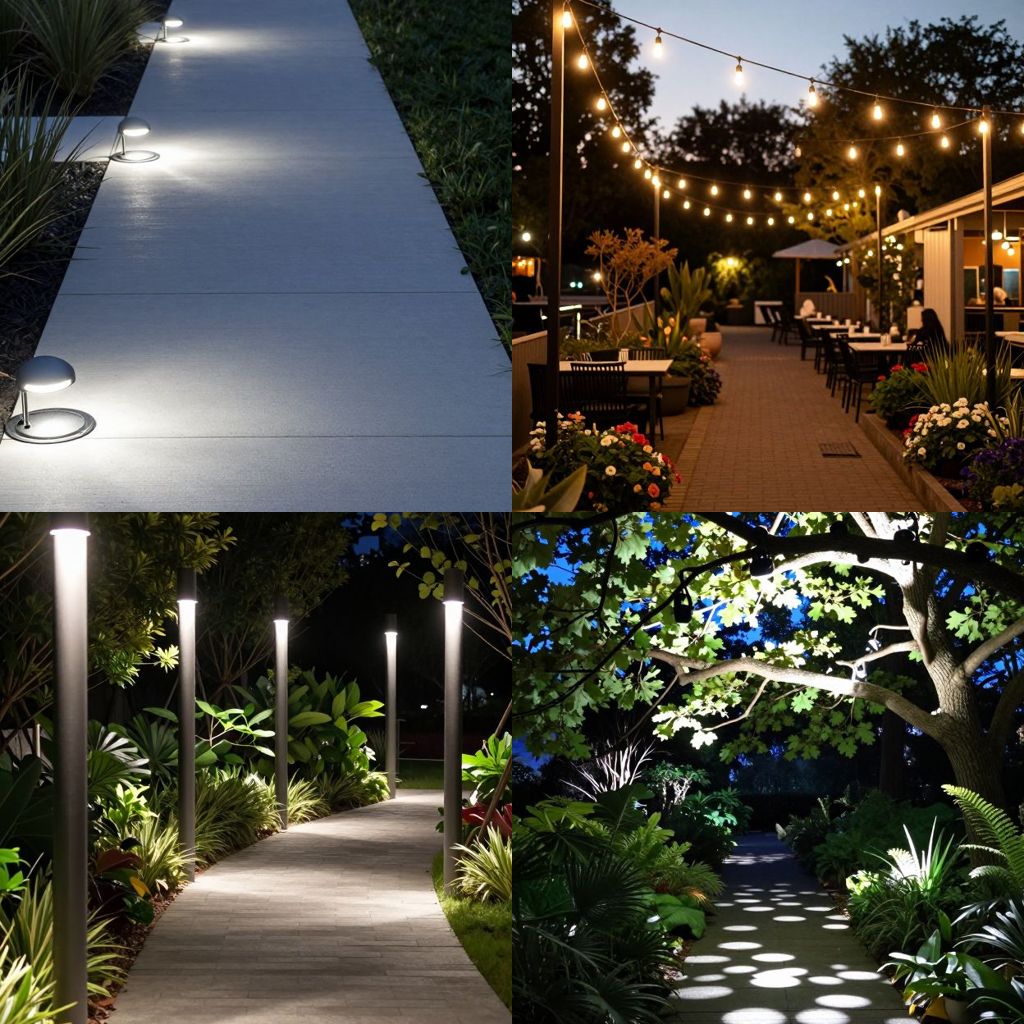
Ever stumbled through your garden at night, phone flashlight in hand, trying not to trip over that random rock? Yeah, me too. Pathway lighting transforms those treacherous midnight walks into something actually pleasant. I started experimenting with different lighting styles a few years back, and honestly, the right setup changes everything about how you experience your outdoor space after sunset.
Whether you want something subtle or a bit more dramatic, there’s a pathway lighting solution that fits your vibe. Let’s talk about 11 ideas that actually work.
1. Solar Stake Lights for the Budget-Conscious
Solar stake lights are basically the gateway drug of pathway lighting. You stick them in the ground, the sun does its thing during the day, and boom – you’ve got light at night without touching your electricity bill.
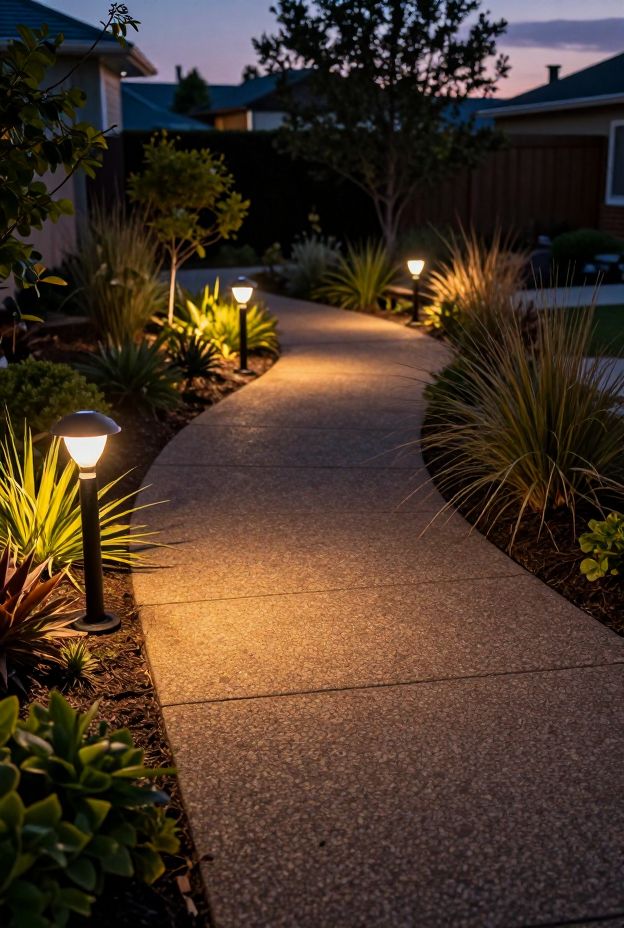
I love how zero-maintenance these things are. No wiring, no electrician bills, just plant them wherever you need light. The technology has come a long way too – modern solar lights actually stay bright for hours instead of that sad dim glow older models gave off.
The catch? You need decent sunlight exposure during the day. If your pathway is shaded by trees all day, solar might not cut it. But for sunny spots, they’re perfect for beginners who want to test the waters without committing to a full lighting installation.
2. Bollard Lights with a Staggered Layout
Bollard lights are those tall, cylindrical fixtures that look super professional. When you stagger them along your pathway instead of lining them up like soldiers, you create this really cool rhythmic effect that feels intentional and stylish.
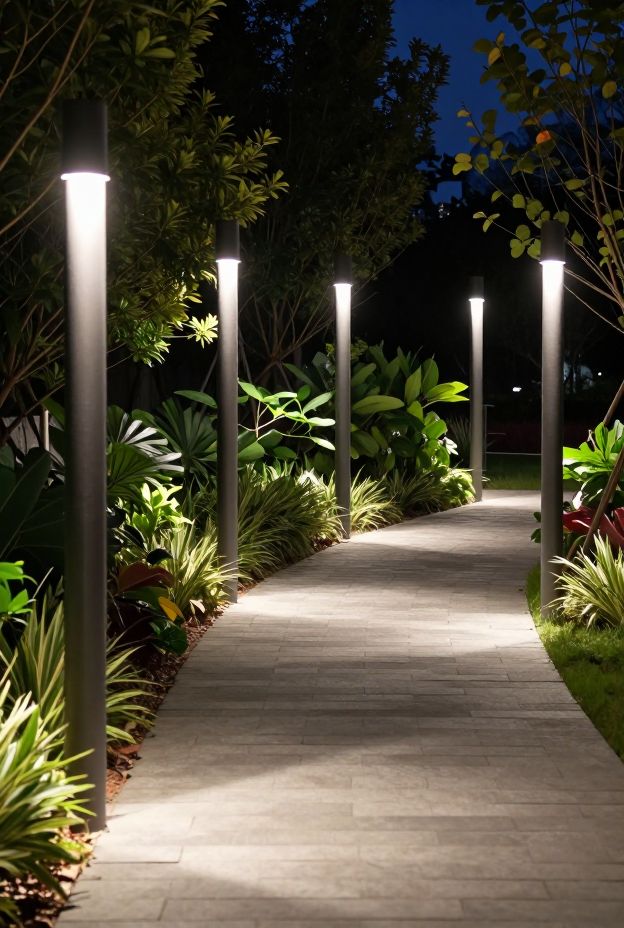
What makes bollards awesome is their 360-degree light distribution. They illuminate the path and the surrounding plants at the same time, which means you’re getting more bang for your buck. Plus, they work with pretty much any design style – modern, rustic, cottage garden, you name it.
I recommend spacing them about 8 feet apart and alternating sides. This prevents that “airport runway” look while still providing plenty of visibility. Trust me, the staggered approach looks way more sophisticated than straight lines.
3. Downlighting from Trees (AKA Moonlighting)
Want to know a secret? Some of the best pathway lighting doesn’t even sit on the ground. Mounting lights high up in trees to shine down creates this gorgeous moonlight effect that feels totally natural.
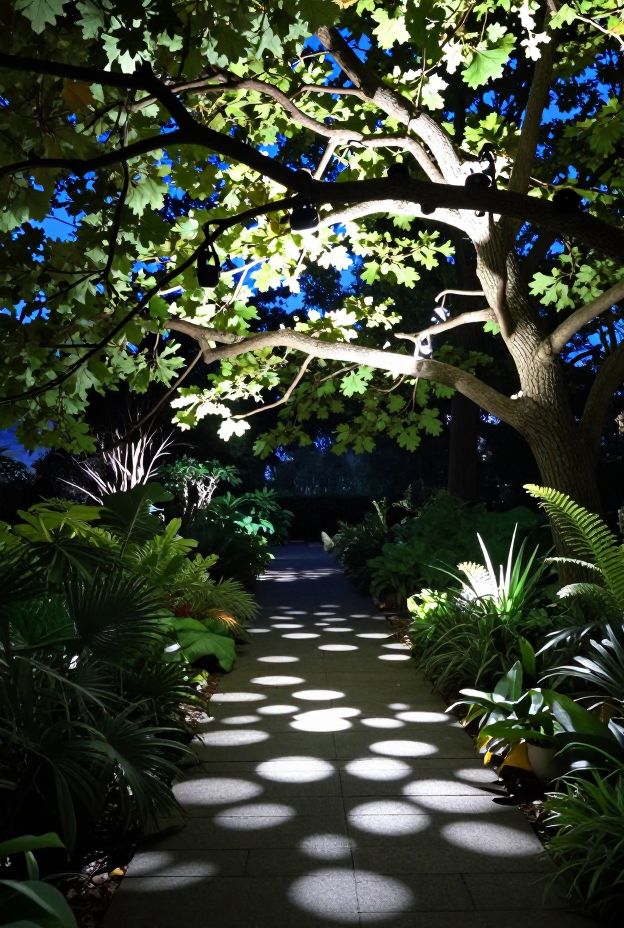
This technique washes light over a wider area than ground-level fixtures. You get softer shadows and a more subtle atmosphere that doesn’t scream “I installed lights everywhere!” The light filters through branches and leaves, creating these beautiful patterns on the path below.
You’ll need trees near your pathway for this to work, obviously. But if you’ve got them, this is IMO one of the most elegant lighting solutions out there. It’s functional without being obvious, which is exactly what good landscape lighting should be.
4. Mushroom Path Lights for Whimsical Vibes
Okay, hear me out – mushroom lights might sound kitschy, but the modern versions are actually pretty chic. These fixtures have a rounded cap that directs light downward, preventing glare while creating focused pools of illumination.
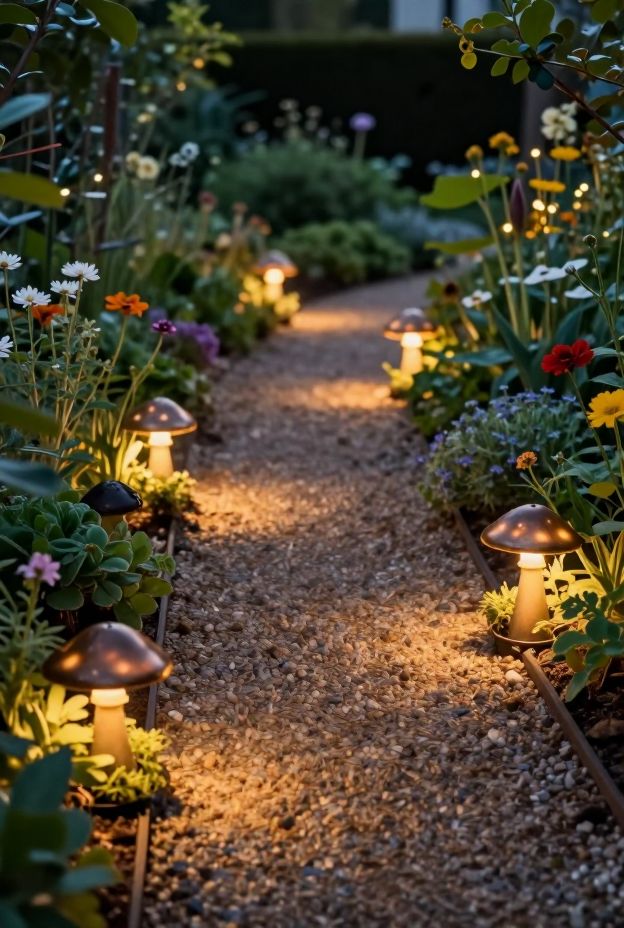
I’ve seen these work beautifully in cottage gardens and naturalistic landscapes. They blend into the scenery during the day and provide just enough light at night without overwhelming the space. The mushroom shape also protects the bulb from weather, which means they last longer.
Choose styles that match your garden’s personality. Sleek metal mushrooms work for modern spaces, while textured or colored ones fit more eclectic designs. They’re also super easy to install – just stake them into the soil and you’re done.
5. In-Ground Flush Lights for Minimalists
If you hate visible fixtures during the day, flush-mount in-ground lights are your answer. These babies sit level with your pathway surface and disappear completely when you’re not using them.
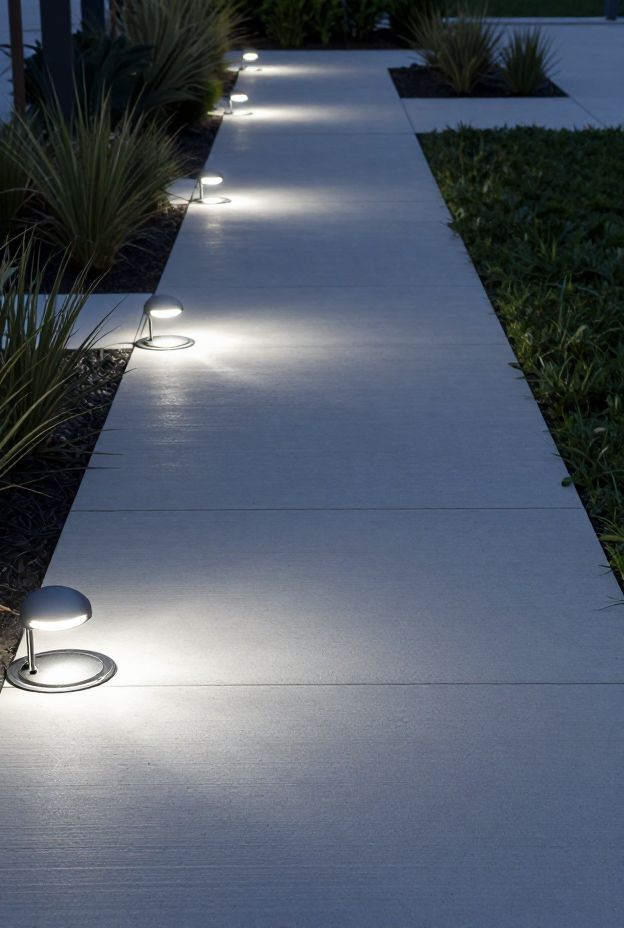
The effect is pretty dramatic. You get these clean lines of light defining your path edges without any fixtures cluttering the view. They work especially well with modern architecture where you want sleek, unobtrusive design.
Installation requires more planning since you need to embed them properly into your hardscape. Make sure you get ones with grated tops to prevent glare and add some texture. FYI, they’re also great for marking steps or transitions between different garden areas.
6. LED Stake Lights for Flexibility
LED stake lights are the workhorses of pathway lighting. You can move them around until you find the perfect spots, and they’re incredibly energy-efficient. I’m talking years of use on minimal power.
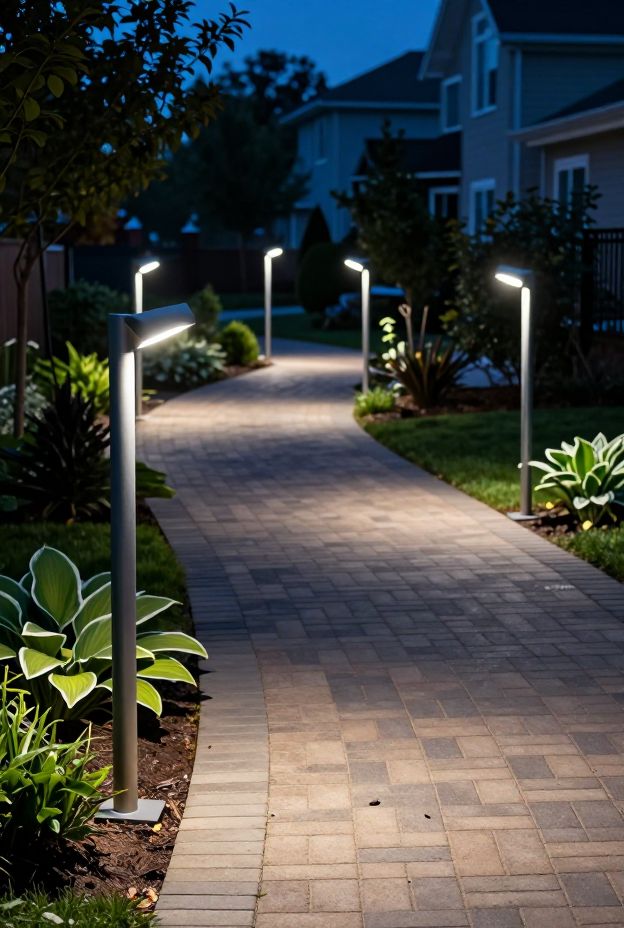
Modern LED stakes come in tons of styles – from sleek contemporary designs to traditional lantern shapes. They provide consistent, bright light that doesn’t flicker or fade over time. The best part? Low heat output means they’re safe around plants and kids.
Look for adjustable models where you can aim the light exactly where you need it. Some even have color temperature options so you can switch between warm and cool tones depending on the season or your mood. Pretty cool, right?
7. Stepping Stone Lights for a Magical Touch
Stepping stone lights are installed directly into or beside your stepping stones, creating this lit pathway effect that looks straight out of a fairy tale. Each stone glows softly, guiding you along like breadcrumbs 🙂
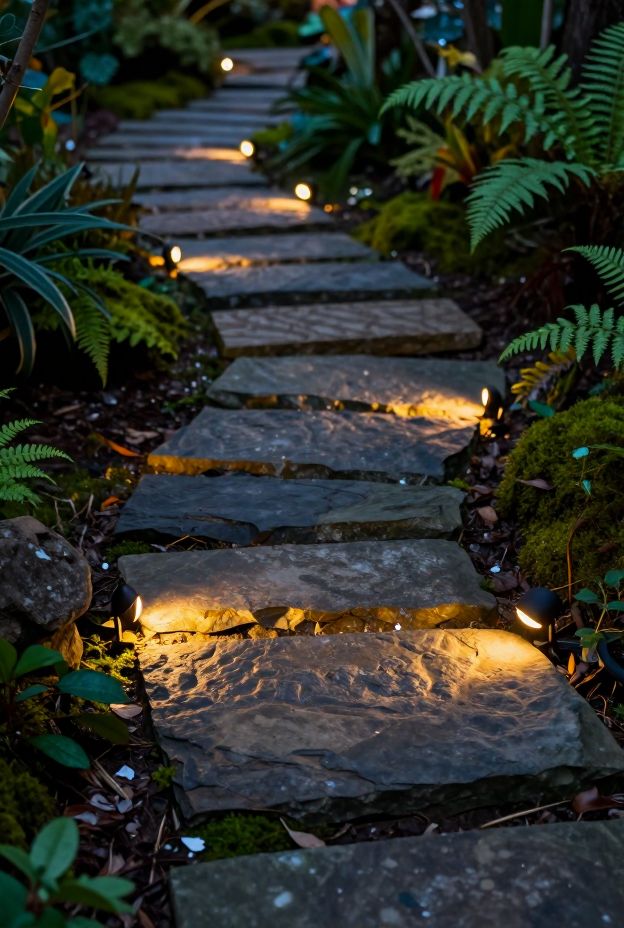
These work best in informal garden settings where you’ve got a meandering path through planted areas. The lights highlight the individual stones while casting a gentle glow on the surrounding ground. It’s functional art, basically.
Installation varies depending on whether you’re building a new path or retrofitting an existing one. Some lights nestle between stones, while others require cutting into the stone itself. Either way, the effect is totally worth the effort for creating an enchanted garden vibe.
8. Wall-Integrated Lighting for Retaining Walls
Got retaining walls along your pathway? Use them! Installing lights directly into the wall face creates downward illumination that lights the path while showcasing the wall’s texture and materials.
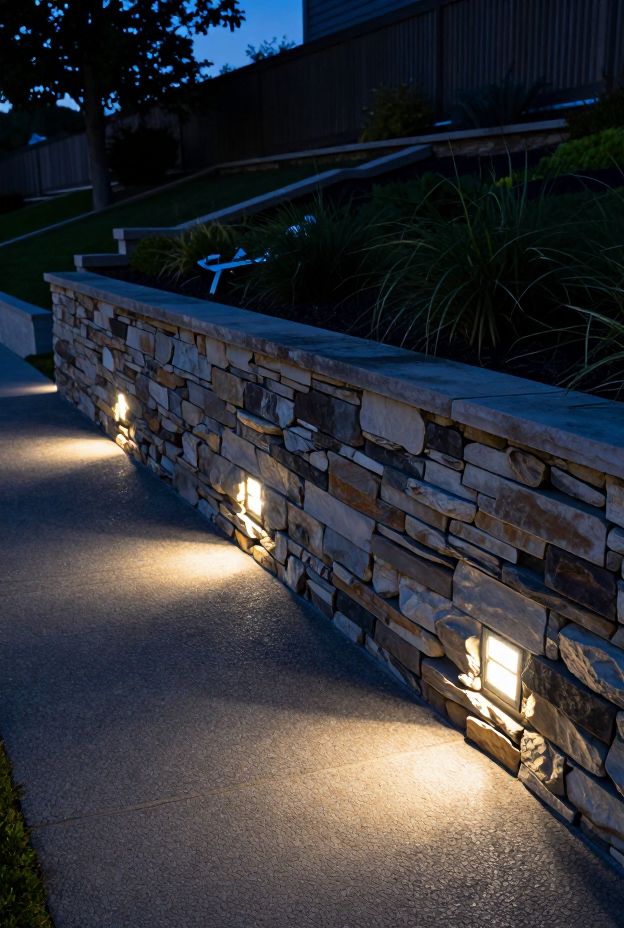
This approach is super practical for sloped properties where retaining walls are already part of the landscape. The lights enhance the stonework or brickwork at night, turning a functional element into a design feature. Plus, they don’t take up any pathway space since they’re mounted vertically.
Space the lights evenly along the wall for consistent coverage. Choose fixtures that complement your wall material – bronze for stone, black for brick, or stainless for concrete. The light will wash down and create these beautiful shadow patterns that change with the texture of your wall.
9. Motion-Sensor Pathway Lights for Smart Efficiency
Why light an empty path? Motion-sensor lights activate only when someone walks by, saving energy and adding a security bonus. They’re perfect if you don’t use your pathways constantly but want light when you need it.
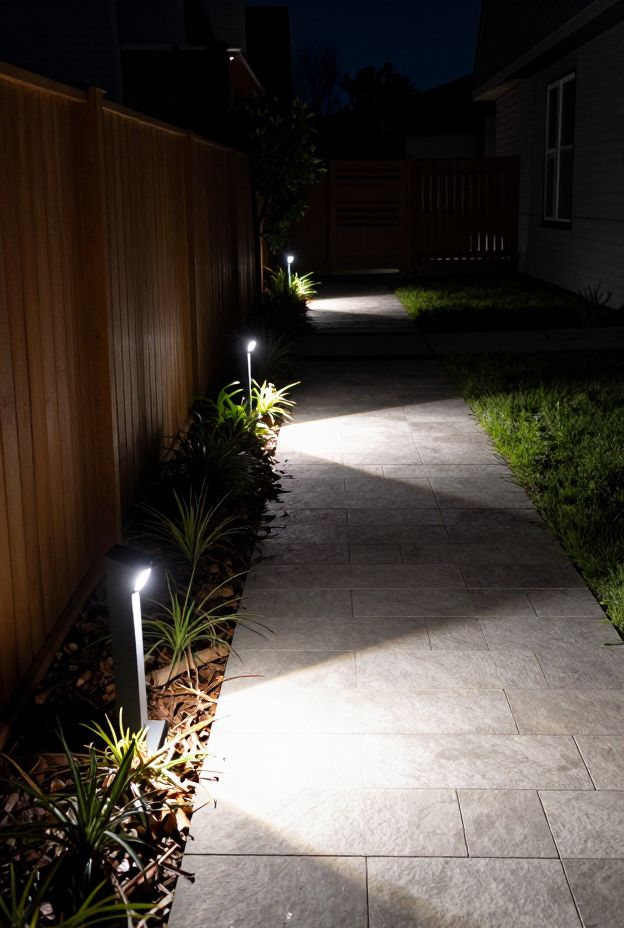
Modern motion sensors have come a long way – they’re sensitive enough to catch movement but smart enough not to trigger with every leaf that blows by. Some even adjust brightness, giving you a dim glow normally and full brightness when activated.
I particularly like these for side yards or less-used garden paths. The sudden illumination guides you safely while alerting you to any unexpected visitors (the two-legged or four-legged kind). Just make sure to adjust the sensitivity so you’re not constantly triggering them yourself.
10. String Lights for Casual Overhead Glow
Who says pathway lighting has to come from below? Stringing cafe-style lights overhead creates this festive, relaxed atmosphere that makes evening walks feel like a special occasion.
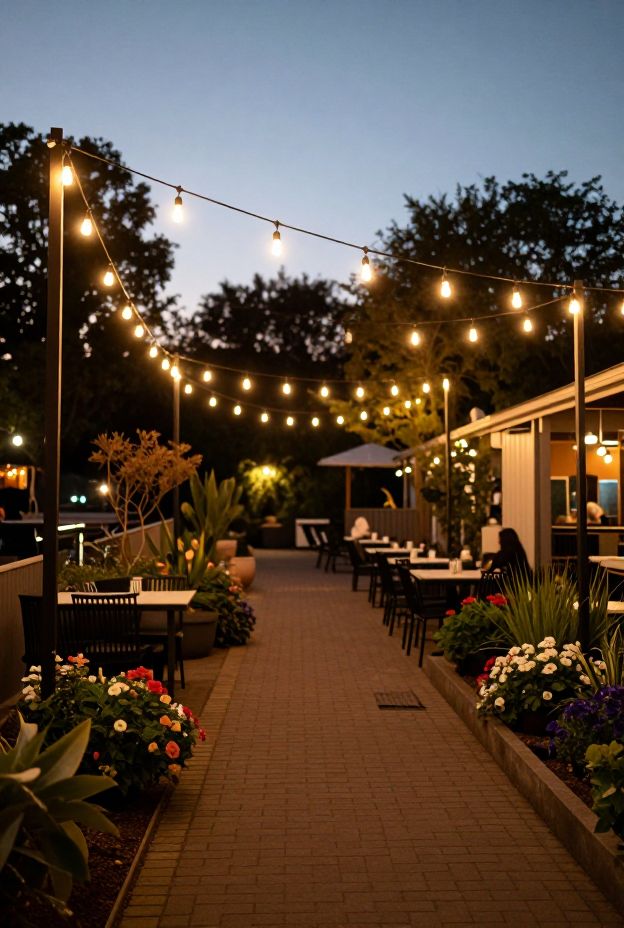
This works great for pathways that run through entertaining areas or connect different parts of your outdoor living space. The overhead position provides ambient lighting rather than focused illumination, so you might want to combine them with some ground-level lights for safety.
Choose weather-resistant commercial-grade strings instead of those cheap indoor versions. The investment pays off when your lights survive wind, rain, and sun exposure year after year. Edison bulbs give a vintage vibe, while globe lights feel more contemporary – pick whatever matches your outdoor style.
11. Lantern-Style Path Lights for Traditional Charm
Sometimes you want lighting that makes a statement. Lantern-style fixtures bring old-world charm to pathways while providing plenty of practical illumination. Think colonial, Victorian, or craftsman-inspired designs that add character.
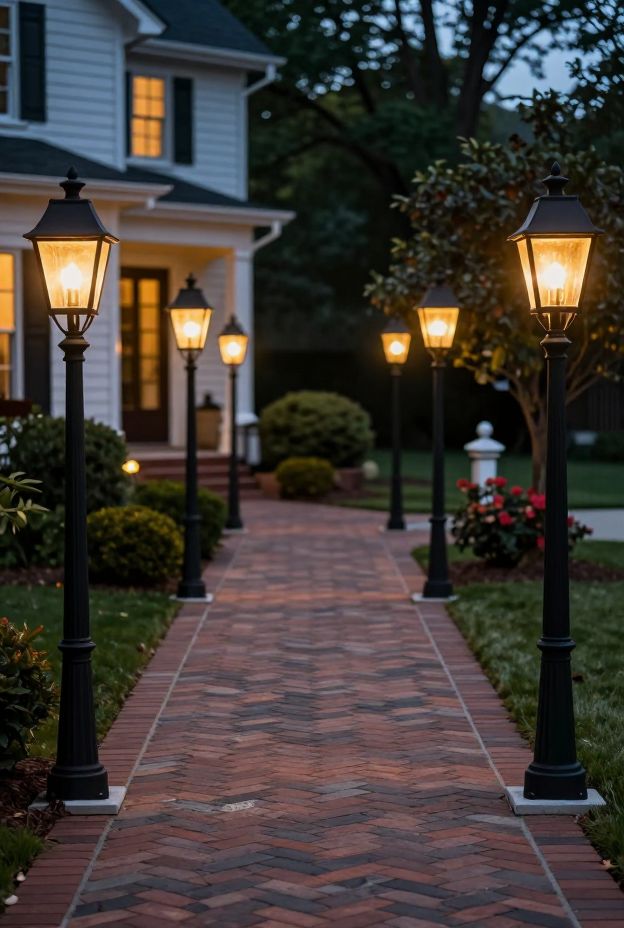
These fixtures typically stand taller than standard path lights, giving them more presence in your landscape. The housing protects the bulb while creating interesting shadow patterns through decorative panels or glass. They work beautifully for formal gardens or homes with traditional architecture.
You can find lantern styles in various heights and finishes. Match the finish to other outdoor fixtures – if your house lights are black, stick with black lanterns. For a cohesive look, use the same style throughout your property instead of mixing and matching different lantern designs.
Lighting Your Way Forward
Pathway lighting isn’t just about avoiding twisted ankles in the dark (though that’s definitely a perk). The right lights transform your garden into a space you actually want to use after sunset. Whether you go minimal with flush lights or whimsical with mushroom fixtures, the key is choosing something that fits your style and actually serves your needs.
Start with one section of pathway and experiment. You can always add more lights or switch up styles as you figure out what works. The beauty of most pathway lighting? It’s forgiving. Move things around, try different spacing, mix warm and cool tones until it feels right.
Now get out there and light up those paths. Your future nighttime self will thank you :/