So you’ve got a rooftop and you’re staring at it thinking, “This concrete wasteland could use some life, right?” Trust me, I’ve been there. My first rooftop was basically a glorified storage space for broken patio furniture until I realized I was sitting on prime real estate for an urban garden. Whether you’re working with a tiny balcony or a sprawling penthouse terrace, transforming that dead space into a thriving oasis isn’t just possible—it’s honestly one of the most rewarding projects you’ll tackle.
Here’s the thing about rooftop gardens: they’re not just pretty to look at (though Instagram will thank you). They actually cool your building, filter air pollution, and give you a legit reason to escape the chaos below. Plus, there’s something ridiculously satisfying about growing your own herbs while being surrounded by skyscrapers. Ready to turn that boring rooftop into your personal Eden? Let’s get into it.
1. Vertical Living Walls That Actually Work
Ever walked past one of those stunning vertical gardens and thought, “Yeah, that’s never happening on my rooftop”? Well, plot twist—it totally can. Vertical gardens are absolute game-changers when you’re dealing with limited floor space, which, let’s be honest, most of us are.
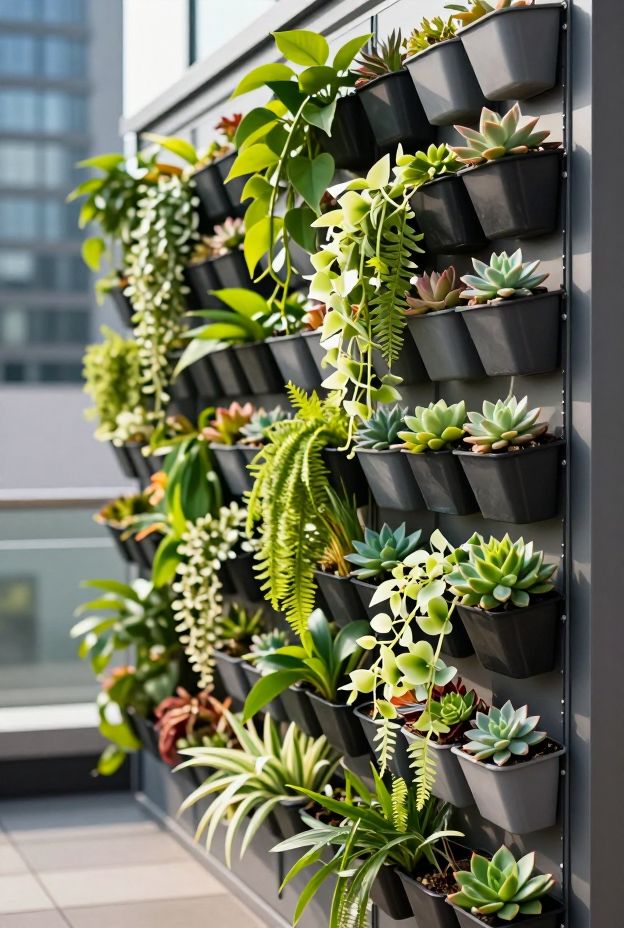
The beauty of living walls is that they maximize every inch of vertical real estate. I’m talking about installing modular pocket planters, wall-mounted containers, or even DIY pallet gardens that you can customize to fit your space perfectly. Choose drought-tolerant plants like succulents, ferns, or trailing pothos if you’re not trying to become a full-time plant babysitter.
Here’s what works best for rooftop vertical gardens:
- Modular systems – Easy to install and rearrange when you inevitably change your mind about the layout
- Self-watering planters – Because climbing to your rooftop every single day gets old fast
- Native plants – They handle wind and temperature fluctuations like champs
- Mixed textures – Combine different leaf shapes and colors for that designer look without the designer price tag
Pro tip? Start small with one wall section before going full botanical takeover. Your back will thank you, and you’ll figure out what actually survives your specific rooftop microclimate.
2. Container Garden Paradise
Okay, so container gardens might sound basic, but hear me out—when done right, they’re anything but boring. The flexibility alone makes them perfect for rooftop situations where you might be renting or dealing with structural weight limits.
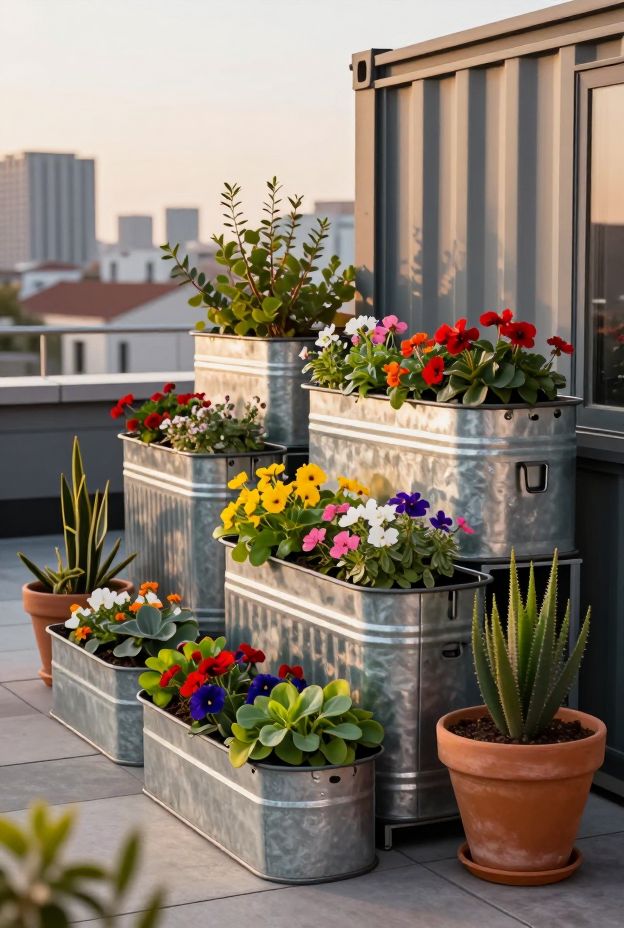
Container gardens let you move things around seasonally, protect sensitive plants during storms, and experiment without commitment. I’ve lost count of how many times I’ve rearranged my containers because I decided the tomatoes needed more sun or the herbs looked better near the seating area.
Mix different container sizes, heights, and materials to create visual interest. Galvanized metal troughs give that industrial-chic vibe, while terra cotta adds warmth. Lightweight resin pots work great if you’re worried about weight restrictions. Group them in odd numbers (because apparently that’s what makes things look intentional—design rules are weird but they work).
3. Raised Bed Systems for Serious Growers
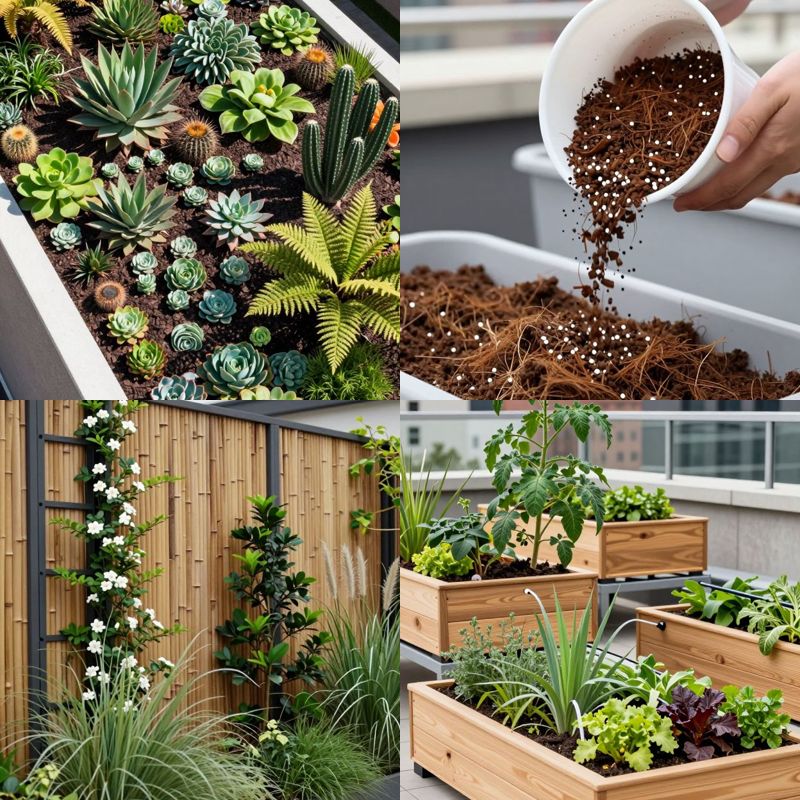
Want to grow actual food and not just decorative plants? Raised beds are where it’s at. They give you better soil control, drainage, and honestly, they just make everything look more organized and intentional.
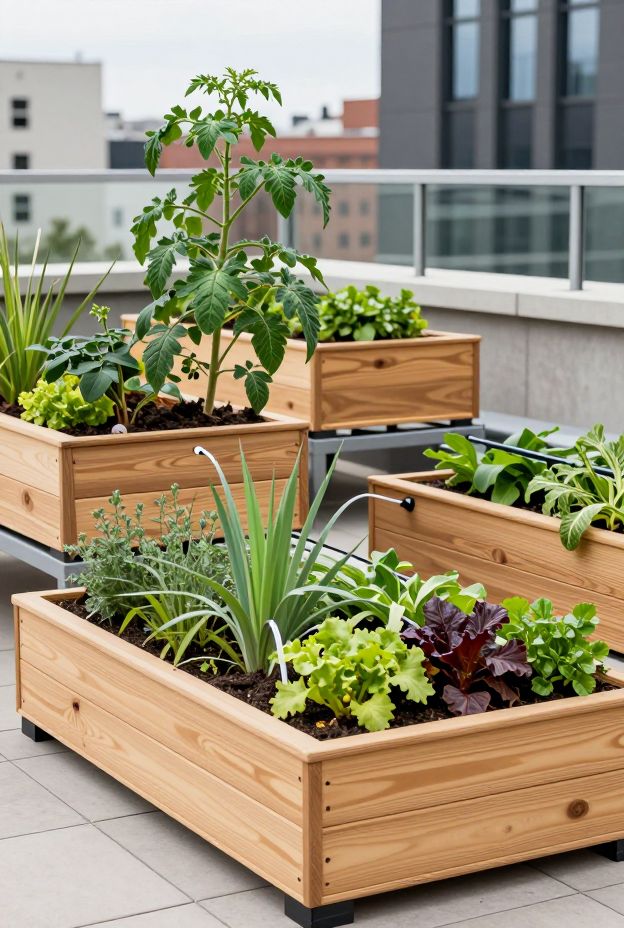
I switched to raised beds after realizing my container tomatoes were basically dwarves compared to what they could be. The deeper root space and improved soil quality make a massive difference for vegetables, herbs, and even small fruit bushes.
Consider these factors when planning raised beds:
- Weight capacity of your rooftop (get this checked—it matters more than you think)
- Cedar or composite materials that won’t rot in a season
- Height between 12-24 inches for optimal root depth
- Built-in irrigation systems to save your sanity
FYI, you can grow everything from lettuce to strawberries in properly designed raised beds. Just remember that exposed rooftops mean more wind, so staking and support systems aren’t optional—they’re essential.
4. Privacy Screens With Purpose
Nothing kills the rooftop vibe faster than feeling like your neighbors are watching your every move. Privacy screens solve this while adding serious aesthetic points—if you do them right.
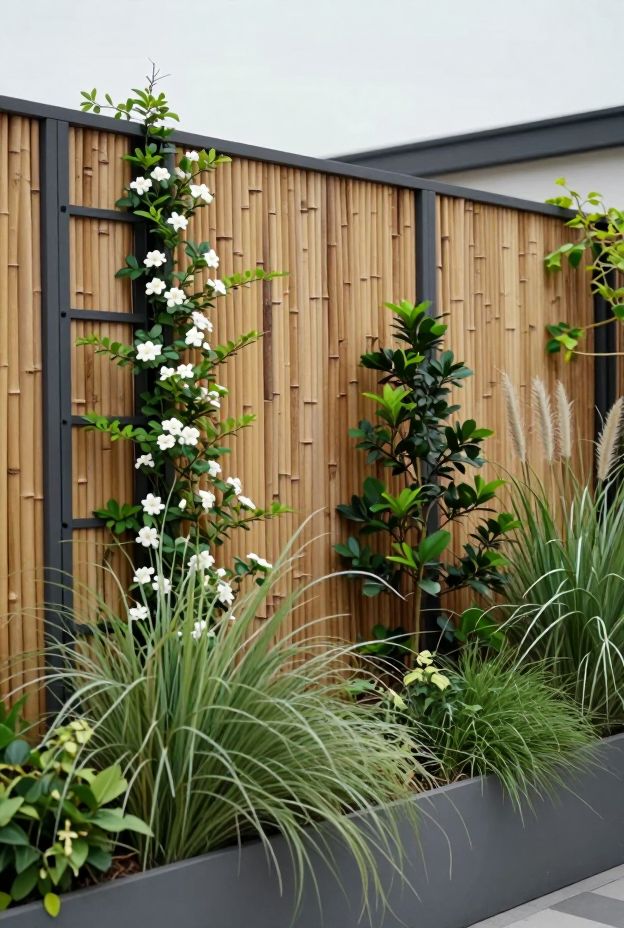
Forget boring wooden fences. Use bamboo screens, metal trellises with climbing vines, or even tall ornamental grasses in planters to create natural barriers that actually look good. I went with a combo of trellises and climbing jasmine, and now my space feels like a secret garden instead of a fishbowl.
The trick is layering. Start with a structural screen, add climbing plants for softness, then use taller potted plants in front for depth. This creates that “intentionally designed” look instead of the “I just stuck random stuff here” vibe we’re trying to avoid.
5. Weather-Resistant Seating Areas
What’s the point of creating a rooftop oasis if you can’t actually chill there? Your seating situation needs to withstand sun, wind, rain, and whatever else Mother Nature throws at it—because trust me, she will test you.
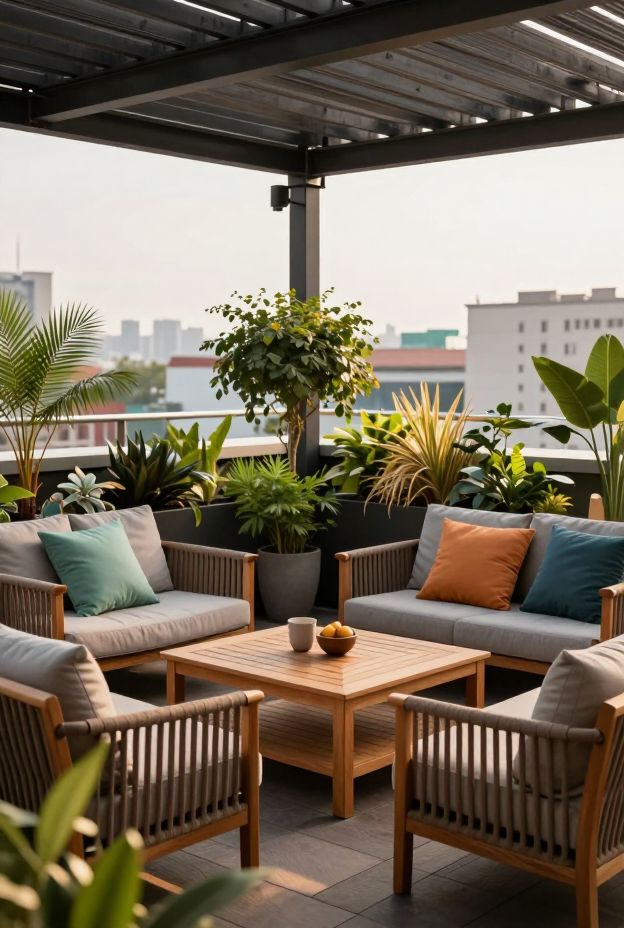
Invest in weather-resistant furniture that you won’t need to haul inside every time clouds appear. Teak, powder-coated metal, and all-weather wicker are your friends here. Add outdoor cushions in UV-resistant fabrics (they exist and they’re worth it), and suddenly you’ve got a legit outdoor living room.
Create multiple seating zones if space allows. A dining area for meals, a lounge zone with comfy chairs, maybe even a hammock situation if your setup can handle it. The goal is making your rooftop as functional as any indoor room—just with better views and fresher air.
6. Smart Irrigation Systems
Let’s talk about the elephant on the rooftop: watering. Rooftop gardens dry out faster than ground-level ones because of wind and sun exposure, and manually watering everything gets old approximately three days in.
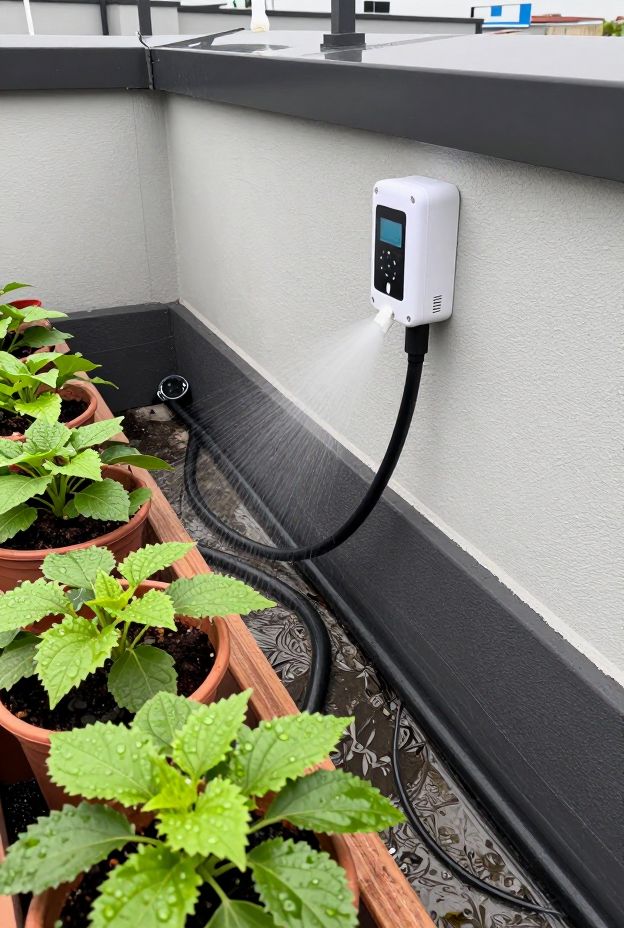
Enter smart irrigation systems—seriously, they’re not as complicated or expensive as you think. Drip irrigation with timers means your plants get consistent moisture without you schlepping watering cans up stairs daily. Plus, you can actually go on vacation without returning to a plant graveyard.
Key components worth considering:
- Drip lines for containers and raised beds
- Smart controllers that adjust based on weather
- Rain sensors to avoid overwatering
- Zone controls for different plant water needs
IMO, this is where you should splurge. Good irrigation pays for itself in plant survival rates and saved time.
7. Shade Structures That Don’t Suck
Full sun all day sounds great until you realize you’ve created a botanical oven. Shade structures aren’t just nice to have—they’re necessary for both you and your plants.
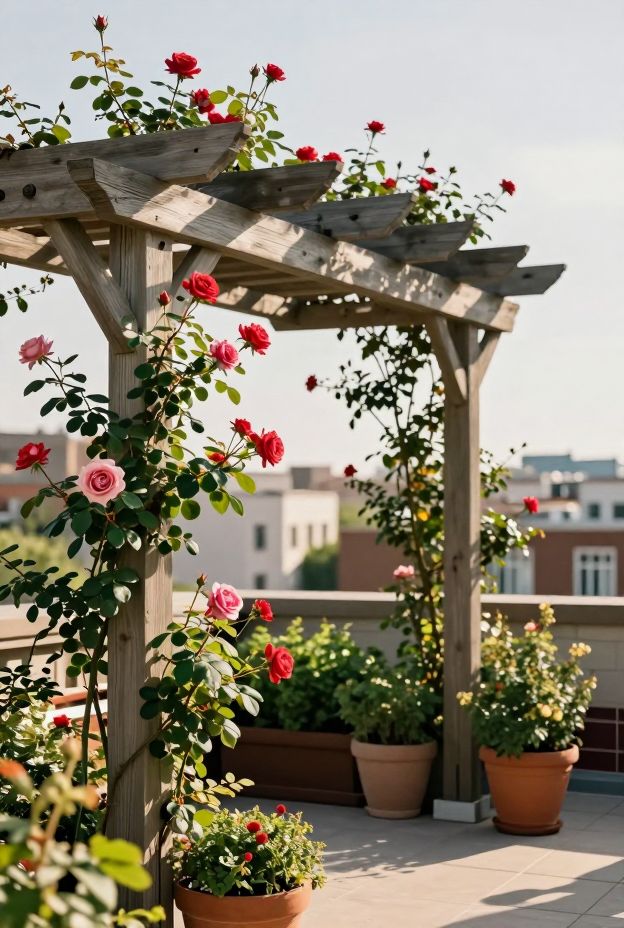
Pergolas, retractable awnings, shade sails—pick your poison based on your aesthetic and budget. I went with a pergola because it looks amazing and I could train climbing roses over it, creating natural shade that actually smells good. Partial shade also lets you grow a wider variety of plants instead of being limited to full-sun varieties.
Consider the sun’s path across your rooftop throughout the day and year. That perfect shady spot in summer might be completely exposed in winter, so plan accordingly. Retractable options give you flexibility, which is clutch when weather patterns are unpredictable.
8. Herb Spiral Gardens
Want to look like you know what you’re doing while maximizing growing space? Herb spirals are your answer. They’re basically vertical gardens designed specifically for herbs with different moisture and sun needs.
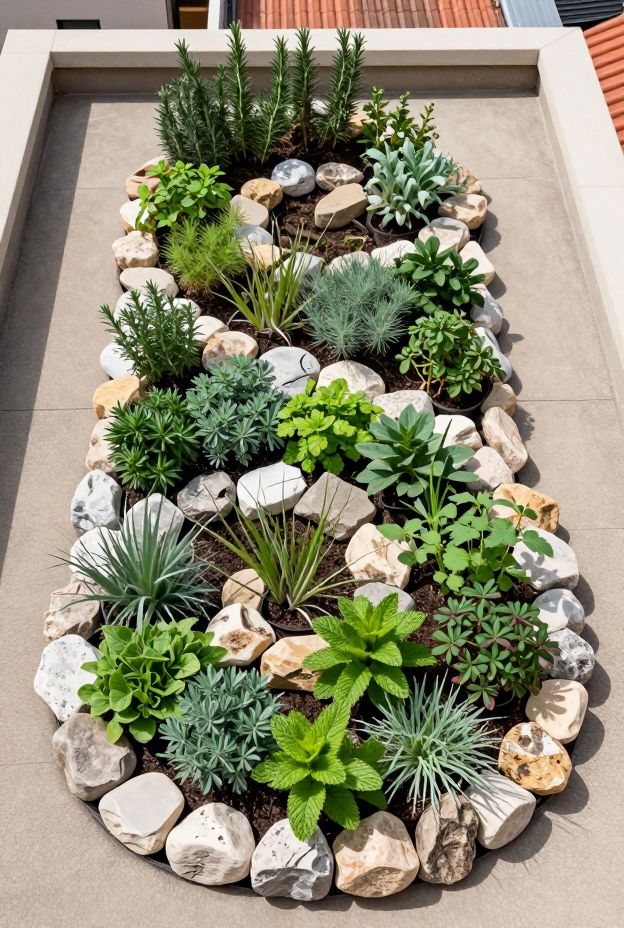
The concept is simple but genius: build a spiral-shaped raised bed where Mediterranean herbs (rosemary, thyme) go at the top in well-drained soil, while moisture-loving herbs (mint, cilantro) chill at the bottom. It’s efficient, space-saving, and honestly just looks cool.
Plus, having fresh herbs within arm’s reach when you’re grilling on your rooftop? *Chef’s kiss* 🙂 There’s nothing quite like the satisfaction of making dinner with ingredients you grew yourself, especially when your “garden” is literally above the city streets.
9. Microclimate Zones for Plant Diversity
Here’s something most rooftop gardeners figure out the hard way: not all areas of your rooftop get the same conditions. Wind patterns, sun exposure, and heat reflection create different microclimates—and you can use this to your advantage.
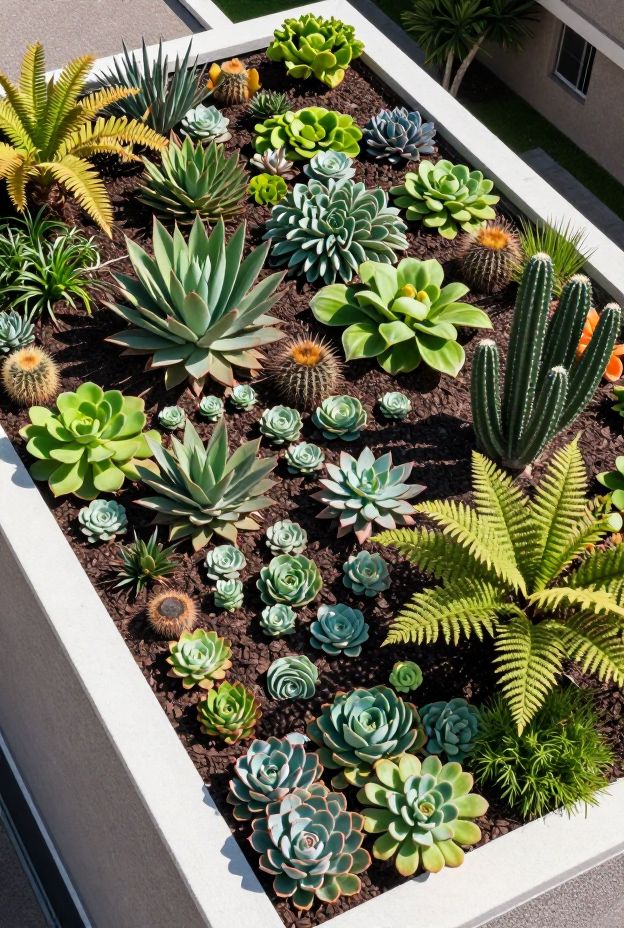
Map out your rooftop’s microclimates and plant accordingly. That corner that’s always shady and damp? Perfect for ferns and hostas. The blazing hot south-facing wall? Succulents and Mediterranean plants will thrive there.
I spent my first season fighting against my rooftop’s natural conditions before realizing I should work with them instead. Now I’ve got sun-lovers where it’s hot, shade plants in cooler spots, and wind-resistant varieties along the exposed edges. Everything’s happier, including me.
10. Lightweight Growing Media Solutions
Real talk: regular garden soil is way too heavy for most rooftops. You need specially formulated lightweight growing media that won’t exceed weight limits while still giving plants what they need.
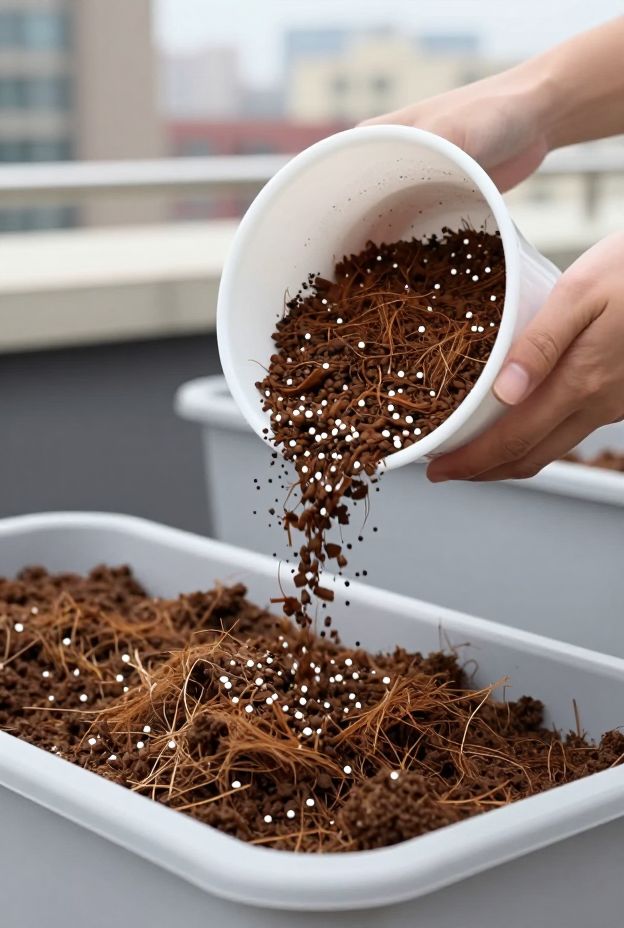
Look for mixes containing perlite, vermiculite, and coconut coir—they retain moisture while keeping weight down and drainage optimal. Commercial rooftop garden mixes exist specifically for this purpose, and while they cost more upfront, they prevent the structural disaster of overloading your rooftop.
Key benefits of lightweight media:
- Reduces overall weight by up to 50% compared to traditional soil
- Improves drainage to prevent waterlogging
- Better insulation for roots during temperature extremes
- Longer-lasting without compacting as quickly
Get your rooftop’s weight capacity checked before planning. I can’t stress this enough—it’s not the sexy part of garden planning, but it’s definitely important. Safety first, Instagram-worthy gardens second.
11. Night Garden Lighting Design
Why should your rooftop oasis only work during daylight hours? Strategic lighting transforms your space into a magical evening retreat—and honestly, plants look even better with proper uplighting.
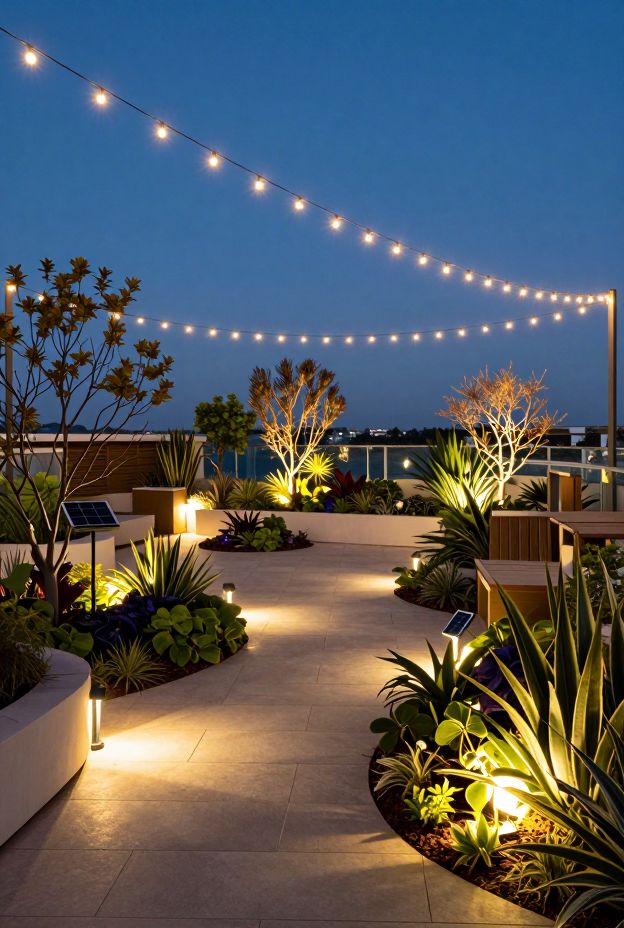
Layer your lighting like you would indoors: ambient lighting for overall illumination, task lighting for functional areas, and accent lighting to highlight specific plants or features. Solar-powered options work great on rooftops since, you know, sun exposure isn’t usually a problem up there.
String lights create instant ambiance (basic but effective—don’t @ me). Path lights keep walkways safe. Uplights on architectural plants or trees create drama. The goal is making your rooftop as inviting at 9 PM as it is at 9 AM, giving you more usable hours to actually enjoy what you’ve built.
12. Pollinator-Friendly Plant Selections
Ever noticed how rooftop gardens often feel too quiet? That’s because we forget to invite the ecosystem. Pollinator-friendly plants attract bees, butterflies, and birds—bringing life and movement to your urban oasis.
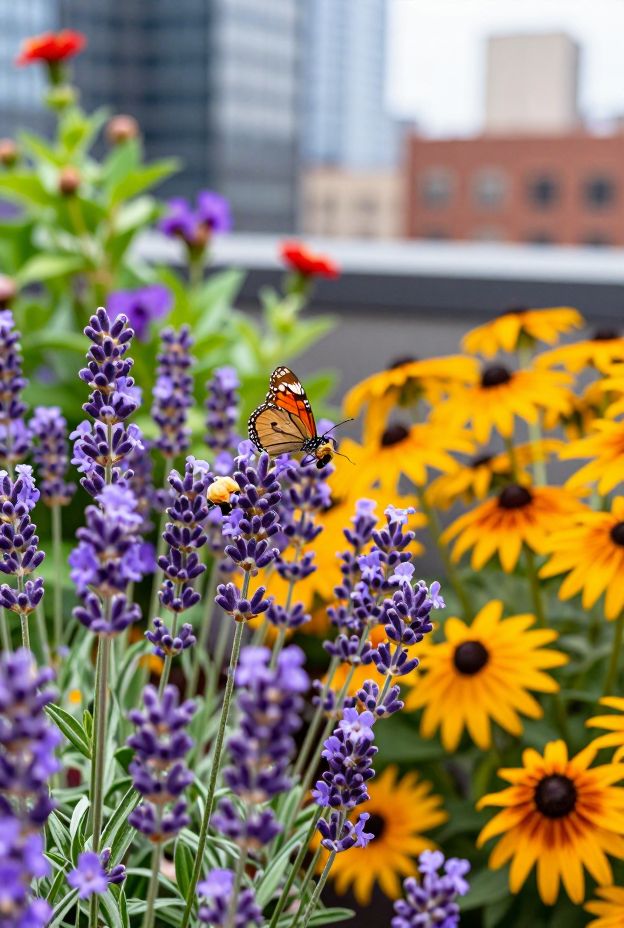
Choose native flowering plants that bloom at different times throughout the season. Lavender, coneflowers, black-eyed Susans, and bee balm are all pollinator magnets that happen to be gorgeous and low-maintenance. You’ll be amazed how quickly wildlife discovers your rooftop once you give them reasons to visit.
Beyond the environmental karma points, pollinator plants actually improve your garden’s productivity if you’re growing fruits and vegetables. Better pollination equals better harvests—it’s a win-win situation. Plus, watching butterflies flutter around your plants while you’re sipping coffee above the city streets hits different. Trust me on this one.
Conclusion
Creating a rooftop oasis isn’t about following a rigid blueprint—it’s about understanding your space, working with its unique challenges, and designing something that actually fits your lifestyle. Whether you go all-in with raised beds and irrigation systems or start simple with container gardens and build from there, the key is just starting.
Your rooftop doesn’t need to be massive or fancy to become a legitimate urban escape. It just needs to be intentionally designed with plants that suit your conditions, structures that maximize your space, and features that make you actually want to spend time there. The best rooftop garden is the one you’ll use—not the one that looks perfect on Pinterest but requires a full-time staff to maintain.
So grab some containers, pick up a few plants, and start transforming that underutilized concrete slab into something worth bragging about. Your future self (and your stressed-out brain) will thank you for creating an escape that’s literally just a flight of stairs away. Now get up there and start building—those plants won’t grow themselves! 🙂