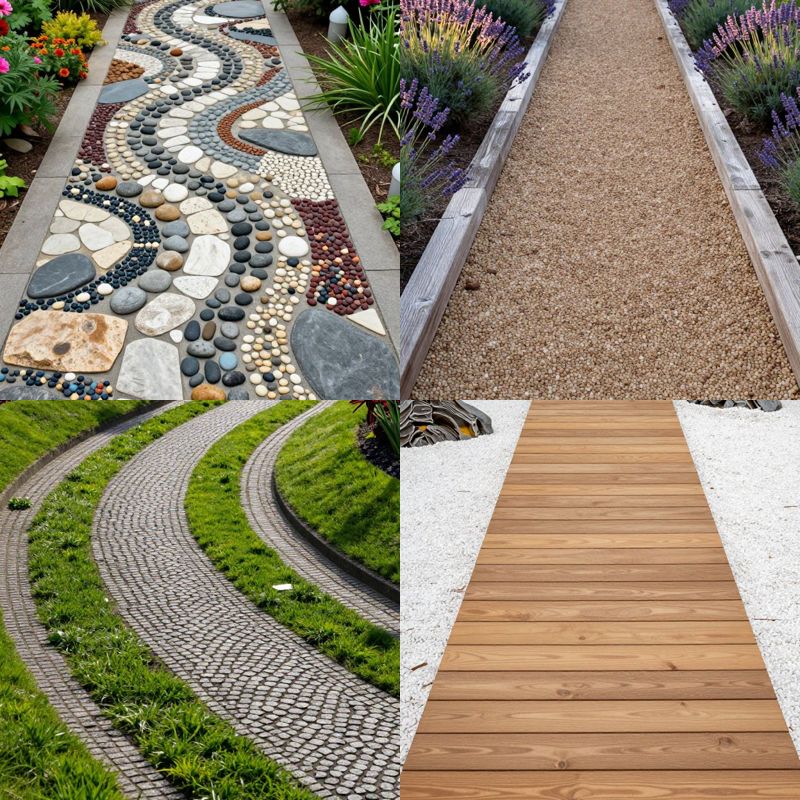
Want to know the secret to transforming your yard from “meh” to magnificent? It starts with the paths you walk on. I’ve spent years experimenting with different garden walkways, and trust me, the right path doesn’t just get you from point A to point B. It sets the entire mood for your outdoor space.
Whether you’re working with a tight budget or ready to splurge on something spectacular, these 13 garden path ideas will help you create walkways that are both functional and seriously gorgeous. Let’s get started!
1. Classic Brick Herringbone Pattern
You can’t go wrong with a traditional brick pathway laid in a herringbone pattern. This timeless design brings instant character and sophistication to any garden style, from cottage to contemporary.
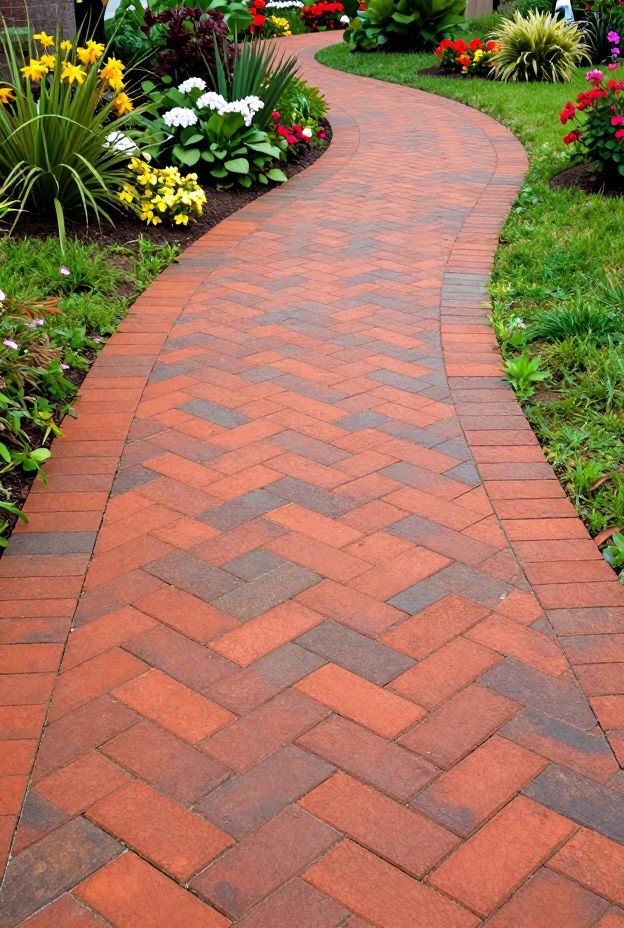
I installed one of these in my side yard three years ago, and it still looks as good as day one. The interlocking pattern creates incredible stability, which means no shifting bricks or uneven surfaces over time. Plus, the diagonal lines make narrow spaces feel wider than they actually are.
The best part? Bricks are surprisingly affordable and you can DIY this project over a weekend. Just make sure you lay a solid base of sand and gravel first, or you’ll regret it when winter comes around.
2. Natural Flagstone with Gravel Fill
If you want that effortlessly elegant look, flagstone stepping stones with gravel fill delivers every single time. The irregular shapes of natural stone create an organic, flowing feel that works beautifully in both formal and casual gardens.
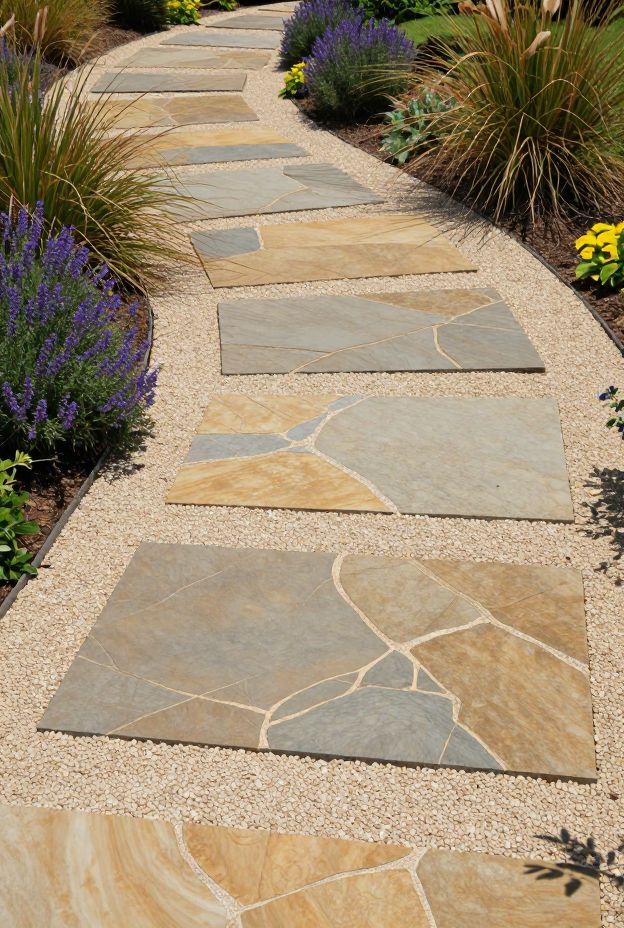
This combination gives you the best of both worlds: solid footing where you need it and excellent drainage between the stones. The gravel fill prevents mud and keeps weeds at bay, which means less maintenance for you. I personally love how the stones warm up in the sun and give off this earthy vibe that just feels right.
Pro tip: Choose larger flagstones for high-traffic areas to make walking easier. Nobody wants to play hopscotch every time they head to the shed 🙂
3. Pea Gravel Path with Wood Edging
Want casual charm without breaking the bank? A pea gravel pathway with wooden beam edging is your answer. The soft crunch underfoot creates this peaceful, garden-party vibe that instantly makes your space feel more inviting.
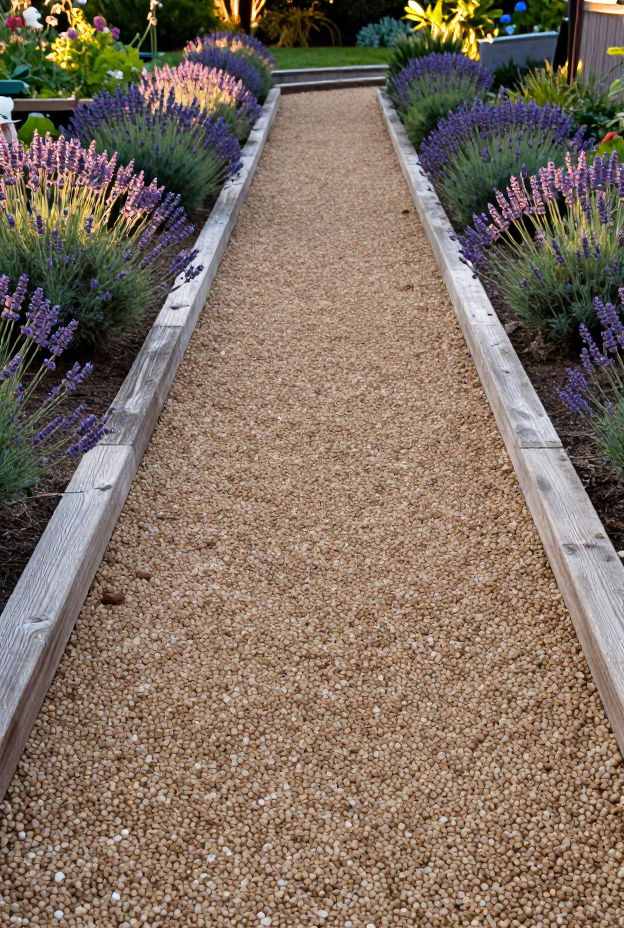
Pea gravel is ridiculously easy to install and costs way less than stone or pavers. The natural drainage means you’ll never deal with puddles, and the light color actually brightens up shady areas. I edged mine with cedar beams, which have held up beautifully and prevent the gravel from migrating into flower beds.
Fair warning: you’ll need to rake it occasionally to keep things looking tidy. But honestly? That’s a small price to pay for such a charming walkway.
4. Large Rectangular Pavers with Ground Cover
This modern approach uses oversized rectangular pavers spaced apart with low-growing ground cover filling the gaps. It’s sleek, contemporary, and surprisingly low-maintenance once established.
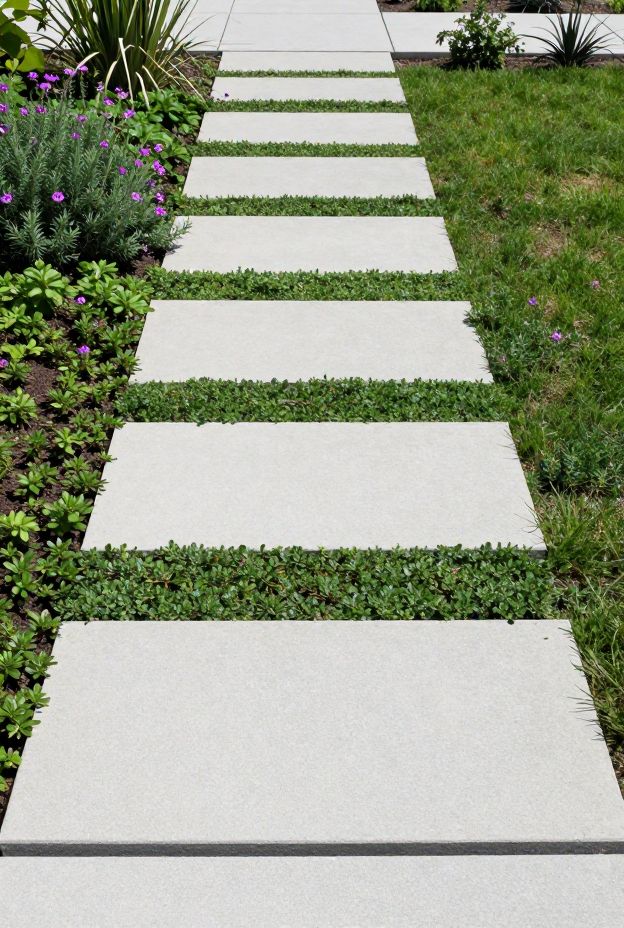
The clean lines create a minimalist aesthetic that works perfectly for modern homes. I’ve seen this done with creeping thyme between the pavers, and wow, the fragrance when you walk on it is incredible. The ground cover softens the hard edges while still maintaining that structured look.
You’ll want to choose ground cover that can handle foot traffic. Creeping thyme, Irish moss, and Scotch moss are all solid choices that stay low and spread nicely.
5. Cobblestone and Grass Combination
Here’s where things get interesting. Alternating strips of cobblestone with grass creates this eye-catching pattern that’s both functional and artistic. The contrast between hard and soft materials adds serious visual interest to your landscape.
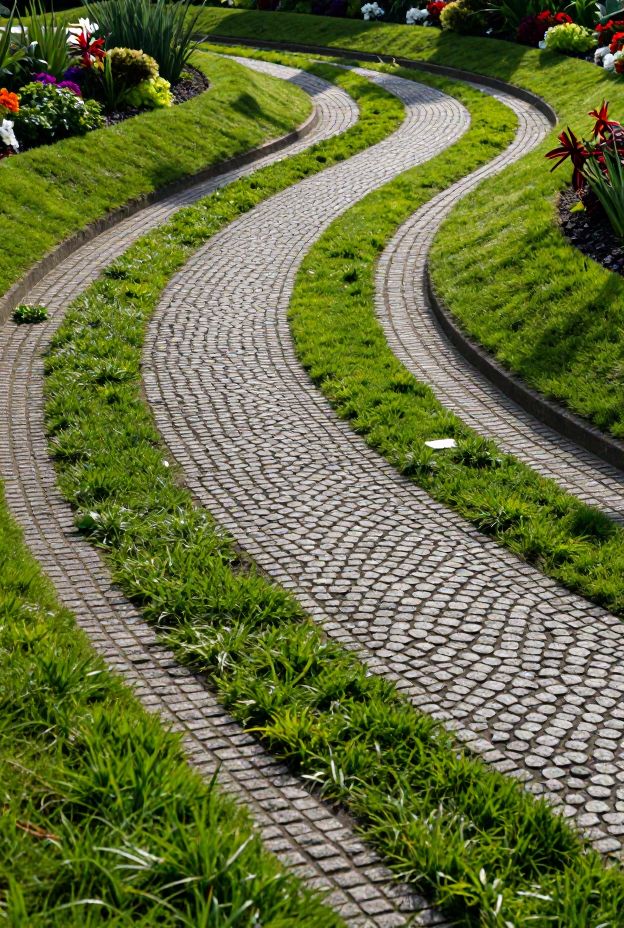
This design works especially well for sloped areas or as garden stairs. The cobblestone provides grip and definition, while the grass sections feel soft and natural. IMO, this is one of the most unique path ideas that actually works in real life, not just on Pinterest.
Just keep in mind you’ll need to mow those grass strips, which can be a bit finicky. But the visual impact? Totally worth the extra effort.
6. Decomposed Granite Path
If you’re looking for something permeable and sustainable, decomposed granite (DG) is calling your name. This fine, crushed stone compacts beautifully to create a firm surface that still allows water to soak through.
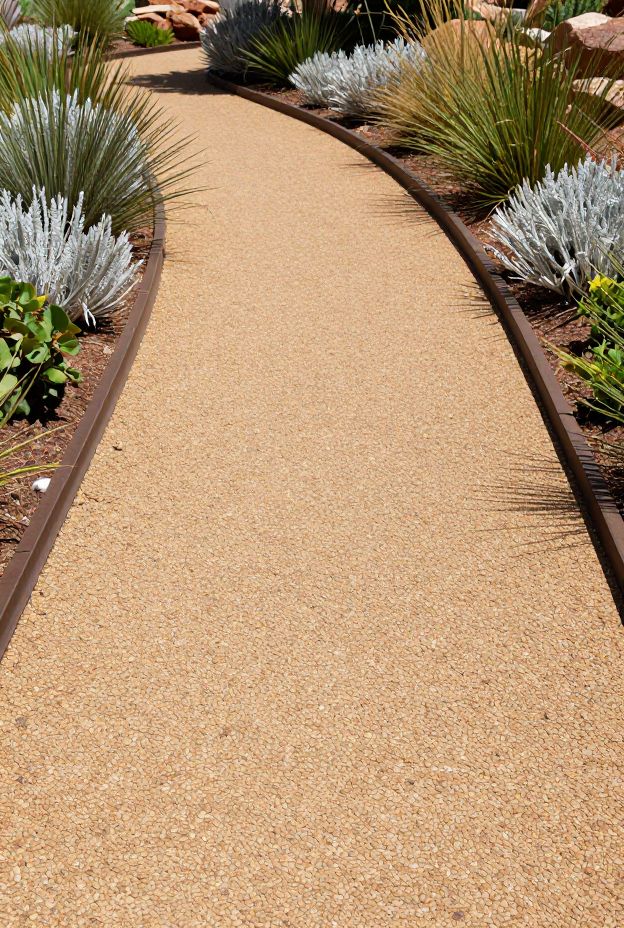
DG paths have this natural, earthy appearance that blends seamlessly with any landscape style. The neutral tones work as a perfect backdrop for colorful plantings, and the material itself is incredibly budget-friendly. I love how it softens the formality of a garden without looking messy.
The key to success with DG is proper edging and occasional re-compacting. Once it settles, though, you’ll have a durable pathway that handles foot traffic like a champ.
Installation Tips
- Install at least 3-4 inches deep for best results
- Wet and compact in layers for maximum stability
- Add stabilizers if you live in a rainy climate
- Edge with metal or stone to prevent spreading
7. Reclaimed Brick with Mossy Gaps
There’s something magical about a weathered brick path with moss growing between the cracks. This approach gives you that old-world, cottage garden feel that looks like it’s been there for generations.
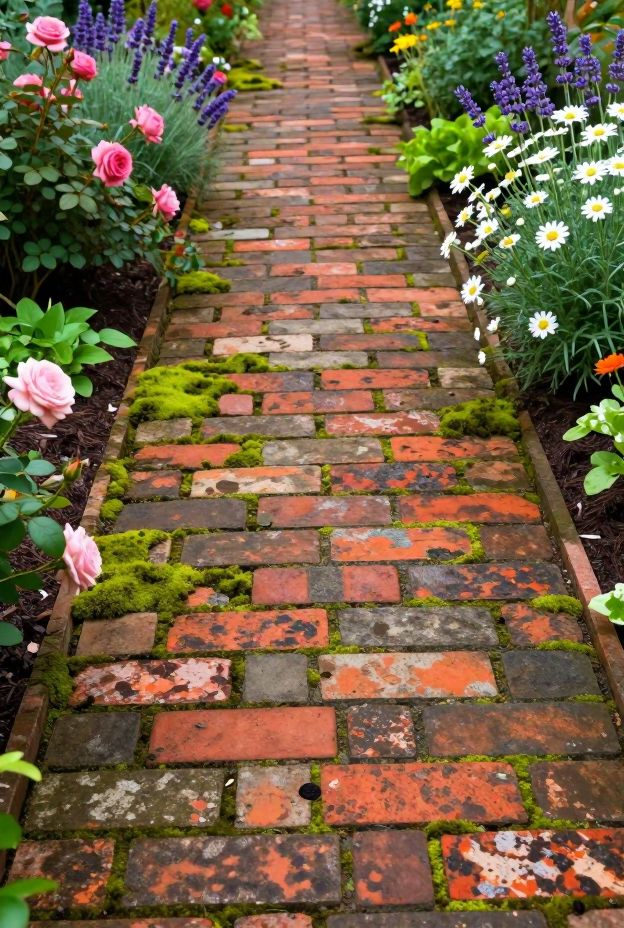
Using reclaimed or recycled bricks adds character that new materials just can’t match. Each brick tells a story with its worn edges and varied colors. The moss that naturally grows in the joints softens everything and creates this romantic, timeless atmosphere.
You can encourage moss growth by keeping the area somewhat shaded and occasionally misting with a buttermilk-moss mixture. Patience is key here, but watching it develop over time is half the fun.
8. Wood Plank Walkway
For a contemporary garden, linear wood planks create a striking modern pathway. The warm tones of wood contrast beautifully with green plantings and add a touch of organic elegance to minimalist designs.
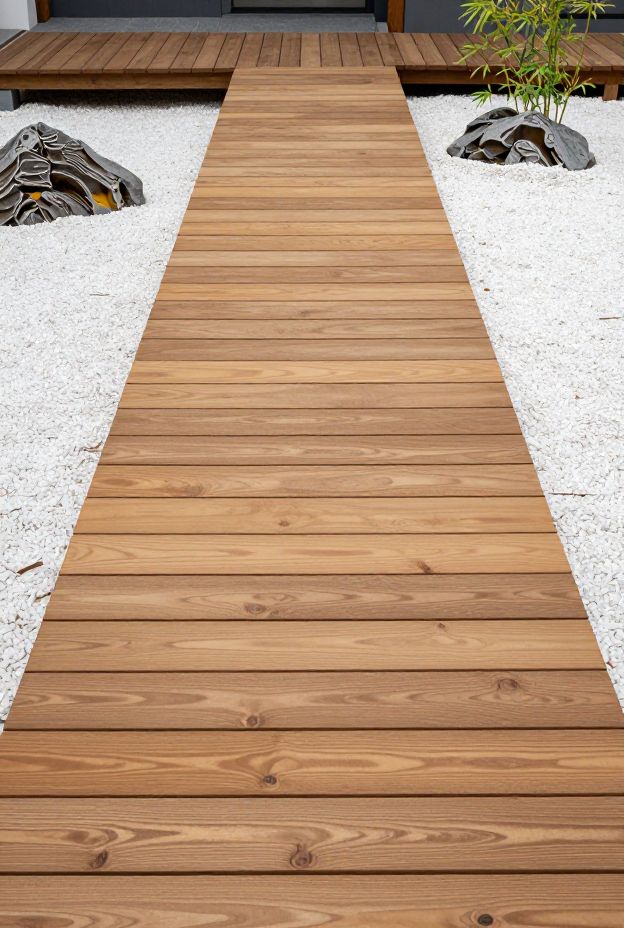
I particularly love this look in Zen-style gardens or as a bridge between different outdoor zones. The wood feels natural underfoot and ages into a gorgeous silvery-gray patina if you let it weather naturally. Cedar and redwood are your best bets for longevity.
Just remember that wood requires more maintenance than stone. You’ll need to treat it periodically or accept the weathered look. Either way, it’s worth it for the visual impact.
9. Mixed Material Mosaic Path
Why choose one material when you can have them all? A mosaic pathway combining different stones, pebbles, and pavers creates an artistic, one-of-a-kind walkway that becomes a focal point in your garden.
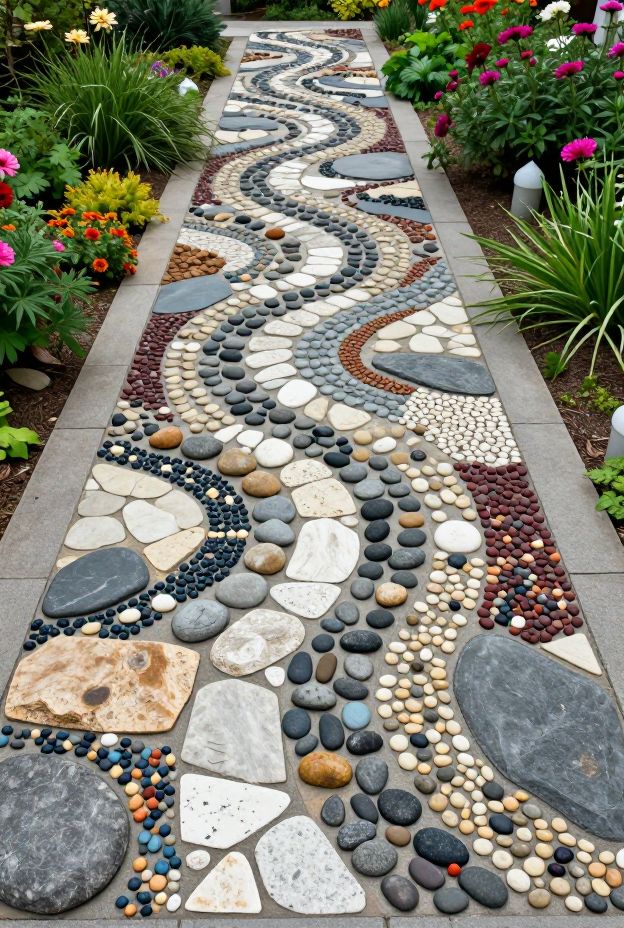
This is where you can really let your creativity shine. Mix flat stones with river rocks, add some pottery shards, or create patterns with different colored pebbles. The irregular, artistic nature makes each section unique and incredibly personal.
FYI, this approach takes more time to install than uniform materials, but the result is a true conversation piece. I’ve seen some absolutely stunning examples that look like outdoor artwork.
10. Stepping Stones Through Lawn
Sometimes simple is best. Large stepping stones set into your lawn create a subtle path that guides traffic without dominating the landscape. This works beautifully for informal gardens where you want movement but not a defined border.
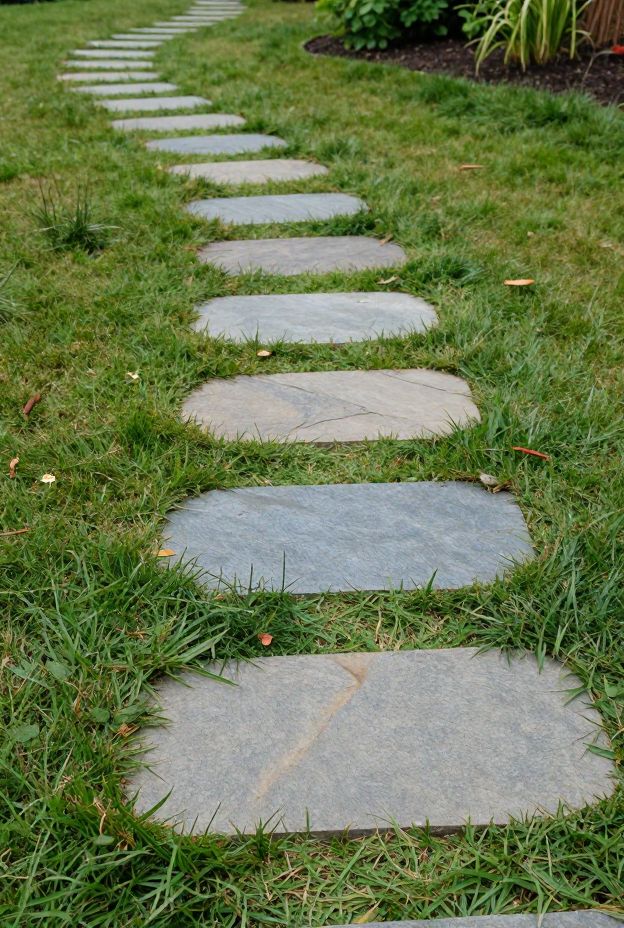
The trick is spacing the stones at a comfortable stride length so people naturally step from one to the next. I set mine about 18-24 inches apart, and it feels perfectly natural to walk. The grass growing around them keeps everything feeling open and flowing.
This is also the easiest path to adjust if you change your mind later. Just relocate the stones and the grass fills back in.
11. Crushed Seashell Path
If you live in a coastal area or just love that beach cottage vibe, crushed seashell paths bring vacation vibes right to your backyard. The white color brightens everything and creates beautiful contrast with green plantings.
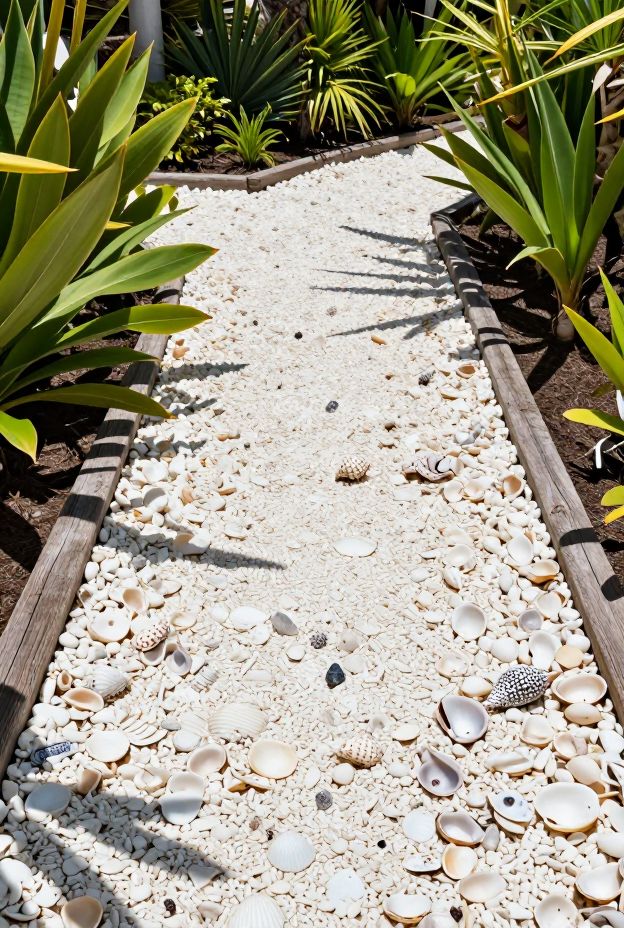
Crushed shells compact nicely to form a stable walking surface, and they have excellent drainage properties. Plus, that distinctive crunch underfoot immediately transports you to a seaside escape. I’ve used this in a side yard, and every time I walk on it, I feel like I’m on vacation.
One heads up: shells can be pricey if you’re far from the coast. But if you can source them locally, they’re an incredible alternative to traditional gravel.
12. Concrete Pavers with Grass Strips
For a contemporary twist on traditional paths, try laying concrete pavers in strips with grass running between them. This creates a geometric pattern that’s both modern and eco-friendly.
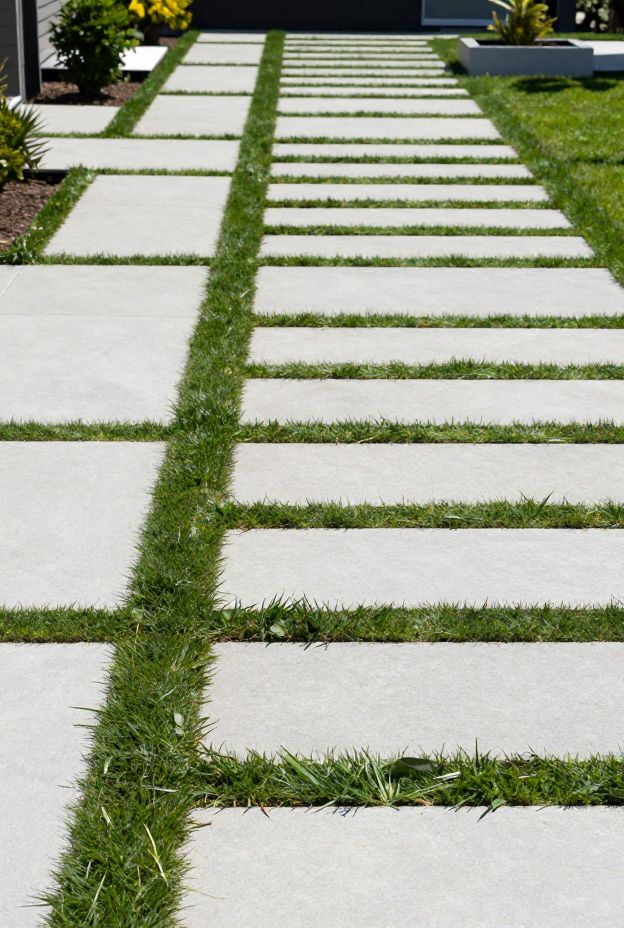
The grass strips soften the industrial feel of concrete while reducing the heat absorption that solid concrete paths create. It’s perfect for front yards where you want something stylish but not too formal. The pattern naturally draws the eye forward and makes spaces feel longer.
Maintenance is straightforward: mow the grass strips and occasionally power-wash the concrete to keep everything looking crisp. The combination stays interesting year after year without feeling trendy.
13. Natural Stone Slabs with Moss
Want to create a path that looks like it belongs in a fairy tale? Large, irregular natural stone slabs with moss growing around and between them deliver pure enchantment. This works especially well in shade gardens where moss thrives naturally.
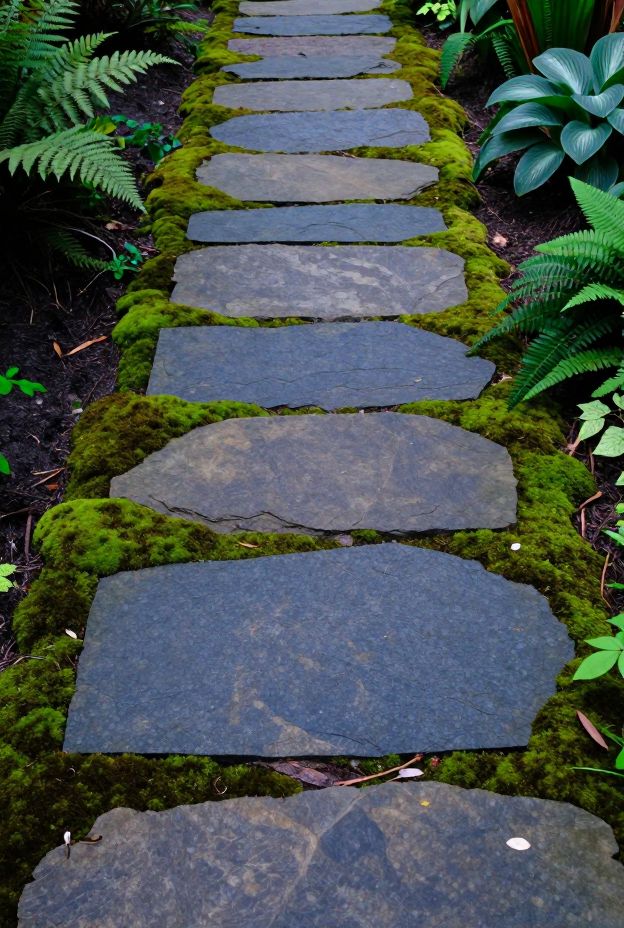
The oversized stones make a bold statement while keeping the path functional and easy to navigate. As the moss fills in around the edges, it creates this soft, dreamy transition between path and garden. I love how it looks different in every season, especially after rain when everything glistens.
This is definitely a “slow garden” approach where you let nature do some of the work. But if you’re patient, you’ll end up with a pathway that looks like it’s been there forever.
Best Stones for This Look
- Bluestone for its rich color and flat surface
- Limestone for a lighter, cottage garden feel
- Slate for contemporary, darker aesthetics
- Local fieldstone for authentic regional character
Creating Your Perfect Garden Path
The path you choose should reflect your personal style and work with your garden’s existing vibe. Consider your budget, maintenance tolerance, and overall aesthetic before committing to a design.
Remember that paths don’t just serve a practical purpose. They guide the journey through your garden, create visual flow, and establish the character of your entire outdoor space. Whether you go for rustic brick, elegant stone, or modern concrete, your garden walkway becomes part of the experience you’re creating.
So grab your shovel, pick your favorite idea from this list, and start creating a walkway that’ll make every trip through your garden feel special. Trust me, you’ll wonder why you waited so long! 🙂