I’m going to be straight with you – if you’ve ever killed a cactus (no judgment, we’ve all been there), succulent gardens are about to become your new best friend. These drought-tolerant beauties are basically nature’s way of saying “hey, I get it, you’re busy.” I’ve been designing succulent gardens for years, and honestly? They’ve saved me from countless plant funeral moments. Whether you’re dealing with scorching summers or just forget to water your plants for, um, extended periods, these 14 design ideas will transform your outdoor space into a low-maintenance oasis that actually thrives on neglect.
1. The Desert Minimalist Rock Garden
Picture this: smooth river rocks, a few statement succulents, and basically zero maintenance. I created one of these in my front yard last year, and my neighbors still ask how I keep it looking so “curated” – little do they know I’ve watered it maybe three times. The key is using large rocks as focal points with smaller succulents like echeveria and sedum tucked between them.
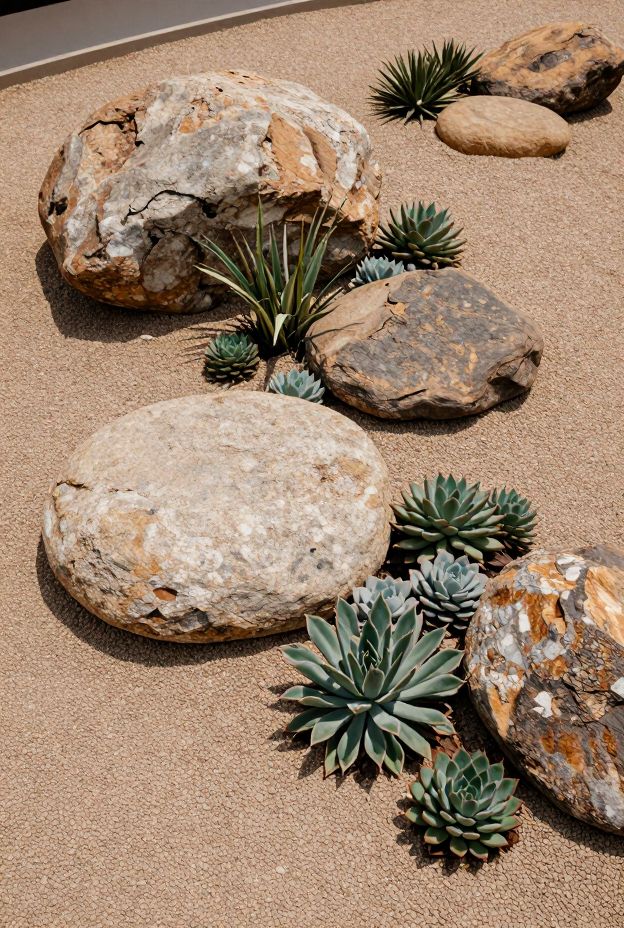
This design works because the rocks retain heat during the day and radiate it at night, creating a microclimate your succulents will love. Plus, they prevent soil erosion and suppress weeds. Ever wondered why professional landscapers charge so much for this look? Because it actually requires design skill – but you can totally DIY it.
Choose these elements for your rock garden:
- Large decorative boulders as anchors
- Mixed sizes of river rocks or pea gravel
- Hardy succulents like agave, aloe, and jade plants
- Drought-tolerant ground covers to fill gaps
2. Vertical Succulent Wall Art
Vertical gardens are having a moment, and succulents are perfect for this space-saving design. I installed one on my patio fence last summer, and it’s basically living wall art that requires watering maybe once a week (sometimes I stretch it to two – don’t tell anyone :/).
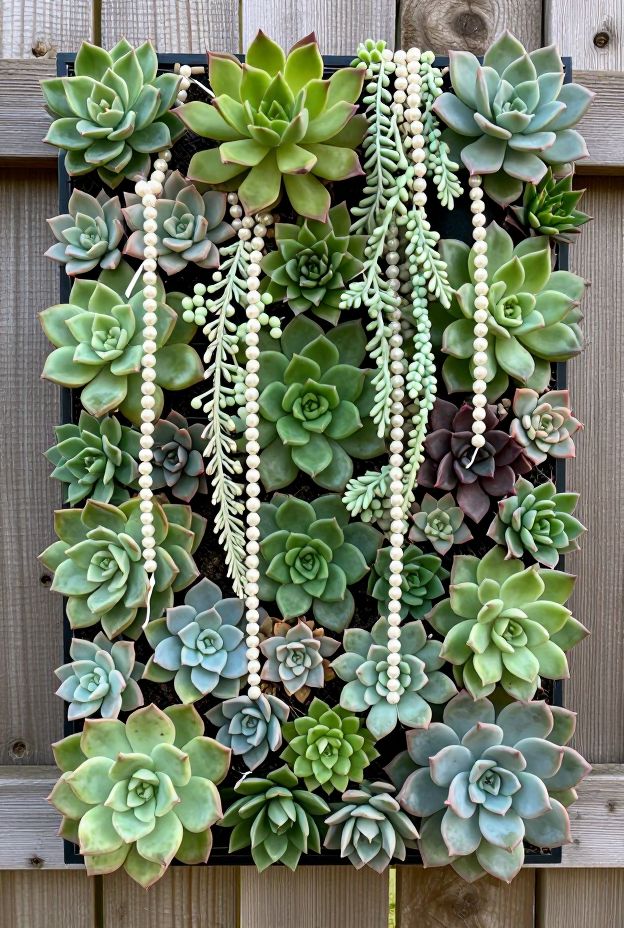
You can buy pre-made vertical planters or create your own using wooden pallets or picture frames with wire mesh backing. The trick is ensuring proper drainage so your succulents don’t get root rot. IMO, this is one of the most Instagram-worthy designs you can create.
Materials you’ll need:
- Vertical planter frame or repurposed pallet
- Succulent soil mix with excellent drainage
- Smaller succulent varieties like string of pearls and burro’s tail
- Landscape fabric to hold soil in place
3. Mediterranean Terracotta Container Collection
There’s something ridiculously charming about mismatched terracotta pots clustered together. Terracotta is porous, which means it breathes and helps prevent overwatering – basically idiot-proof for succulent growing. I have about fifteen pots of varying sizes on my balcony, and the asymmetrical arrangement looks intentionally stylish.
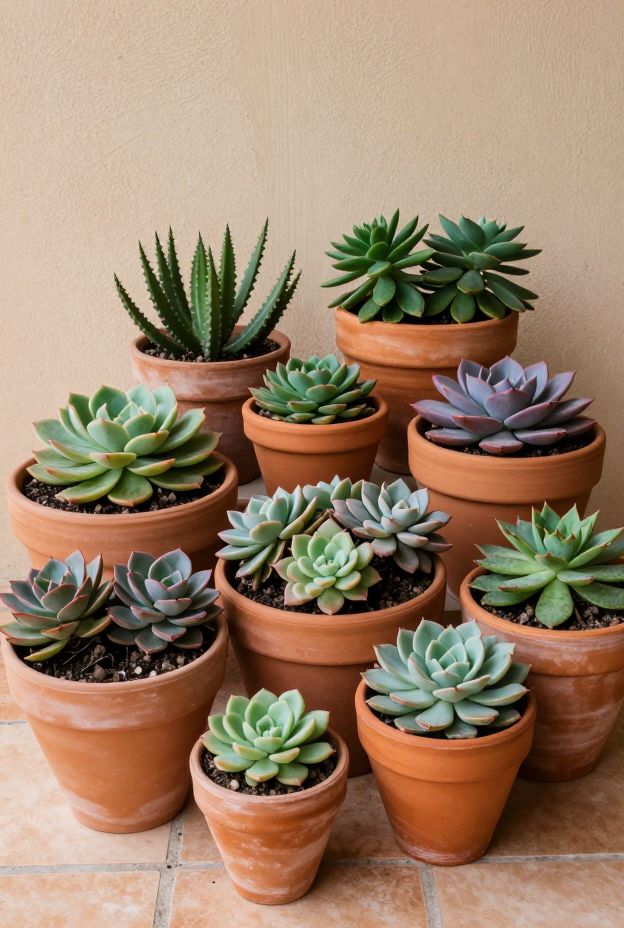
The beauty of container gardens is mobility. When that freak cold snap hits (looking at you, unpredictable weather patterns), you can simply move your entire collection indoors. Plus, you can constantly rearrange them when you get bored – which I do way too often.
4. Geometric Concrete Planter Arrangement
Modern architecture meets desert vibes in this design. Concrete planters in geometric shapes create a contemporary look that’s perfect for urban spaces. I made several concrete planters using silicone molds last winter (pandemic project, anyone?), and they’ve become conversation starters at every gathering.
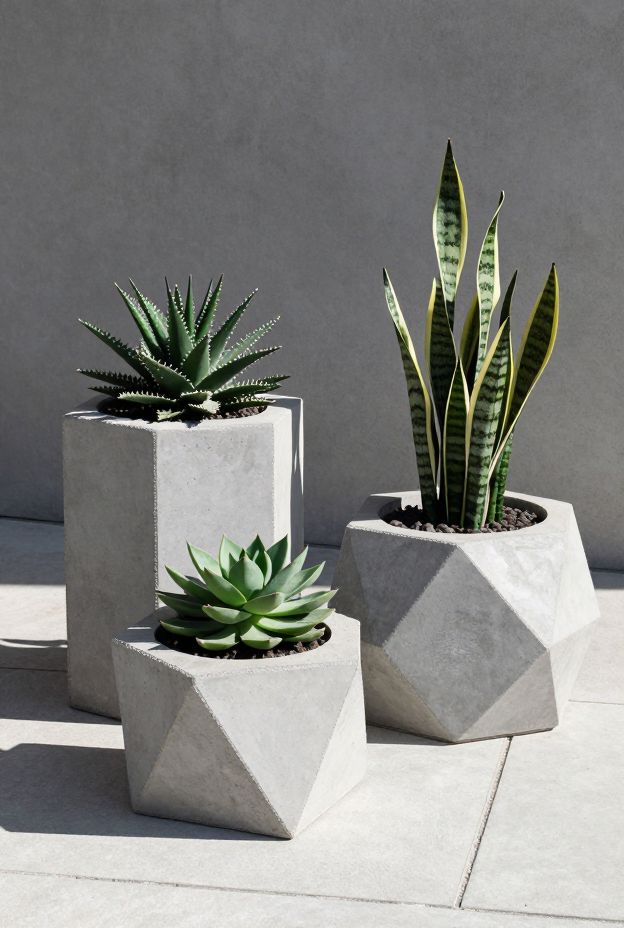
Concrete actually helps regulate soil temperature and is incredibly durable. You can create cubes, hexagons, spheres – whatever geometry floats your boat. Pair them with architectural succulents like haworthia or snake plants for maximum impact.
Why Concrete Works
Concrete planters offer benefits you might not expect. They’re heavy enough to withstand wind, provide excellent insulation, and develop a beautiful patina over time. Plus, you can customize the color by adding concrete dye during mixing.
5. Succulent Pathway Border Design
Want to line your garden path without spending every weekend trimming hedges? Low-growing succulents create perfect pathway borders that stay compact and neat. I planted sedum along my stone walkway three years ago, and it’s still thriving with zero pruning required.
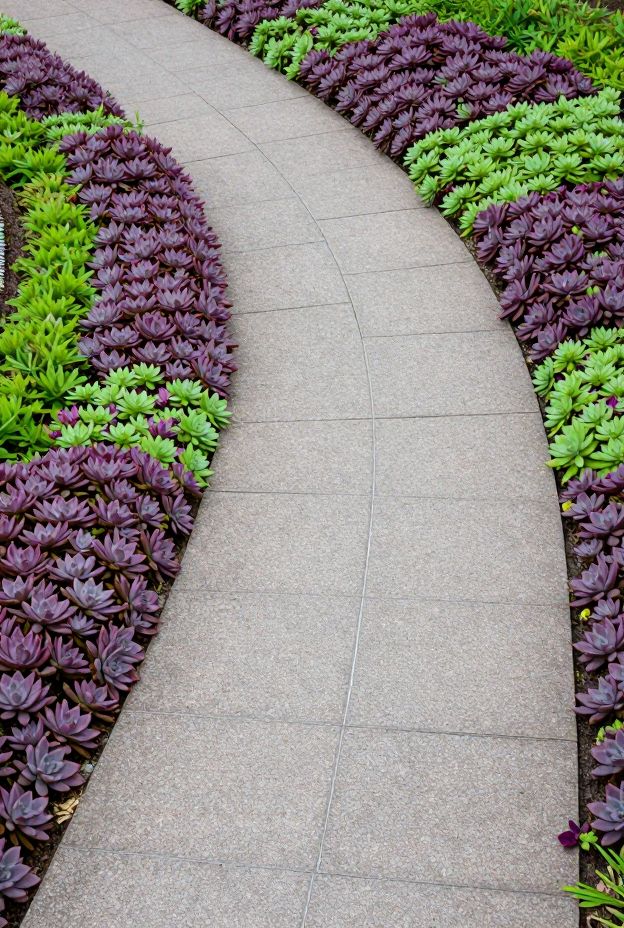
This design works particularly well with creeping varieties that spread slowly but don’t become invasive. The colors range from deep purple to bright green, creating a living ribbon effect that guides visitors through your garden. FYI, this also works beautifully as driveway edging if you’ve got a gravel or decomposed granite surface.
6. Color-Coordinated Succulent Bed
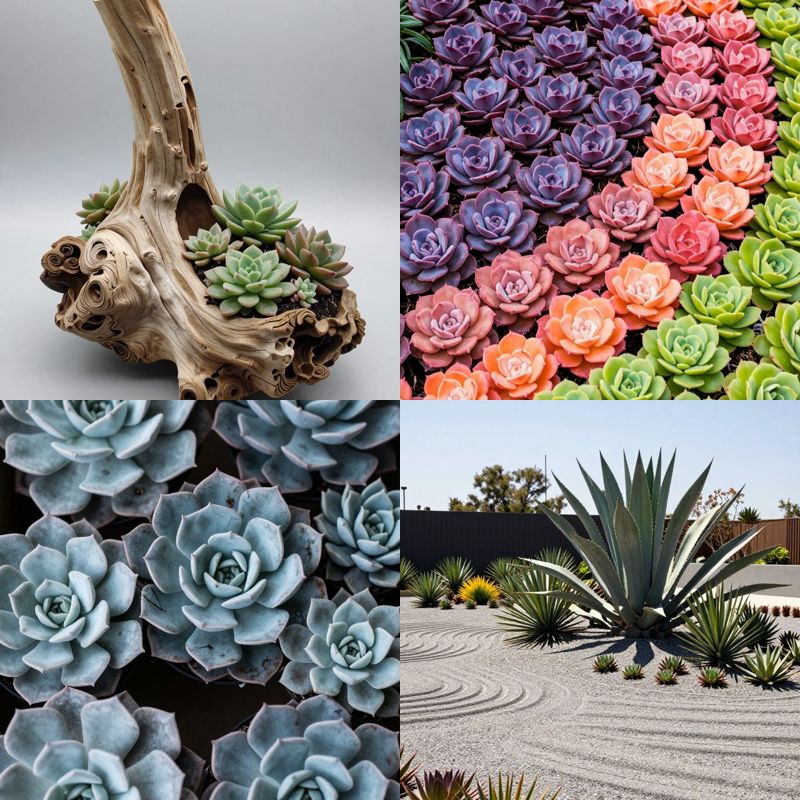
Who says desert plants can’t be colorful? Succulents come in an insane range of colors – from burgundy to chartreuse to silvery blue. I designed a color-gradient bed last spring, starting with purple echeveria on one end and transitioning through pink, orange, and finishing with lime-green aeoniums. Does it sound extra? Maybe. Does it look amazing? Absolutely.
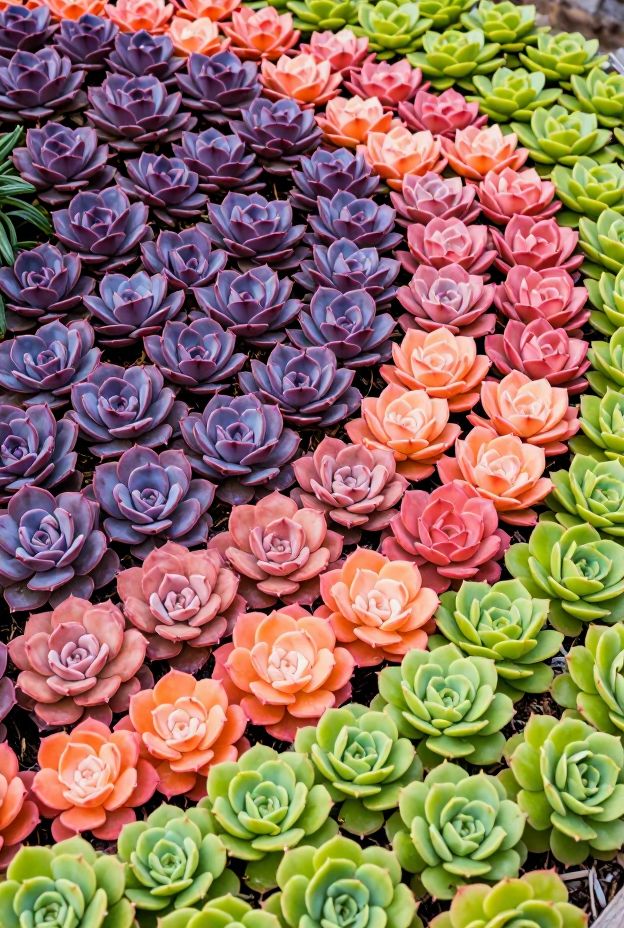
The secret is planning your color scheme before you plant. Group warm tones together or create complementary color combinations for visual impact. This technique makes your garden look professionally designed even if you’re totally winging it.
7. Raised Wooden Box Succulent Garden
Raised beds solve so many problems – poor soil, drainage issues, back pain from bending over. I built three cedar boxes in my backyard, filled them with a custom succulent soil mix, and now I’ve got the easiest garden maintenance routine ever. You know what’s great about working at waist height? Everything.
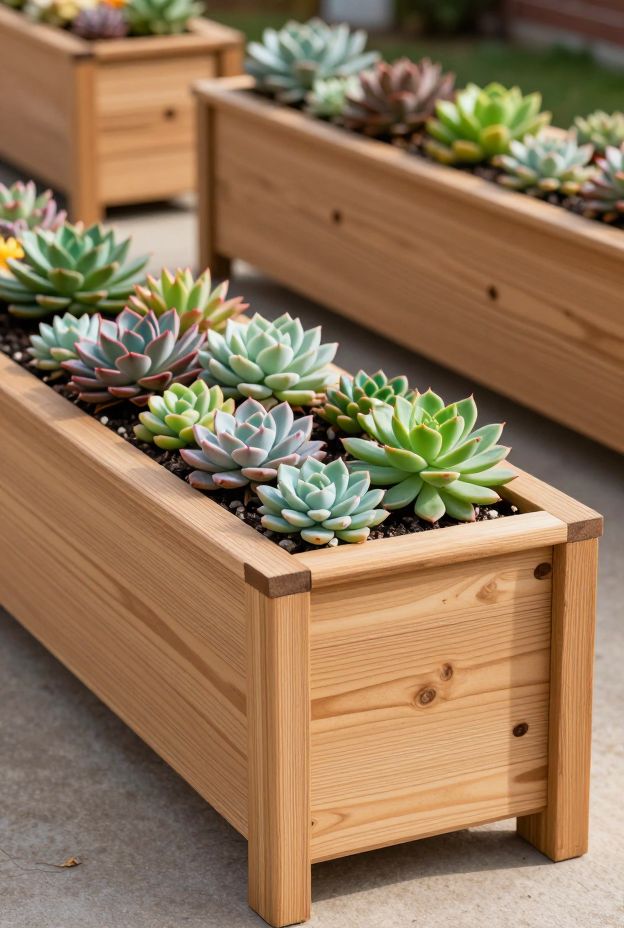
Cedar naturally resists rot and pests, making it ideal for outdoor planters. You can build these boxes in any size, stack them for dimension, or arrange them in interesting configurations. Plus, they create clear garden zones and keep aggressive succulents contained.
Building Tips
Line the bottom with hardware cloth to prevent gophers and other critters from tunneling in. Drill drainage holes every few inches. Fill the bottom third with gravel before adding soil to improve drainage even further.
8. Fairy Garden Succulent Landscape
Okay, stay with me here – miniature succulent gardens with tiny decorations are adorable and totally acceptable for adults. Creating a fairy garden with succulents lets you play with scale and tell a visual story. I made one for my niece’s birthday, and honestly? I might have enjoyed it more than she did 🙂
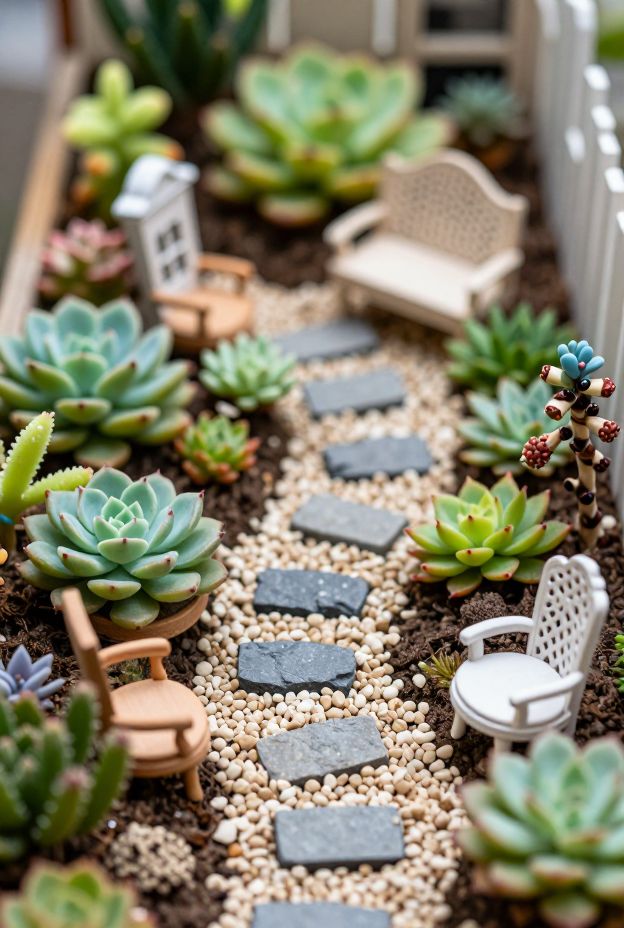
Use smaller succulent varieties, add miniature furniture or structures, and create little pathways with pea gravel. It’s whimsical, low-maintenance, and makes people smile. Who says gardening has to be serious all the time?
9. Succulent and Driftwood Sculpture
Natural driftwood pieces make incredible organic planters for succulents. I found a massive piece of driftwood on a beach vacation, hollowed out sections, added soil, and planted various sedums and sempervivums. It’s basically functional art that requires watering maybe twice a month.
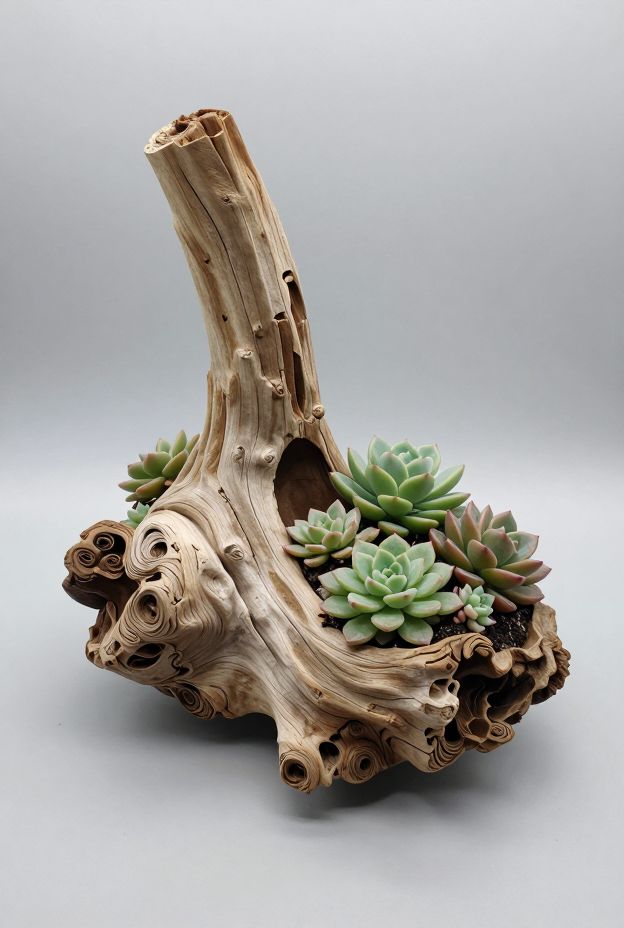
The weathered wood texture contrasts beautifully with the fleshy succulent leaves. This design works as a centerpiece on outdoor tables or as a striking focal point in garden beds. Plus, every piece of driftwood is unique, so your garden will be completely one-of-a-kind.
10. Monochromatic Succulent Display
Sometimes less is more. Choosing succulents in a single color family creates a sophisticated, cohesive look. I did an all-silver-and-blue collection last year using echeveria ‘Perle von Nurnberg’, blue chalk sticks, and ghost plants. The monochromatic scheme looked intentional and elegant – way classier than my usual chaotic plant arrangements.
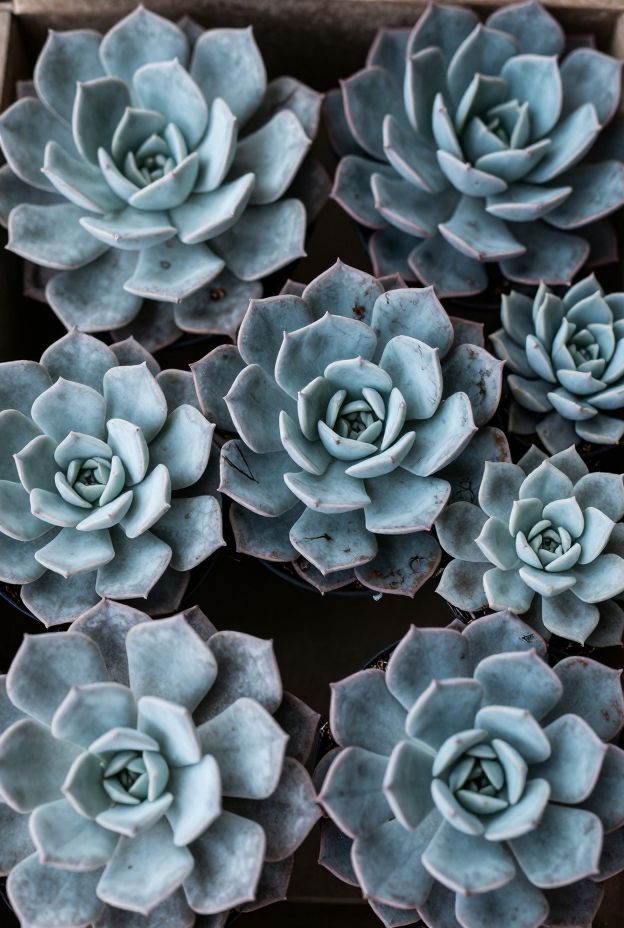
This approach works especially well in modern or minimalist landscapes. The subtle variations in texture and form become more noticeable when color isn’t competing for attention. It’s like the design equivalent of a capsule wardrobe for your garden.
11. Gravel Garden with Statement Succulents
Replace your lawn with gravel and strategic succulent plantings – your water bill will thank you. I convinced my parents to do this in their front yard, and their landscaping costs dropped by about 70%. Zero mowing, minimal watering, and it still looks lush and intentional.
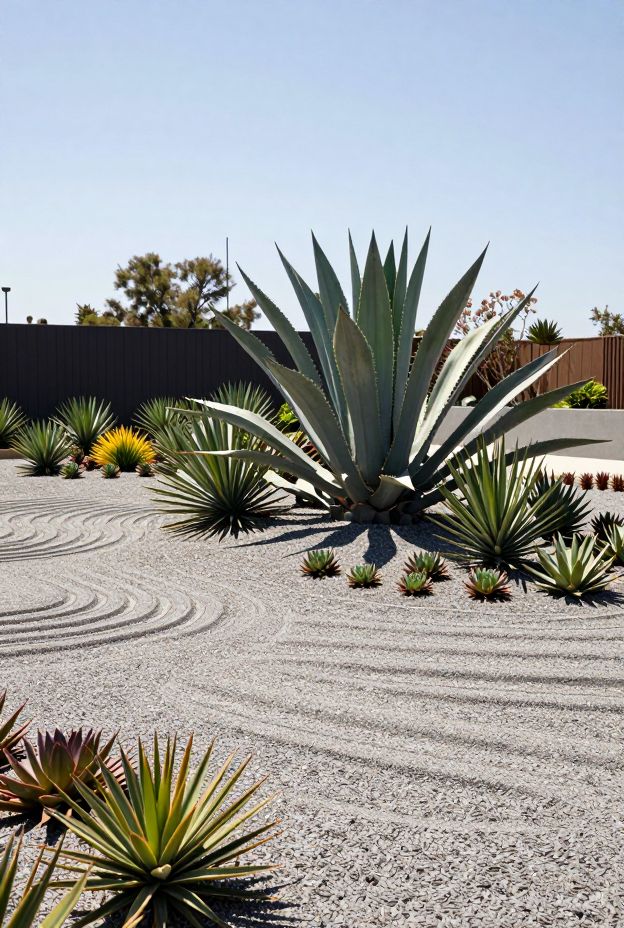
Choose large architectural succulents like agave, yucca, or aloe as focal points, then fill in with smaller varieties. The gravel mulch suppresses weeds, retains moisture, and creates a clean, contemporary aesthetic. Plus, you can rake it into patterns if you’re feeling Zen.
Installation Steps
- Remove existing grass and weeds
- Install landscape fabric to prevent regrowth
- Add 2-3 inches of decomposed granite or pea gravel
- Plant succulents directly through fabric into prepared holes
12. Hanging Succulent Basket Collection
Trailing succulents in hanging baskets create visual interest at eye level and above. I have string of pearls, burro’s tail, and ruby necklace cascading from hooks on my porch overhang. The movement and texture add dimension that ground-level plants can’t achieve.
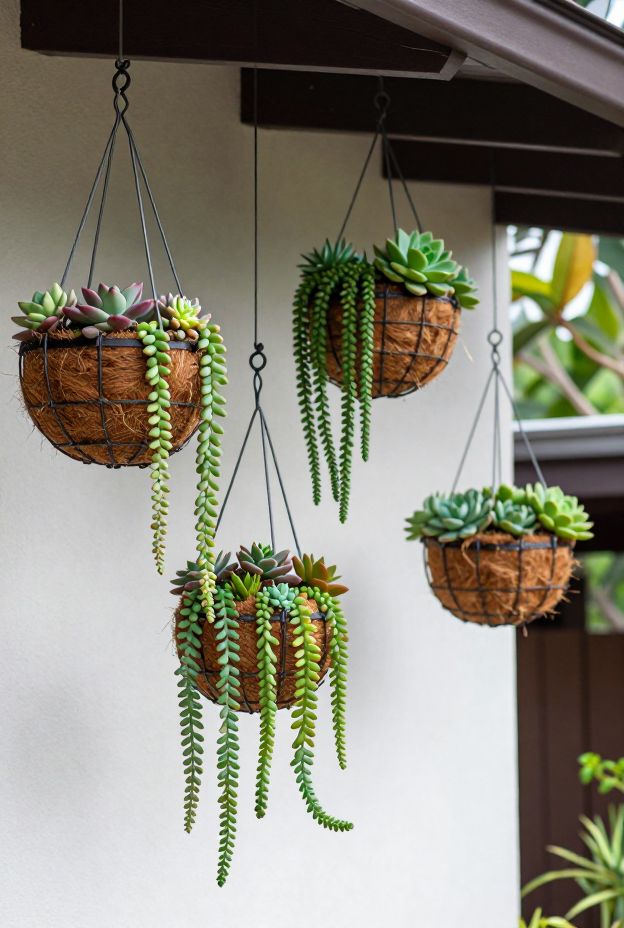
Wire baskets lined with coco fiber work perfectly because they drain well and look rustic-chic. You can also use hanging ceramic planters or repurpose vintage containers. Group them at different heights for maximum impact.
13. Zen Garden with Succulent Accents
Traditional Zen gardens meet modern drought-tolerant landscaping in this peaceful design. Combine raked gravel patterns with carefully placed succulents for a meditative outdoor space. I created a small Zen area in my side yard using three large rocks, five succulent clusters, and fine white gravel I rake every few weeks when I need to decompress.
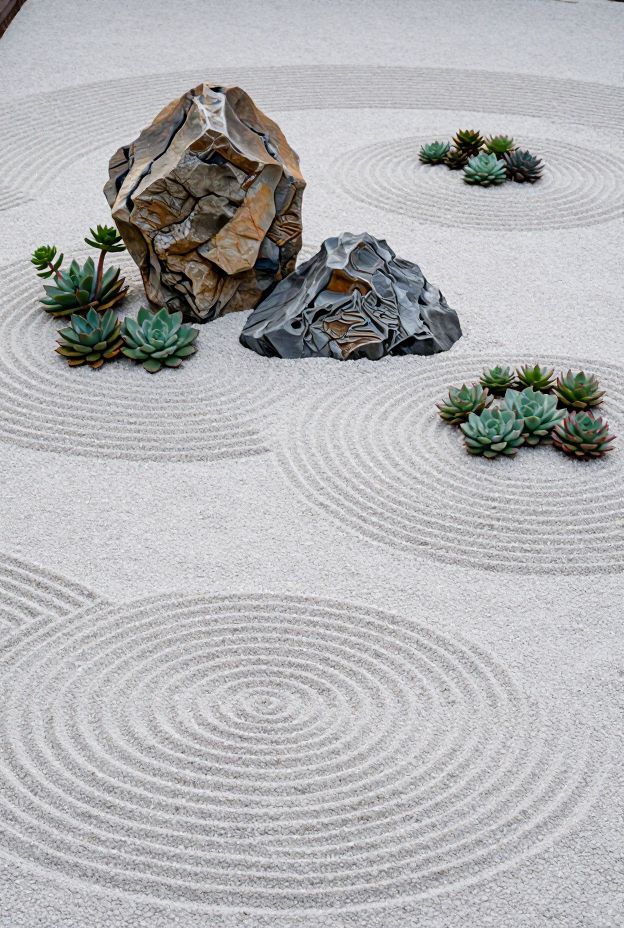
The minimalism forces you to appreciate each element. Every succulent becomes a sculptural focal point rather than just another plant. It’s the Marie Kondo approach to garden design – keep only what sparks joy and serves a purpose.
14. Succulent Ground Cover Slope Solution
Hillsides and slopes are perfect for succulent ground covers that prevent erosion while looking intentional. I planted ice plant and sedum on a steep embankment behind my house, and it’s become a self-sustaining tapestry of color that blooms throughout the year. Zero irrigation system needed once established.
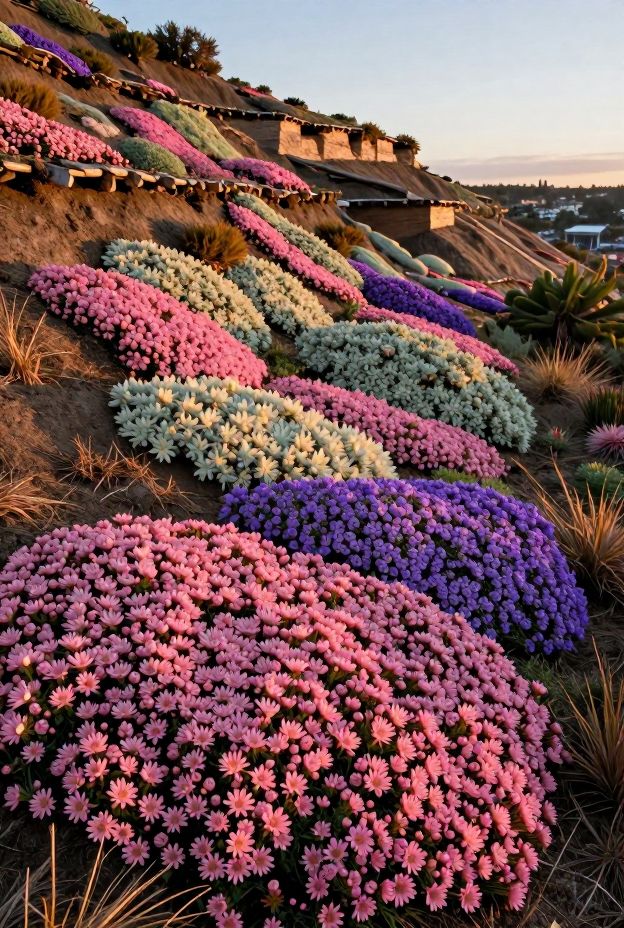
These spreading succulents create a living mulch that chokes out weeds and stabilizes soil. Choose varieties that spread quickly but aren’t invasive in your region. The result is a low-maintenance slope that actually enhances your property value.
Conclusion
There you have it – 14 ways to create stunning succulent gardens that practically take care of themselves. Whether you’re working with a tiny balcony or a sprawling backyard, these drought-tolerant beauties prove that low-maintenance doesn’t mean boring. I’ve personally tested most of these designs (some more successfully than others, let’s be honest), and they’ve all transformed neglect from a plant-killing liability into a thriving strategy. So pick a design that speaks to you, grab some succulents, and create an outdoor space that looks amazing even when you forget it exists for weeks at a time. Your future self – and your water bill – will thank you.