Look, I get it. You want fresh basil for your pasta, mint for your mojitos, and maybe some rosemary because it makes you feel fancy. But here’s the thing—most people think herb gardens are complicated or require some magical green thumb. Spoiler alert: they don’t. Whether you’re working with a tiny apartment balcony or a sprawling backyard, growing herbs is honestly one of the easiest ways to level up your cooking game without breaking the bank.
I’ve killed more plants than I care to admit (RIP to that basil I overwatered in 2023), but I’ve also figured out what actually works. These 12 herb garden ideas aren’t just creative—they’re practical, beginner-friendly, and designed to keep you stocked with fresh flavors no matter the season. Let’s jump in.
1. Vertical Wall Planter: When Floor Space is a Myth
If you’re living in a shoebox-sized apartment like I did for years, floor space is precious real estate. A vertical wall planter lets you grow multiple herbs without sacrificing that square footage. I mounted one on my balcony wall, and suddenly I had basil, cilantro, parsley, and thyme all within arm’s reach.
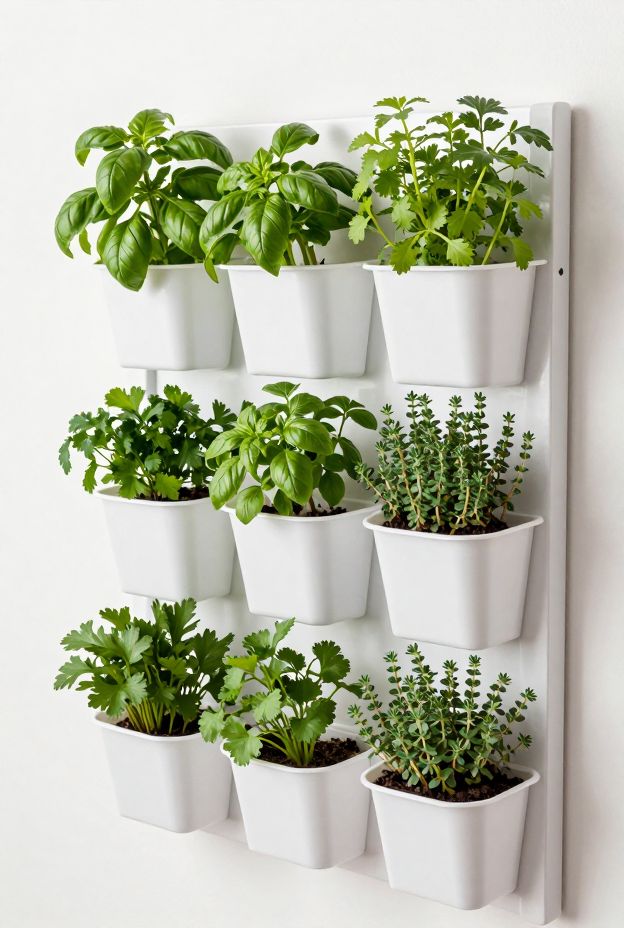
Here’s what makes vertical planters amazing:
- Space-efficient: You’re using wall space instead of floor space
- Easy drainage: Most designs have built-in drainage systems
- Visual appeal: It looks like a living art installation (hello, Instagram-worthy kitchen)
- Accessibility: Everything’s at eye level, so no bending down
Pro tip: Choose herbs with similar water needs for each vertical section. I learned this the hard way when my thyme drowned because it shared space with moisture-loving mint. :/
2. Mason Jar Windowsill Garden: Budget-Friendly Brilliance
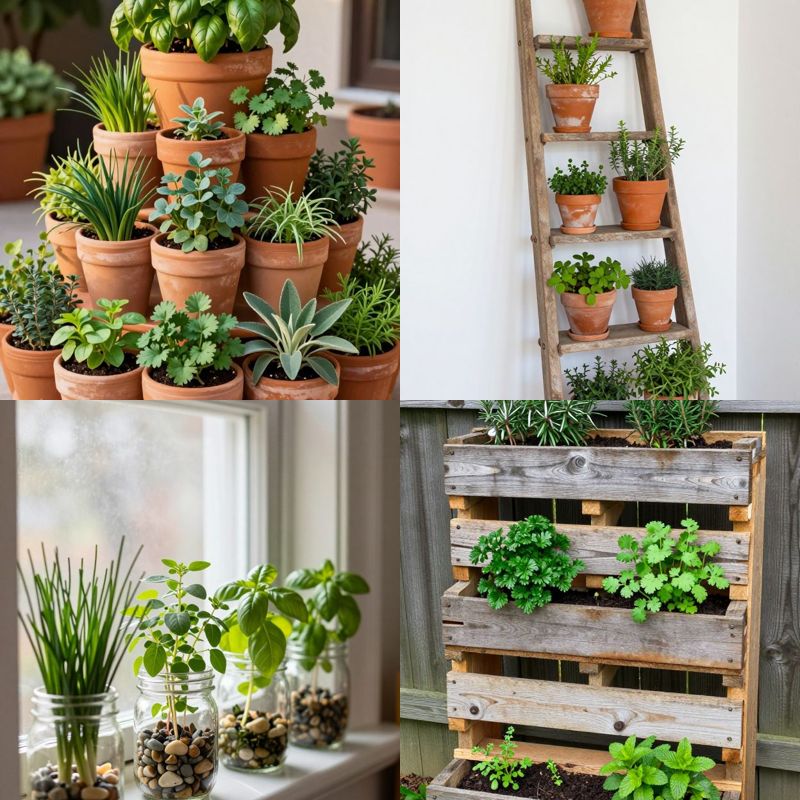
Mason jars aren’t just for hipster coffee shops anymore. Line up a few on your kitchen windowsill, and boom—instant herb garden. I love this setup because it costs almost nothing, and you can literally reach over while cooking to snip what you need.
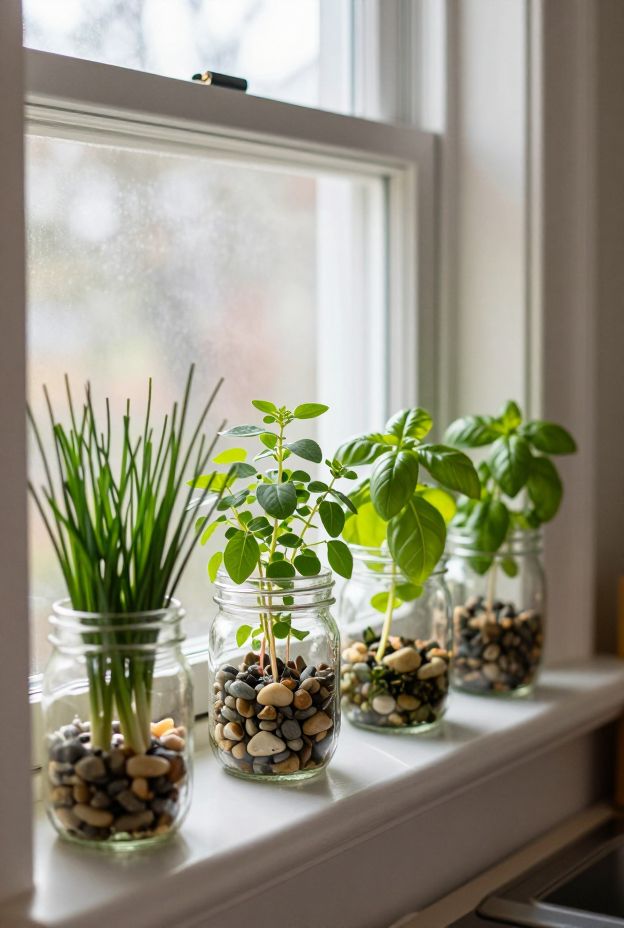
The key is choosing the right herbs. Stick with compact varieties like chives, oregano, and small basil plants. Add some pebbles at the bottom for drainage, and make sure your windowsill gets at least 4-6 hours of sunlight. FYI, south-facing windows work best if you’re in the Northern Hemisphere.
3. Hanging Basket Herb Garden: Gravity is Optional
Why limit yourself to ground-level gardening when you can literally hang your herbs from the ceiling or hooks? Hanging baskets work incredibly well for trailing herbs like oregano, thyme, and even some varieties of mint that like to spread like they own the place.
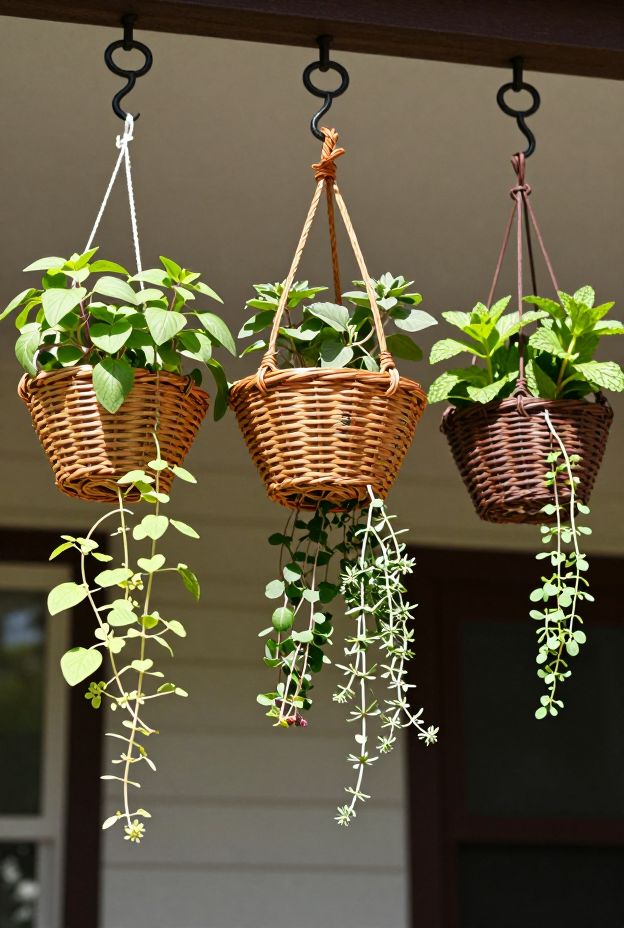
I hung three baskets above my patio table, and honestly, it’s both functional and decorative. Ever tried reaching up to grab fresh basil while grilling? It feels oddly satisfying. Just remember to water these more frequently—hanging plants dry out faster because air circulates around the entire pot.
4. Repurposed Pallet Planter: Rustic Meets Resourceful
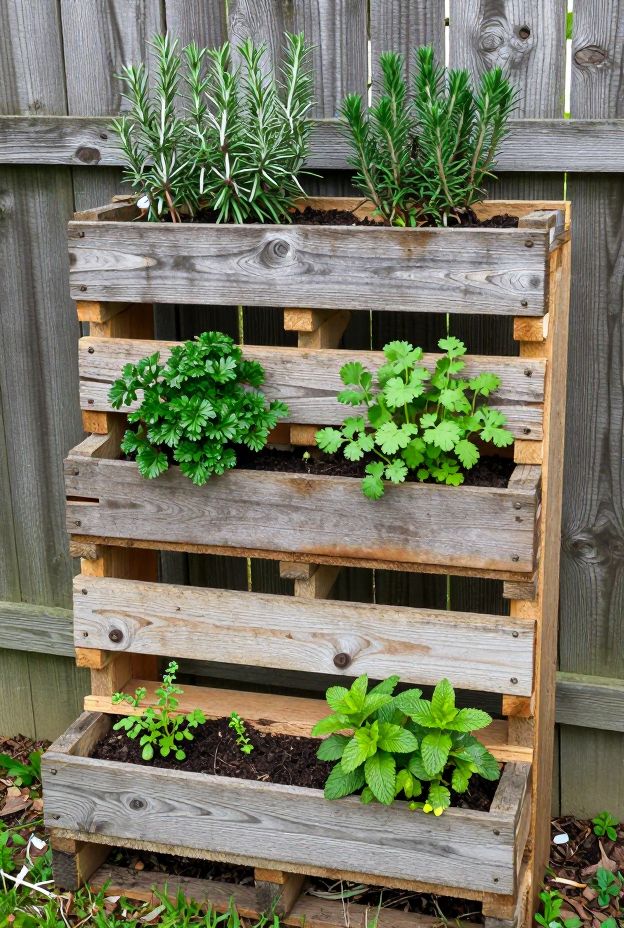
Got an old wooden pallet lying around? Don’t toss it. You can transform it into a seriously cool herb garden that leans against a wall or fence. Sand it down, add some landscape fabric to the back, fill it with soil, and plant away.
What I planted in mine:
- Rosemary in the top slots (it likes good drainage)
- Parsley and cilantro in the middle
- Mint in the bottom (contained, because mint is basically the Genghis Khan of herbs)
This setup gives you tons of planting space while looking rustic and intentional. Plus, you’re recycling, so you can feel good about your environmental impact while seasoning your dinner.
5. Tiered Strawberry Planter: Not Just for Berries
Those tiered strawberry planters you see everywhere? They’re perfect for herbs too. Each pocket becomes home to a different herb, and the vertical design means you maximize space while keeping everything organized and easy to harvest.
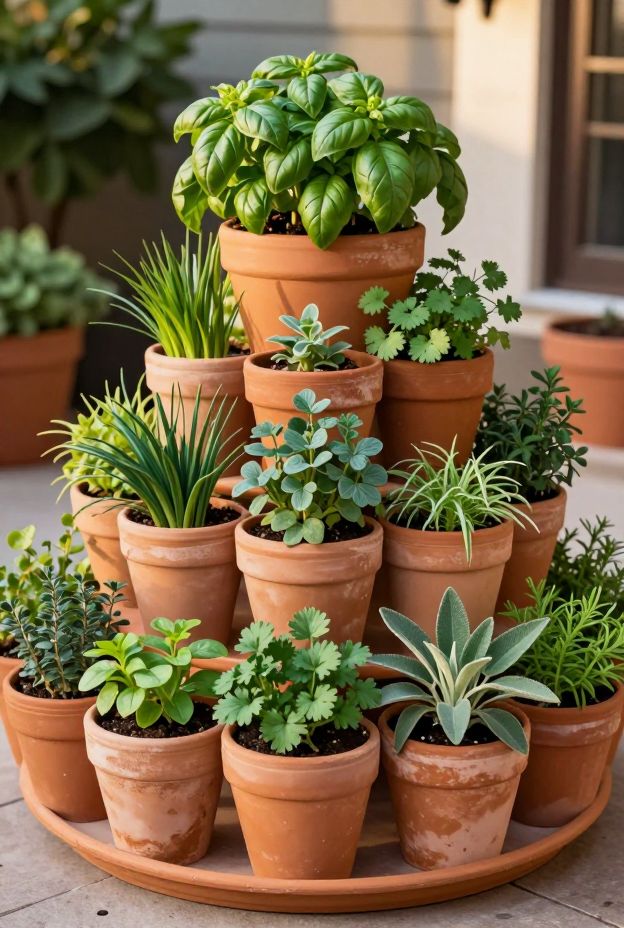
I use one on my patio and rotate herbs seasonally. Spring brings cilantro and dill, summer gets basil and chives, and fall welcomes sage and parsley. The drainage is excellent, and I never have to worry about herbs competing for root space. IMO, this is one of the most underrated herb garden setups out there.
6. Indoor Hydroponic System: Tech Meets Taste
Okay, hear me out on this one. Hydroponic systems might sound fancy and expensive, but modern countertop versions are surprisingly affordable and ridiculously easy to use. No soil, no mess, just water, nutrients, and a grow light.
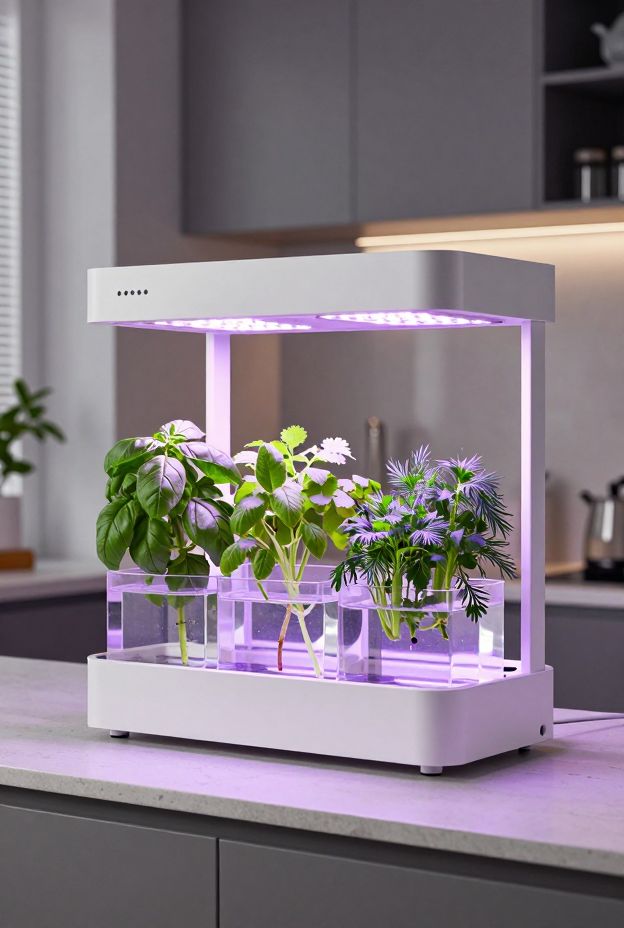
I was skeptical until I tried one last winter. My basil, cilantro, and dill grew faster than they ever did in soil, and I had fresh herbs during those dreary months when outdoor gardening was impossible. The upfront cost is higher, but you’re growing year-round without worrying about seasons or weather.
Why Hydroponic Works
- Faster growth: Herbs grow 25-30% faster than soil-grown plants
- No weeds: Because there’s no soil (duh)
- Consistent yields: You control everything—water, nutrients, light
- Space-saving: Most systems are compact and fit on countertops
7. Gutter Garden: Surprisingly Genius
Rain gutters aren’t just for roofs. Mount them horizontally on a fence or wall, add drainage holes, fill with soil, and you’ve got yourself a linear herb garden that’s perfect for shallow-rooted herbs. I’ve seen these on balcony railings, garage walls, and even inside greenhouses.
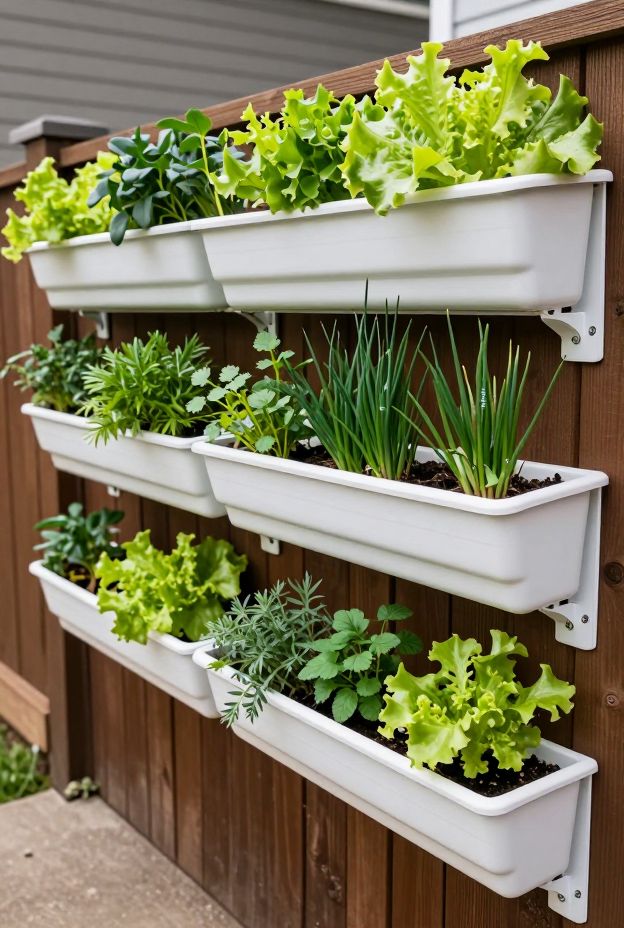
The best part? You can customize the length based on your space. Need a 10-foot herb garden? Go for it. Only have room for 3 feet? That works too. Just make sure you’re planting herbs that don’t need deep roots—think lettuce, cilantro, and chives rather than rosemary or lavender.
8. Spiral Herb Garden: Form Meets Function
A spiral herb garden is basically a raised bed shaped like… well, a spiral. It creates different microclimates at different heights, so you can plant Mediterranean herbs (rosemary, thyme, oregano) at the sunny, well-drained top and moisture-loving herbs (mint, parsley, chives) at the shadier, damper bottom.
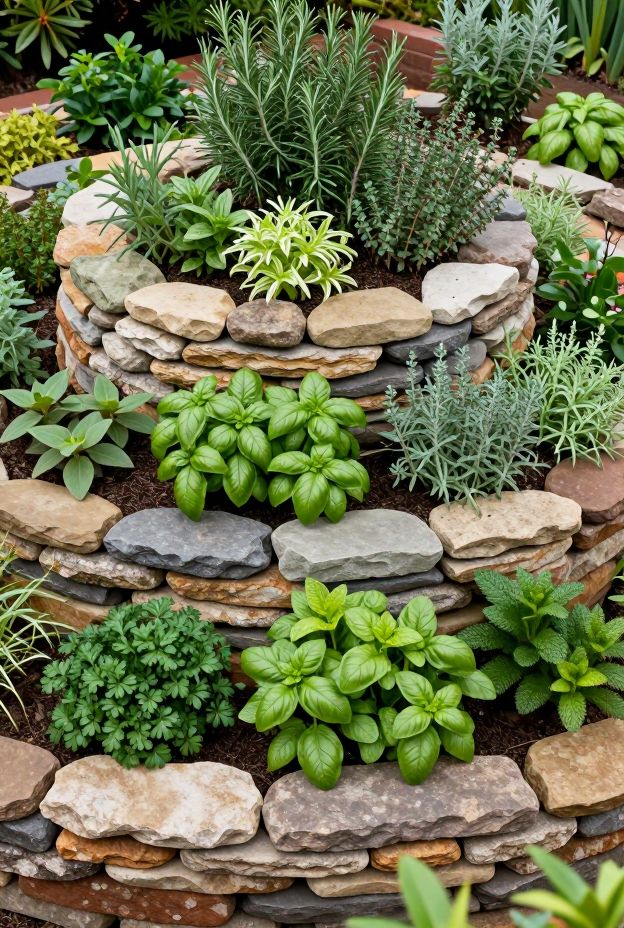
Building one takes some effort—you’re stacking stones or bricks in a spiral pattern—but the result is stunning and incredibly functional. Plus, you look like a gardening genius when guests ask about it. 🙂
Planting Strategy for Your Spiral
- Top tier: Rosemary, thyme, oregano (full sun, dry conditions)
- Middle tier: Basil, cilantro, sage (moderate sun and moisture)
- Bottom tier: Mint, parsley, chives (partial shade, more moisture)
9. Self-Watering Container Garden: For the Forgetful
Let’s be real—sometimes you forget to water your plants. I’ve been there more times than I’d like to admit. Self-watering containers have a reservoir at the bottom that gradually releases water to the soil, so your herbs stay hydrated even when you forget about them for a few days.
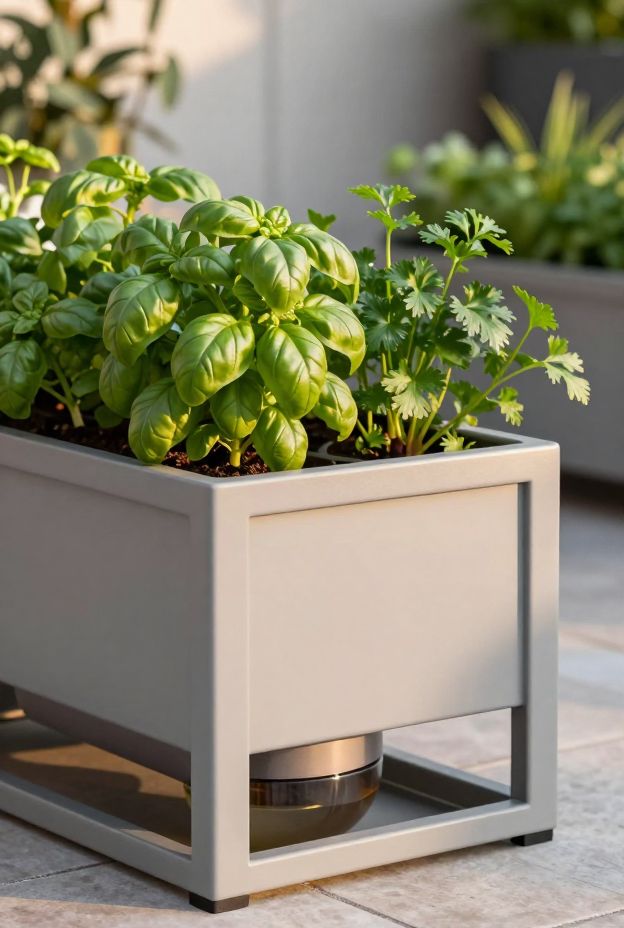
I use these for my basil and parsley, and honestly, they’ve saved me from plant murder multiple times. The herbs grow consistently because they’re getting steady moisture instead of my erratic “oh crap, I forgot to water” schedule. Worth every penny if you’re prone to neglecting your plants.
10. Ladder Shelf Herb Garden: Vertical Style with Character
An old wooden ladder makes an unexpectedly perfect plant stand. Lean it against a wall, place pots on each rung, and you’ve got a herb garden with serious vintage charm. I found an old ladder at a yard sale for $15, and it’s now the centerpiece of my herb collection.
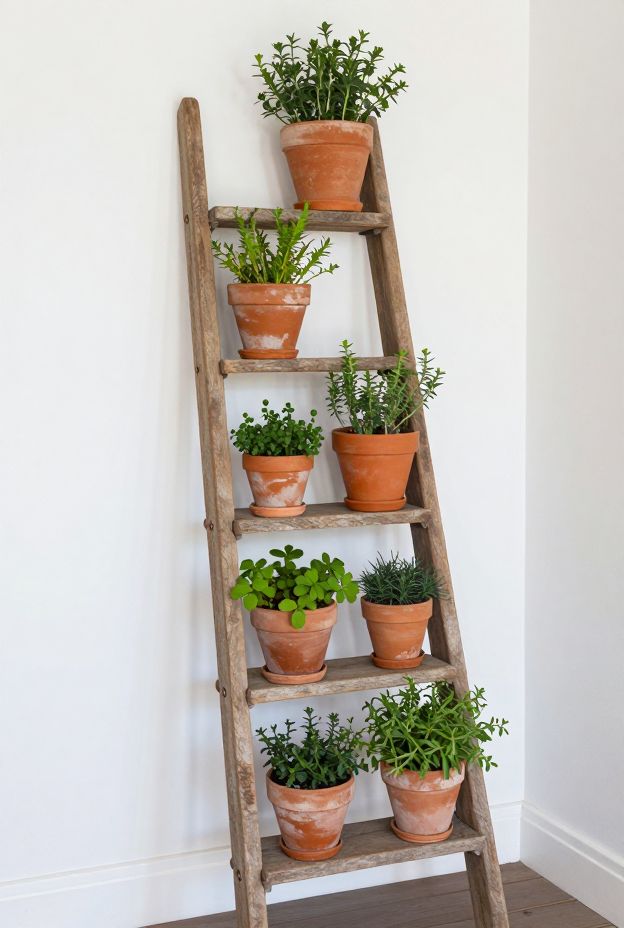
Each rung holds 2-3 small to medium pots, giving you plenty of growing space without eating up your square footage. Plus, you can easily move herbs up or down based on their light requirements. Shade-lovers go on bottom rungs, sun-worshippers climb to the top.
11. Sink or Bathtub Planter: Upcycling at Its Finest
Got an old sink or bathtub from a renovation? Before you haul it to the dump, consider turning it into a seriously quirky herb garden. The built-in drainage (hello, plumbing holes) makes these perfect for plants, and the depth accommodates herbs with deeper root systems.
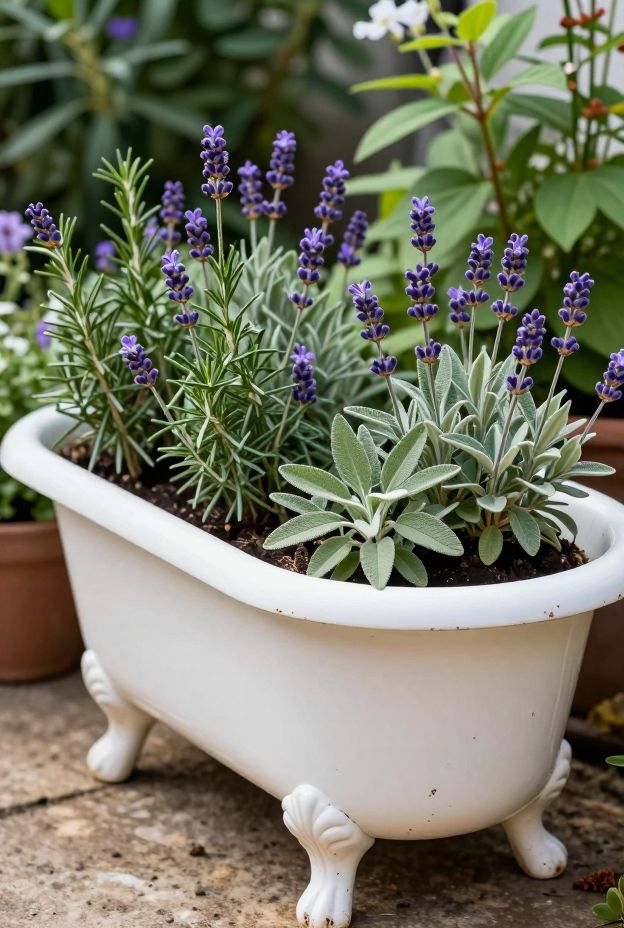
I’ve seen vintage clawfoot tubs filled with lavender, rosemary, and sage looking absolutely magical in gardens. Old farmhouse sinks work beautifully on patios or porches. Yeah, it’s a bit weird, but that’s exactly why it works. People love the conversation starter, and you get a functional, unique herb garden.
12. Window Box Herb Garden: Classic for a Reason
Sometimes the classics are classic because they simply work. Window boxes mounted outside your kitchen window give you immediate access to fresh herbs while adding curb appeal. I can literally open my kitchen window and grab whatever I need without stepping outside.
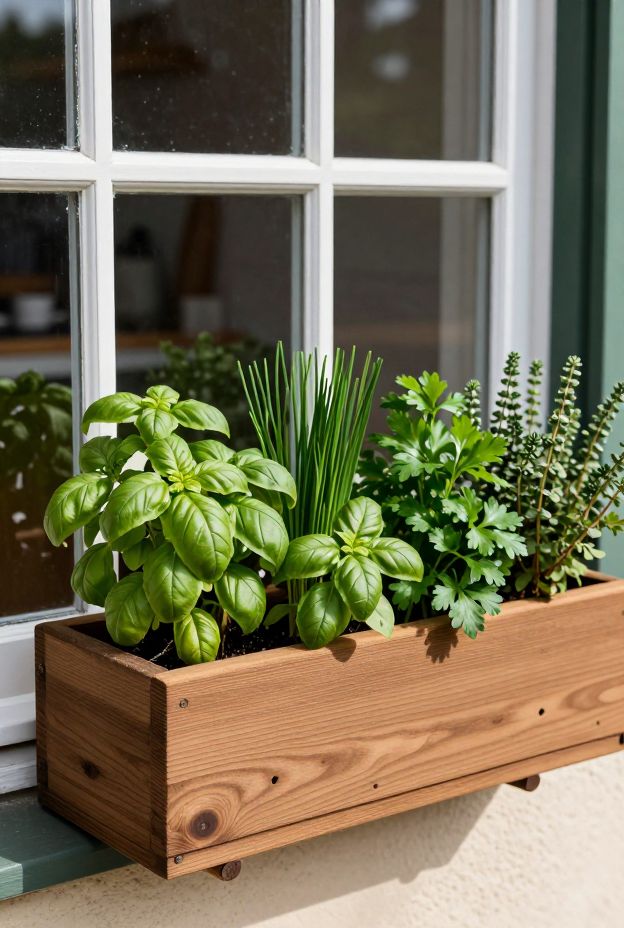
The key is choosing a sturdy box with good drainage and mounting it securely—nobody wants a herb garden crashing onto the sidewalk. I plant mine with a mix of culinary favorites: basil, chives, parsley, and thyme. During summer, the smell of fresh herbs wafting through open windows is honestly better than any candle you can buy.
Pro Tips for Window Box Success
- Secure mounting: Use heavy-duty brackets rated for the weight
- Drainage holes: Essential to prevent waterlogged roots
- Proper depth: Aim for at least 6-8 inches deep
- Regular harvesting: Keeps plants bushy and productive
Final Thoughts: Just Start Already
Here’s the thing about herb gardens—they’re more forgiving than you think. You don’t need a perfect setup or expensive equipment. Pick one idea from this list, start small, and grow from there (pun absolutely intended). I started with three mason jars on a windowsill, and now I’ve got herbs in every corner of my space.
The best herb garden is the one you’ll actually use. Whether that’s a high-tech hydroponic system or a repurposed bathtub full of rosemary, what matters is having fresh flavors at your fingertips. Your cooking will thank you, your wallet will thank you, and honestly, there’s something deeply satisfying about seasoning dinner with herbs you grew yourself.
Now stop overthinking it and get planting. Your future pasta deserves better than that sad dried basil from 2019 sitting in your spice cabinet.