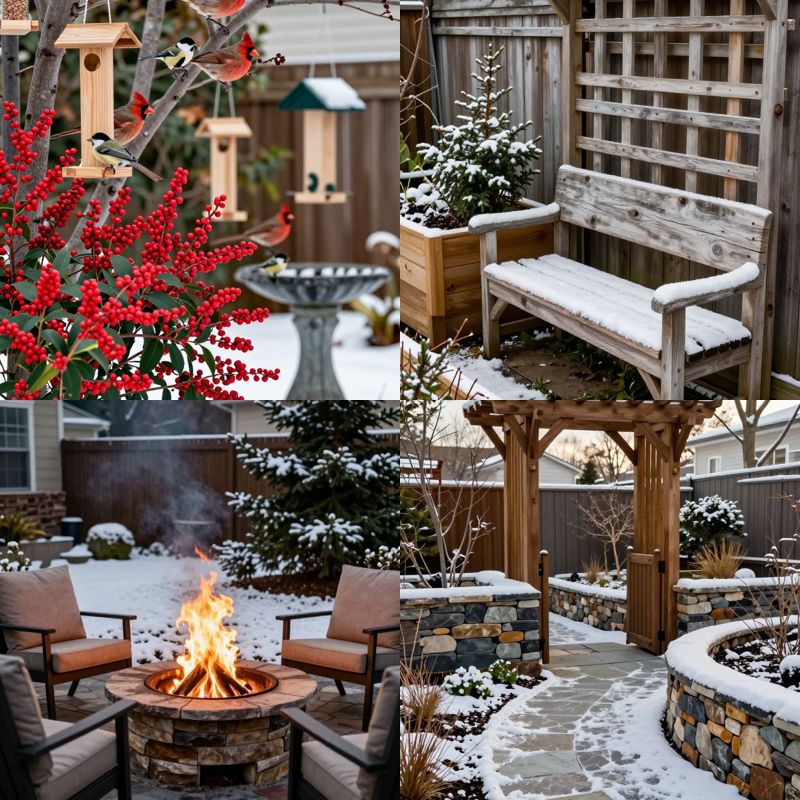
Winter doesn’t have to mean saying goodbye to your beautiful outdoor space. Your garden can absolutely shine during the coldest months if you know the right tricks to keep it cozy and inviting. I’ve spent countless winter mornings sipping coffee while staring at what used to be a sad, brown yard, and trust me, it doesn’t have to be that way. These 12 winter garden ideas will help you transform your outdoor space into a place you actually want to spend time in, even when it’s chilly outside.
1. Install a Fire Pit for Instant Warmth and Ambiance
Want to know the fastest way to make your winter garden irresistible? Add a fire pit. Nothing beats gathering around crackling flames when the temperature drops. You can choose from portable metal bowls, built-in stone structures, or even modern gas-powered options that light up with the flip of a switch.
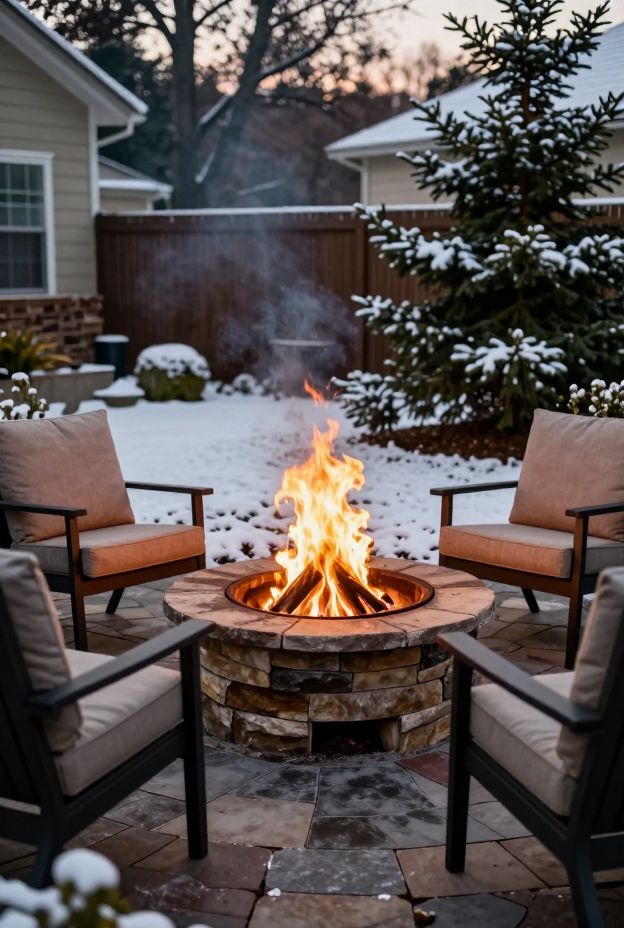
Fire pits create a natural gathering spot that draws people outside. Position yours on a paved area or stone patio for safety, and surround it with weatherproof seating. FYI, a fire pit also extends your outdoor entertaining season by months, making those crisp winter evenings perfect for s’mores and hot cocoa.
The dancing flames cast gorgeous shadows across your garden and provide enough warmth to keep you comfortable for hours. Plus, there’s something almost magical about watching snowflakes melt as they get close to the fire 🙂
2. Plant Evergreen Shrubs for Year-Round Structure
Evergreens are the backbone of any solid winter garden plan. While other plants go dormant and disappear, boxwood, holly, and yew keep your yard looking intentional and designed. I planted a row of boxwoods along my walkway three years ago, and they’ve saved my garden from looking completely dead every winter since.
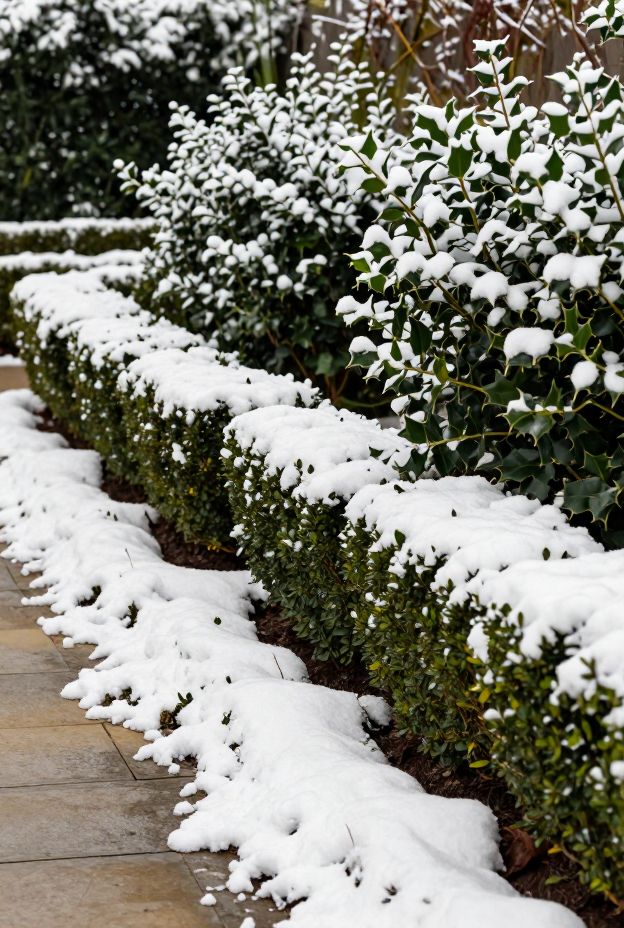
These hardy plants maintain their green color throughout the coldest months. They provide essential structure and shape when everything else has lost its leaves. You can use them as borders, hedges, or standalone specimens depending on your space.
Evergreen shrubs also look absolutely stunning when dusted with snow or frost. The contrast between dark green foliage and white snow creates a picture-perfect winter scene right in your backyard.
3. Add Winter-Blooming Flowers for Unexpected Color
Who says flowers only bloom in spring? Winter-blooming plants like hellebores, winter pansies, and cyclamen laugh in the face of cold weather. These tough little plants produce gorgeous blooms even when snow is on the ground.
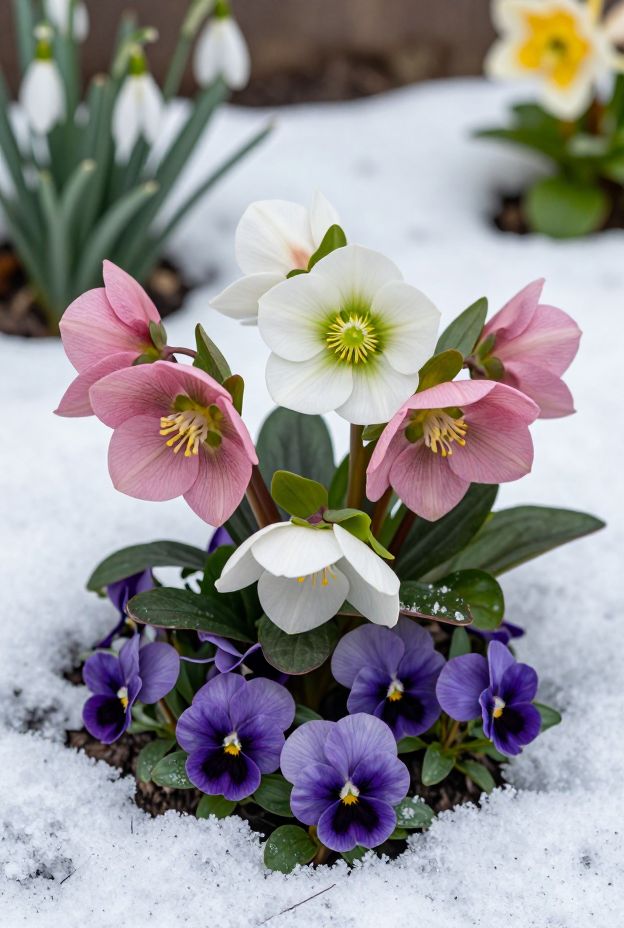
Hellebores, also called Christmas roses, push up their elegant flowers in late winter. Winter pansies provide reliable color all season long, and they’re surprisingly frost-tolerant. Snowdrops are another fantastic choice that literally bloom through the snow.
Plant these beauties in containers near your entrance or scatter them throughout your garden beds. They’ll give you those much-needed pops of color when you need them most. IMO, there’s nothing more cheerful than spotting bright blooms peeking through a snowy landscape.
4. Create a Sheltered Seating Area
You need a protected spot where you can actually sit and enjoy your winter garden. A sheltered seating area blocks wind and provides some overhead coverage from rain or snow. Think pergolas with clear roofing, covered gazebos, or even strategically placed hedges that create a cozy nook.
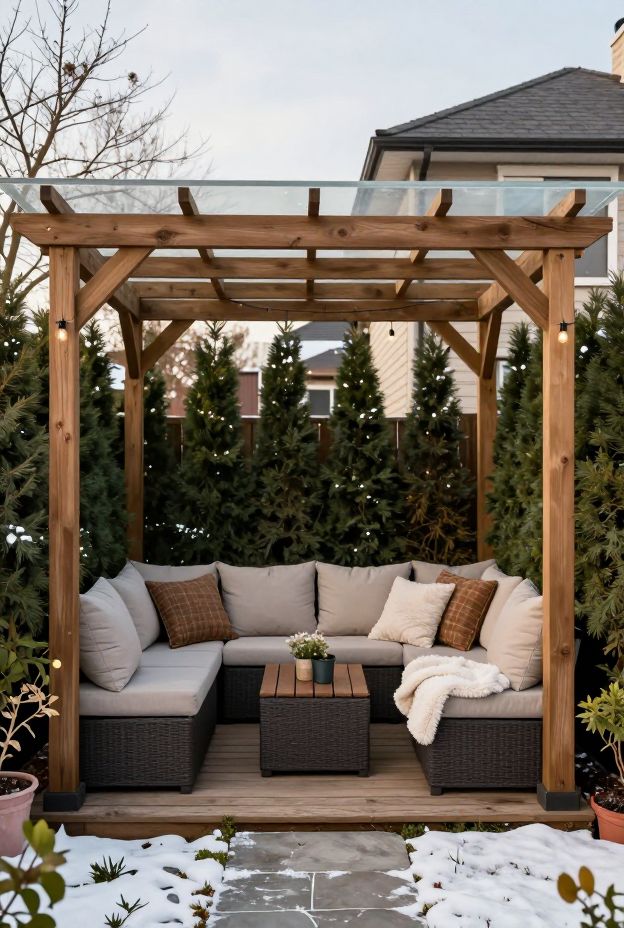
Position your seating to catch maximum winter sunshine. South-facing spots typically get the most warmth during the day. Add outdoor blankets, weatherproof cushions, and maybe a small outdoor heater to make the space truly inviting.
This sheltered space extends your living area outdoors. You can enjoy your garden even on blustery days, watching the weather from your protected vantage point. It’s basically like having a front-row seat to nature’s winter show.
5. Use Decorative Containers and Pots
Empty containers look depressing in winter, but filled pots can totally transform your space. Choose weatherproof containers that won’t crack in freezing temperatures, and fill them with winter-hardy plants, evergreen branches, or seasonal decorations.
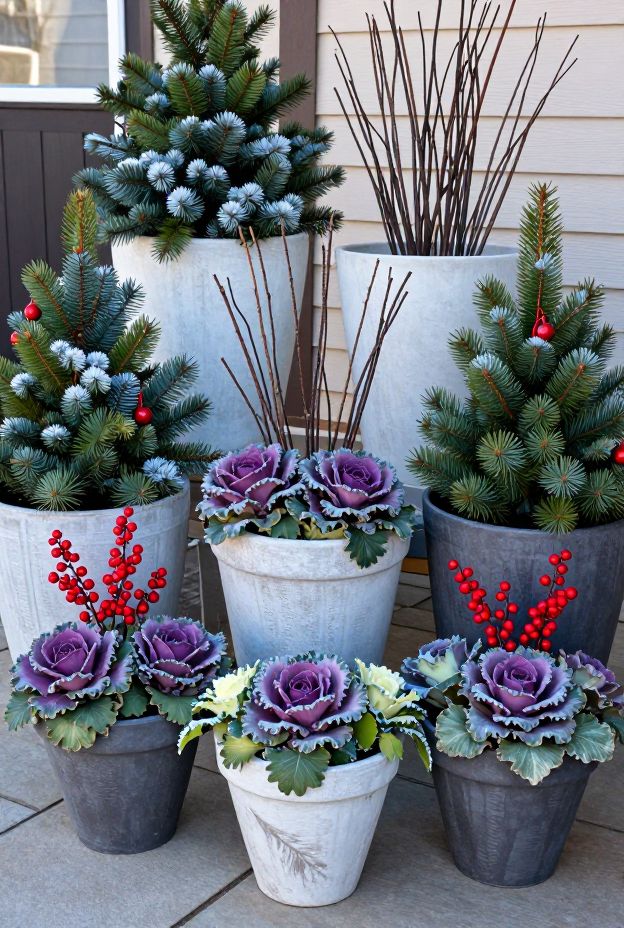
Combine evergreen ferns with ornamental cabbages for interesting texture. Add twigs, berries, and pine branches for a natural, festive look. You can change these arrangements throughout winter to keep things fresh.
Group containers of different heights near your entrance, along pathways, or on your patio. They create instant visual interest and bring life to areas that might otherwise look bare. Plus, containers are way easier to maintain than entire garden beds during cold months.
6. Install Outdoor Lighting for Magical Evenings
Winter means darker afternoons, so outdoor lighting becomes essential. String lights, lanterns, and pathway lighting make your garden usable and beautiful after sunset. I strung cafe lights across my patio two winters ago, and now I can’t imagine the space without them.
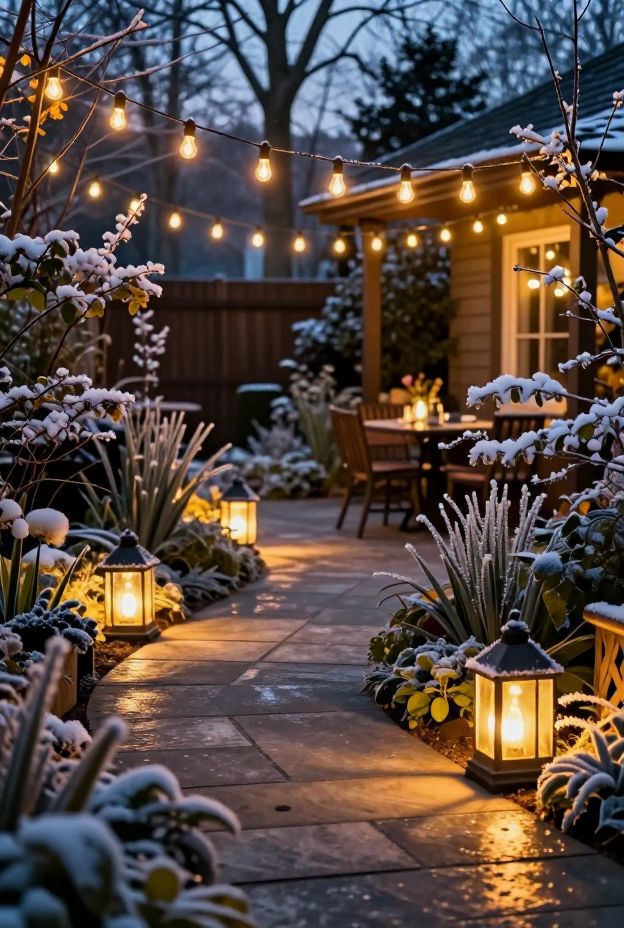
Layer different types of lighting for the best effect. Use string lights for ambient glow, spotlights to highlight trees or architectural features, and pathway lights for safety. Solar-powered options make installation super easy since you don’t need electrical work.
Good lighting transforms your garden into an enchanting evening retreat. It also makes your outdoor space feel larger and more inviting. When those lights reflect off frost or snow, the effect is absolutely stunning.
7. Showcase Trees with Interesting Bark
Some trees save their best look for winter when their decorative bark takes center stage. Silver birch has gorgeous white bark that practically glows against winter skies. Japanese maples reveal their elegant branching structure once leaves drop, and their bark often features beautiful colors.

Paper bark maples have exfoliating bark that peels in cinnamon-colored strips. River birches offer salmon-pink peeling bark that catches your eye from across the yard. These trees provide serious visual interest when most other plants offer nothing.
Plant these specimens where you’ll see them from indoor windows. Position them as focal points in your garden layout. Their architectural beauty becomes even more apparent when snow or frost highlights their branches and bark texture.
8. Add Red Twig Dogwood for Bold Color
If you want serious winter drama, you need red twig dogwood. These deciduous shrubs lose their leaves but reveal brilliant red or yellow stems that practically glow against snow and gray skies. The color intensifies as temperatures drop, making them perfect winter performers.
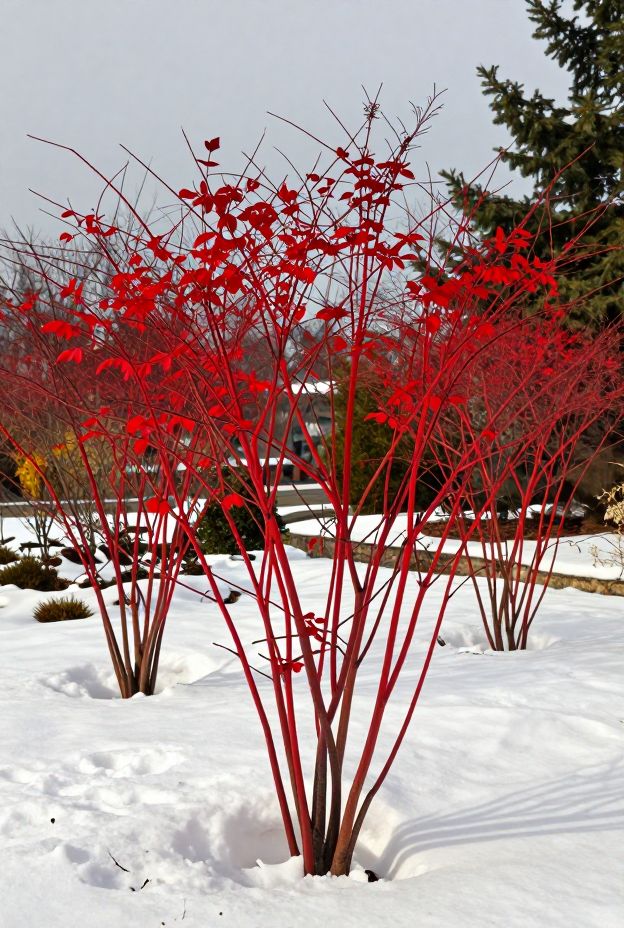
Red osier dogwood and Arctic Fire varieties are particularly stunning. Plant them in groups for maximum impact, or use them as border plantings. The vibrant stems need no flowers or foliage to make a statement.
These shrubs love moisture, so plant them in areas that stay relatively damp. You can even cut some stems for indoor winter arrangements. The best part? They’re incredibly low-maintenance and deer-resistant.
9. Incorporate Natural Wood Elements
Wood brings instant warmth to cold winter landscapes. Wooden benches, trellises, raised beds, and decorative structures add earthy tones and cozy vibes to your garden. The natural material contrasts beautifully with frost and snow.
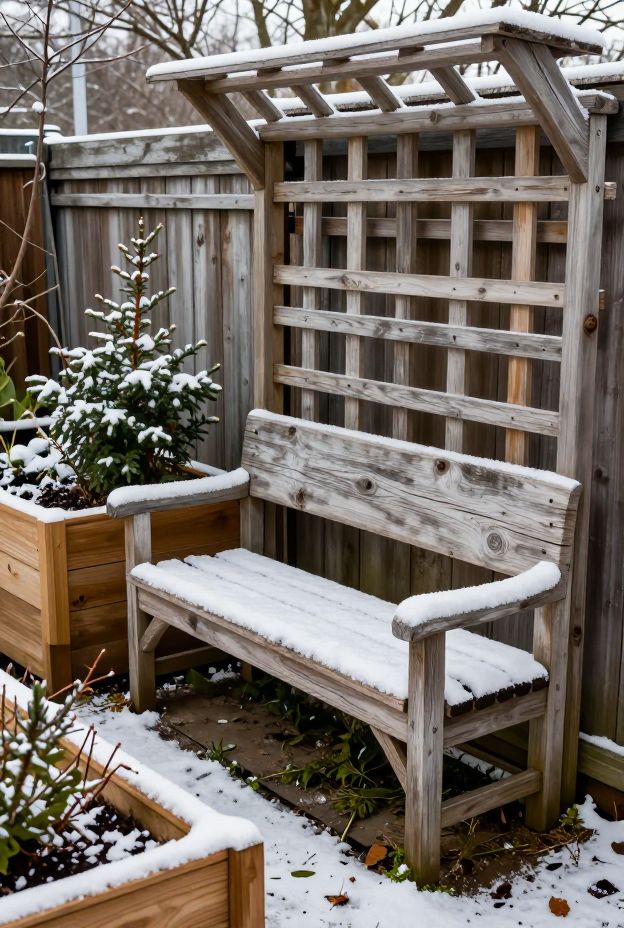
Choose weather-resistant woods like cedar or teak that can handle winter conditions. A rustic wooden bench creates a charming seating spot even when it’s too cold to actually sit there. Wooden obelisks and trellises add vertical interest and structure to empty winter beds.
Wood also ages gracefully in outdoor settings. The weathered gray patina that develops over time adds character and cottage-garden charm. These elements make your garden feel intentionally designed rather than accidentally abandoned for the season.
10. Plant Ornamental Grasses for Movement and Texture
Ornamental grasses are winter garden superheroes. Prairie grasses like little bluestem, switch grass, and Indian grass turn gorgeous shades of gold, copper, and burgundy as temperatures drop. Their seed heads catch frost and snow in absolutely magical ways.
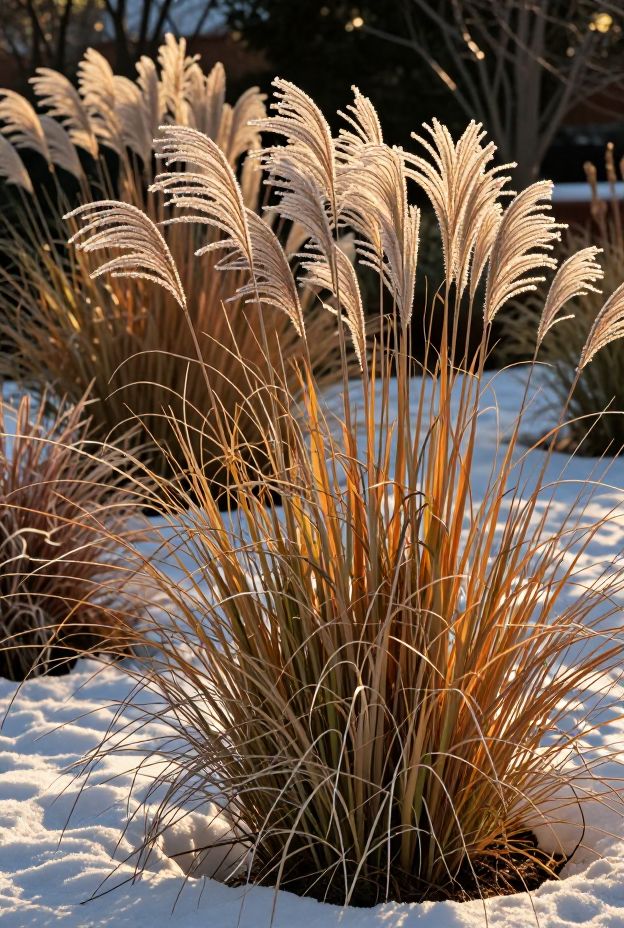
These grasses sway in winter breezes, adding movement and life to your garden. They stand tall through snow and ice, maintaining their structure when other perennials collapse. The rustling sound they make in the wind is surprisingly soothing.
Leave them standing all winter rather than cutting them back in fall. Their vertical forms provide habitat for beneficial insects and birds. Come spring, you can cut them back just before new growth emerges. Until then, they’re pure winter gold.
11. Attract Wildlife with Berries and Feeders
Your winter garden becomes way more interesting when you invite wildlife to visit. Plant berry-producing shrubs like winterberry holly, American highbush cranberry, or hawthorn. Birds flock to these food sources during lean winter months.
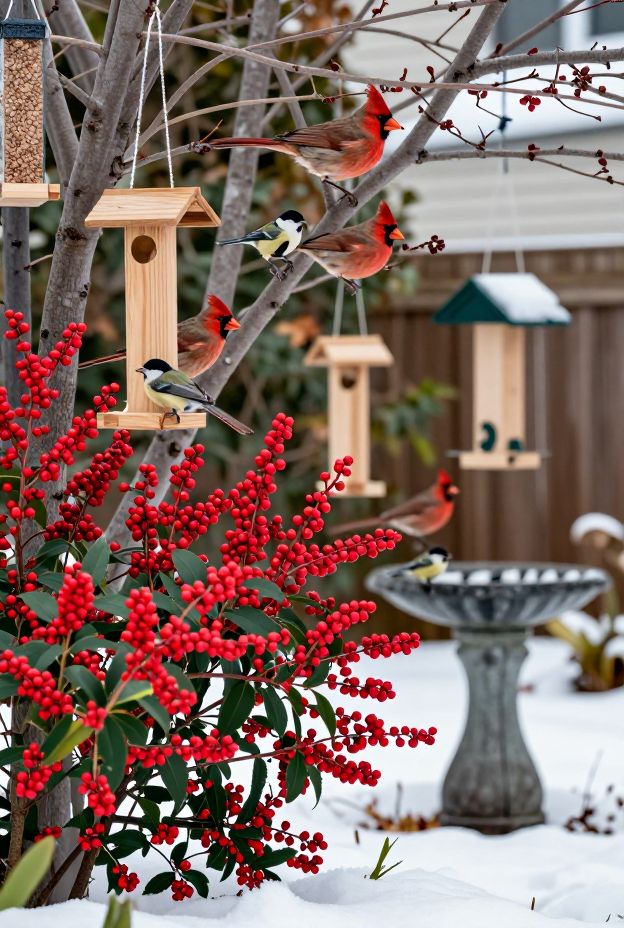
Add bird feeders filled with seeds, suet cakes, or dried fruit. Install a heated birdbath so wildlife has access to unfrozen water. Watching cardinals, chickadees, and other birds brings your winter garden to life in unexpected ways.
These berries also provide gorgeous winter color. Bright red winterberries look incredible against snow and evergreen backgrounds. You get the dual benefit of helping local wildlife while making your garden more visually appealing. Win-win!
12. Design with Hardscaping Features
Winter reveals your garden’s bones, so make sure those bones look good. Hardscaping elements like stone pathways, decorative walls, garden sculptures, and arbors become focal points when plants die back. A beautiful stone wall or elegant arbor provides year-round structure.
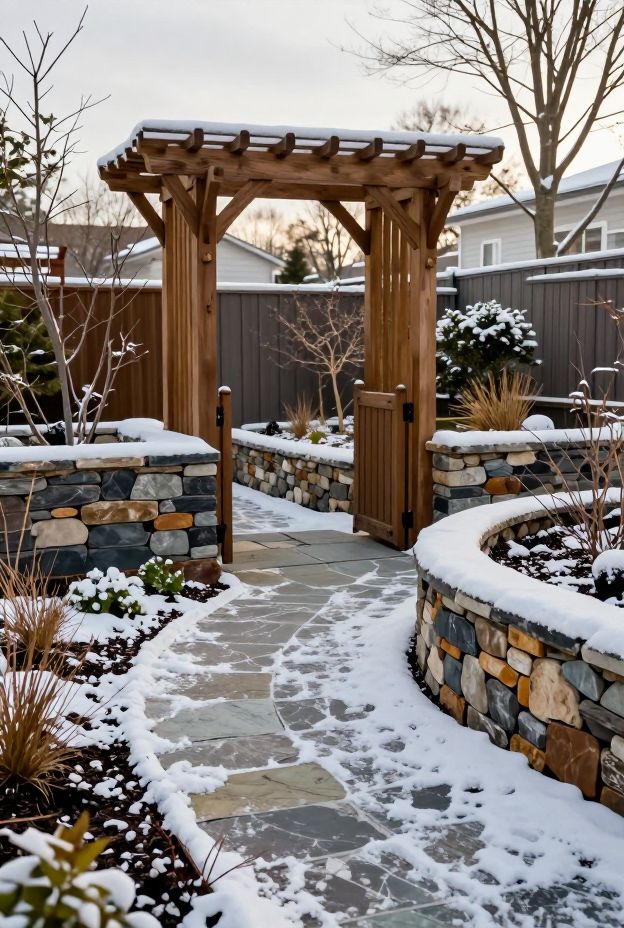
These permanent features require zero winter maintenance while adding major visual appeal. Stone and metal materials often look even better when covered with frost or a light dusting of snow. They create clear lines and defined spaces in your garden layout.
Consider adding a stone pathway that leads to your fire pit or seating area. Install a decorative arbor as an entrance to different garden rooms. These investments pay off every single day, but especially during winter when they’re doing all the heavy lifting aesthetically.
Conclusion
Your winter garden deserves just as much attention as your summer blooms. With these 12 cozy ideas, you’ll create an outdoor space that looks intentional and inviting all year long. The key is combining evergreen structure, pops of unexpected color, and elements that make you actually want to spend time outside.
Start with one or two ideas that excite you most. Maybe that’s finally installing that fire pit you’ve been dreaming about, or planting some red twig dogwood for instant drama. Winter gardens reward those who plan ahead and embrace the season’s unique beauty.
Your yard doesn’t have to hibernate just because it’s cold outside. Get out there and give your winter garden the love it deserves. You’ll be amazed at how much joy a well-designed winter space can bring during those long, cold months. Trust me, your future self will thank you when you’re sipping hot chocolate by the fire pit in January!