So, you want more birds singing in your garden? Same. There’s something genuinely magical about stepping outside with your morning coffee and spotting a robin splashing around like it owns the place. A birdbath is honestly one of the easiest ways to turn your garden into a bird hotspot, and the options out there are way more exciting than a plain concrete bowl on a stick. Let me walk you through 12 charming birdbath ideas that actually work.
1. The Classic Pedestal Birdbath
You can’t go wrong with a classic pedestal birdbath — it’s the little black dress of garden decor. A stone or concrete pedestal birdbath sits at the perfect height for birds to spot water from a distance, and it gives your garden that timeless cottage feel.
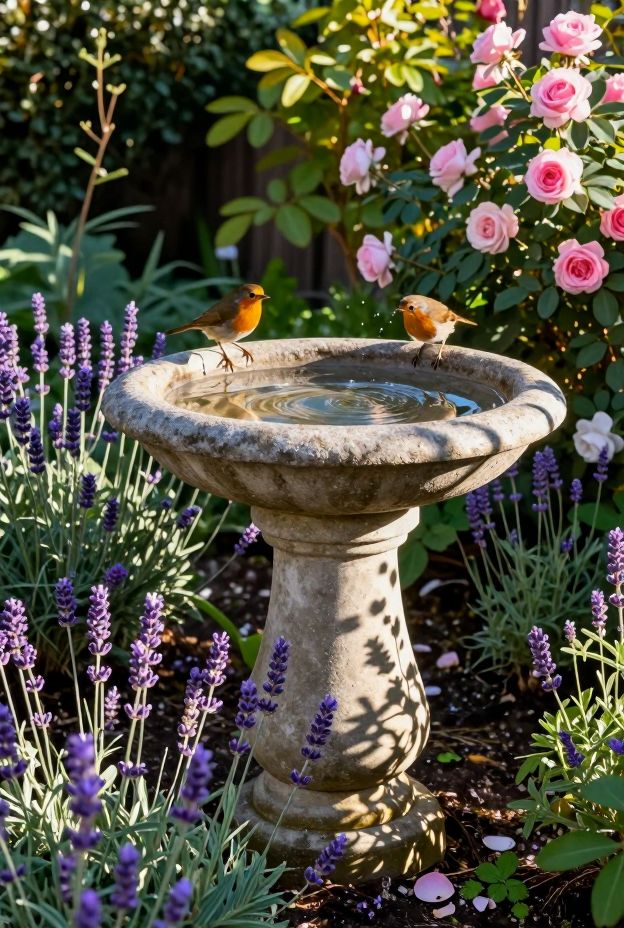
IMO, a weathered concrete finish looks far better than shiny new stone. Birds actually trust it more because it blends into the natural environment. Place it near shrubs or low-hanging branches so birds have somewhere to perch and assess the situation before hopping in.
Key placement tips:
- Keep it 10–12 feet from dense cover to reduce predator ambush risks
- Position it in dappled shade to slow water evaporation
- Make sure the basin is no deeper than 2–3 inches — birds aren’t looking for a swimming pool
2. Solar-Powered Fountain Birdbath
Moving water is basically a dinner bell for birds. A solar-powered fountain birdbath creates that gentle ripple sound that birds can hear from surprisingly far away. The movement also keeps mosquitoes from breeding — because nobody wants to accidentally create a mosquito resort in their garden. 🙂
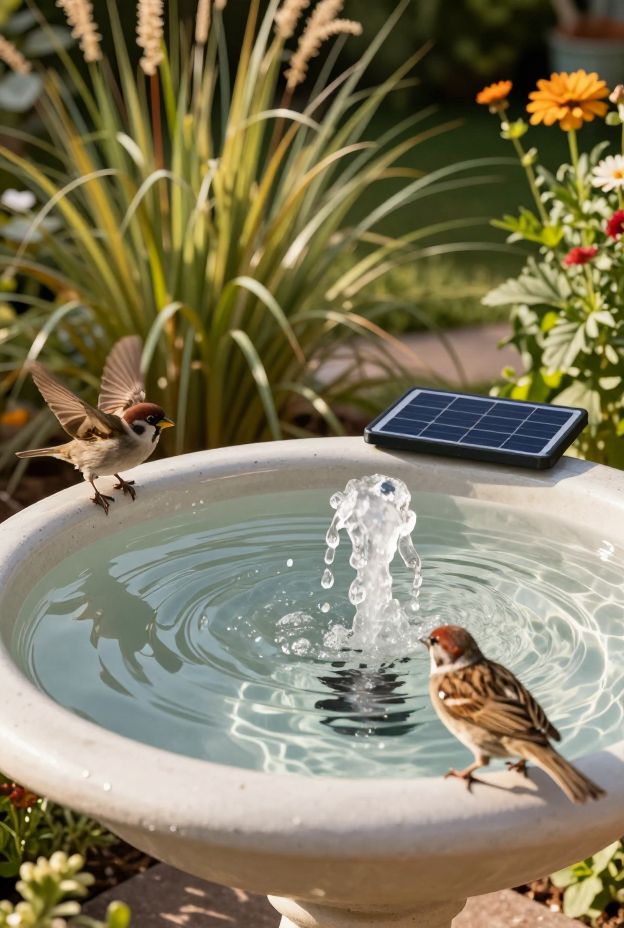
The solar panel charges during the day and keeps the fountain bubbling without adding a cent to your electricity bill. You can find compact solar fountain inserts that fit into almost any existing basin, which is a win if you already own a birdbath and just want to upgrade it.
What to look for in a solar fountain insert:
- Multiple spray head settings for different water patterns
- A battery backup so it keeps running on cloudy days
- Easy-clean filters that don’t require you to dismantle the whole thing
3. Hanging Birdbath for Small Gardens
No ground space? No problem. A hanging birdbath is perfect for balconies, small courtyards, or crowded garden beds. You suspend it from a tree branch or a shepherd’s hook, and suddenly you’ve opened up a whole new vertical dimension for bird activity.
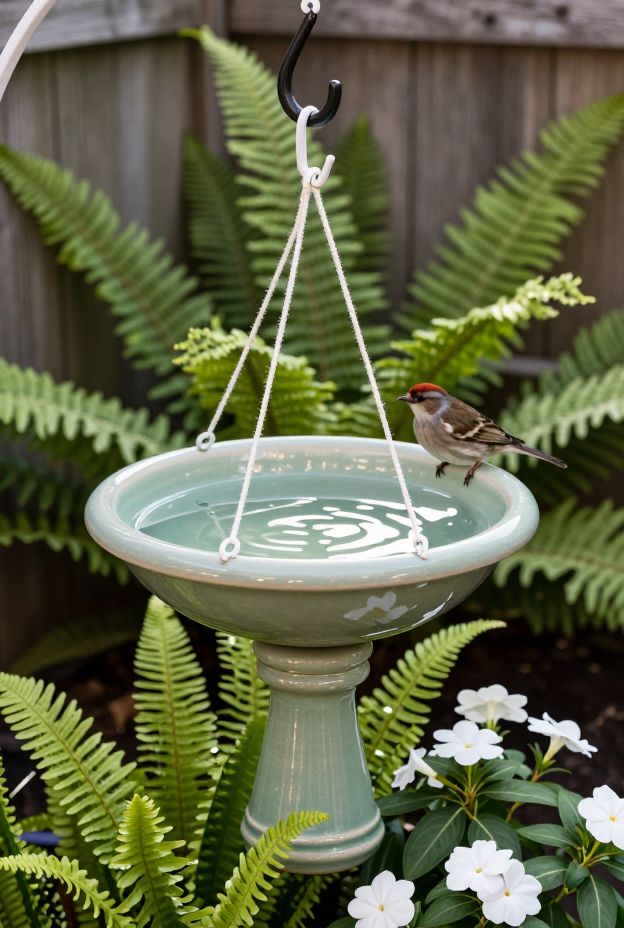
The trick with hanging birdbaths is stability. If the basin swings too much in the wind, birds will skip it entirely — they prefer a landing platform that doesn’t behave like a carnival ride. Look for designs with chain stabilizers or wide, flat basins with low centers of gravity.
4. Ground-Level Birdbath
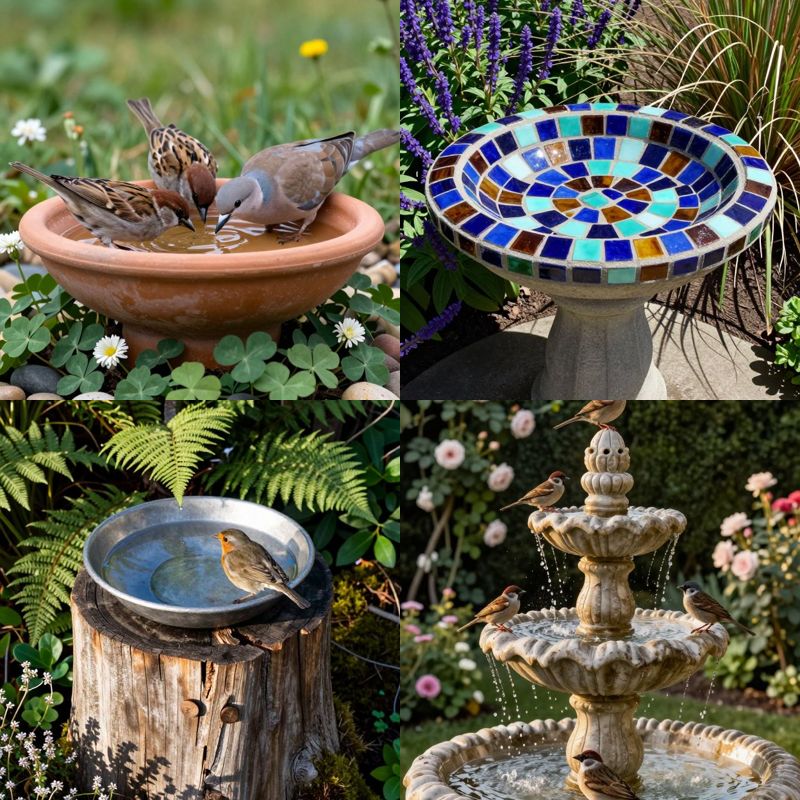
Here’s a fun fact: many ground-feeding birds like sparrows, doves, and towhees actually prefer a birdbath at ground level. It mimics the natural puddles they’d find after rain, so it feels familiar and safe to them.
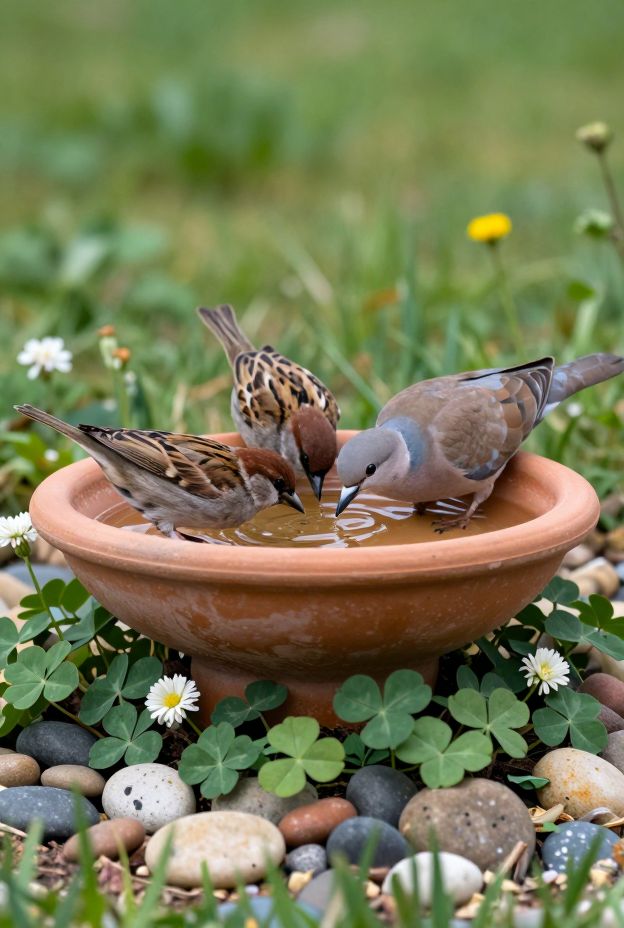
A shallow terracotta saucer or a flat flagstone with a gentle depression works beautifully. Just be extra careful about cats and other predators if you go this route. Place the bath in an open area so birds have a clear sightline in every direction — they like to see trouble coming.
5. Vintage Upcycled Birdbath
Ever looked at an old colander, a cracked ceramic bowl, or a dented wash basin and thought, “that could be something”? Because it absolutely can. Upcycled birdbaths made from vintage items add incredible character to a garden, and they cost next to nothing to make.
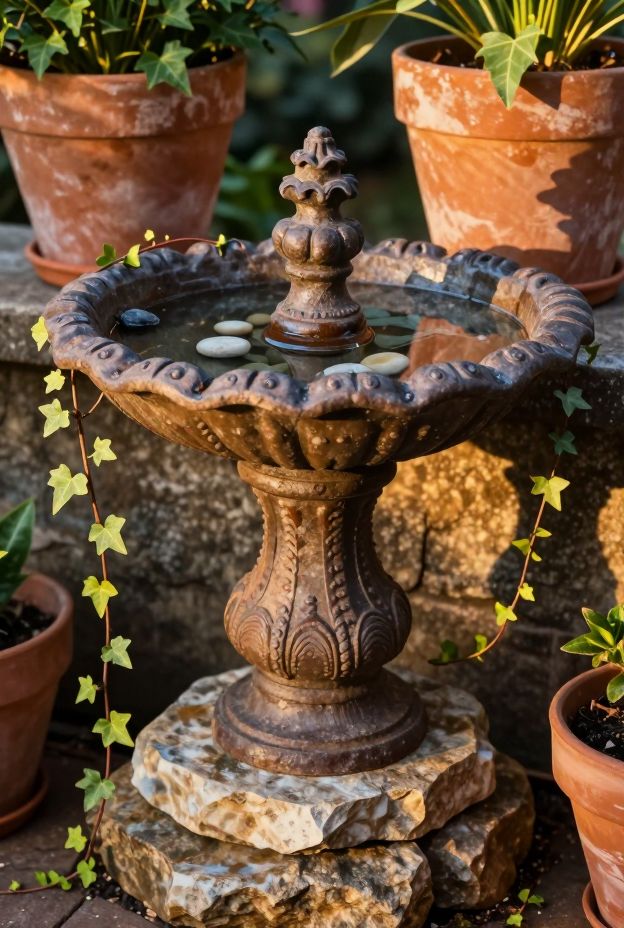
I’ve seen gorgeous birdbaths made from old cast iron skillets, antique sewing machine bases topped with shallow bowls, and even upturned ceramic lamp bases. The birds honestly don’t care about the aesthetics — but you will, every time you look out the window. Just make sure whatever you use is non-toxic, has no sharp metal edges, and holds water without leaking too fast.
6. Mosaic Tiled Birdbath
If you’re a little crafty, a mosaic tiled birdbath is one of the most rewarding weekend projects you’ll ever tackle. You take a plain concrete basin, apply your own tile design using waterproof grout, and end up with a one-of-a-kind garden centerpiece that looks genuinely stunning in sunlight.
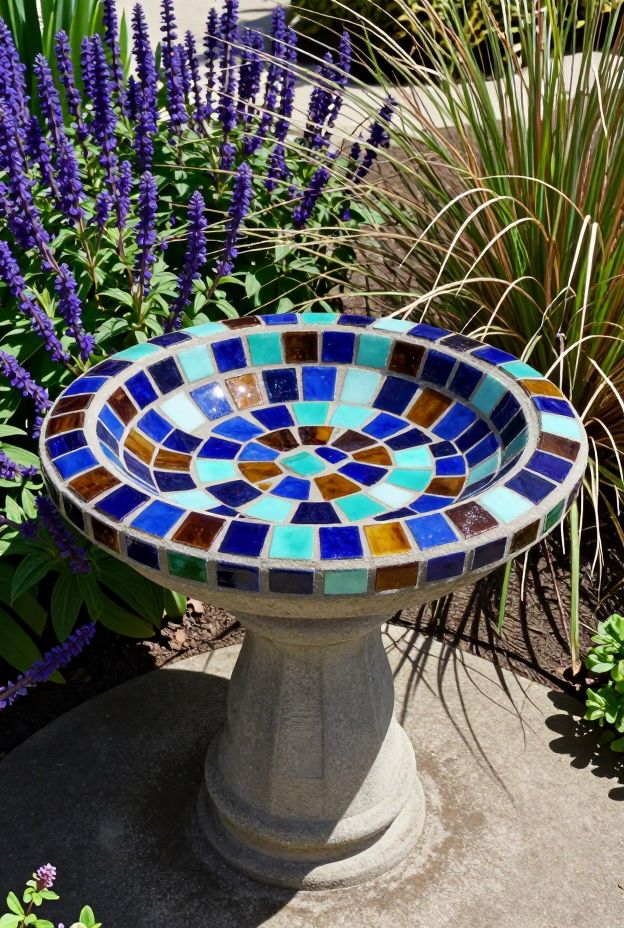
Use glass mosaic tiles in blues, greens, and earth tones to keep the look natural. Avoid tiles with overly reflective or mirror surfaces — birds can find those disorienting. Stick to unglazed or lightly textured tiles so the basin surface stays grippy for little bird feet.
7. Naturalistic Rock Pool Birdbath
Want birds to feel like they’ve found a hidden oasis? A naturalistic rock pool birdbath built from stacked stones or boulders with a shallow basin cut or carved into the top looks like something straight out of a nature documentary. Birds absolutely love it.
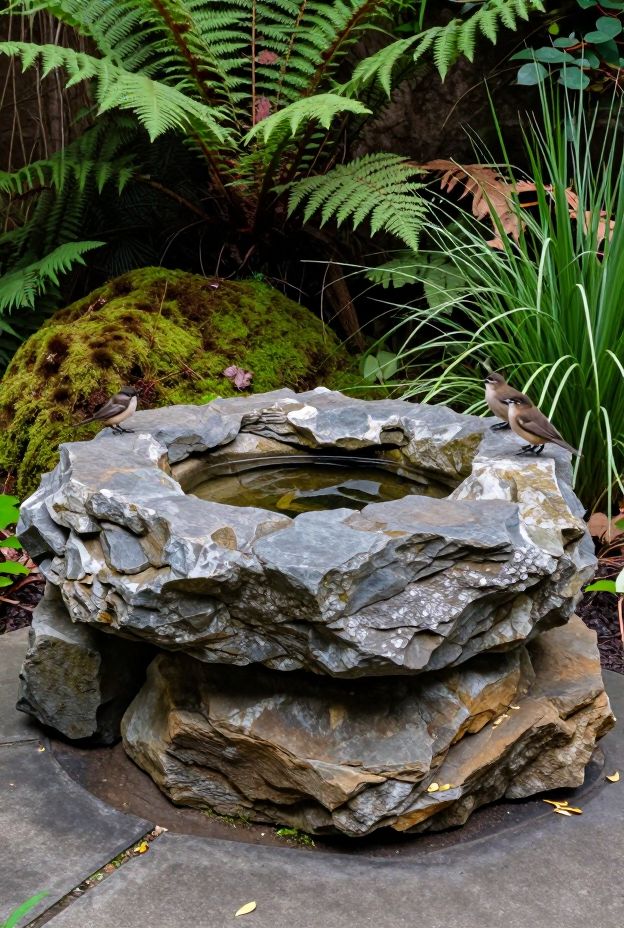
You can either DIY this with hypertufa (a lightweight concrete mix), buy a pre-formed rock-look resin basin, or simply arrange flat stones around a shallow metal bowl. The rougher, more organic the surface looks, the better. Bonus points if you surround it with native plants like ornamental grasses or ferns to complete the natural vibe.
8. Pedestal Birdbath with Built-In Dripper
A standard pedestal bath is great, but add a drip system and you’ve essentially built a bird magnet. Drippers create a slow, steady drip into the basin that produces that soft plinking sound birds find irresistible. FYI, this is probably the single most effective upgrade you can make to attract more species, including warblers and vireos that might otherwise pass your garden by.
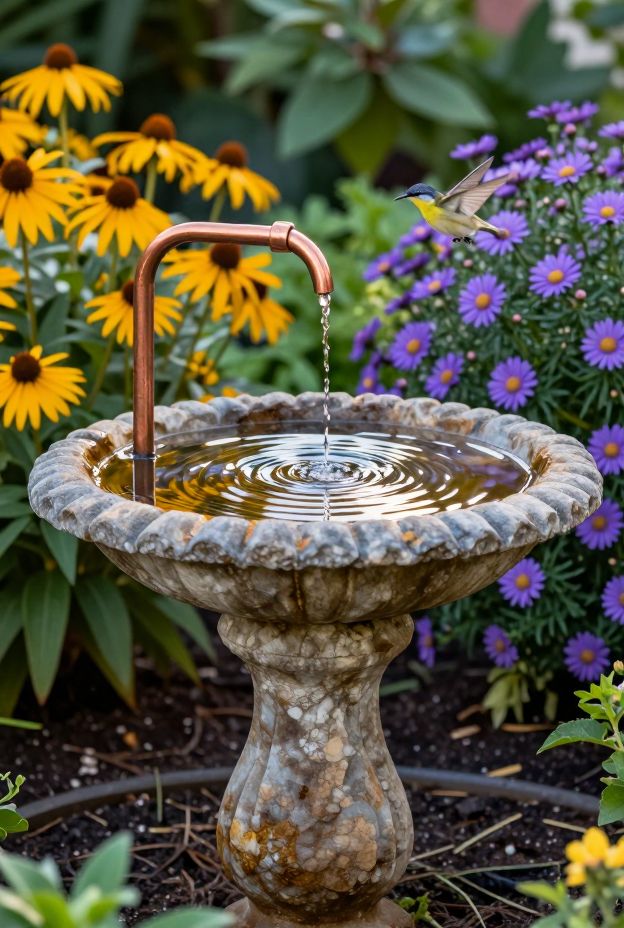
You can buy standalone dripper attachments that connect to your garden hose with a simple valve. Set the drip rate slow — you don’t want to waste water, and birds prefer a gentle trickle over a mini waterfall. Pair this with a pedestal bath in a visible, open spot and you’ll be amazed at the variety of birds that show up.
9. Ceramic or Glazed Pottery Birdbath
A glazed ceramic birdbath is the glamorous cousin of plain concrete. They come in stunning colors, handcrafted patterns, and interesting shapes that make them as much garden art as functional bird accessory. A deep cobalt blue or earthy terracotta glaze looks especially beautiful surrounded by green foliage.
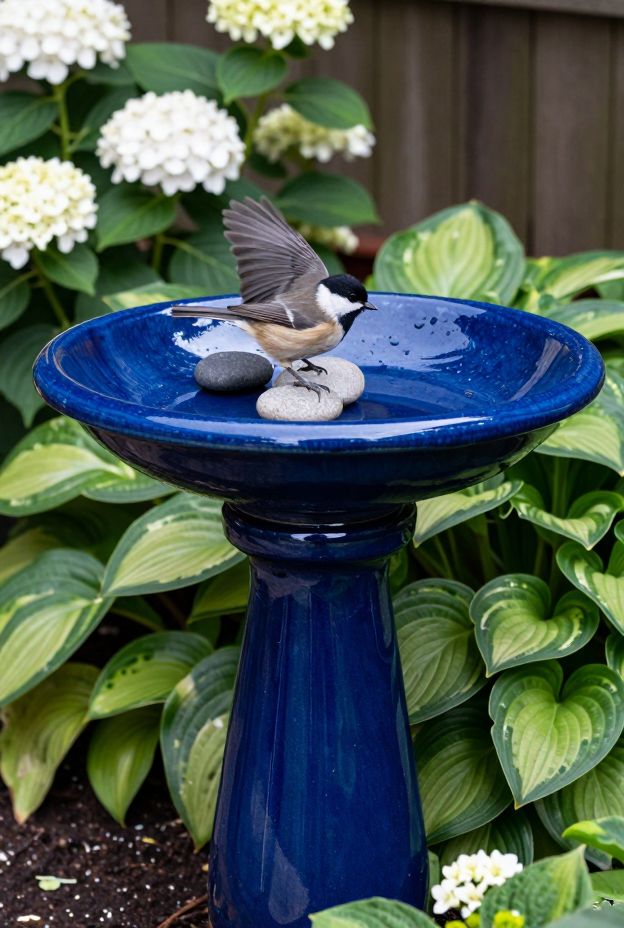
One practical note: glazed surfaces can get slippery when wet, which makes birds nervous. An easy fix is to place a few flat pebbles or marbles in the basin. It gives birds solid footing, reduces the water depth in the center, and honestly adds a nice decorative touch too.
10. Heated Birdbath for Winter Visitors
If you live somewhere with cold winters, a heated birdbath is an absolute game-changer. Water is scarce for birds in winter because natural sources freeze over, and a heated bath essentially makes your garden the most popular spot on the block from November through February.
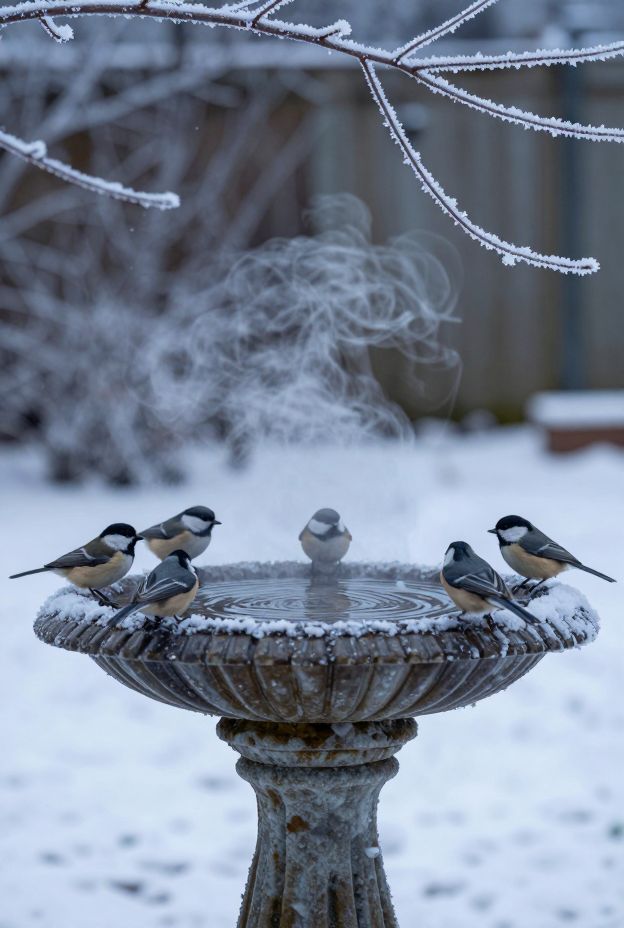
You don’t need a specially built heated birdbath — you can buy submersible birdbath heaters that drop into any existing basin and thermostatically control the water temperature. They only kick on when temps drop near freezing, so they’re surprisingly energy-efficient. Birds like chickadees, nuthatches, and woodpeckers will thank you all winter long.
11. Tree Stump Birdbath
Got a tree stump in your garden that you’ve been meaning to deal with? Consider turning it into a natural birdbath instead. You can hollow out the top slightly with a chisel and line it with a waterproof sealant, or simply set a shallow metal bowl into the center of the stump for a low-effort, high-charm result.
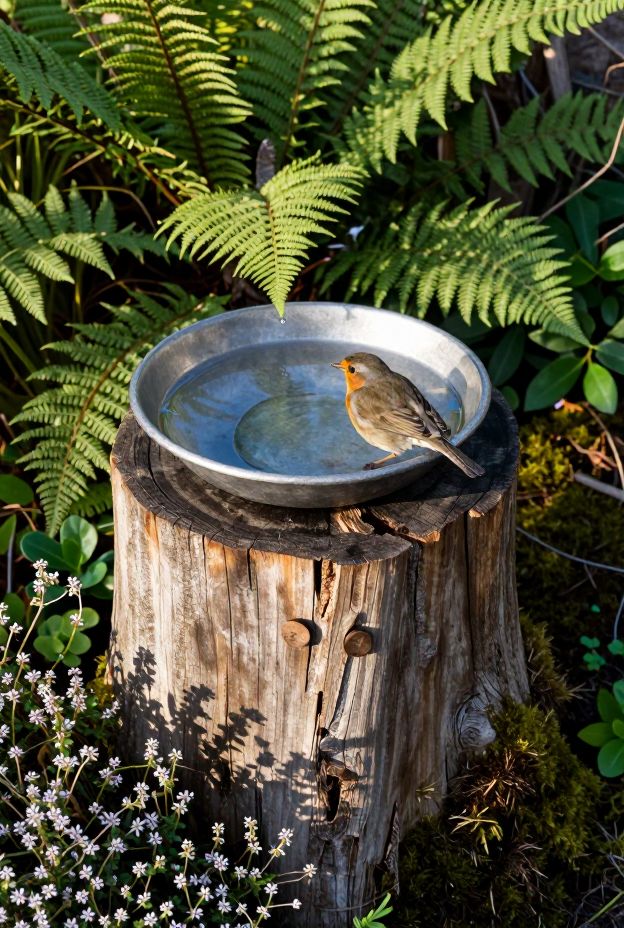
Stump birdbaths blend seamlessly into woodland-style gardens and feel incredibly organic. They’re naturally textured, which birds love, and they bring an earthy, grounded aesthetic that complements wildflower plantings perfectly. Just treat the wood annually to prevent rot from spreading.
12. Multi-Tier Birdbath Fountain
Think of a multi-tier birdbath fountain as the ultimate bird resort. Water cascades from one basin to the next, creating movement, sound, and multiple landing spots at different heights. Small birds use the upper tiers; larger birds use the lower basin. Everybody wins. :/
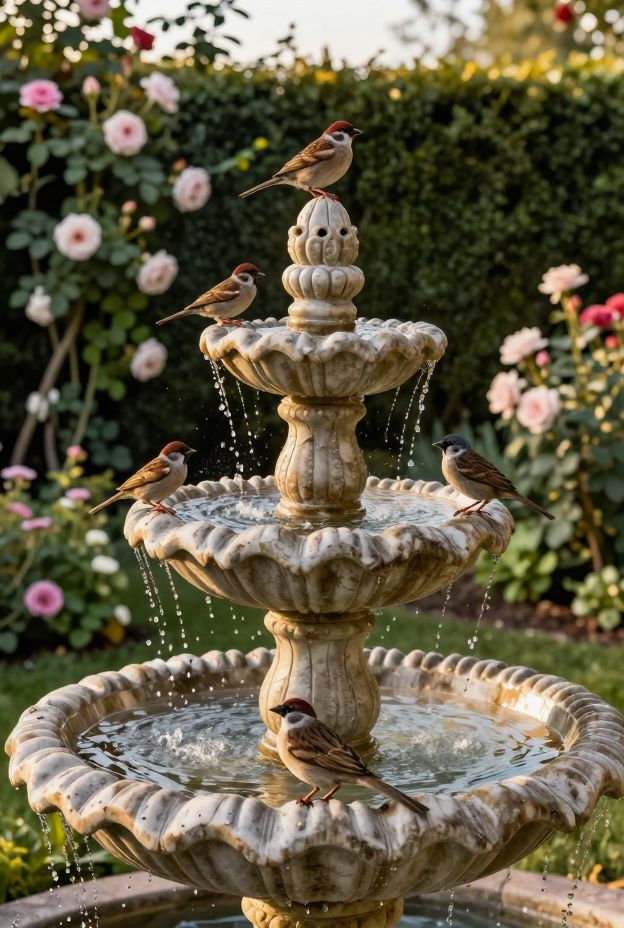
Multi-tier fountains do require a pump and a power source, but the payoff in bird activity is remarkable. They work especially well as garden focal points surrounded by native plantings. Choose a frost-resistant material like resin, fiberglass, or treated stone if you plan to leave it outside year-round.
Tips for all tiers:
- Clean basins every 2–3 days to prevent algae and bacteria buildup
- Add a water treatment tablet formulated for birdbaths to keep water fresh longer
- Position near native plants and trees that offer food sources and perching spots
Final Thoughts: Your Garden, Their Paradise
Here’s the thing about birdbaths: birds aren’t picky about brand names or price tags. What they care about is clean, fresh water in a safe, accessible spot. Whether you spend $5 on a terracotta saucer or $200 on a multi-tier fountain, the birds will show up if the basics are right.
Start with one birdbath, get your placement right, keep it clean, and observe what species visit. Then you can layer in upgrades like drippers, solar fountains, or heaters based on what you notice. Gardening is always more fun when you’re learning from the birds themselves.
Pick one idea from this list, set it up this weekend, and see what shows up. Chances are, you’ll be hooked — and your garden will never feel quite as quiet again.