You know that feeling when you look at your fence and think, “Wow, that’s… a fence”? Yeah, me too. A bare fence line is basically the outdoor equivalent of a blank wall — totally functional, but kind of sad. The good news? With a little creativity and some strategic planting, you can turn that boundary from boring to absolutely stunning. Let’s talk about 12 fence line landscaping ideas that’ll make your neighbors do a double-take (in the best way possible).
1. Climbing Roses for Classic Romance
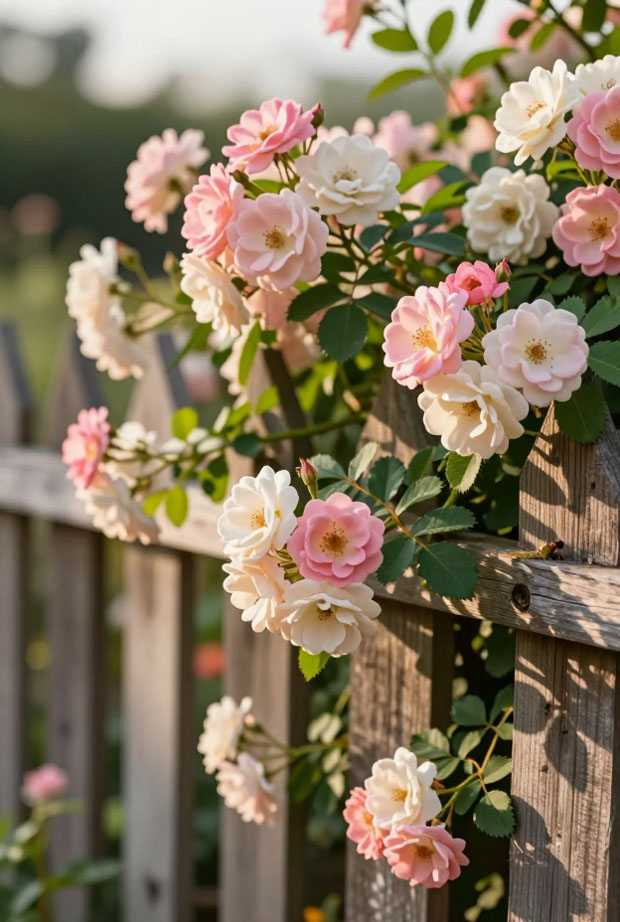
If you want your fence to look like it belongs in a fairytale garden, climbing roses are your best friend. They scramble up fence panels and posts with gorgeous blooms that genuinely stop people in their tracks. IMO, there’s nothing quite like a rose-covered fence on a sunny morning.
Choose varieties like ‘New Dawn’ or ‘Cecile Brunner’ for their vigorous growth and repeat blooming. They do need some training and tying in early on, but once they get going, they practically manage themselves.
- Best for: Wooden or metal fences with horizontal rails
- Bloom season: Late spring through fall (depending on variety)
- Care level: Moderate — prune after flowering and watch for blackspot
2. A Layered Cottage Border
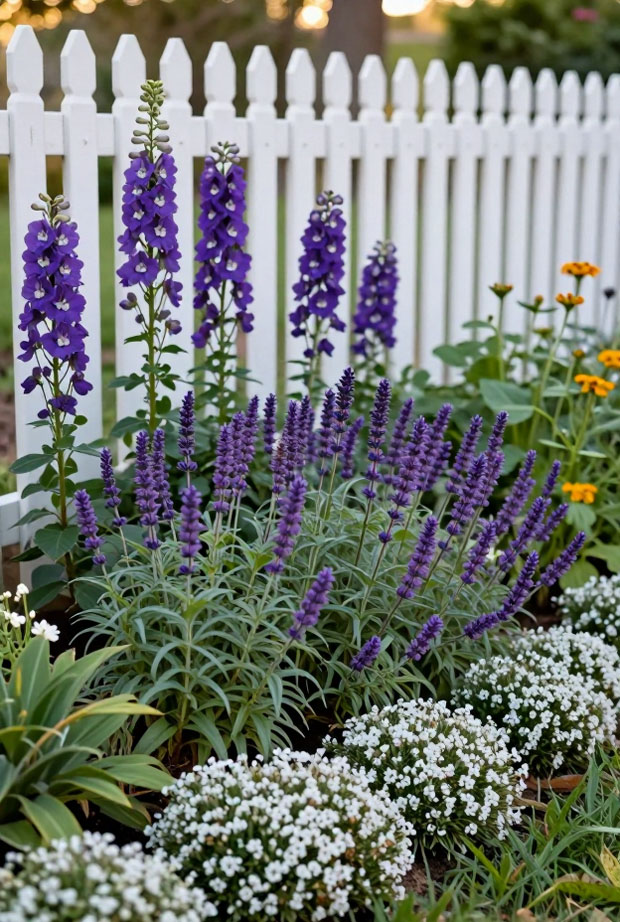
Layering plants in front of your fence is one of the most effective ways to create depth and visual interest. Think tall plants at the back, mid-height in the middle, and low ground cover at the front. It sounds simple, but the results are genuinely jaw-dropping.
Try pairing tall ornamental grasses or delphiniums at the fence, catmint or salvia in the middle, and creeping thyme or alyssum at the edge. This creates a lush, flowing border that softens the hard lines of any fence.
- Back layer: Miscanthus grass, hollyhocks, or foxgloves
- Middle layer: Salvia, catmint, or peonies
- Front layer: Creeping thyme, sweet alyssum, or ajuga
3. Evergreen Hedging for Year-Round Structure
Want something that looks great in January just as much as July? Evergreen hedging planted along a fence line gives you consistent structure and privacy without going bare in winter. It’s basically the landscaping equivalent of a reliable friend.
Boxwood, yew, and Portuguese laurel all work brilliantly as a complementary hedge alongside a fence. You get the structure of the fence plus the softness and texture of living green.
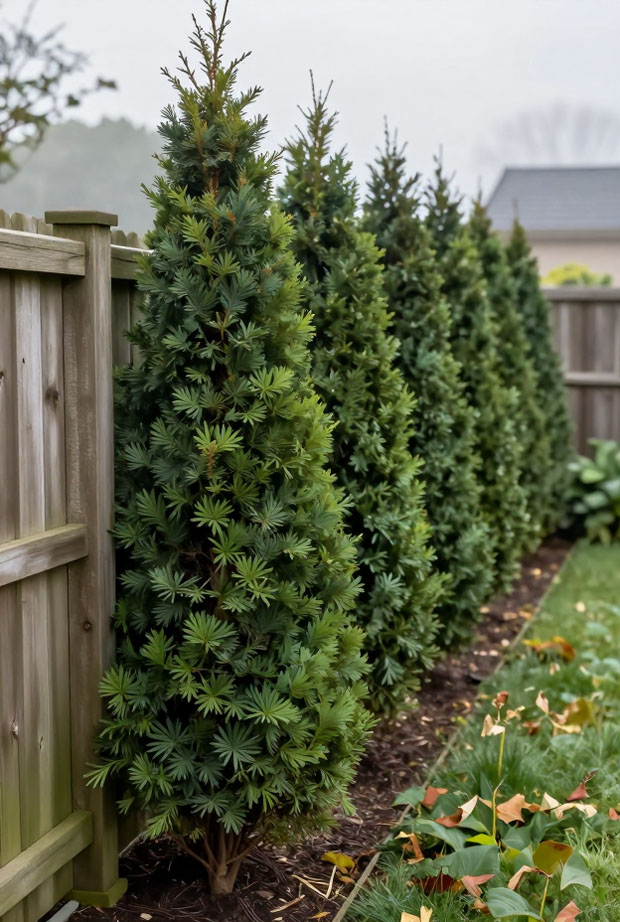
The trick is to plant the hedge about 30-40 cm in front of the fence, giving the roots room to spread and preventing the fence from being damaged by root pressure over time.
4. Bamboo for a Tropical or Zen Vibe
Okay, before you panic — clumping bamboo, not running bamboo. Running bamboo is basically a horror movie in plant form. Clumping varieties like Fargesia or Bambusa stay put and look absolutely incredible planted along a fence line.
They grow tall and lush, adding a tropical or Zen aesthetic that completely transforms the feel of your garden. They’re also fast-growing, which is perfect if you want results without waiting five years.
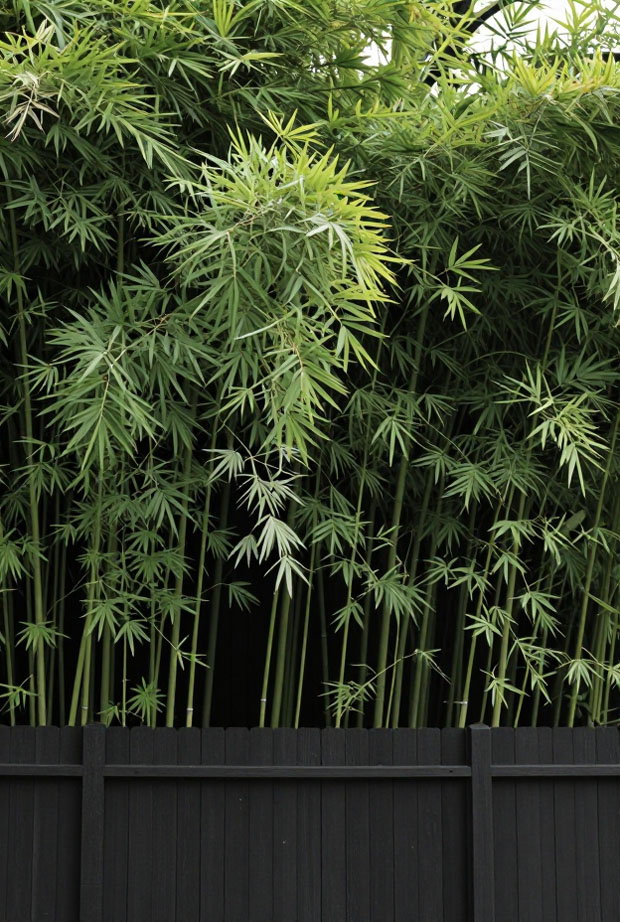
- Fargesia robusta: Hardy, non-invasive, great for shade
- Bambusa multiplex: Warm climate favourite, feathery texture
- Tip: Install a root barrier just in case — better safe than sorry
5. Espalier Fruit Trees for Edible Beauty
Here’s a concept that blew my mind when I first tried it: training fruit trees flat against a fence in a decorative pattern. It’s called espalier, and it’s one of the most space-efficient, visually beautiful things you can do with a fence line.
Apple and pear trees respond really well to espalier training. You get blossoms in spring, fruit in autumn, and an architectural structure that looks stunning even in winter when the branches are bare.
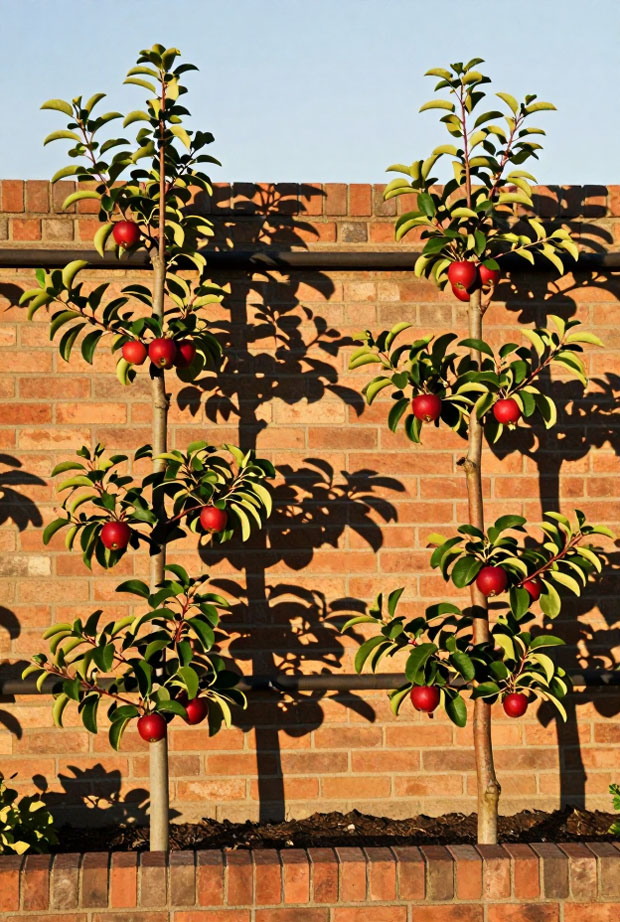
It does take patience and regular pruning, but the payoff is a fence line that’s both gorgeous and genuinely productive. Can you put a price on homegrown apples? I say no.
6. Ornamental Grasses for Movement and Texture
Few plants add as much drama and movement to a fence line as ornamental grasses. The way they catch the breeze and shimmer in sunlight is honestly mesmerizing. Plus, they’re incredibly low maintenance once established.
Varieties like Karl Foerster feather reed grass or Blue Oat grass add height, structure, and a soft, flowing texture that contrasts beautifully against a hard fence. They work in almost any climate and look great in naturalistic or contemporary garden styles.
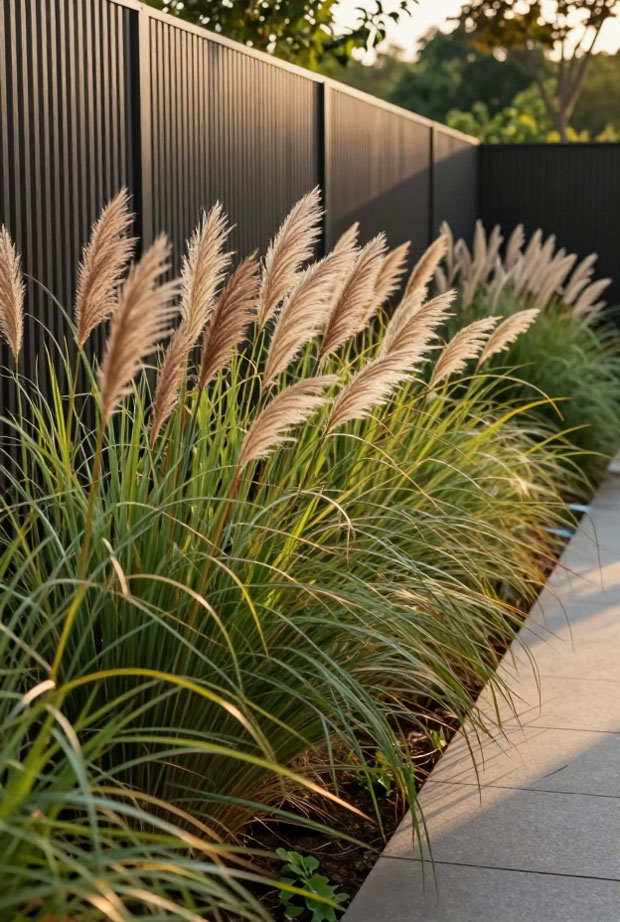
- Karl Foerster: Upright, tall, excellent for screening
- Blue Oat Grass: Compact, blue-toned, works in borders
- Pennisetum: Feathery plumes, soft texture, great in full sun
7. Jasmine for Fragrance and Flowers
Ever walked past a jasmine-covered fence in the evening and just stopped in your tracks? That sweet, intense fragrance is something else entirely. Star jasmine (Trachelospermum jasminoides) is one of the best climbers you can grow along a fence — it’s evergreen, covered in white flowers in summer, and the scent travels surprisingly far.
It clings beautifully to trellis or wire supports attached to your fence, and it grows quickly enough to give you coverage within two to three seasons. FYI, it also stays green all year, so you’re not left with a bare tangle come winter.
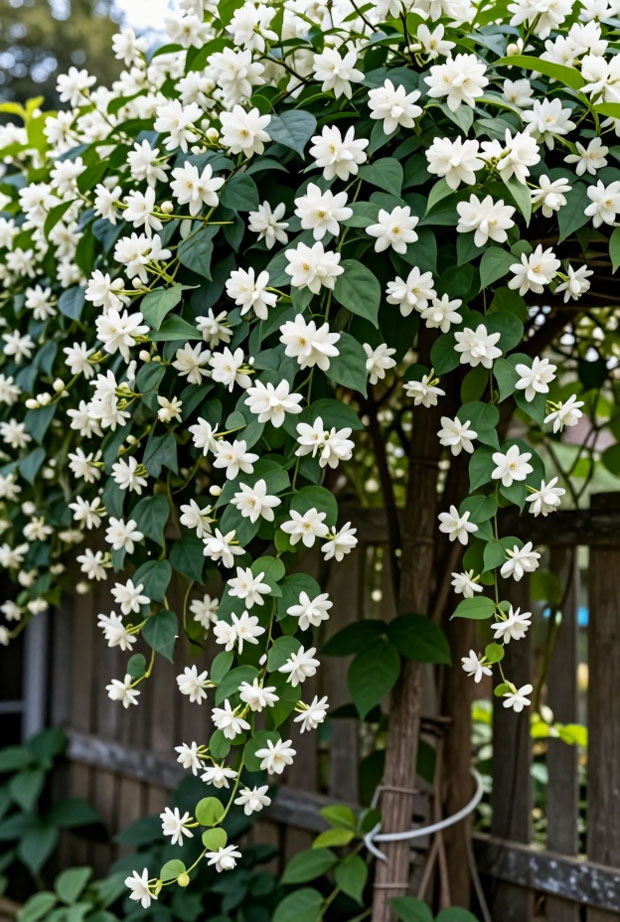
Common jasmine (Jasminium officinale) is a great option too if you prefer a more vigorous, deciduous climber. Just be prepared to do some tidying each spring.
8. Wisteria for Showstopping Drama
Wisteria is the plant world’s showoff, and honestly? Good for it. A wisteria-covered fence in full bloom is genuinely one of the most beautiful sights in any garden. Those cascading purple or white flower clusters are stunning and the scent is divine.
The catch is that wisteria is a long game. It can take three to seven years to flower properly, and it needs a very sturdy fence because it gets heavy. But once it blooms? Worth every single year of waiting.
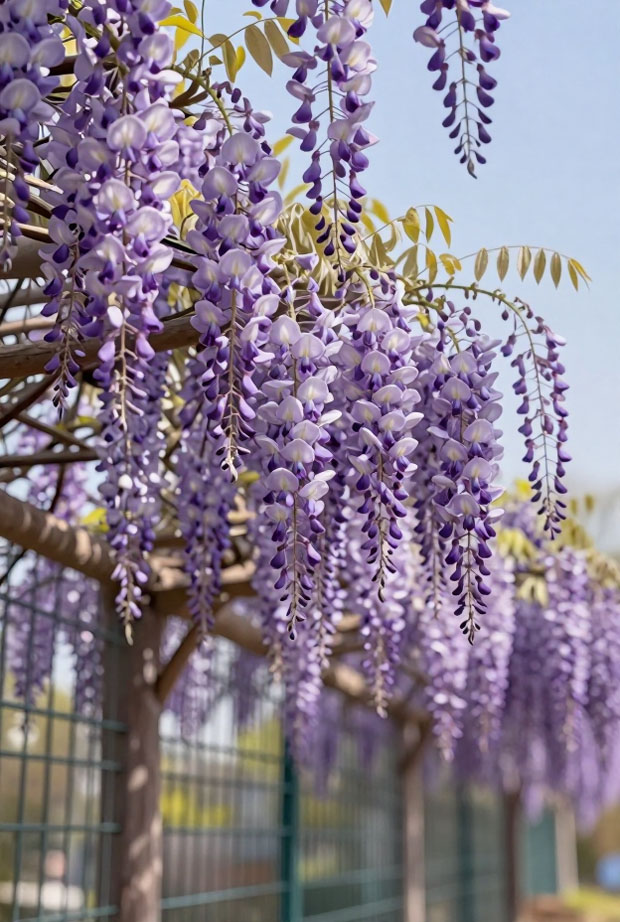
- Choose Japanese or Chinese wisteria for the most dramatic blooms
- Train along strong horizontal wires on a robust fence or wall
- Prune twice a year to keep it manageable and encourage flowering
9. Flowering Perennial Border
A perennial border planted along a fence line is one of the most rewarding landscaping projects you can take on. Unlike annuals, perennials come back every year, which means your initial investment in time and plants pays off season after season.
Rudbeckia, echinacea, phlox, and agastache all work brilliantly in a fence line border. Mix bloom times so you get continuous colour from spring through to the first frosts. Throw in some ornamental alliums for spring interest and you’ve got a planting scheme that earns its keep all year.
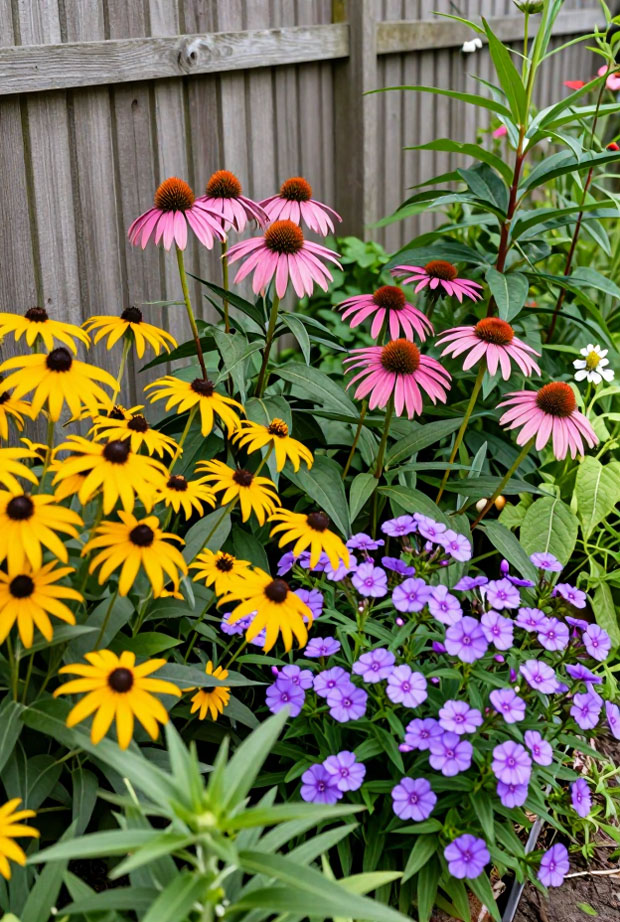
The key is spacing. Give perennials room to spread and fill in over two to three seasons, rather than cramming them in. Patience here really does pay off.
10. Hydrangeas for Big, Lush Impact
If you want big, dramatic blooms with relatively low effort, hydrangeas planted along a fence line are an absolute winner. They create a lush, cottage-garden feel and the blooms last for months — even into autumn as they dry beautifully on the stem.
Paniculata varieties like ‘Limelight’ or ‘Phantom’ are especially great for fence lines because they grow into large shrubs with impressive cone-shaped flower heads. They handle sun well and are generally tougher than the classic mophead varieties.
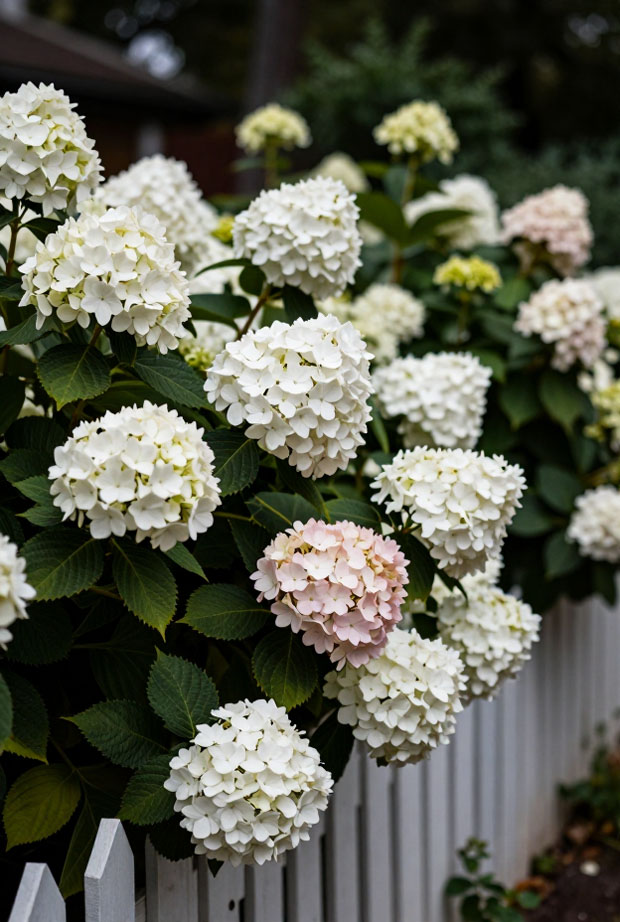
- Hydrangea paniculata: Sun-tolerant, large shrub, white to pink blooms
- Hydrangea macrophylla: Classic mophead, prefers partial shade
- Hydrangea arborescens ‘Annabelle’: Huge white blooms, very hardy
11. Vertical Garden Panels for Urban Spaces
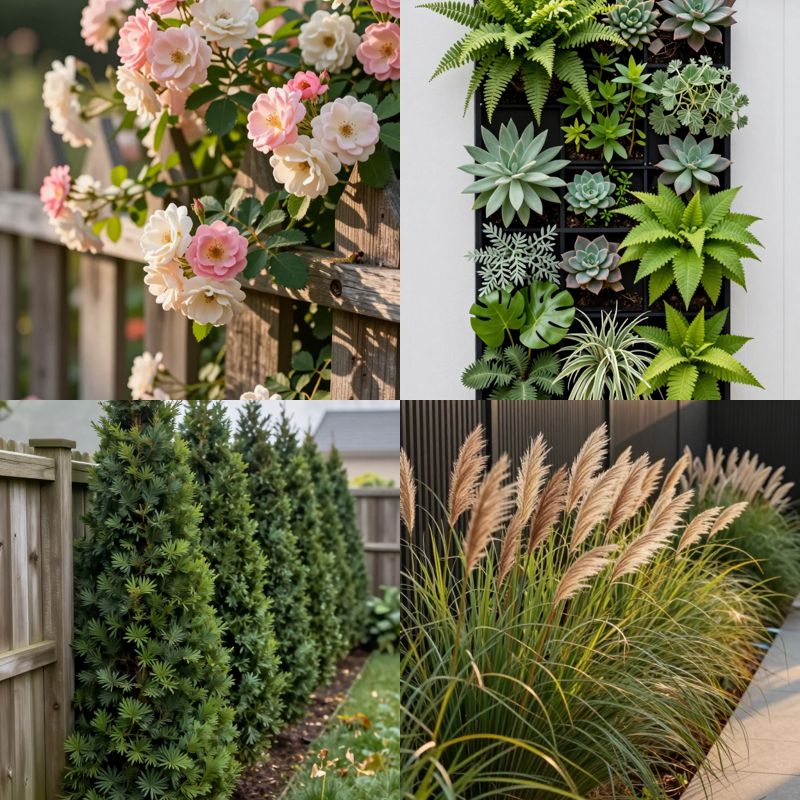
Don’t have much depth to work with? No problem. Vertical garden panels or living wall systems mounted directly onto your fence let you grow plants without needing a deep border. This is a game-changer for narrow urban gardens.
You can use modular pocket planters, wire grid systems with small pots, or even repurposed wooden pallets to create a vertical planting display. Ferns, succulents, herbs, and trailing plants all work well in this kind of setup.
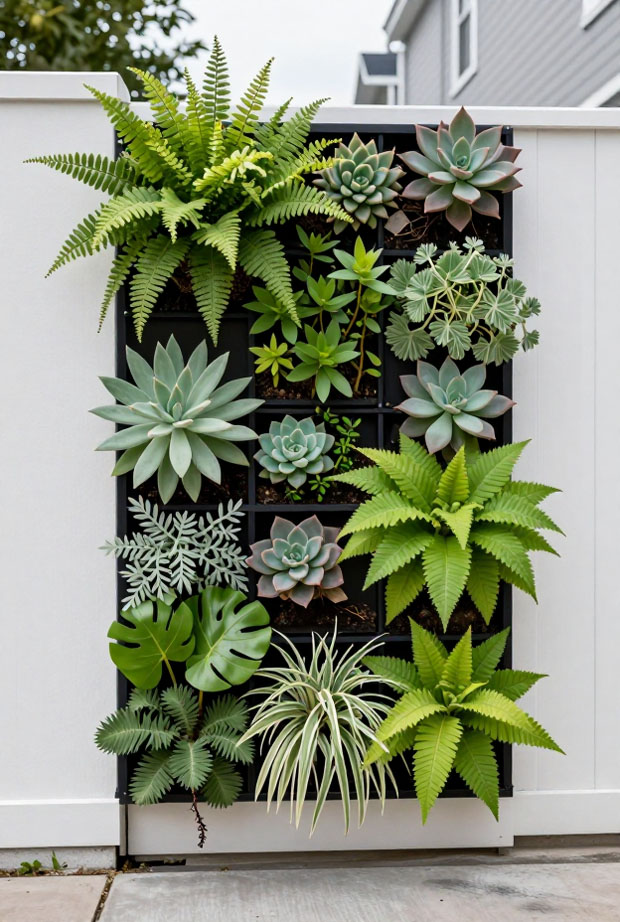
It does require a bit more watering attention since vertical planters dry out faster than ground beds. But the visual impact against a fence is genuinely impressive, especially for small courtyard gardens. 🙂
12. Native Wildflower Strips for a Natural Look
Sometimes the most beautiful fence line landscaping is the one that looks like it wasn’t really “designed” at all. Planting a strip of native wildflowers along your fence creates that gorgeous, natural meadow look that’s also incredibly good for local wildlife.
Native plants attract pollinators like bees and butterflies, need minimal watering once established, and genuinely thrive in local conditions because — well — that’s where they evolved. It’s smart gardening and beautiful gardening at the same time.
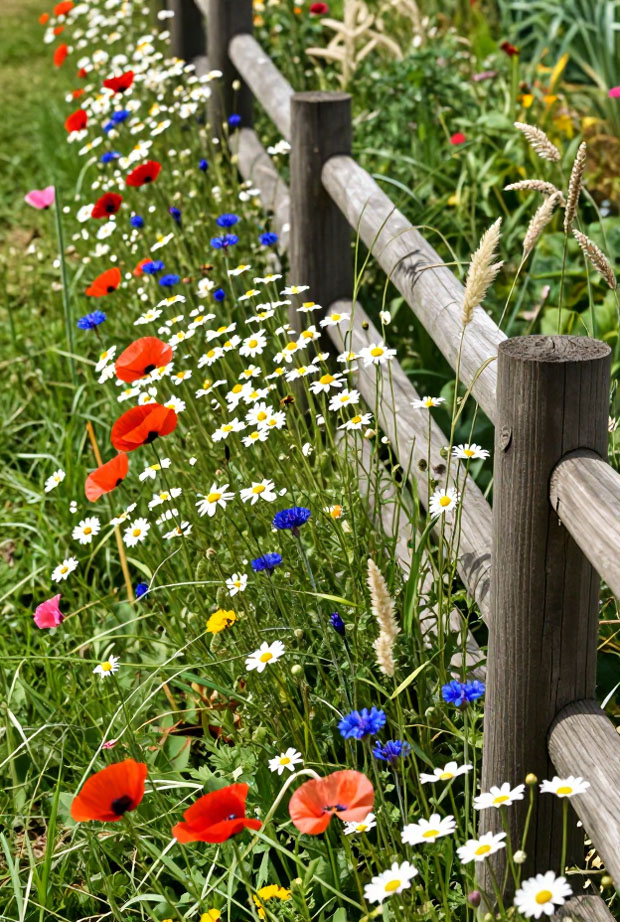
- Choose a native wildflower seed mix suited to your region’s climate
- Clear the ground of grass and weeds before sowing for best results
- Leave seedheads standing over winter for birds and insects
- Enjoy the fact that you’ve created a mini wildlife habitat in your own backyard
Bringing It All Together
Your fence line is essentially a blank canvas, and these 12 ideas prove there’s no shortage of ways to bring it to life. Whether you go for the romance of climbing roses, the drama of wisteria, or the practicality of a native wildflower strip, the right approach depends on your climate, your fence type, and honestly, your personality.
The biggest mistake most gardeners make is doing nothing with their fence line at all. Even one or two of these ideas can completely transform the feel of your outdoor space. So pick your favourite, start small if you need to, and watch your boundary become something you’re actually proud of.
Which idea caught your eye first? Whatever you choose, just get started. Your fence (and your future self) will thank you. 🙂