You know that sad, patchy corner of your yard that collects dead leaves and broken dreams? Yeah, a rock garden can fix that. I transformed my own neglected side yard into a gorgeous, textured landscape, and I haven’t touched a lawnmower near it since. Rock gardens are one of those rare design wins where low maintenance, high impact, and genuine beauty all collide in the best possible way. Let’s get into it.
1. The Classic Alpine Rock Garden
If you want that straight-out-of-the-Swiss-mountains look, an alpine rock garden is your starting point. You stack irregular stones at varying heights, tuck in drought-tolerant alpine plants like creeping thyme and sedums, and suddenly your flat suburban yard looks like it has some personality. The key here is layering rocks at natural angles rather than stacking them perfectly, because nature is beautifully imperfect.
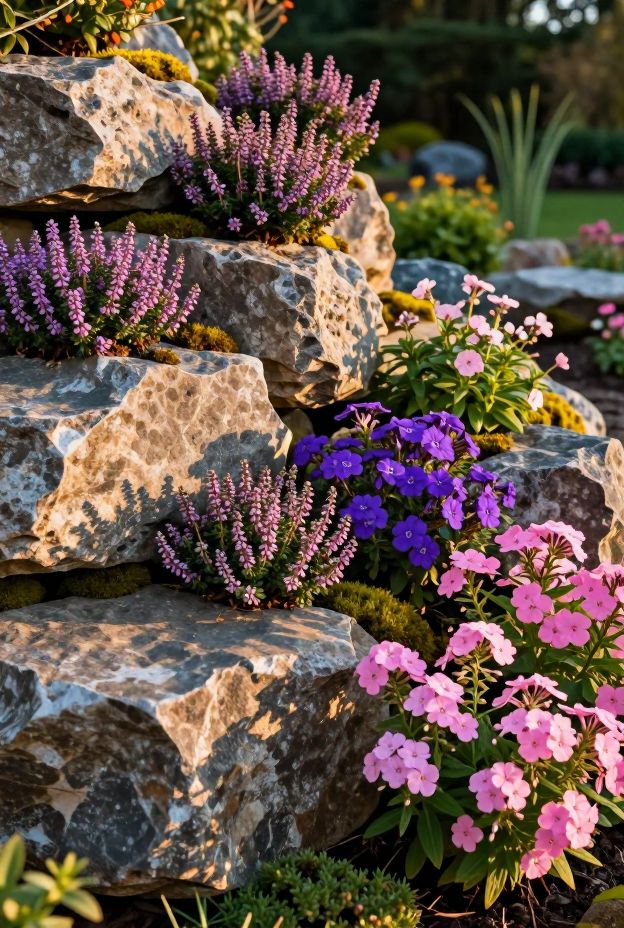
Think of alpine plants as the overachievers of the plant world. They survive harsh conditions, stay compact, and bloom without much fuss from you. FYI, plants like aubrieta, phlox subulata, and alpine asters work brilliantly here and add pops of color through spring and summer. You basically get a flower show for almost zero effort.
Quick Tips for Alpine Rock Gardens
- Use limestone or granite rocks for an authentic alpine look
- Plant in groups of three or five for a natural, organic feel
- Ensure excellent drainage by mixing grit or gravel into your soil
- Leave gaps between rocks for plants to root and spread naturally
2. The Dry Creek Bed
A dry creek bed is essentially a fake river that looks completely real, and honestly, it might be the most underrated rock garden idea on this list. You arrange smooth river rocks and pebbles in a winding path across your yard, mimicking how water naturally carves through a landscape. It adds serious drama without a single drop of irrigation.
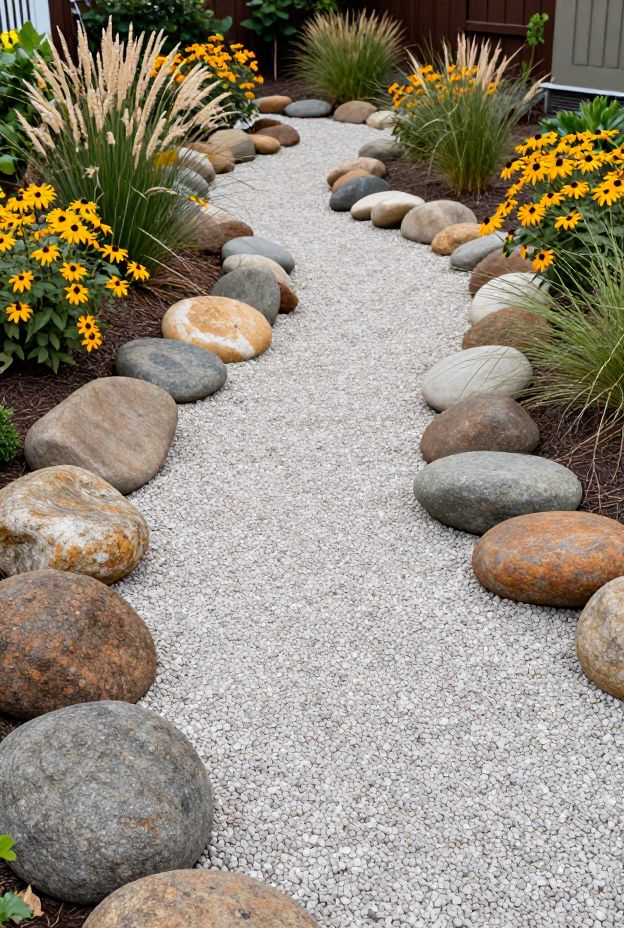
The visual trick here is using varying rock sizes. Place larger boulders along the outer edges, medium stones in the middle, and fine gravel at the center to create depth. I added native ornamental grasses and black-eyed Susans along the edges of mine, and neighbors genuinely stopped to ask if I had a water feature installed. The answer was no, and I felt a little smug about it 🙂
Making Your Creek Look Realistic
- Curve the path naturally rather than running it in a straight line
- Add larger anchor stones at bends to mimic natural water flow patterns
- Use river-washed, smooth stones rather than angular quarry rocks
- Plant moisture-loving species nearby for added authenticity
3. The Japanese Zen Rock Garden
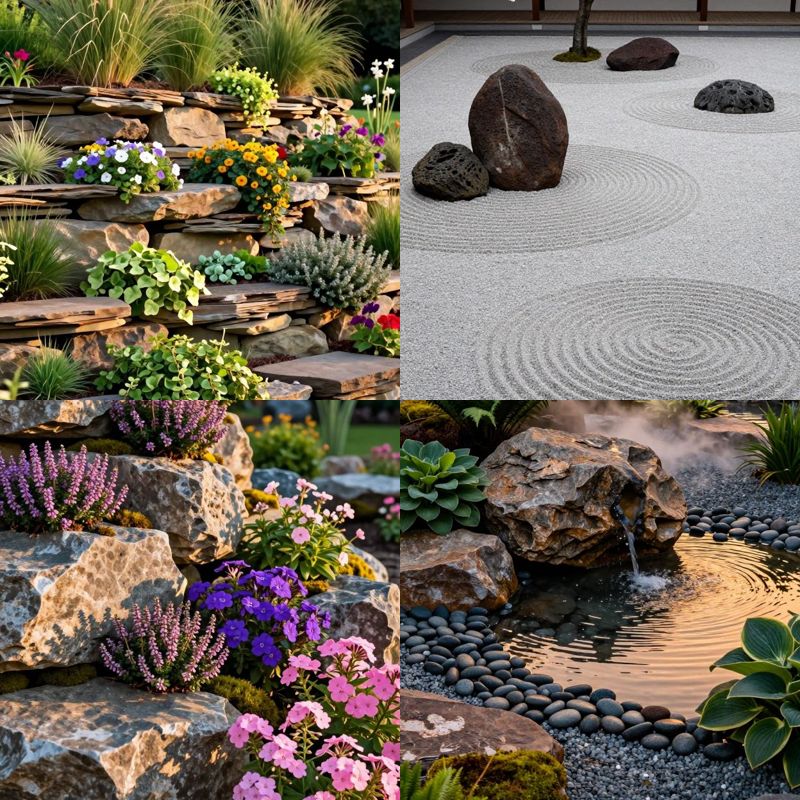
Want a space that genuinely calms your nerves after a rough day? A Japanese Zen rock garden is pure therapy. The traditional design uses raked gravel or sand with carefully placed boulders that represent islands or mountains. You don’t need a huge space for this, and the meditative quality it brings to a yard is something I did not expect until I created one myself.
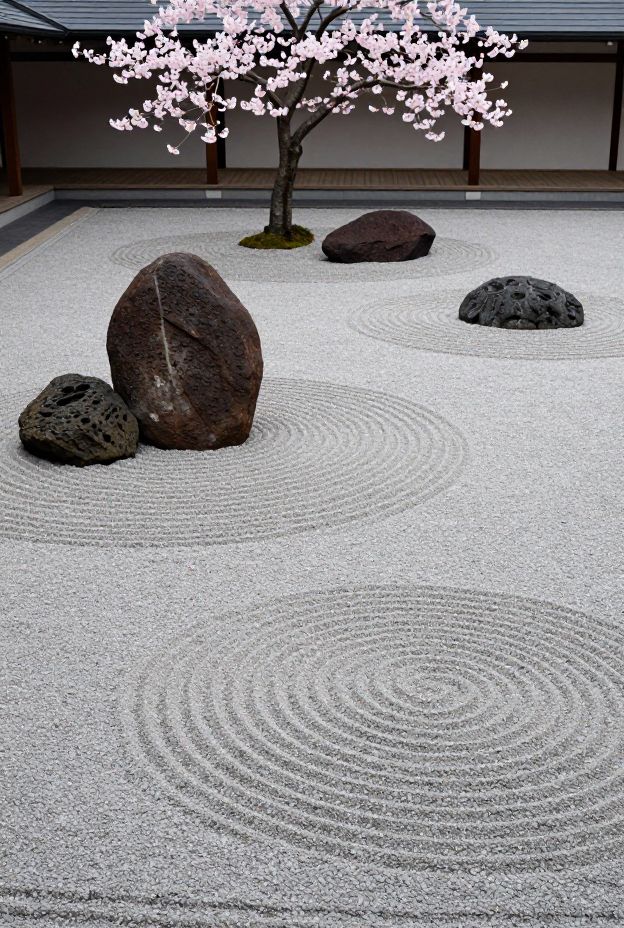
The raking patterns in the gravel are where you get to be creative. Circular patterns around rocks symbolize water rippling, while straight lines suggest flowing rivers. Keep the plant palette minimal, maybe a single ornamental cherry tree or a clump of bamboo at the border, and let the rocks and gravel do the heavy lifting. Simple, intentional, stunning.
4. The Succulent Rock Garden
If you have ever killed a plant by overwatering it (no judgment, I’ve been there), a succulent rock garden is your redemption arc. Succulents and rocks are a natural pairing because both thrive in fast-draining, low-nutrient soil conditions. You get bold textures, architectural shapes, and a color range that goes from dusty blue to vivid purple without any real upkeep from your end.
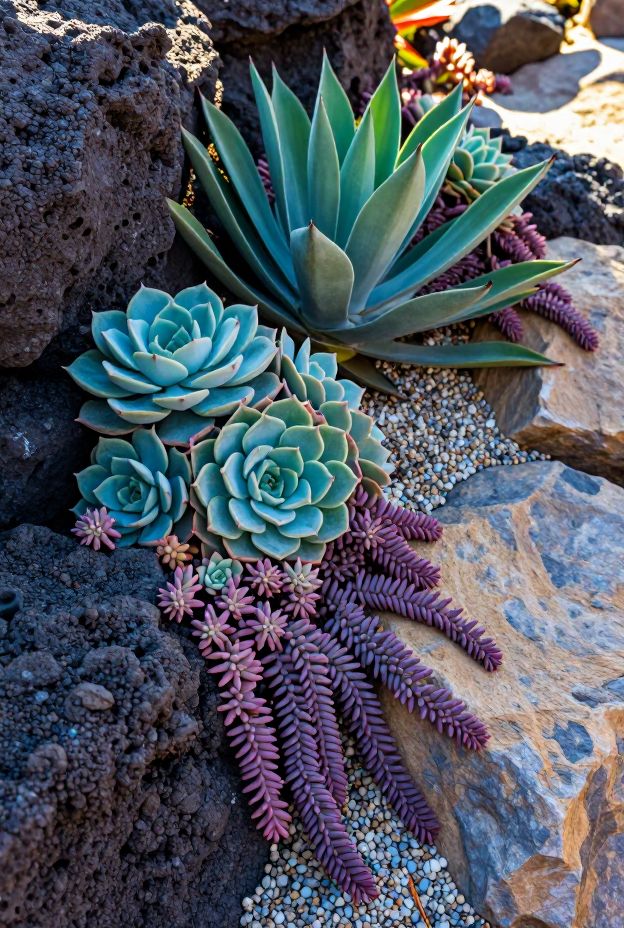
The trick to nailing this look is mixing rock textures deliberately. Rough, volcanic lava rock pairs beautifully with the waxy, smooth surfaces of echeverias and sedums. Arrange your rocks in clusters rather than scattering them randomly, then plant succulents in the crevices for that “growing out of the earth” look. IMO, this is one of the most photogenic rock garden styles you can pull off in a small space.
Best Succulents for Rock Gardens
- Sempervivum (Hens and Chicks) for spreading ground coverage
- Sedum varieties for cascading over rock edges
- Agave as a bold centerpiece statement plant
- Aloe for vertical drama and texture contrast
5. The Terraced Rock Garden
Got a sloped yard that feels impossible to work with? A terraced rock garden turns that problem into a feature. You build horizontal levels using stacked flat stones, creating planting pockets at each tier. It controls erosion, maximizes your planting space, and looks like you hired a professional landscaper. Spoiler: you did not need to.
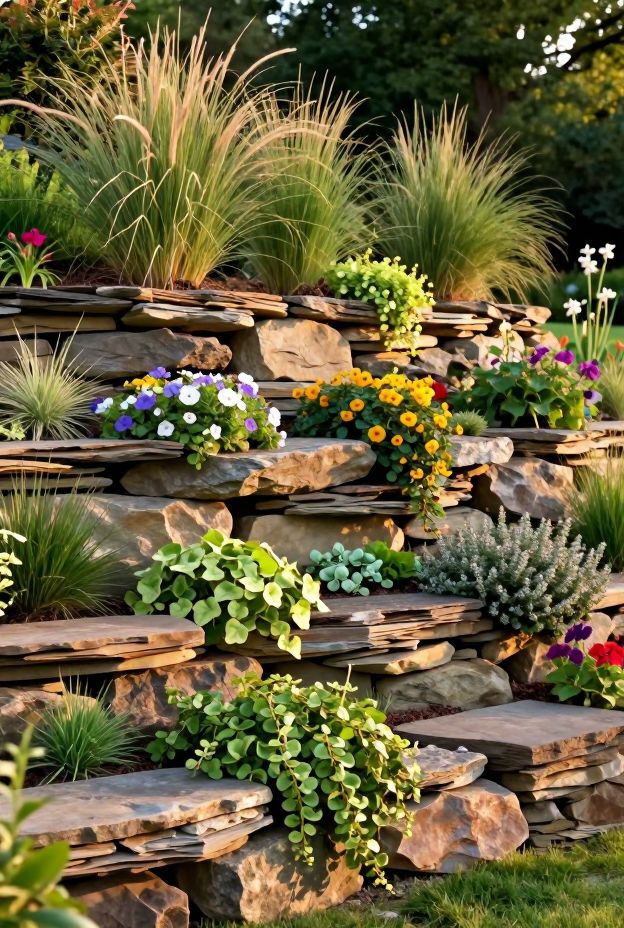
Each tier becomes its own little ecosystem where you can mix plants with different heights and textures. Place trailing plants like creeping Jenny or thyme at the edges so they spill over the rocks and soften the hard lines. At the top tiers, go for taller ornamental grasses or flowering perennials to create a natural backdrop. The layered look adds serious depth to any garden.
6. The Desert-Inspired Rock Garden
Desert gardens are having a major moment, and for good reason. They look dramatic, sculptural, and require almost nothing from you once established. A desert rock garden uses large sandstone or red rock boulders, decomposed granite mulch, and drought-tolerant plants like ornamental cacti, yucca, and desert marigolds to create a bold, sun-baked aesthetic. Even in non-desert climates, you can pull this off with the right plant selection.
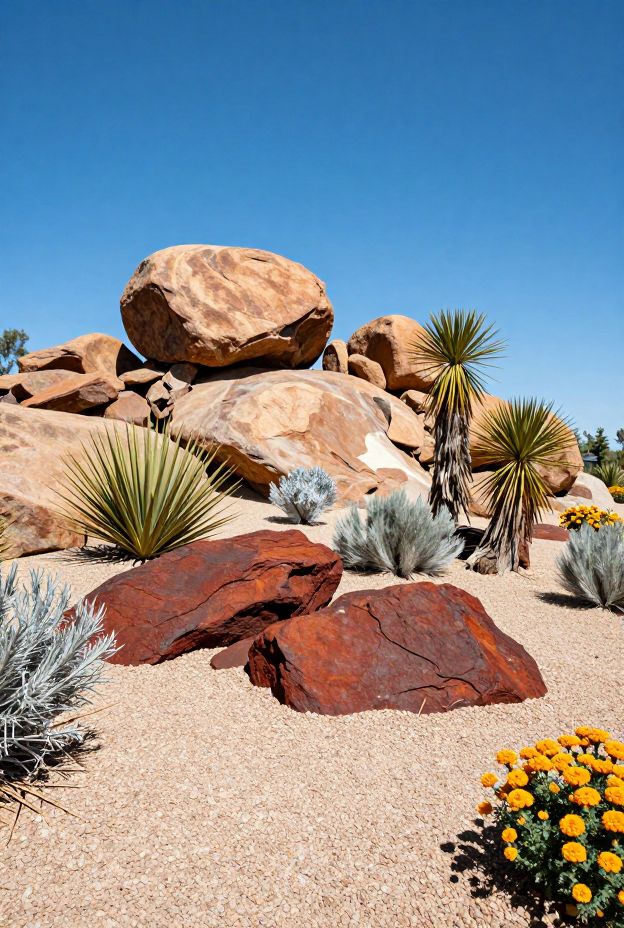
Color plays a huge role here. Warm-toned rocks in terracotta, rust, and sandy beige create that authentic desert palette. Contrast these earthy tones with silvery-leafed plants like artemesia or blue oat grass to make the whole arrangement pop. This style works especially well in hot, dry climates where trying to grow a traditional lawn is basically a full-time job you never signed up for.
7. The Cottage-Style Rock Garden
Rock gardens do not have to feel stark or minimal. A cottage-style rock garden leans into abundance, mixing tumbling flowers, lush greenery, and weathered stones for a look that feels romantic and lived-in. Think foxgloves peeping between mossy boulders and lavender spilling over low stone walls. It is the garden equivalent of a cozy sweater.
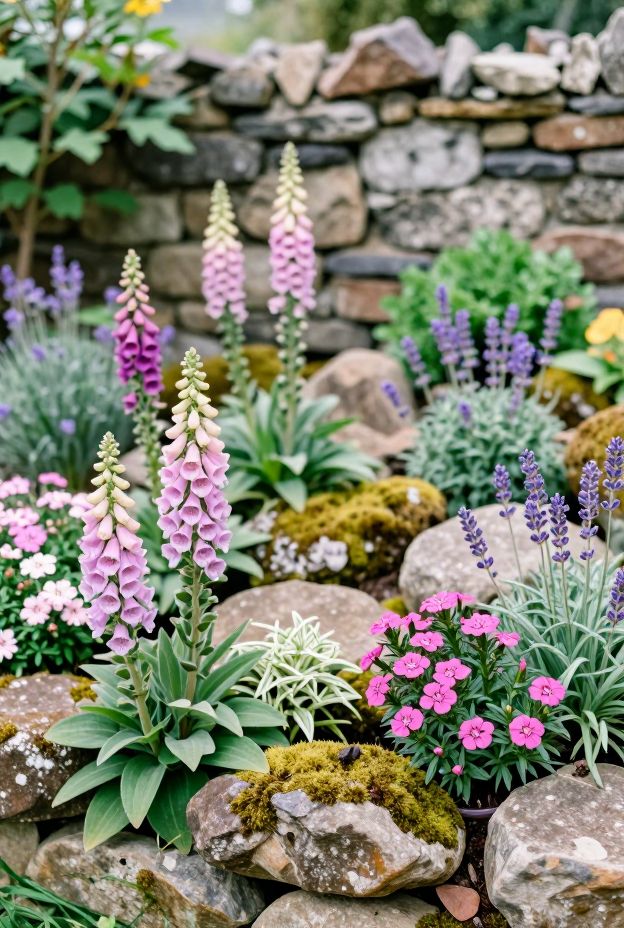
The secret to this style is embracing a little organized chaos. Let plants self-seed and spread naturally between the rocks. Use soft, rounded fieldstones rather than sharp, angular quarry rock for a gentler, more organic look. Roses, dianthus, and hardy geraniums all thrive in rock garden conditions and contribute to that lush cottage charm you are going for.
8. The Rock Pathway Garden
Why settle for boring mulched pathways when you can turn your garden walkways into a rock pathway garden that doubles as a landscape feature? Large stepping stones flanked by gravel, pebbles, and creeping ground covers create a pathway that is both functional and genuinely beautiful. Every step through your garden becomes intentional and visually interesting.
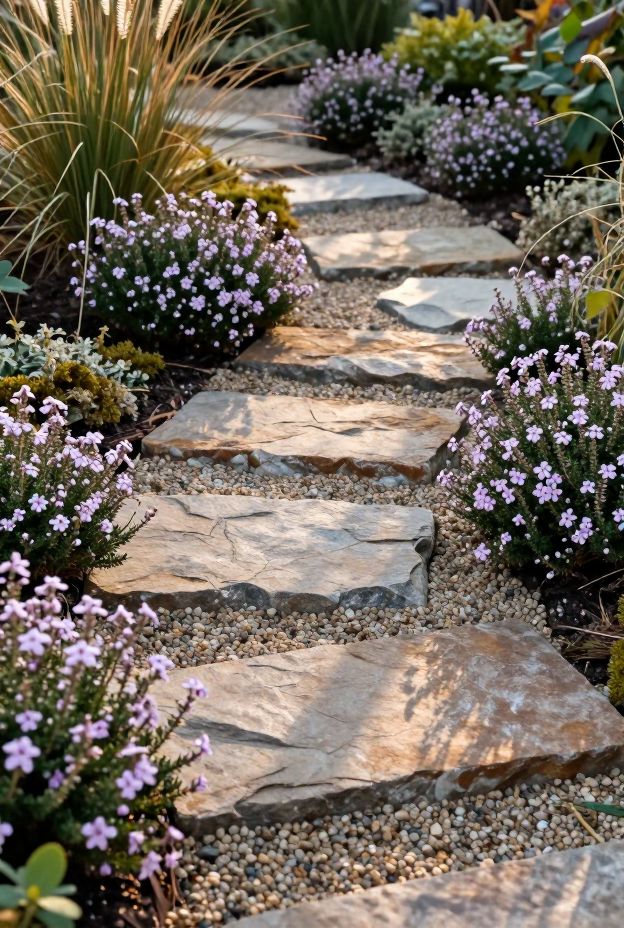
Plant low-growing perennials like woolly thyme, moss phlox, or Irish moss between and around the stepping stones to soften the hard surfaces and add texture. These plants handle light foot traffic well and release a lovely scent when brushed against. The combination of solid rock and soft greenery creates a contrast that looks incredibly polished with minimal effort on your part.
Choosing the Right Stepping Stones
- Flagstone for a natural, irregular look that ages beautifully
- Slate for a sleek, modern vibe with great color variation
- Fieldstone for a rustic, cottage-garden feel
- Space stones roughly 18-24 inches apart for comfortable natural stride
9. The Rock Garden with a Water Feature
Want to take your rock garden from great to genuinely spectacular? Add water. A small rock garden water feature such as a bubbling boulder, a tiered stone fountain, or even a simple container pond surrounded by rocks creates movement, sound, and life in your garden. The combination of water and stone feels elemental, almost primal, in the best way.
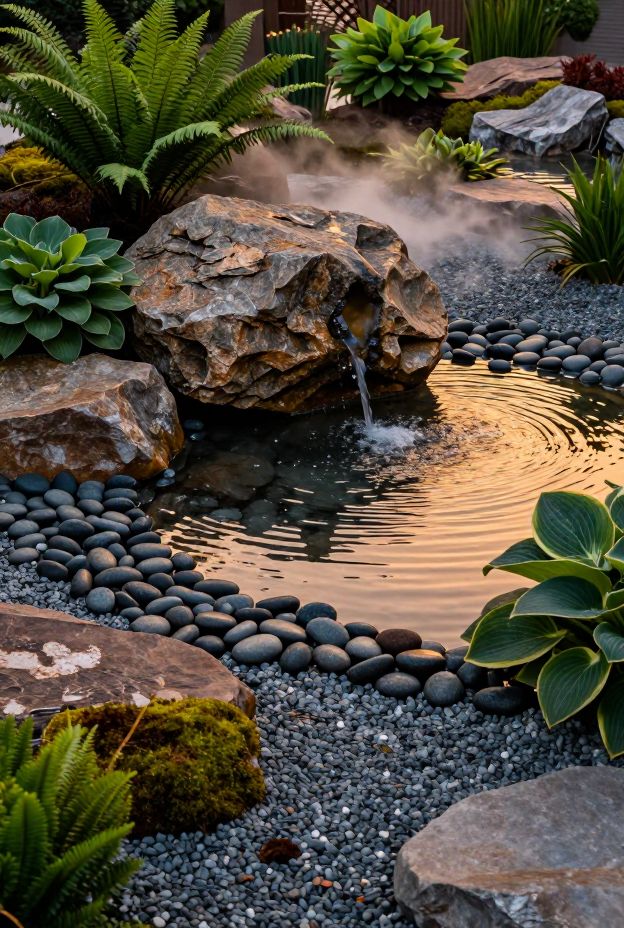
You do not need to go massive or expensive. A recirculating pump buried beneath a gravel bed with water bubbling up through a drilled boulder costs less than most people expect and creates an effect that looks like you spent serious money. Surround it with moisture-loving ferns, hostas, and smooth river stones, and you have created a natural focal point that draws every eye straight to it.
10. The Raised Rock Garden Bed
A raised rock garden bed is perfect when your native soil is poor, drainage is an issue, or you simply want to create a dramatic focal point in a flat yard. You build up walls using larger stones and fill the interior with a gritty, free-draining soil mix. The elevation naturally adds visual interest and gives plants a stage to perform on.
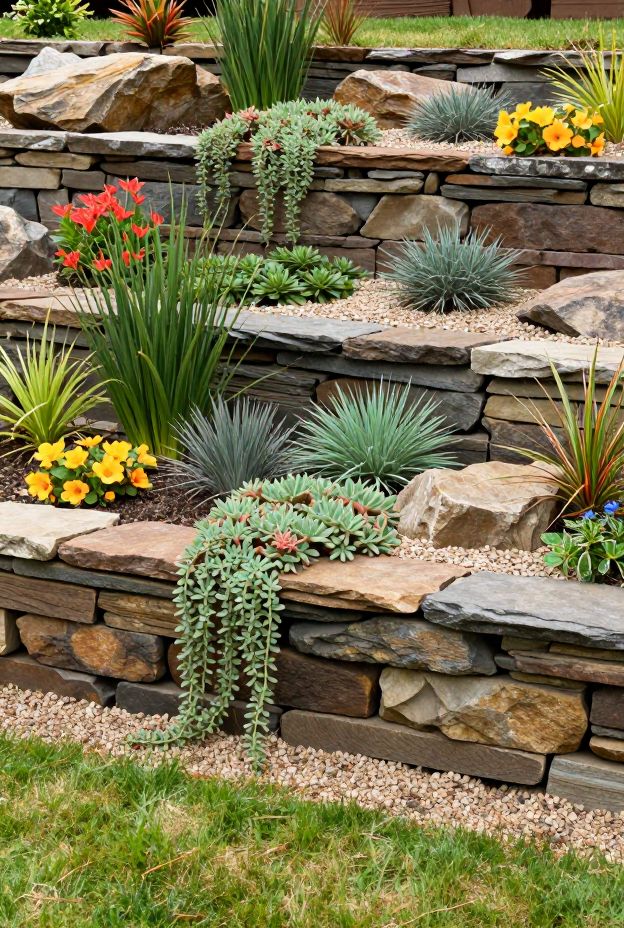
Raised beds also give you full control over your growing conditions, which is incredibly useful for finicky alpine or Mediterranean plants that demand perfect drainage. Use the largest, most attractive stones for the outer walls since they become part of the display. Fill the top with smaller rocks, gravel mulch, and your chosen plants for a polished, intentional look. Height variation in a garden is something many people overlook, and raised rock beds solve that problem beautifully.
Building Your Raised Rock Bed
- Stack stones with a slight backward lean for structural stability
- Fill with a mix of 50% topsoil, 25% horticultural grit, and 25% compost
- Leave planting pockets in the walls themselves for cascading plants
- Top-dress with fine gravel mulch to retain heat and suppress weeds
Bringing It All Together
Rock gardens genuinely are one of the smartest landscaping decisions you can make. They look incredible year-round, they handle drought, they deter weeds, and they give you back your weekends. Whether you go full Zen minimalism or wildly romantic cottage-style, there is a rock garden approach that fits your space, your climate, and your personality.
The best part? You can start small. Pick one idea from this list, grab some rocks from a local stone yard, and experiment in a corner of your garden. Most rock garden styles cost far less than traditional landscaping and deliver far more visual impact per dollar spent. That is a trade I will take every single time 🙂
So, which of these ten ideas grabbed you? If your yard has been staring at you with that look of quiet disappointment for too long, now is a great time to do something about it. Grab some rocks and get creative. Your future, low-maintenance, gorgeous yard is waiting.