Your front yard is literally the first thing anyone sees when they pull up to your home. And yet, so many of us just… leave it there. A sad patch of grass, maybe one lonely bush, and a mailbox that’s seen better days. Sound familiar? I’ve been there too, staring at my front yard thinking, “There has to be a better way.” Spoiler: there is. A well-designed flower bed in front of your house can instantly transform your curb appeal from “meh” to “wow, who lives here?” Let’s get into 14 stunning ideas that actually work.
1. Curved Border Beds for a Soft, Natural Look
Straight lines are fine, but curved flower beds? They hit different. Curved borders soften the hard edges of driveways and walkways, creating a flowing, natural feel that makes your front yard look intentional and welcoming. Instead of a rigid geometric look, you get something that feels like it grew there on purpose.
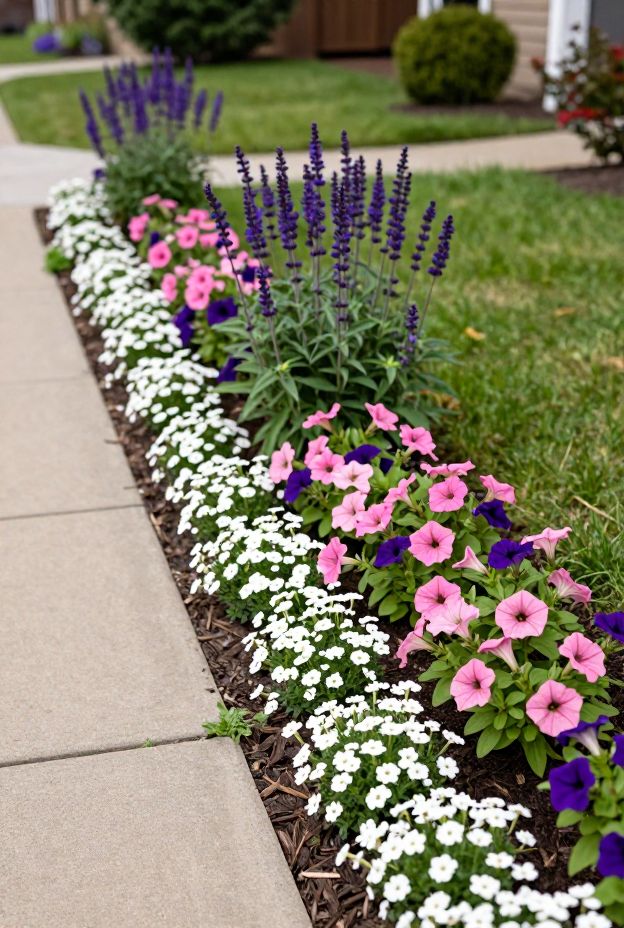
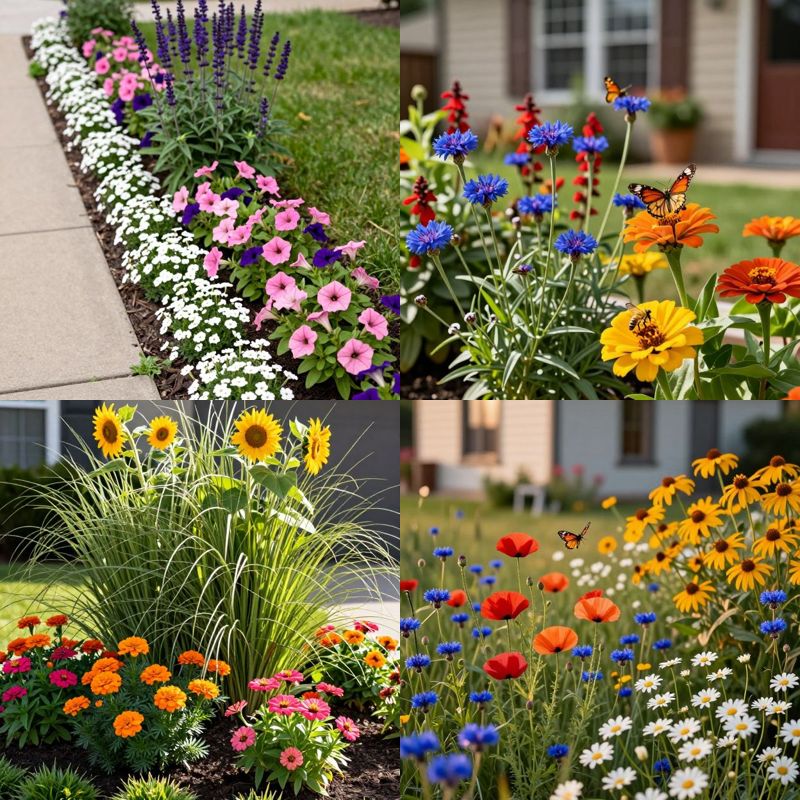
The key to pulling this off is layering your plants — short edging plants like alyssum or dusty miller up front, midsized bloomers like petunias in the middle, and taller anchors like salvia or coneflowers in the back. Repeat a few of the same plants throughout the curve to keep everything cohesive. Trust me on this one — repetition is your best friend in garden design.
2. Layered Planting for Maximum Visual Depth
Ever wonder why some flower beds look full and lush while others look flat and disappointing? The secret is layering plants by height. Tall plants like sunflowers or ornamental grasses go in the back, medium bloomers like marigolds and zinnias sit in the middle, and low-growing ground covers anchor the front row.
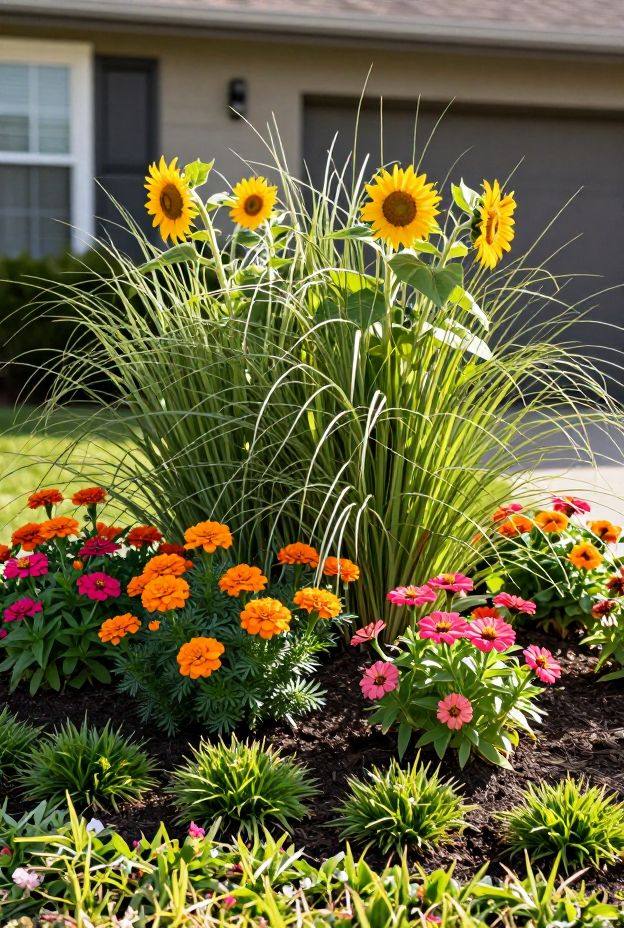
This technique creates genuine visual depth that your neighbors will absolutely notice. It also ensures that every single plant gets its moment in the sun — both literally and figuratively. Pair contrasting colors in each layer for a bold look, or try different shades of the same color for a more sophisticated, ombre effect.
3. Cottage Garden Style with Wild, Romantic Blooms
If you want a front yard that looks straight out of an English countryside fairy tale, the cottage garden style is your answer. Think roses, lavender, foxgloves, and delphiniums all growing together in a beautifully organized chaos. It’s casual, it’s charming, and it photographs incredibly well.
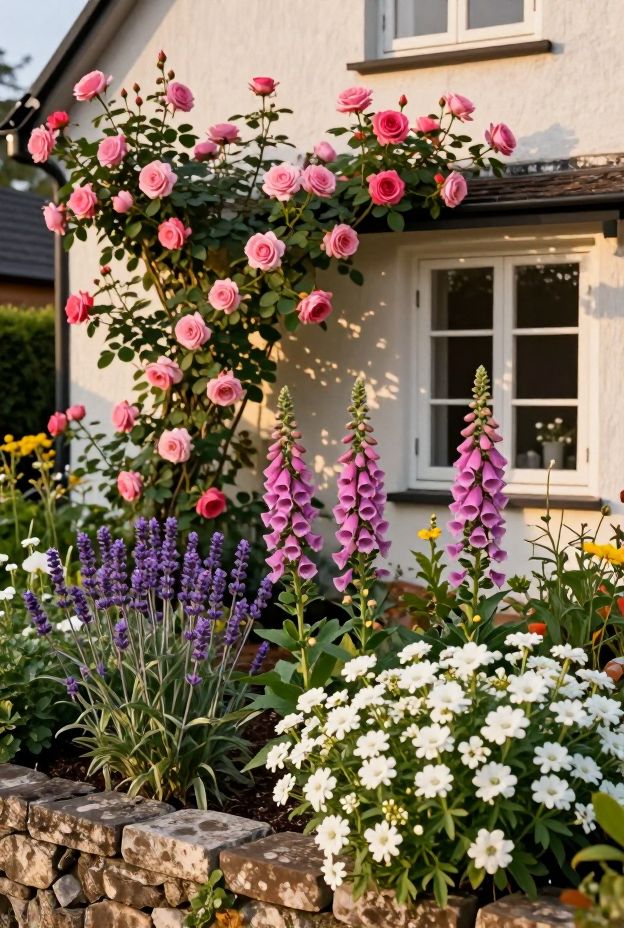
The best part? Cottage gardens are actually low-stress to maintain once established. You don’t need perfect symmetry or precise spacing. Let the plants do what they want within a loose framework, and the result will look effortlessly gorgeous. IMO, this is one of the most underrated curb appeal strategies out there.
Best Plants for Cottage Garden Beds
- Roses — classic, fragrant, and endlessly romantic
- Lavender — adds color, scent, and attracts pollinators
- Foxglove — tall, dramatic, and absolutely stunning
- Sweet alyssum — low-growing filler with a honey-like fragrance
- Hollyhock — vertical height that draws the eye upward
4. Minimalist Geometric Beds for a Modern Home
Not everyone wants a wildflower explosion in their front yard, and that’s completely valid. If your home has a modern or contemporary design, sleek, geometric flower beds with clean lines and a restrained color palette will complement your architecture beautifully. Think two or three colors max, with precise edging and structured plantings.
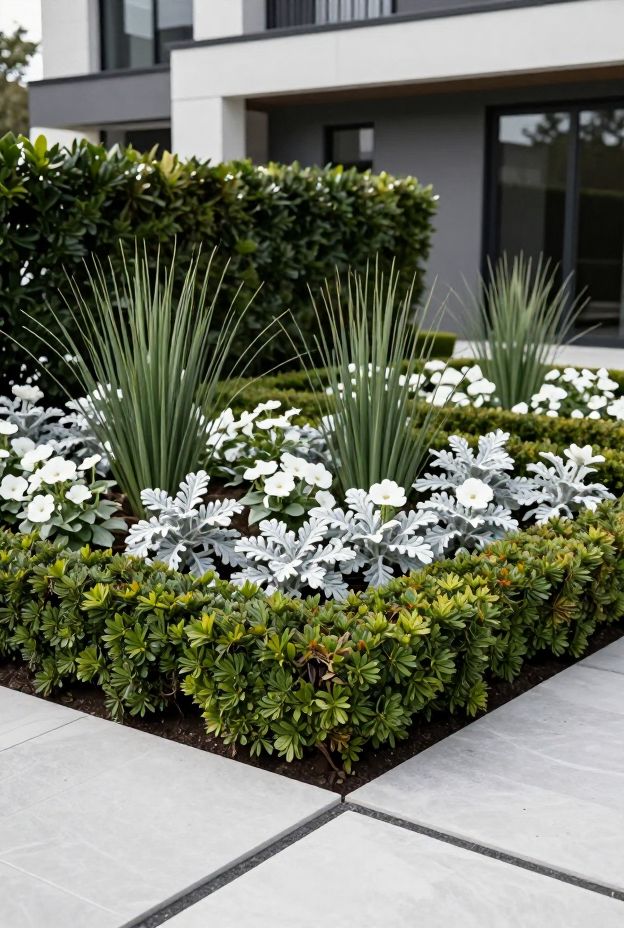
Limit your palette to complementary tones — maybe white blooms with silver foliage, or deep purple against fresh green groundcover. Boxwood hedges and ornamental grasses work exceptionally well as structural anchors in minimalist designs. This style proves that sometimes doing less actually gives you so much more.
5. Native Plant Flower Beds — The Smart Choice
Can we talk about how underappreciated native plant gardens are? These beds feature plants that are naturally suited to your local climate and soil, which means they thrive with minimal watering, fertilizing, or babying. Your garden looks gorgeous, and you barely have to lift a finger after the initial planting. Sounds like a win to me 🙂
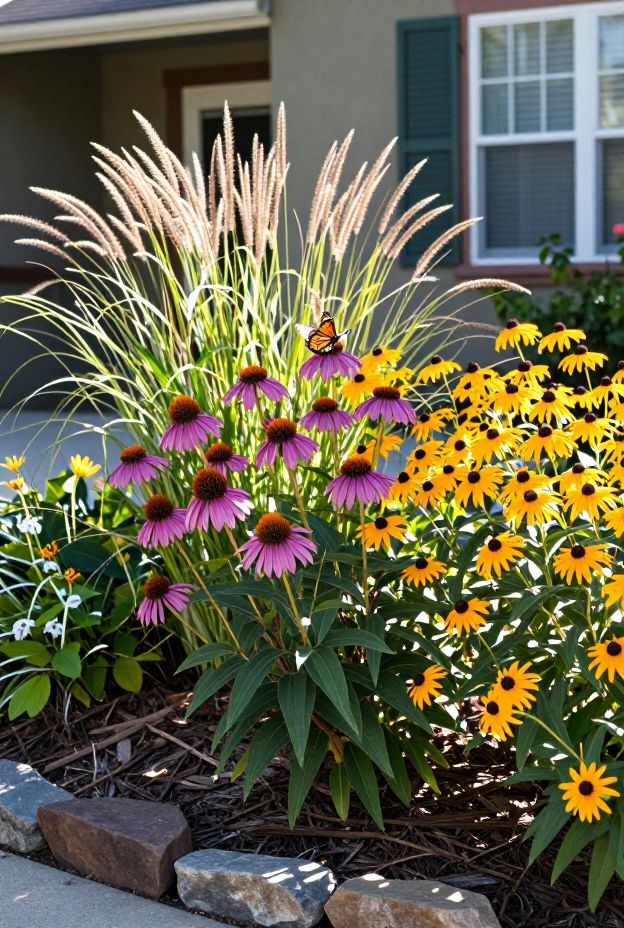
Native plants also attract local pollinators like bees and butterflies, which adds genuine life and movement to your front yard. Research what’s native to your region before you plant — coneflowers and black-eyed Susans work brilliantly in many parts of North America, while lavender and salvia shine in Mediterranean-style climates. Your local ecosystem will thank you, and so will your wallet.
6. Pollinator Garden Beds Full of Life
A pollinator-friendly flower bed does double duty — it looks stunning AND it supports your local ecosystem. Plant species like cornflower, salvia, and zinnias to attract butterflies, while hummingbirds go absolutely crazy for red tubular blooms like penstemon and cardinal flower. You’re basically setting up a living, buzzing display right in your front yard.
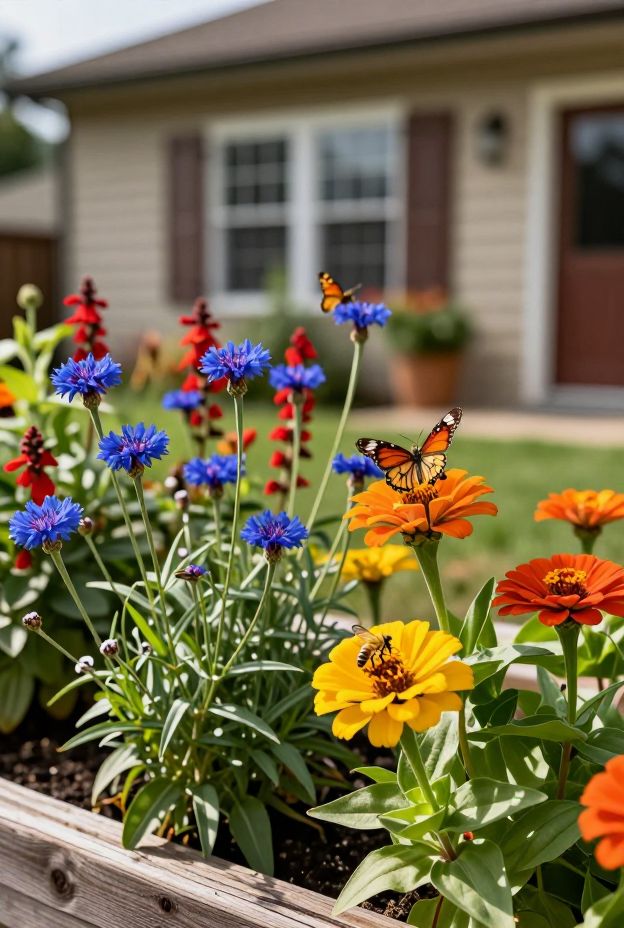
The visual appeal here is real. When your flower bed is filled with butterflies and bumblebees floating around, it creates a dynamic, eye-catching scene that no static garden decoration can match. Layer your pollinator plants from low to high, and choose varieties that bloom at different times to keep the activity going all season long.
7. Tulip and Spring Bulb Beds for Early Season Impact
If you want your front yard to be the talk of the neighborhood every spring, plant tulip and spring bulb beds in the fall and prepare to be amazed. Tulips bloom from mid-March through May in most regions, and they come in nearly every color imaginable — deep reds, bright yellows, soft pastels, dramatic bi-colors.
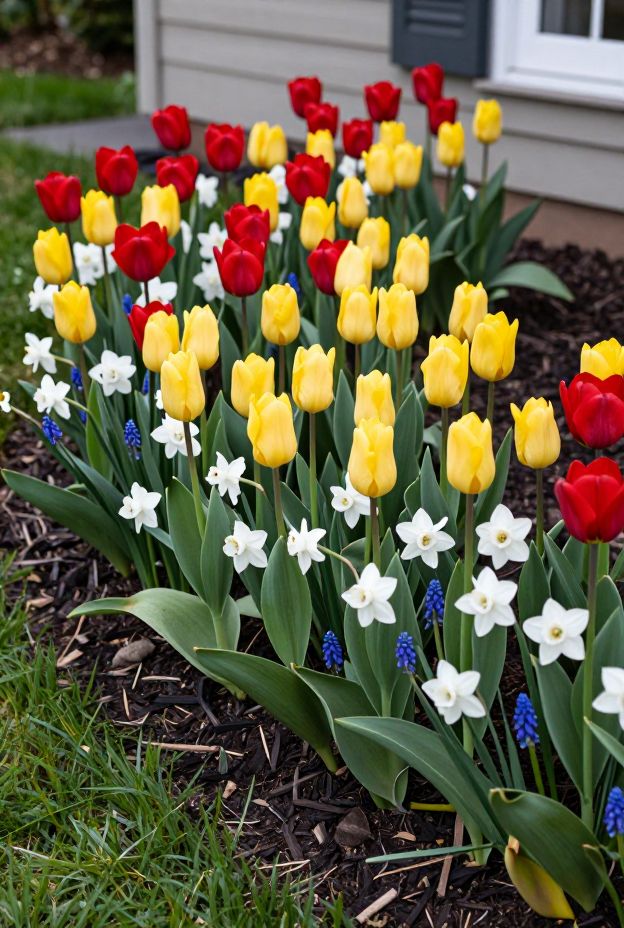
Mix tulips with daffodils and grape hyacinth for a layered, sequential bloom show that starts early and keeps going. A mix like ‘Lava’ tulips for deep, bold focal color combined with ‘Marieke’ daffodils and grape hyacinth creates a color combination that genuinely stops people in their tracks. Plant bulbs in clusters, not single rows, for maximum visual impact.
8. Mailbox Flower Bed — A Small Change, Big Impact
Here’s one that so many homeowners completely overlook — the mailbox flower bed. Your mailbox sits right at the street level, making it one of the most visible spots on your entire property. A small, well-maintained flower bed around your mailbox does wonders for your overall curb appeal without requiring a huge investment of time or money.
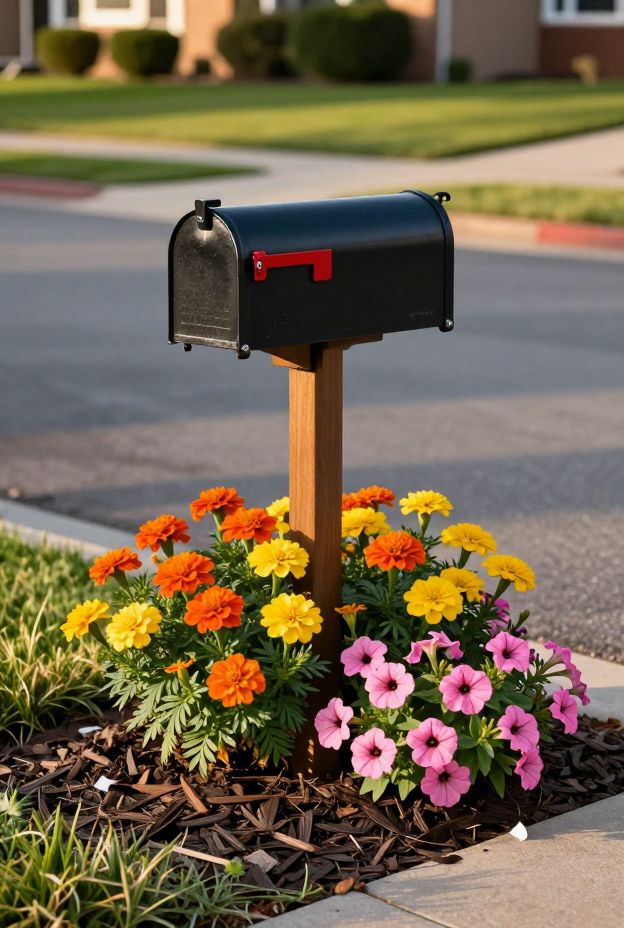
Stick to shorter, bright flowers that are easy to spot from the street — marigolds, petunias, and impatiens are all great choices. Keep the planting tight and tidy, and add a fresh layer of mulch each season to make the whole thing look polished and intentional. Seriously, this one simple upgrade can change how your entire front yard reads from the road.
9. Walkway-Lined Flower Beds for a Grand Entrance
Want to make every person who walks up to your front door feel like a VIP? Line your walkway with a flower bed on both sides. This classic technique frames your entrance, draws the eye naturally toward your front door, and creates a sense of arrival that feels genuinely special. It’s the landscaping equivalent of rolling out the red carpet.
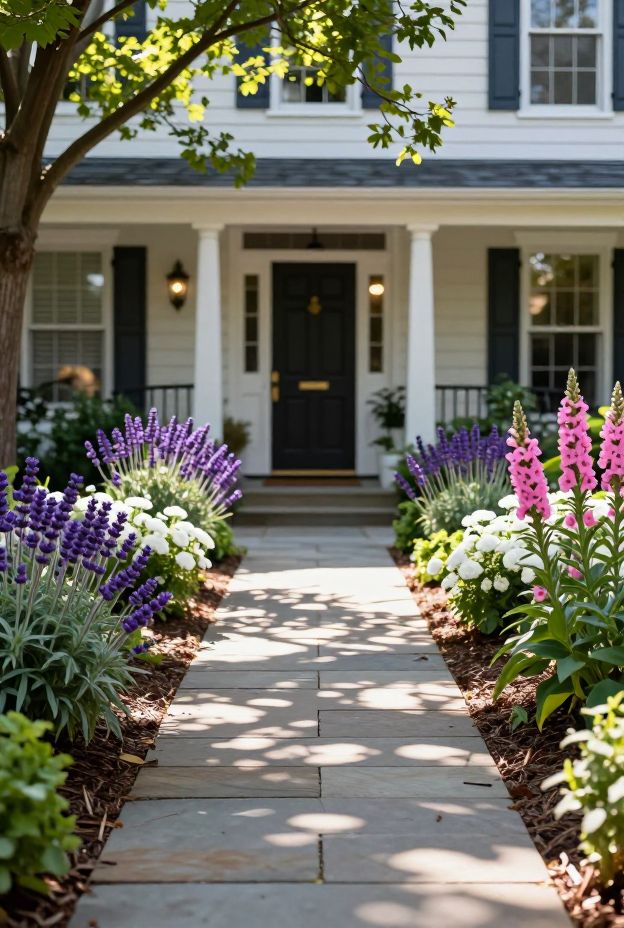
Choose plants with interesting textures and contrasting heights to keep the walkway visually dynamic. Low-growing lavender, ornamental grasses, or a ribbon of colorful annuals all work beautifully here. Keep the plants trimmed and tidy so they never encroach on the walking path itself — nobody wants to battle through overgrown foliage just to reach your door.
10. Corner Triangle Beds to Fill Awkward Angles
Got an awkward corner in your front yard where the sidewalk meets the driveway? A triangular corner flower bed turns that dead space into a genuine focal point. Design a planting bed that fits neatly into the angle, and anchor it with a small ornamental tree or a standout shrub to give it structure and height.
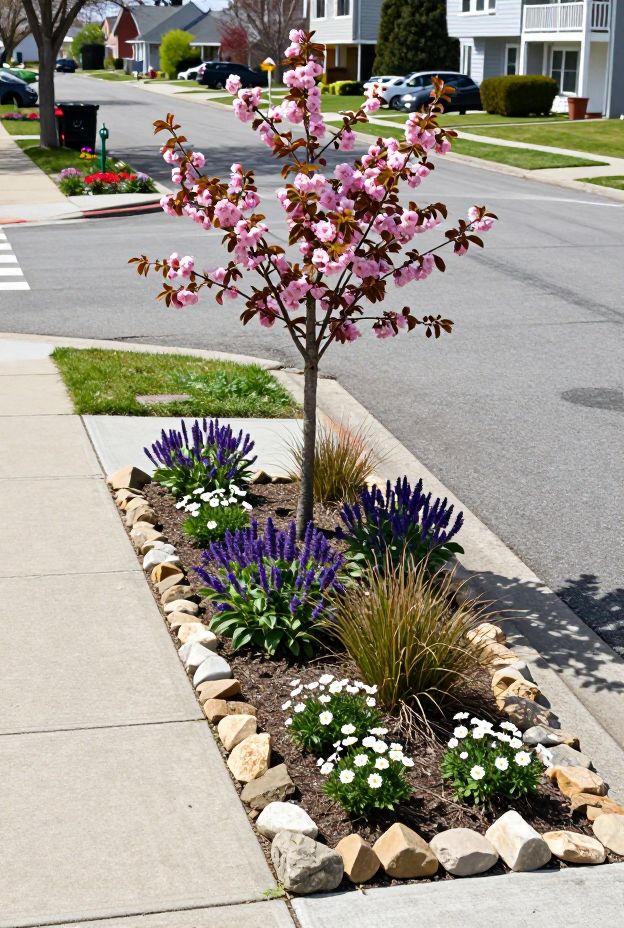
From there, fill in the surrounding space with medium and low-growing plants to create a layered, finished look. Adding a small decorative fence or low border edging around the triangle gives it a crisp, intentional appearance. This is one of those ideas that solves a problem while also creating something beautiful — the best kind of design solution.
11. Tree Base Flower Beds — Work With What You Have
Got a big tree in your front yard? Stop ignoring that awkward bare patch of soil around its base. A tree base flower bed is one of the easiest ways to add color and texture to your front yard without breaking new ground — literally. Arrange shade-loving plants like hostas, impatiens, and ferns in a circular or asymmetrical ring around the trunk.
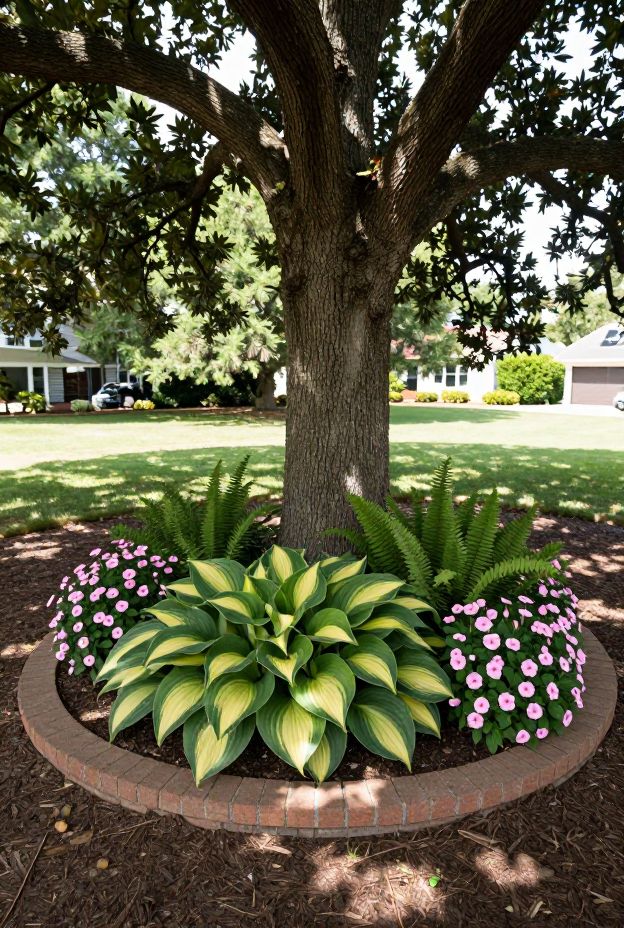
Hostas are especially brilliant for this — they come in dozens of varieties with different leaf colors and textures, and they thrive in the partial shade that tree canopies create. Add a ring of decorative stones or brick edging to define the bed and keep mulch in place. This turns an overlooked area into a deliberate design feature.
12. Raised Flower Beds with Retaining Wall Edges
If you have a sloped front yard, a raised flower bed with a retaining wall is both a functional and beautiful solution. Use materials like limestone, natural stone, or decorative concrete to build low walls that terrace your slope into usable planting levels. The structure alone adds architectural interest before you even plant a single flower.
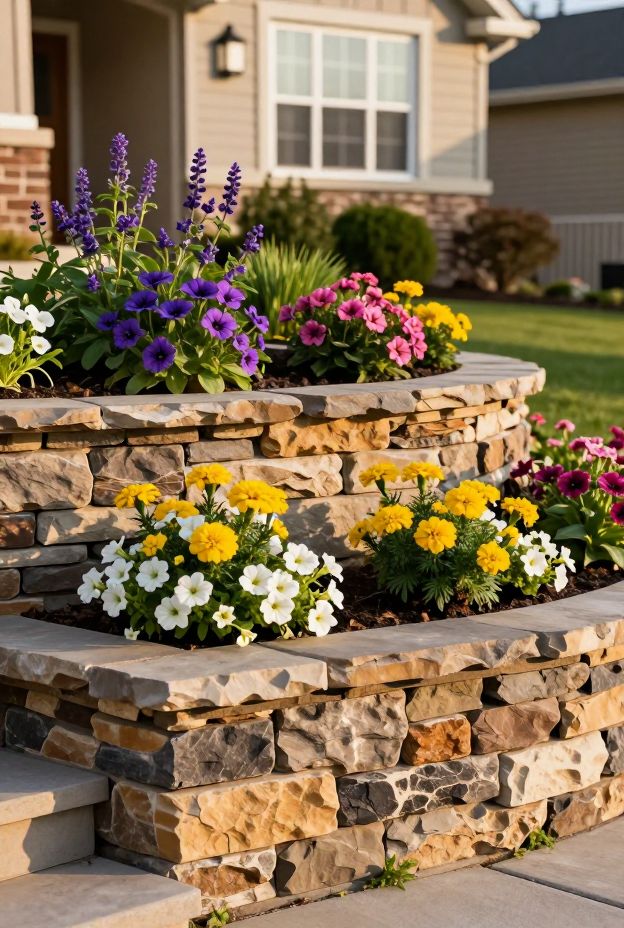
Fill your raised beds with a mix of perennials for long-term structure and colorful annuals for seasonal pops of color. The elevation change that raised beds create makes your plantings more visible from the street, giving your curb appeal a dramatic boost. FYI, raised beds also improve drainage and soil quality, which means healthier, more vibrant plants overall.
13. Seasonal Rotating Flower Beds — Year-Round Curb Appeal
Most people think about their flower beds in summer and then forget about them. But what if your front yard looked stunning in every single season? Seasonal rotating flower beds are planned specifically to keep something blooming year-round, from early spring through late fall and beyond. It takes a little planning up front, but the payoff is enormous.
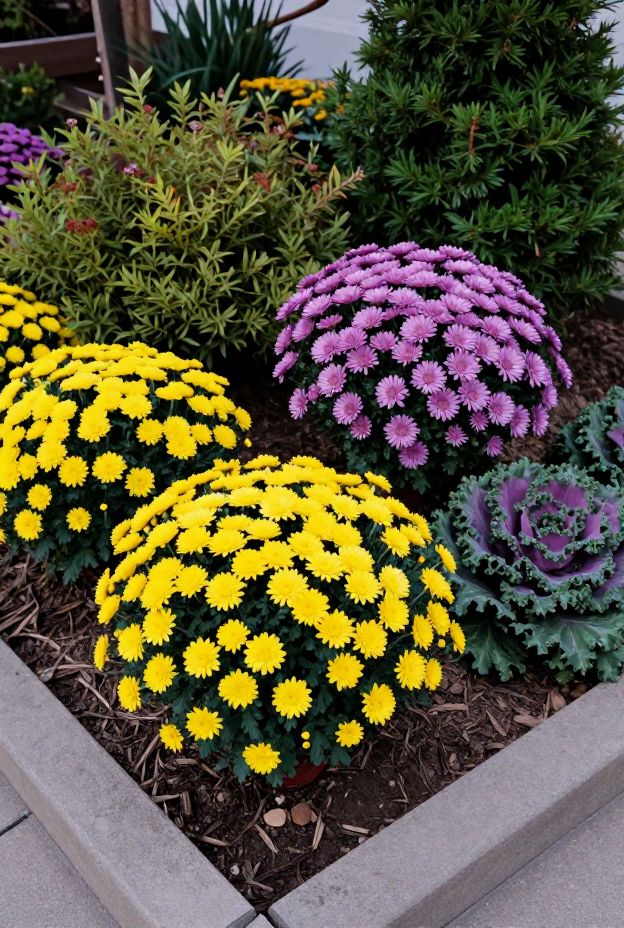
Start with spring bulbs like tulips and daffodils, transition to summer staples like zinnias and dahlias, then bring in chrysanthemums and ornamental kale for autumn. In winter, evergreen shrubs, ornamental grasses, and structural hardscaping keep the bed looking intentional and well-maintained even when nothing is blooming. Your front yard stays impressive no matter what time of year a guest pulls up.
Seasonal Planting Guide at a Glance
- Spring: Tulips, daffodils, grape hyacinth, pansies
- Summer: Zinnias, dahlias, marigolds, petunias, salvia
- Autumn: Chrysanthemums, ornamental kale, asters, sedums
- Winter: Evergreen shrubs, ornamental grasses, hellebores
14. Wildflower Meadow Beds for Effortless Beauty
Last but definitely not least — the wildflower meadow bed. This idea gets a bad rap because people assume it looks messy. Done right, though, a carefully chosen mix of wildflowers creates a living, breathing ecosystem that looks absolutely magical. Think poppies, cornflowers, ox-eye daisies, and rudbeckia all growing together in a loose, naturalistic arrangement.
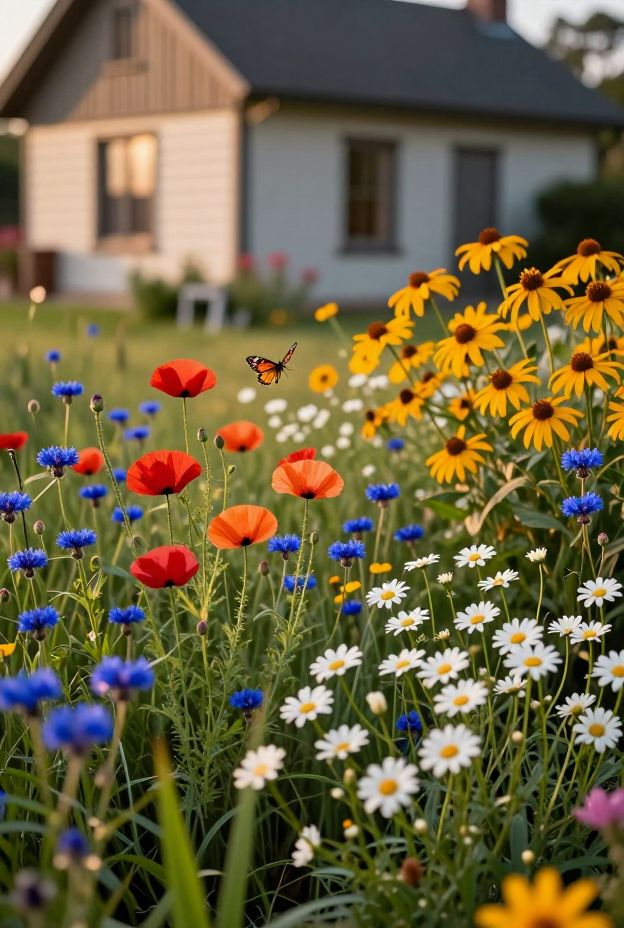
The secret is choosing the right seed mix for your region and preparing your soil properly before sowing. Once established, wildflower beds need very little maintenance — they essentially take care of themselves. These beds attract bees, butterflies, and birds, turning your front yard into a daily nature show. And honestly? The neighbors who called it “too wild” will be the same ones asking you which seeds you used :/
Your front yard is a canvas, and every flower bed is a brushstroke. Whether you go for the polished elegance of a minimalist geometric bed or the free-spirited joy of a wildflower meadow, the key is to start somewhere and start now. Pick one idea from this list that excites you the most, grab your gloves, and get planting. Because a home with a stunning flower bed out front isn’t just more beautiful — it feels more alive, more welcoming, and more you. And really, isn’t that the whole point?