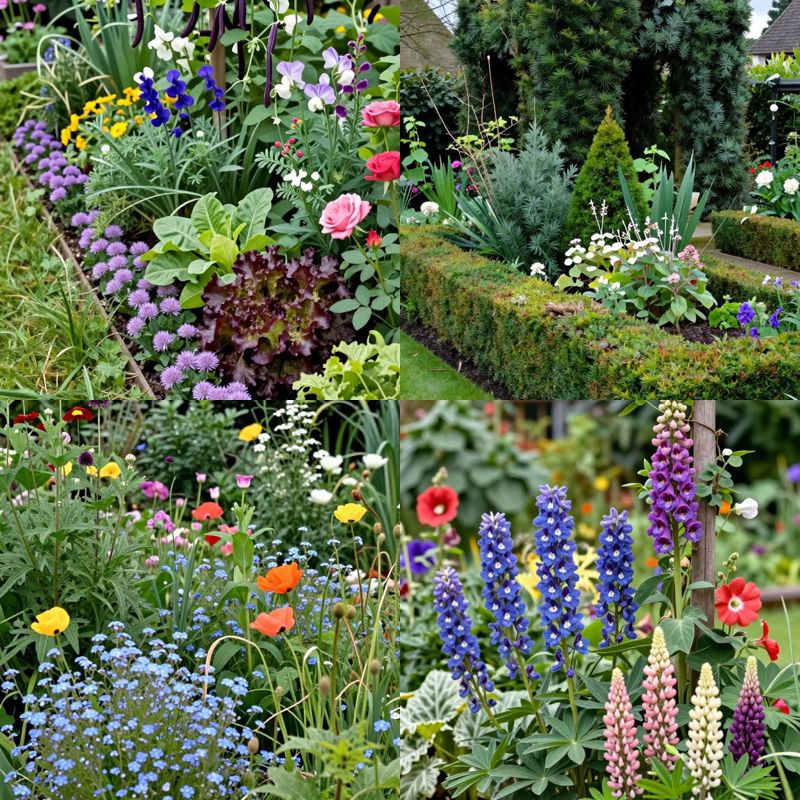
English cottage gardens are the ultimate rebellion against those sterile, perfectly manicured lawns that look like they’ve been cut with a ruler. You know those gardens that practically scream “Don’t touch me, I’m too perfect”? Yeah, forget those. We’re talking about gardens that actually feel alive—romantic, a little wild, and honestly? Way more interesting to look at. If you’ve ever wanted your outdoor space to look like it belongs in a Jane Austen novel (minus the corsets and complicated social rules), you’re in the right place. I’ve been obsessing over cottage garden style for years now, and trust me, once you go informal plantings, you never go back.
1. Layer Your Blooms Like You’re Making a Floral Lasagna
Here’s the thing about cottage gardens—they’re all about layers. I’m talking front, middle, and back, just like you’d arrange people in a group photo (except these “people” won’t complain about being in the back row). You want your garden to look full and lush, not like a lineup of plants standing at attention.
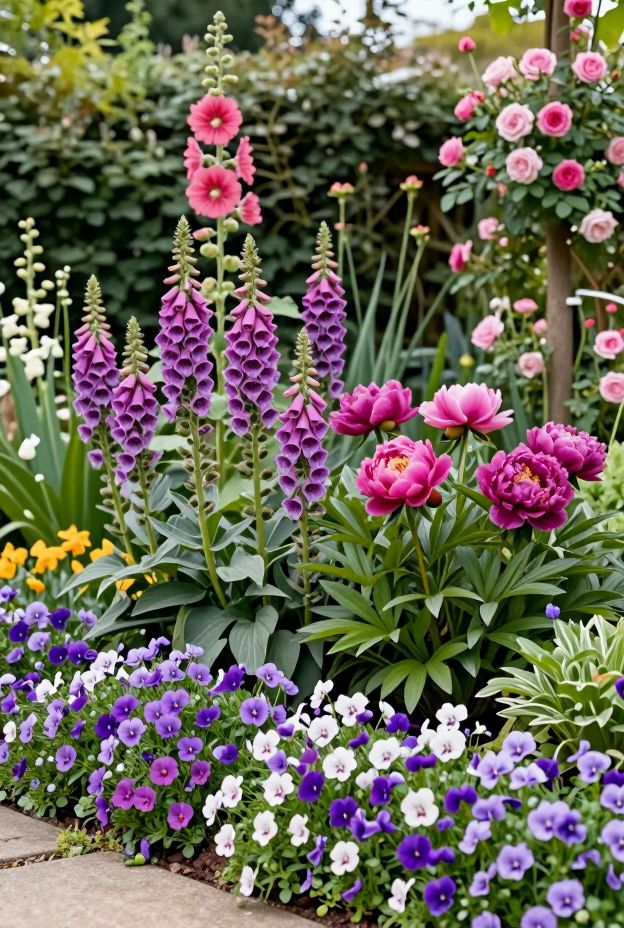
Start with your shortest plants at the front—think sweet alyssum, violas, or primroses. These little guys create that soft, overflowing edge. Then move to your mid-height performers like foxgloves, delphiniums, and peonies in the middle. Finally, throw some tall beauties like hollyhocks or climbing roses at the back. The goal? Creating depth and visual interest that makes people want to keep looking.
FYI, this layering trick isn’t just about aesthetics. It actually helps your plants thrive because they’re not all competing for the same sunlight. Smart, right?
2. Embrace the Chaos (Yes, Really)
Okay, this might sound weird, but hear me out: stop trying to control everything. English cottage gardens thrive on a bit of controlled chaos. That means letting plants self-seed where they want, allowing natural growth patterns, and not freaking out when things don’t follow your perfectly drawn plan.
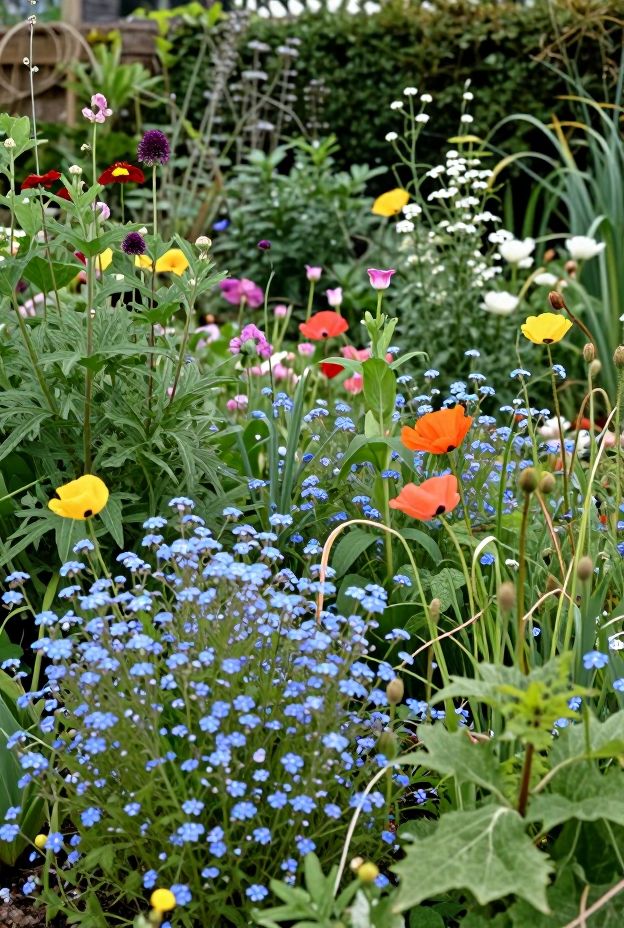
I learned this the hard way when I spent hours trying to keep my garden “organized,” only to realize the most beautiful parts were where I’d let nature do its thing. Some of my favorite plants—forget-me-nots, poppies, and nigella—show up in random spots each year, and honestly? They always choose better locations than I would have.
Ever wondered why cottage gardens feel so magical? It’s because they look like they grew themselves, not like someone forced them into submission.
3. Mix Edibles with Ornamentals
Here’s where cottage gardens get really practical. Who says you can’t have beautiful AND functional? Traditional cottage gardens always mixed vegetables, herbs, and flowers together because, well, people needed to eat. But it also looks fantastic.
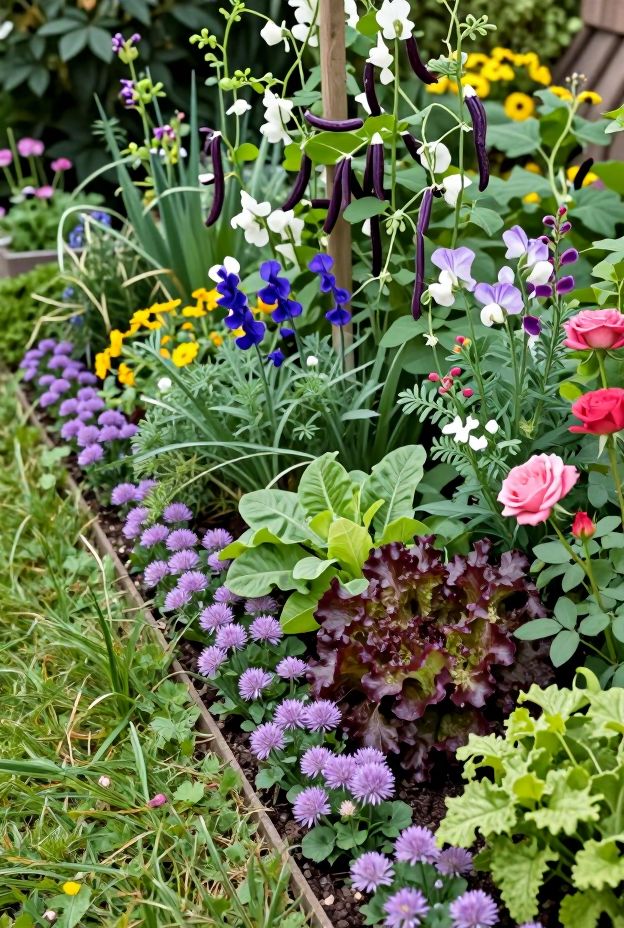
Tuck some purple-leaved lettuce between your roses, plant chives along your borders (the purple flowers are gorgeous), or let runner beans climb up your trellis alongside sweet peas. Thyme makes an excellent ground cover, and rosemary provides structure while smelling amazing. IMO, there’s something deeply satisfying about picking fresh basil from the same garden bed where your peonies are blooming.
4. Go Heavy on the Roses (But Pick the Right Ones)
You can’t have a proper English cottage garden without roses. Period. But here’s the catch—not all roses are created equal for this style. Skip those stiff hybrid teas that look like they’re posing for a portrait and go for old-fashioned varieties instead.
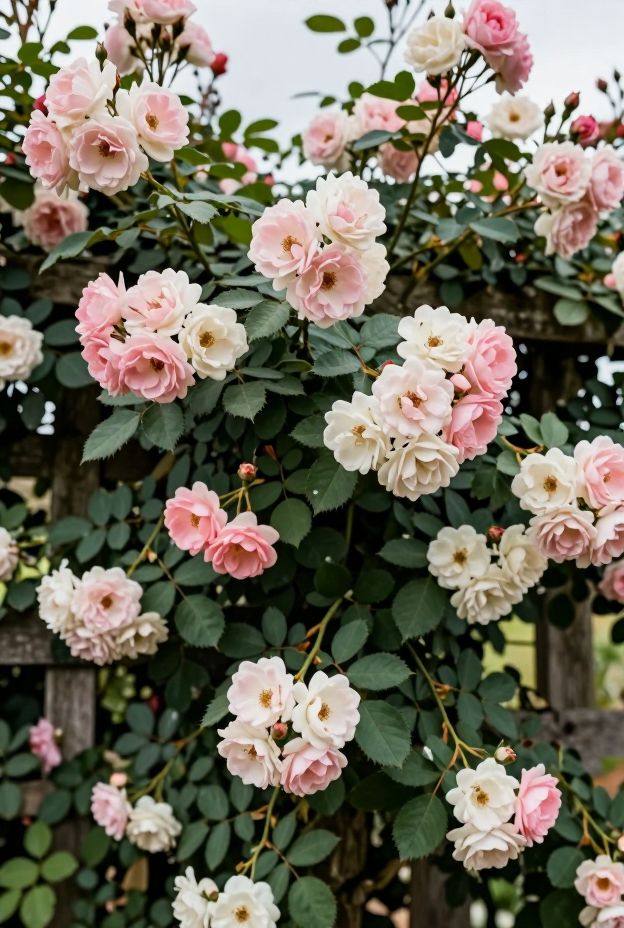
David Austin roses are basically cottage garden royalty. Varieties like ‘Gertrude Jekyll,’ ‘Graham Thomas,’ and ‘Constance Spry’ have that romantic, blowsy look with incredible fragrance. Climbing roses like ‘New Dawn’ or ‘Albertine’ are perfect for covering walls, fences, or arbors. The key is choosing varieties that look relaxed and natural, not like they just came from the salon.
Pro tip: Let your roses grow a bit wild. Don’t deadhead every single faded bloom—some produce gorgeous hips that add autumn interest.
5. Create Pathways That Meander
Straight paths are boring. There, I said it. Cottage garden paths should wander, curve, and make you curious about what’s around the corner. Use materials like brick, stone, or even gravel to create informal pathways that feel like they’ve been there forever.
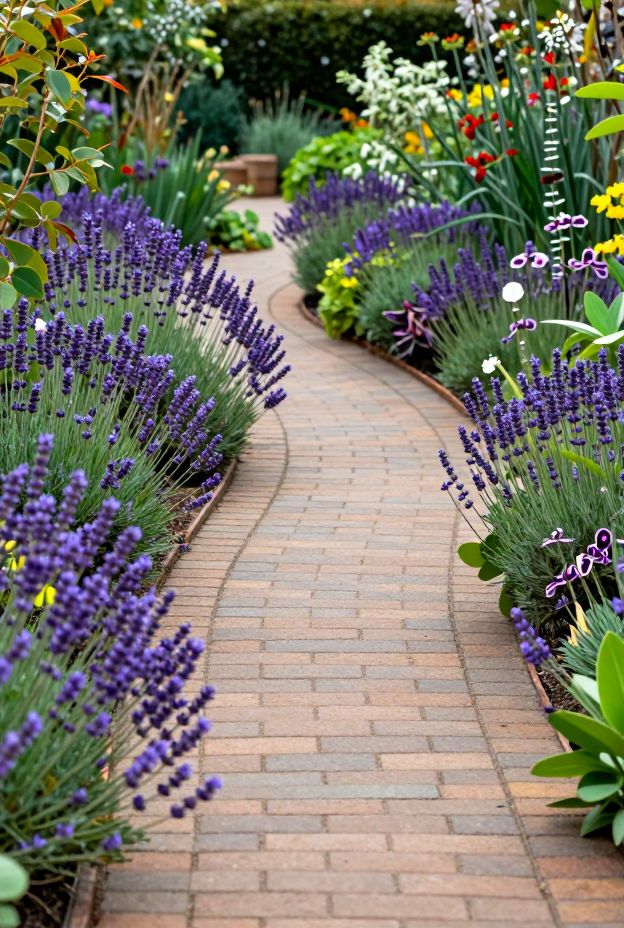
I love how meandering paths slow you down and make you actually notice the plants. Plus, when you let plants spill over the edges—lavender, catmint, lady’s mantle—it softens everything and creates that “barely contained” look that’s so quintessentially cottage garden.
6. Add Vertical Interest with Climbers
Don’t just think horizontally—go vertical! Climbing plants are essential for creating that lush, romantic feeling. Clematis, honeysuckle, and wisteria are classic choices that add height without taking up much ground space.
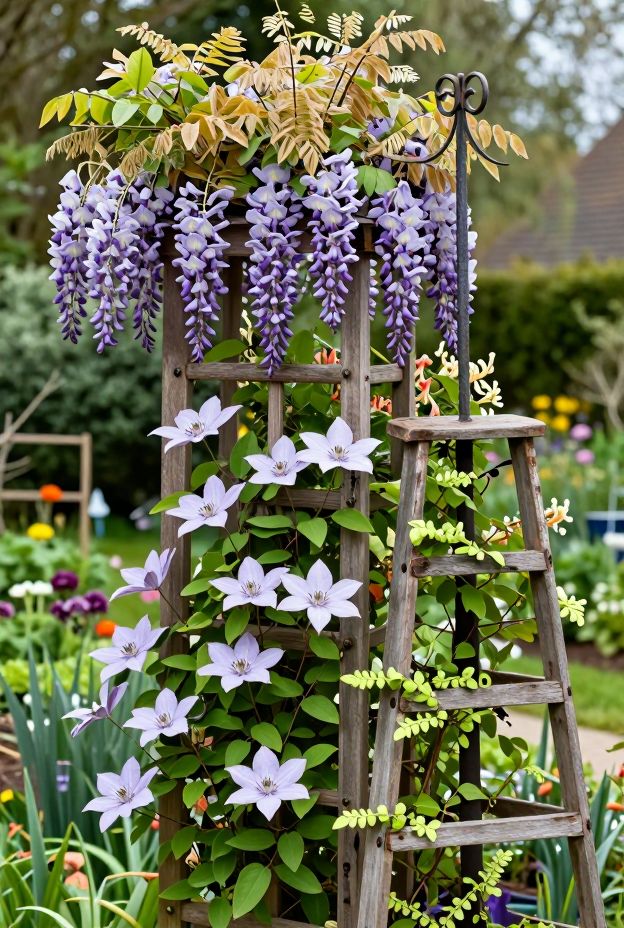
You’ll need structures for them to climb, obviously. Think rustic wooden trellises, metal obelisks, or even old ladders repurposed as plant supports. I’ve seen people use everything from bicycle wheels to vintage bed frames—cottage gardens are forgiving like that. The key is making sure your structures look intentional but not overly fussy.
Quick question: Have you ever stood under a blooming wisteria? If not, add it to your bucket list. 🙂
7. Plant in Drifts, Not Dots
Here’s a rookie mistake I see all the time: planting one of everything. That’s a recipe for a garden that looks scattered and confusing. Instead, plant in groups or “drifts” of the same plant. Three, five, or seven plants of the same variety create impact and cohesion.
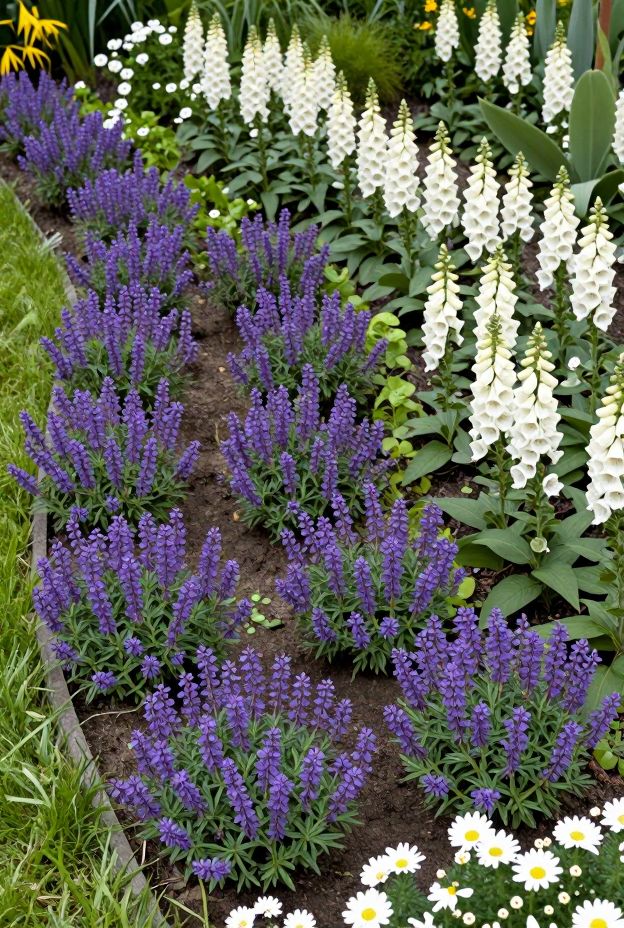
This technique helps your eye move through the garden more naturally. When you see a sweep of purple catmint or a cluster of white foxgloves, it creates rhythm and flow. Save the “one of everything” approach for your seed collection, not your actual planting scheme.
8. Include Self-Seeding Annuals
Want to know the secret to a garden that looks effortlessly abundant? Self-seeding annuals. These are plants that drop seeds, come back next year, and basically do the work for you. Love handles, nigella, cosmos, and California poppies are perfect examples.
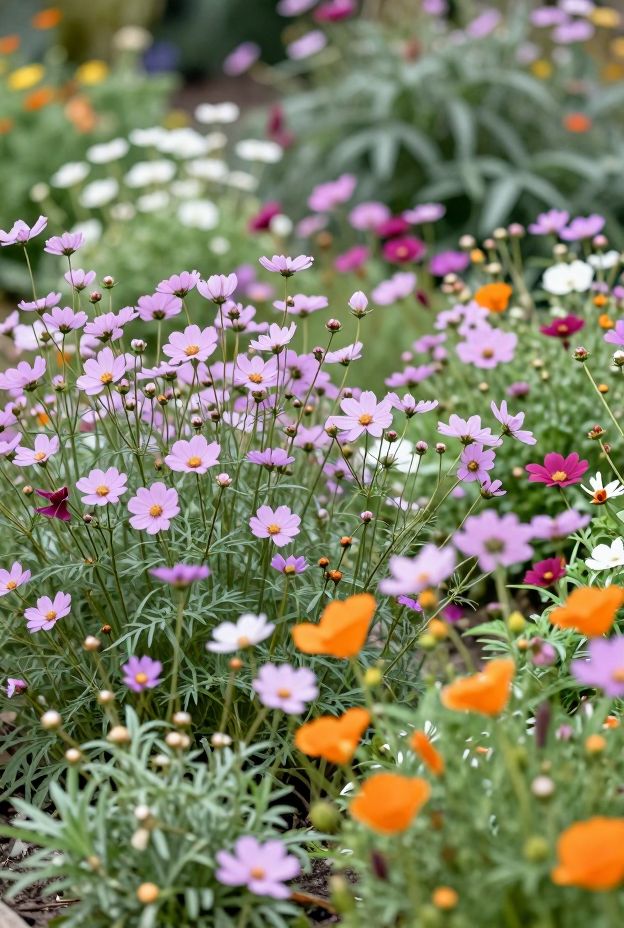
The beauty of self-seeders is that they fill in gaps naturally and create that “I barely tried” look that cottage gardens do so well. Sure, you might need to thin them out occasionally (or relocate some volunteers), but it’s way less work than replanting everything each season.
Plus, there’s something deeply satisfying about plants that just… return. Like they’re saying, “Yeah, I like it here. I’m staying.”
9. Use Traditional Cottage Garden Plants
Some plants are just cottage garden classics for a reason. They’ve been growing in English gardens for centuries because they’re tough, beautiful, and fit the aesthetic perfectly. We’re talking delphiniums, lupines, hollyhocks, foxgloves, sweet peas, and phlox.
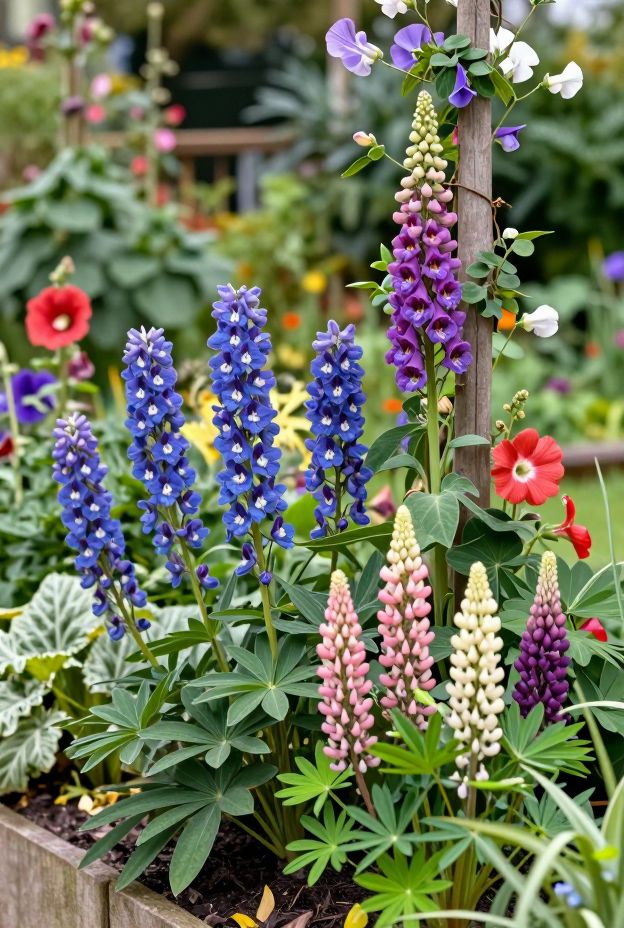
These plants give you that authentic cottage garden vibe immediately. But don’t feel like you have to stick exclusively to historical plants—cottage gardens have always evolved. Mix in some modern varieties that have similar characteristics (relaxed growth habit, romantic appearance, good fragrance).
10. Add a Focal Point (But Keep It Charming)
Every good garden needs something to draw your eye—a focal point that anchors everything. In cottage gardens, this could be an old stone birdbath, a weathered bench, a rustic arbor, or even a vintage watering can displayed on a pedestal.
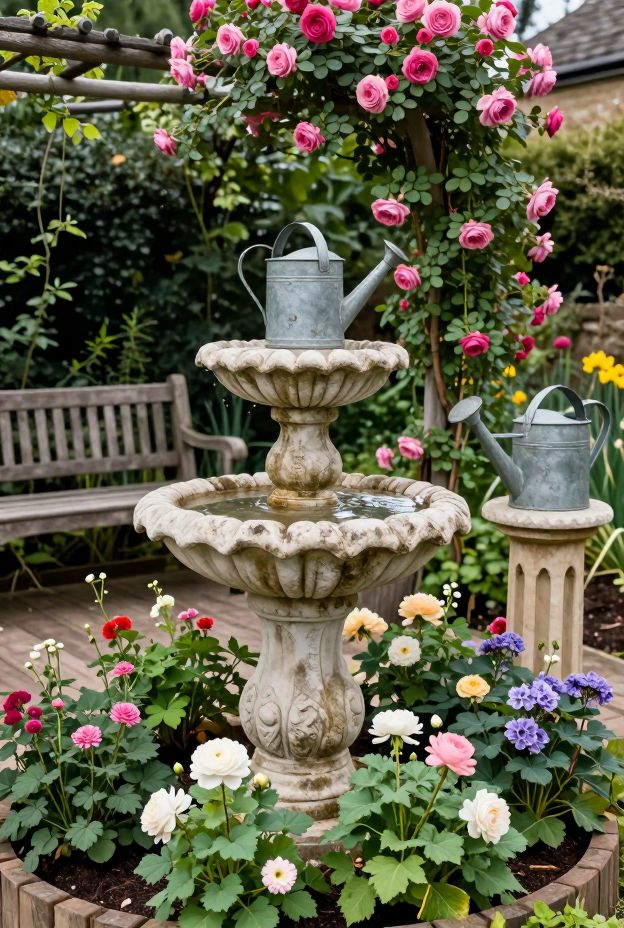
The key word here is “charming.” Skip the ultra-modern sculptures or anything that looks too new and shiny. Cottage gardens love things with patina, history, and character. I’ve seen people use old chimney pots, salvaged windows, and antique garden tools as focal points. If it looks like it could have a story, it probably works.
11. Let Plants Touch (Gasp!)
Here’s where cottage gardening really differs from formal styles: plants should intermingle and touch each other. No bare soil showing, no strict boundaries between different varieties. Everything flows together in a glorious, colorful jumble.
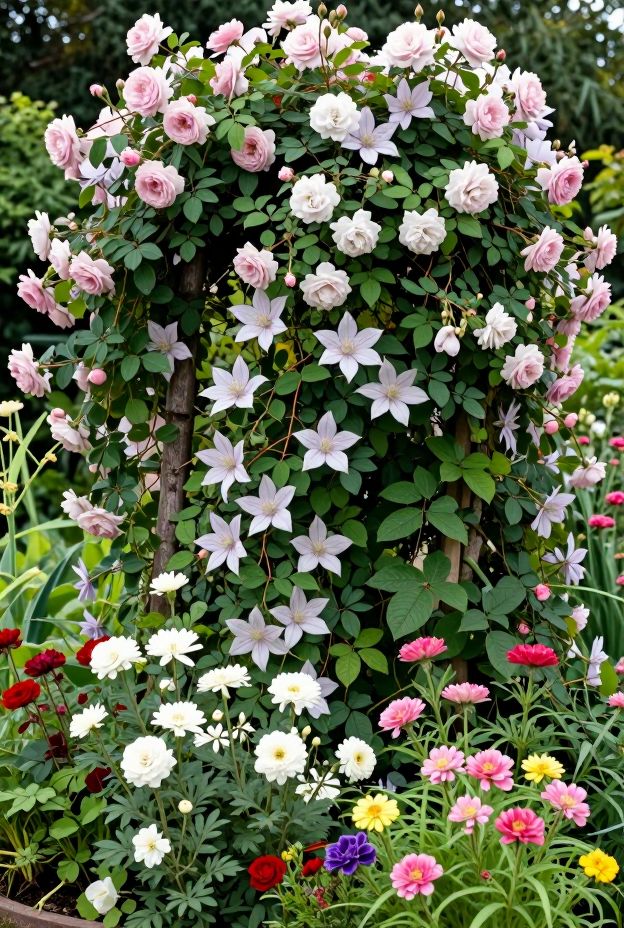
This creates that signature cottage garden look where you can’t quite tell where one plant ends and another begins. It also has practical benefits—the density shades out weeds and helps retain moisture. Win-win, right?
Don’t be afraid of plants growing through each other. A late-flowering clematis scrambling through an early-blooming rose? Chef’s kiss.
12. Include Fragrance (Your Nose Will Thank You)
A cottage garden without fragrance is like cake without frosting—technically still cake, but why would you do that? Scent is essential to the full cottage garden experience. Plant lavender, sweet peas, roses, jasmine, honeysuckle, and old-fashioned pinks near pathways and seating areas.
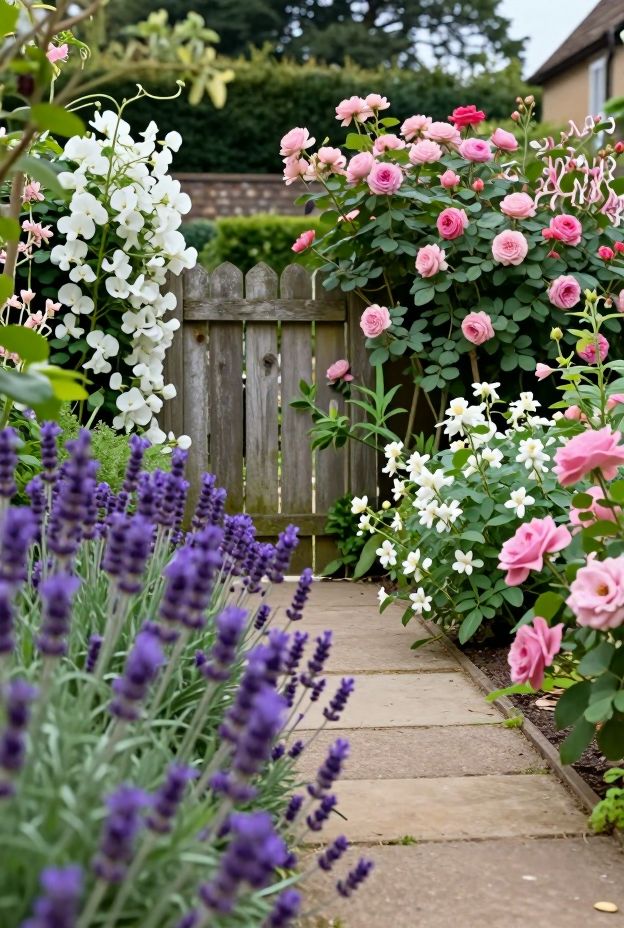
I’m serious about placement here. Put fragrant plants where you’ll actually smell them—along paths, near doors and windows, around benches. There’s nothing better than sitting in your garden on a summer evening with all those scents mixing together. It’s basically aromatherapy, but make it gardening.
13. Choose a Soft Color Palette (Mostly)
Cottage gardens typically favor soft, romantic colors—pinks, purples, blues, whites, and pale yellows. This doesn’t mean you can’t have bold colors, but the overall effect should feel dreamy rather than jarring. Think watercolor painting, not neon sign.
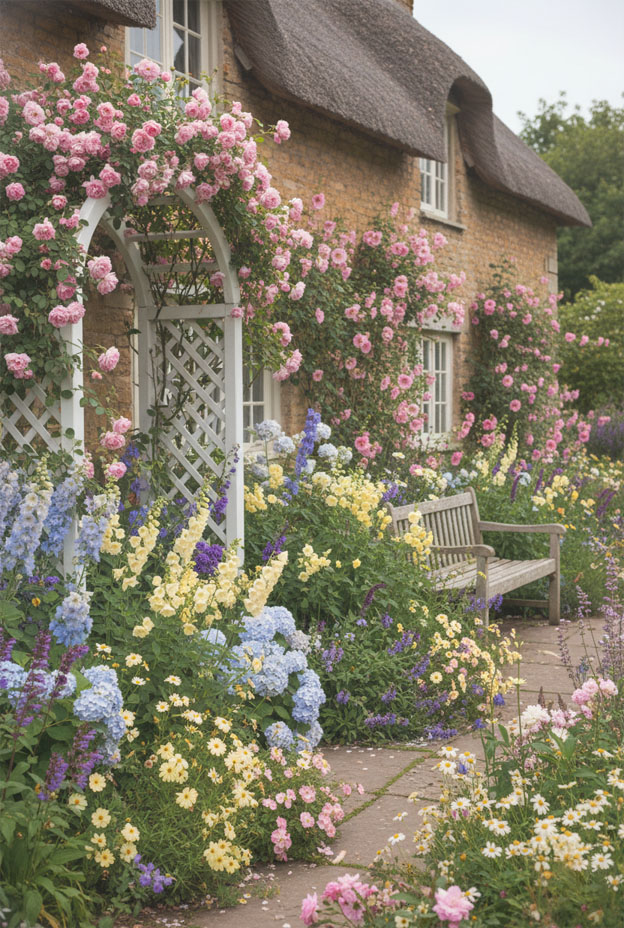
That said, rules are meant to be bent. Some of the most gorgeous cottage gardens I’ve seen include pops of hot pink or deep magenta that prevent everything from looking too precious. The key is balance. If 80% of your palette is soft and romantic, you can get away with some bolder choices.
14. Add Some Structure with Evergreens
I know, I know—we’ve been talking about romantic, flowing plantings. But here’s the thing: even cottage gardens need some structure, especially in winter. A few well-placed evergreens (boxwood, yew, or even rosemary in mild climates) provide year-round interest and anchor the design.
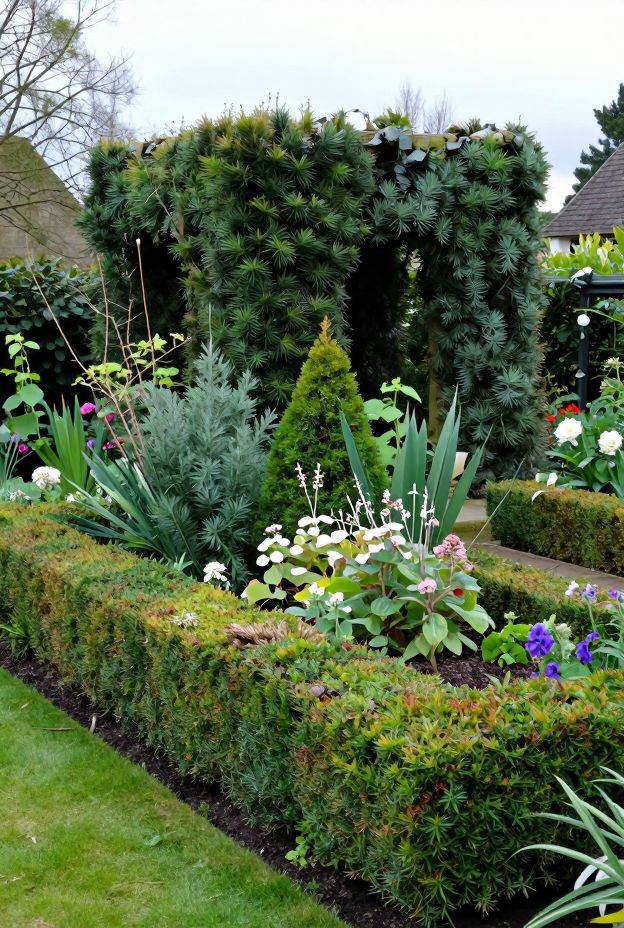
Use them as low hedges, corner plantings, or to define garden “rooms.” They don’t have to be clipped into perfect balls—informal, slightly shaggy shapes work great in cottage gardens. Think of them as the reliable friend who keeps things grounded while everyone else is being dramatic and colorful.
15. Relax and Stop Stressing About Perfection
Last but definitely not least: give yourself permission to be imperfect. Cottage gardens are meant to look lived-in, loved, and a little imperfect. A few weeds here and there? That’s character. Plants that didn’t grow exactly where you planted them? That’s charm. A slightly overgrown path? That’s authenticity.
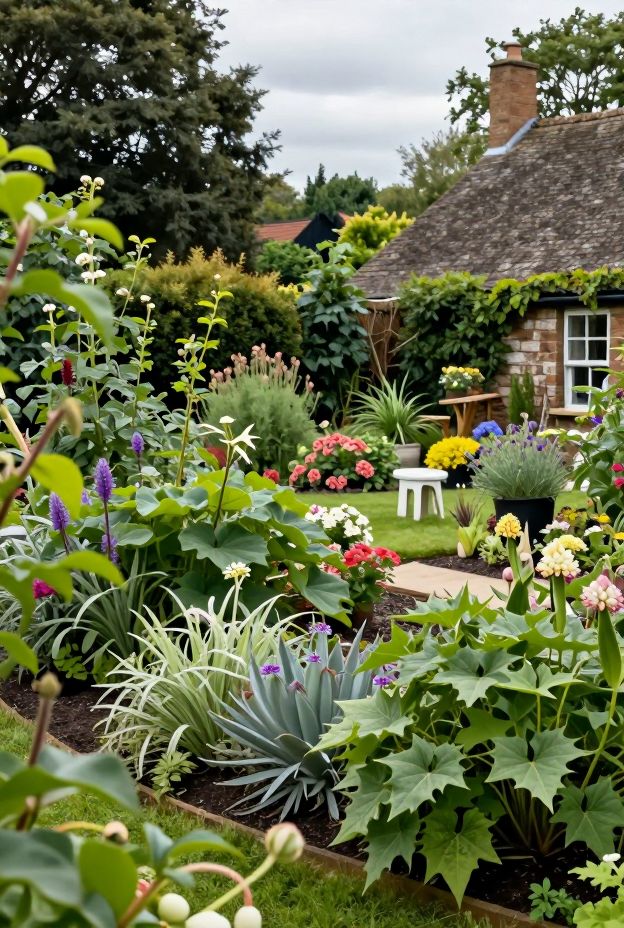
I spent my first year cottage gardening trying to make everything “perfect,” and you know what? It looked stiff and boring. The moment I relaxed and let the garden be itself, magic happened. Plants grew where they wanted, unexpected color combinations appeared, and the whole space just felt more alive.
Honestly, the biggest challenge with cottage gardening isn’t the planting—it’s getting over your need for control. But trust me, once you do? You’ll never look at gardening the same way again.
Conclusion
Creating an English cottage garden isn’t about following strict rules or achieving some impossible standard of perfection. It’s about embracing abundance, celebrating imperfection, and creating a space that feels romantic and welcoming. Whether you’re working with a tiny urban plot or a sprawling country garden, these principles can help you achieve that dreamy, informal look.
Start with a few of these ideas—maybe layer your plantings, add some self-seeders, and let things grow a bit wild. Before you know it, you’ll have a garden that looks like it’s been there for generations, even if you just planted it last spring. And isn’t that the whole point? Creating something that feels timeless, effortless, and absolutely worth spending your weekends in.
Now get out there and plant something. Your future cottage garden is waiting. 🙂