You’re crammed into a tiny urban apartment with a balcony the size of a yoga mat, but you’re dying to grow something green. Your neighbor thinks you’re crazy for wanting a garden when you can barely fit a chair out there, but here’s the thing—**small spaces are actually perfect for creative gardening**. I’ve turned my own shoebox balcony into a mini jungle, and honestly? It’s become my favorite spot in the entire place.
Urban balcony gardening isn’t about having endless square footage. It’s about working smarter, not harder, and maximizing every inch you’ve got. Whether you’re dealing with a narrow railing, limited floor space, or zero direct sunlight (been there), there are space-saving solutions that’ll have you growing herbs, veggies, and flowers like a pro. Ready to transform that sad, empty balcony into your personal green oasis? Let’s talk about 14 game-changing ideas that actually work.
1. Vertical Wall Planters—Because Walls Are Underrated Real Estate
Why let your walls just sit there looking boring when they could be growing your dinner? **Vertical wall planters** are honestly the MVP of small balcony gardens. I installed a pocket planter system on my balcony wall last spring, and now I’ve got fresh basil, mint, and strawberries growing at eye level. Game changer.
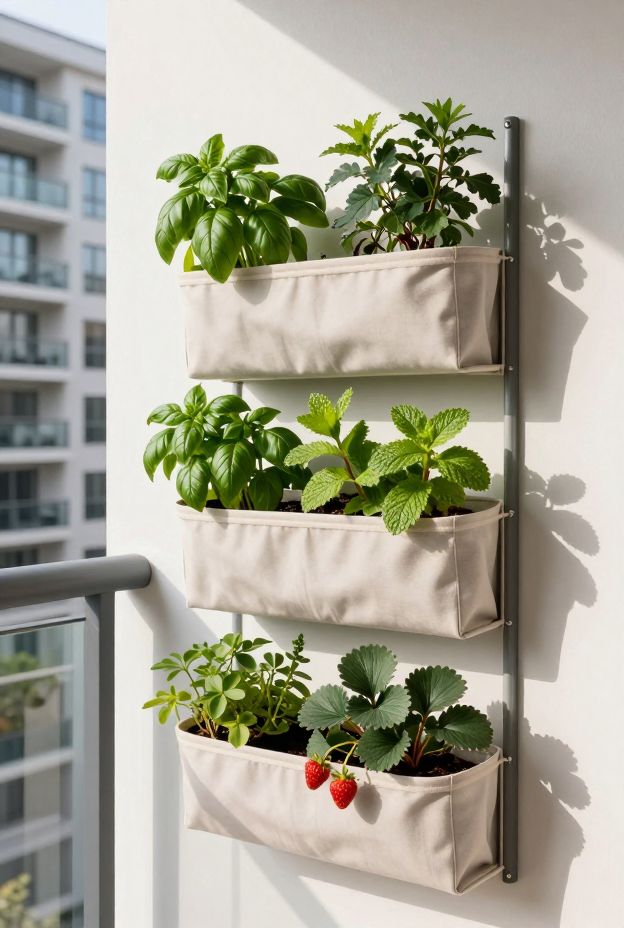
These planters come in all shapes and sizes—felt pocket systems, modular boxes, or even DIY pallet gardens. The beauty here is you’re using vertical space that would otherwise go to waste. Plus, watering is way easier when you’re not bending down to ground level every single time.
Here’s what makes vertical planters so brilliant:
- **Maximize limited floor space** by growing upward instead of outward
- Create a living privacy screen from nosy neighbors (you know who I’m talking about)
- Easy to arrange by sunlight needs—put sun lovers at the top, shade plants below
- Perfect for herbs, lettuce, and small flowering plants
2. Railing Planters—Double Your Growing Space Instantly
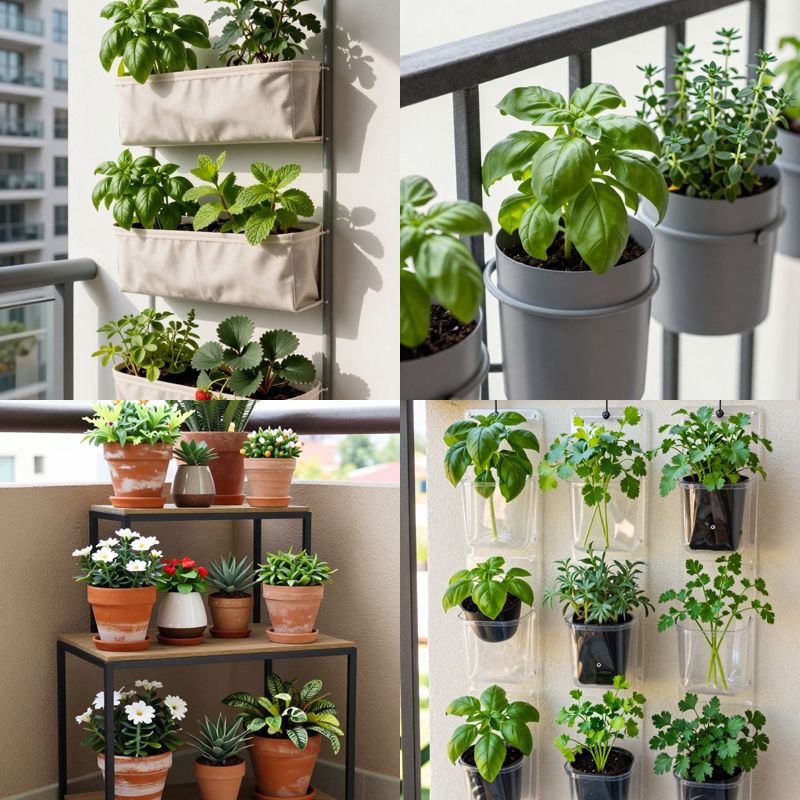
Your balcony railing is prime real estate that most people completely ignore. **Railing planters** hook right over your balcony bars and literally double your planting area without taking up any floor space. I’ve got four of these running along my railing, and they’re packed with petunias and trailing tomatoes.
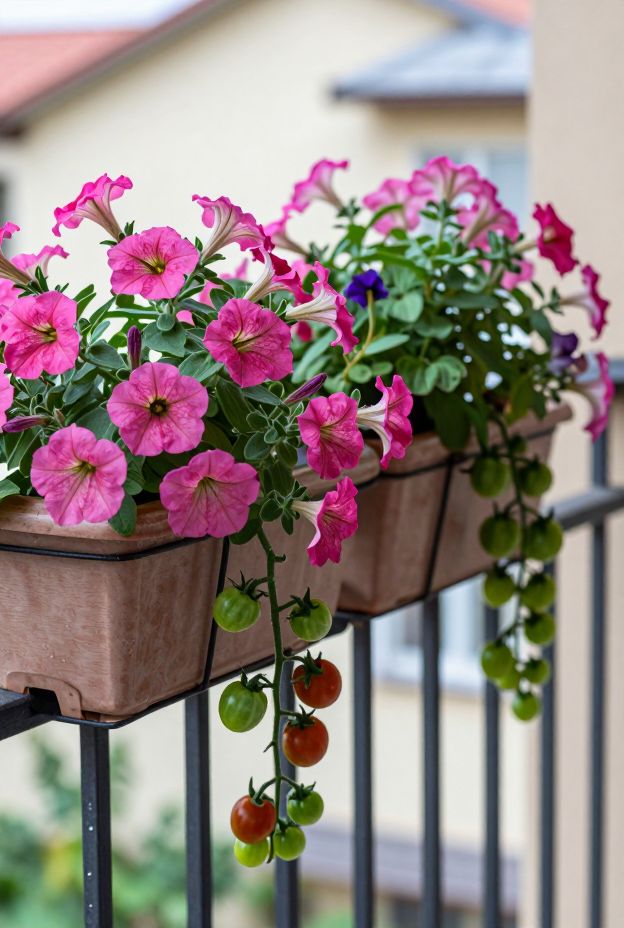
The adjustable ones are worth the extra few bucks because they fit different railing widths. Make sure you get planters with drainage holes though—trust me on this one. I learned that lesson the hard way with some sad, waterlogged plants.
Pro tip: Use railing planters for trailing plants like cherry tomatoes, cucumbers, or cascading flowers. They’ll grow down and create this gorgeous curtain effect that looks way fancier than the effort you put in.
3. Tiered Plant Stands—The IKEA Solution for Your Garden
Ever wondered why corner shelving units work so well inside? Same concept applies outside. **Tiered plant stands** let you stack multiple plants in the footprint of one pot. It’s like vertical gardening but with built-in shelves—basically the IKEA approach to balcony gardens.
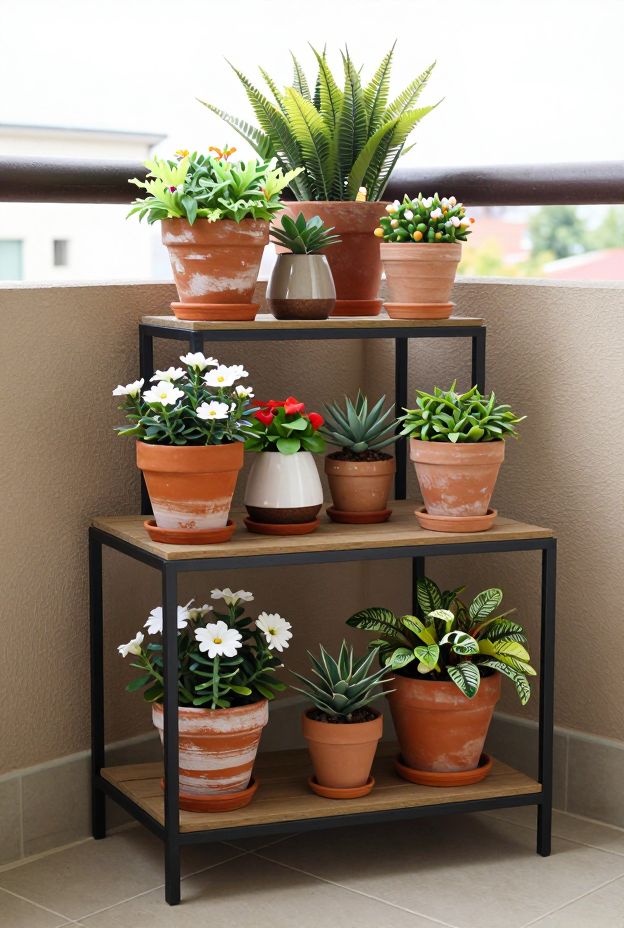
I use a three-tier corner stand that fits perfectly in my balcony’s dead corner space. Now that spot holds nine pots instead of three, and it actually looks intentional instead of cluttered. The key is choosing plants with different heights and textures so each tier has its own personality.
What to consider with tiered stands:
- **Weight distribution**—put heavier pots on lower tiers for stability
- **Sunlight access**—taller plants go on top so they don’t shade shorter ones
- **Material matters**—metal stands are sturdier but can rust; wood looks better but needs weatherproofing
4. Hanging Baskets—Utilize That Ceiling Space
Why should your overhead space go unused? **Hanging baskets** are perfect for sprawling plants and add dimension to your balcony garden. I’ve got two hanging from hooks in my balcony ceiling, filled with trailing ivy and spider plants that make the whole space feel like a secret garden hideaway.
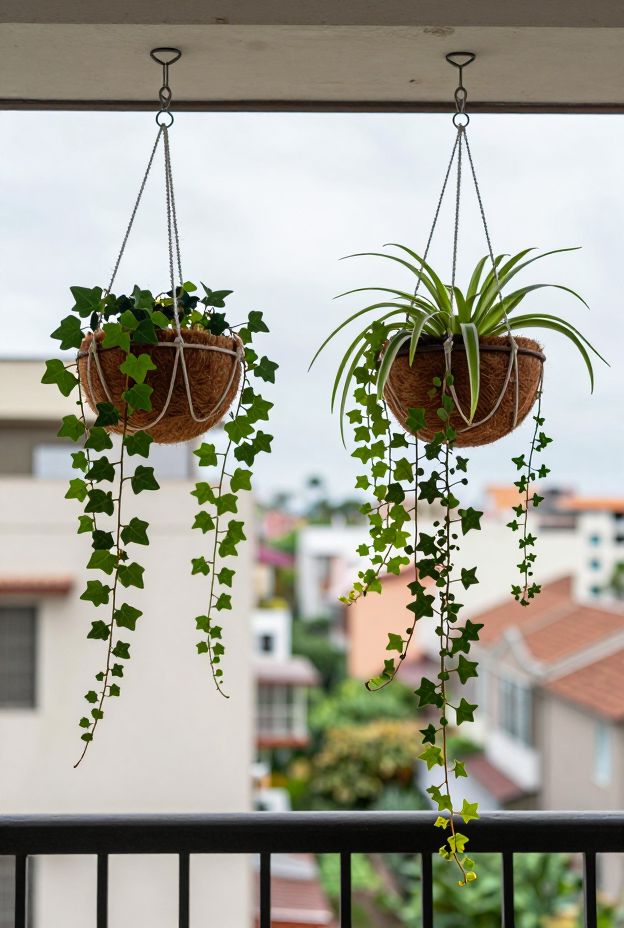
The trick with hanging baskets is getting the right hooks installed—you need ones that can handle wet soil weight, not those flimsy things from the dollar store. And FYI, self-watering hanging baskets exist and they’re worth every penny if you travel or tend to forget about watering (no judgment here).
Best plants for hanging baskets include petunias, fuchsias, trailing herbs like oregano, and strawberries. Basically anything that likes to cascade down looks amazing and doesn’t waste any floor space.
5. Window Box Planters—Not Just for Windows
Here’s a secret: **window box planters** don’t actually need to go on windows. Mind blown, right? You can mount these long, narrow boxes on any balcony wall or railing edge. I attached two along my balcony’s solid half-wall, and they’re perfect for growing salad greens.
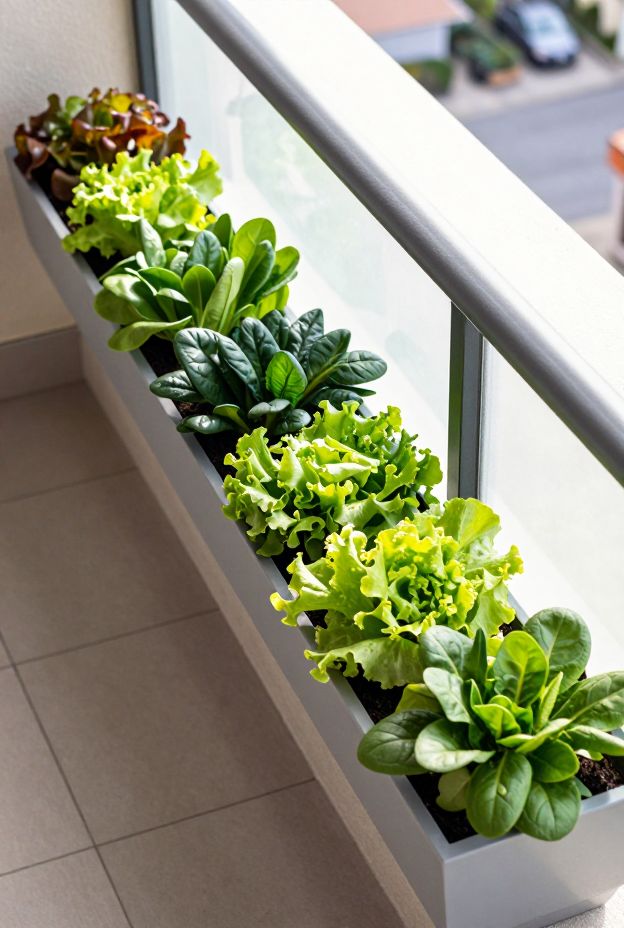
These planters are ideal for shallow-rooted plants like lettuce, spinach, radishes, and annual flowers. The elongated shape means you can fit way more plants than you’d think, and they create a really polished, organized look instead of random pots everywhere.
Installation tip: Make sure you’re drilling into studs or using proper wall anchors. A window box full of wet soil is heavier than it looks, and you don’t want that crashing down mid-summer.
6. Fold-Down Wall Tables with Built-In Planters
Okay, this one’s a bit bougie but hear me out. **Fold-down wall tables** with integrated planters give you a workspace when you need it and a garden when you don’t. I installed one last year, and now I can pot plants, enjoy coffee, and then fold it back up to reclaim that floor space.
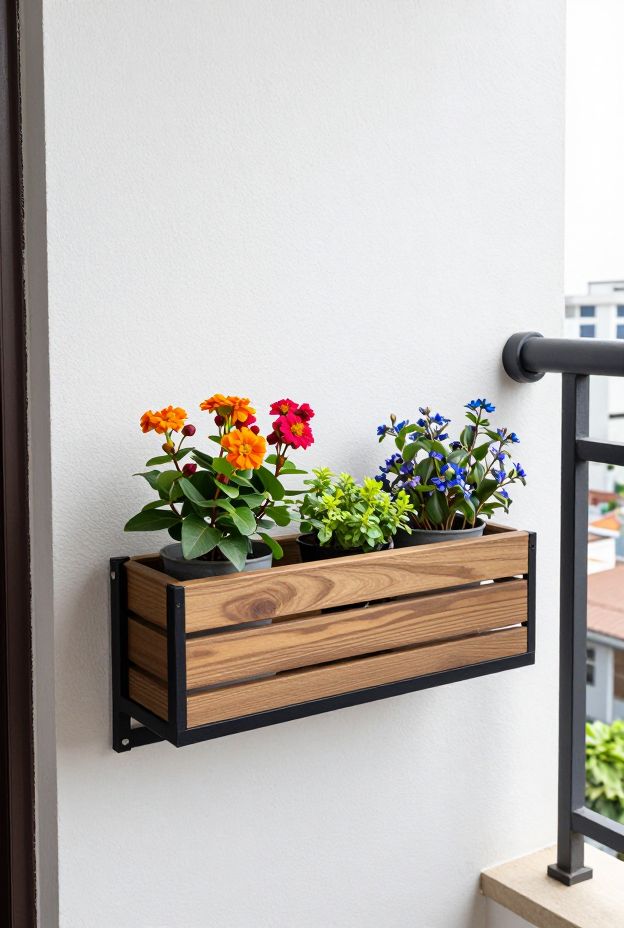
These combo units are perfect if you like to actually use your balcony for sitting and not just as a plant warehouse. When the table’s down, the planters act as a divider. When it’s up, they’re just a nice wall feature. It’s like having your cake and eating it too—or in this case, growing tomatoes and having space to sit 🙂
7. Stacking Planters—The Garden Tower Approach
**Stacking planters** (also called tower planters) are these ingenious systems where pots nest inside each other with openings for plants along the sides. One tower can hold 15-20 plants in the space of a single large pot. Yeah, they look a bit like those vertical hydroponic setups, but way simpler and cheaper.
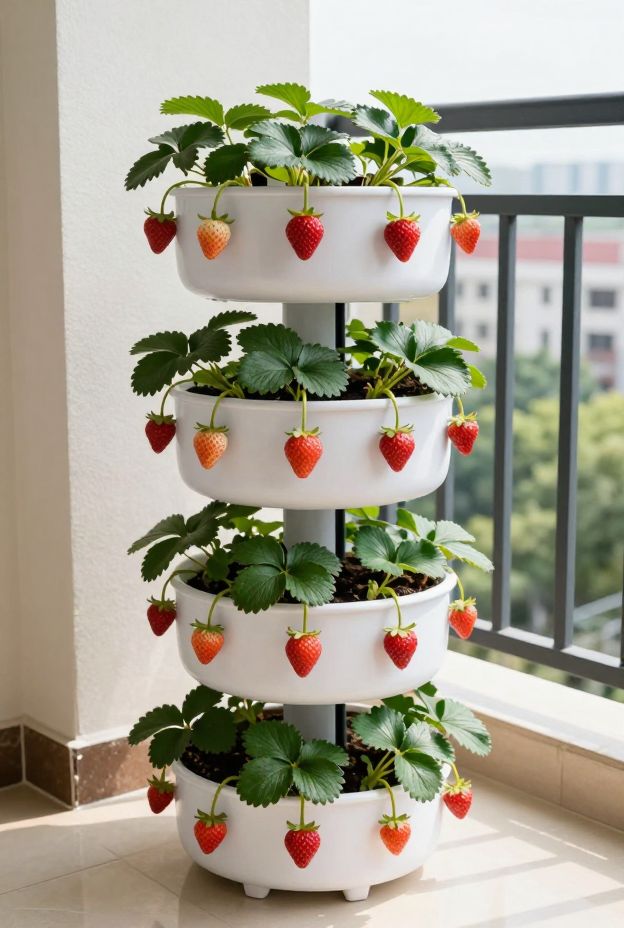
I use a strawberry tower on my balcony, and it produces way more fruit than I expected from such a small footprint. The central reservoir waters all the plants as it drips down, which is pretty genius. They work great for strawberries, herbs, lettuce, and even small flowers like pansies.
Quick heads up: The bottom plants might not get as much sun as the top ones, so plan accordingly. Put your shade-tolerant stuff down low and sun worshippers up high.
8. Over-the-Door Shoe Organizers—Yes, Really
Before you roll your eyes, listen. Those clear plastic **over-the-door shoe organizers** make fantastic vertical herb gardens. I hung one on my balcony door (the one leading inside), and each pocket holds a different herb. It’s quirky, but it works amazingly well and costs like $10.
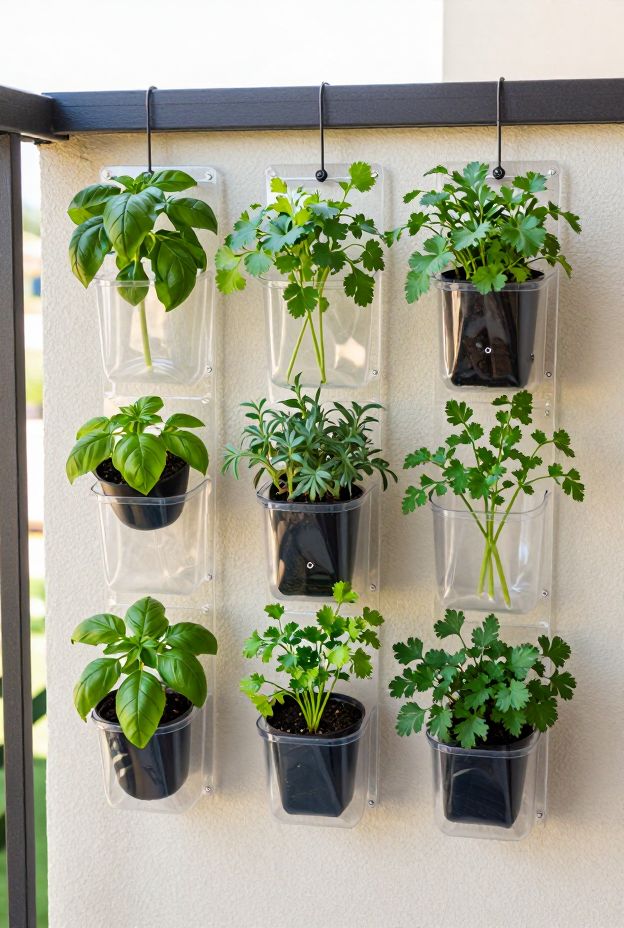
Just punch a few drainage holes in each pocket, fill with soil, and plant away. The pockets are perfect for shallow-rooted plants like basil, cilantro, parsley, and small lettuce. Plus, having herbs right by your door means you actually remember to use them when cooking—IMO, that’s half the battle.
The setup process:
- **Drainage holes**—critical unless you want swamp pockets
- **Lightweight potting mix**—regular soil is too heavy and compacts
- **Frequent watering**—these dry out faster than regular pots
- **Best placement**—on walls that get morning sun but not scorching afternoon heat
9. Rolling Plant Carts—Mobility Is Underrated
Want to play musical chairs with your plants based on sun tracking? **Rolling plant carts** are your answer. I’ve got a three-tier cart on wheels that I move around throughout the day to chase the sunlight. Sounds obsessive, but my peppers are thriving, so who’s laughing now?
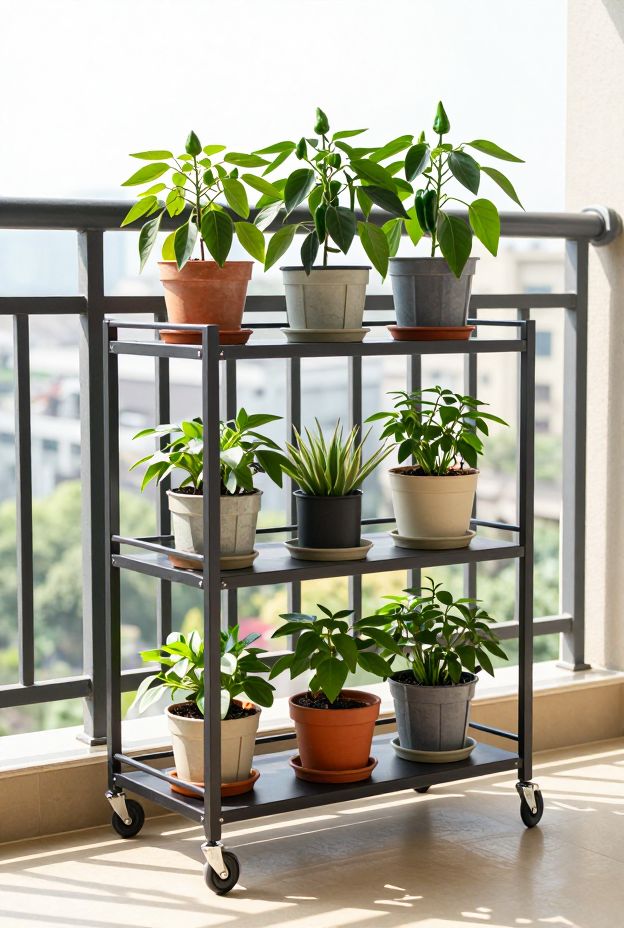
These carts are especially useful if your balcony has weird sun patterns or if you want to bring plants inside during bad weather. The compact footprint holds multiple plants, and the wheels make heavy pots actually manageable for once.
10. Gutter Gardens—DIY Gold
Repurposed rain gutters mounted to your balcony wall make brilliant **gutter gardens** for shallow-rooted crops. I attached three gutters horizontally on my balcony wall at different heights, and they’re packed with lettuce, spinach, and radishes. It looks industrial-chic and produces actual food—what’s not to love?
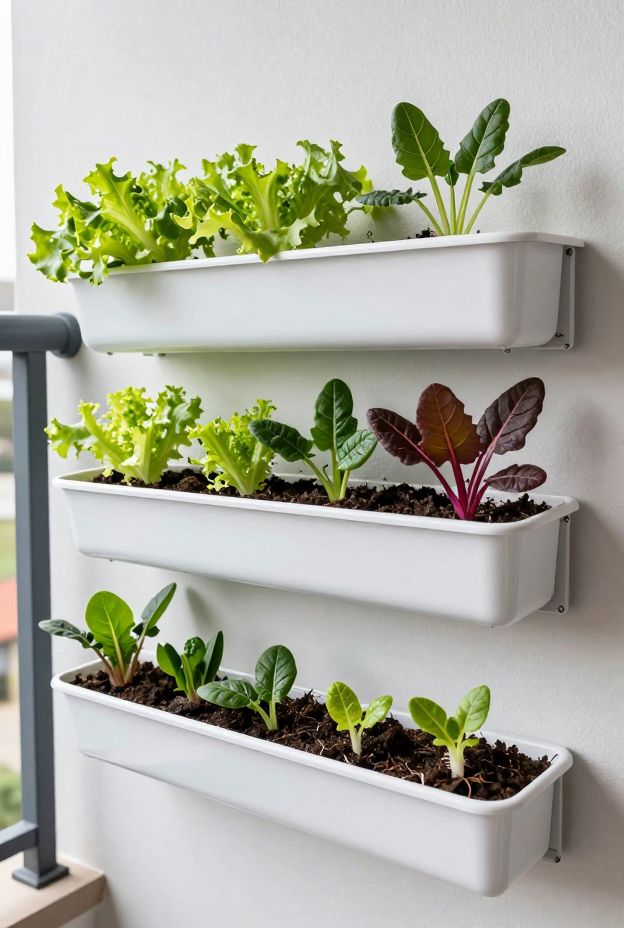
You can buy pre-made gutter garden kits or just grab standard gutters from any hardware store and DIY it. Cap the ends, drill drainage holes every few inches along the bottom, mount with sturdy brackets, and you’re in business. Total cost? Maybe $30 for a setup that holds way more plants than traditional pots.
Best crops for gutter gardens:
- Leafy greens like lettuce, spinach, and arugula
- Herbs—basically all of them work great
- Radishes and green onions
- Strawberries (they love the drainage)
11. Magnetic Planters—If You’ve Got Metal Railings
Got metal balcony railings? **Magnetic planters** stick right on and hold herbs or small flowers without any installation. They’re honestly adorable and ridiculously easy to rearrange. I use three for my cooking herbs, and they’re perfect for that “I need fresh basil RIGHT NOW” moment when you’re cooking.
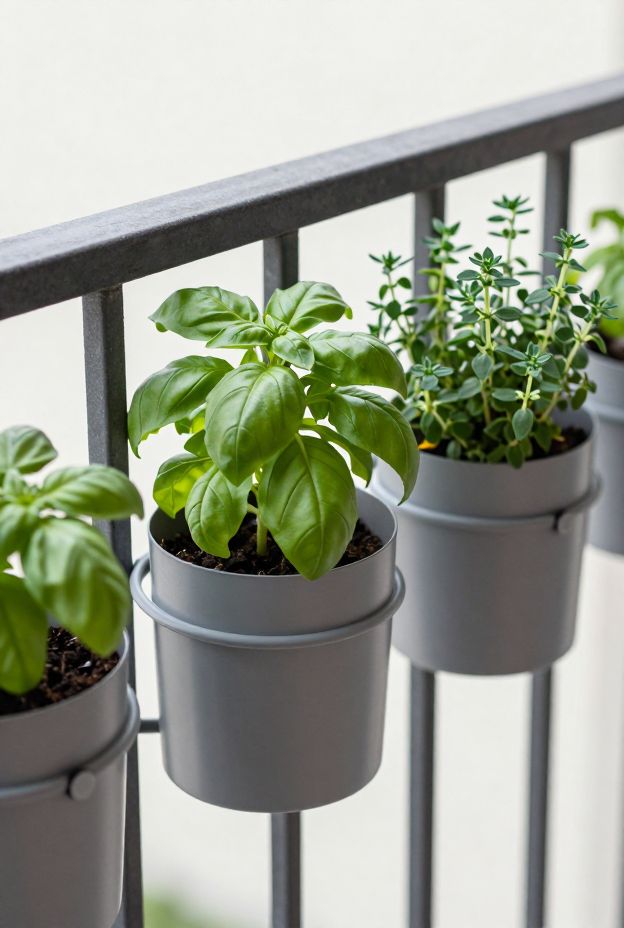
These are small, so don’t expect to grow full-size tomato plants in them. But for herbs, small succulents, or decorative plants? They’re perfect. And the best part—no drilling, no permanent changes, totally renter-friendly.
12. Pallet Gardens—The Pinterest Classic That Actually Works
Yeah, I know, **pallet gardens** are everywhere on Pinterest. But there’s a reason for that—they actually work really well for vertical growing. I leaned a treated pallet against my balcony wall, lined the back with landscape fabric, filled the gaps with soil, and planted herbs and flowers in each opening.
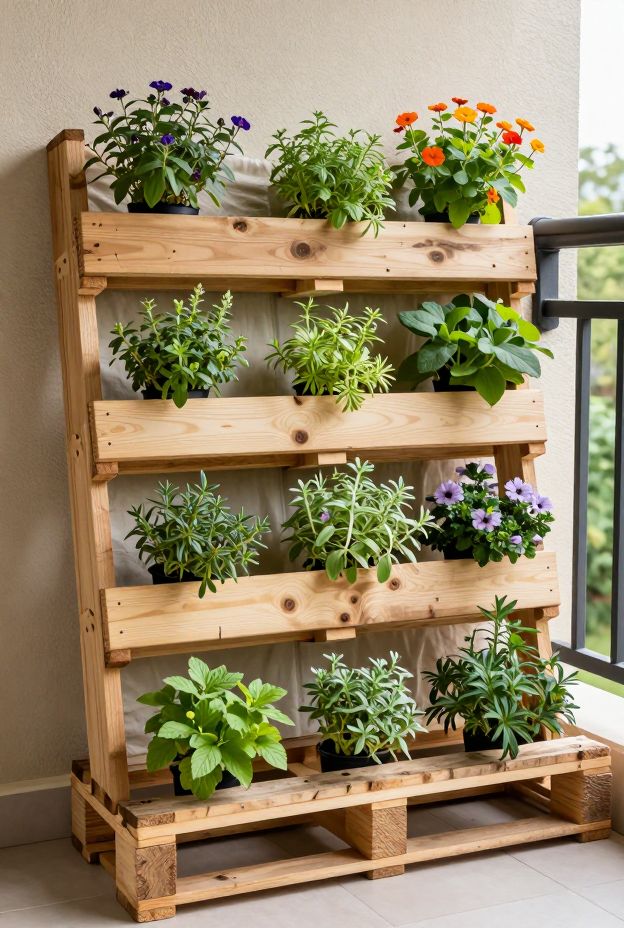
The rustic look either works for you or it doesn’t (personally, I’m into it), but functionally, it’s great. One pallet holds about 15-20 plants depending on pocket size, and you can customize the layout however you want. Just make sure you use heat-treated pallets (marked “HT”), not chemically treated ones.
13. Pocket Planters with Built-In Irrigation
If you struggle with consistent watering, **pocket planters with built-in irrigation systems** are worth the investment. These fabric wall hangings have a water reservoir at the top that slowly distributes moisture to all the pockets below. It’s like having a watering assistant that never takes days off.
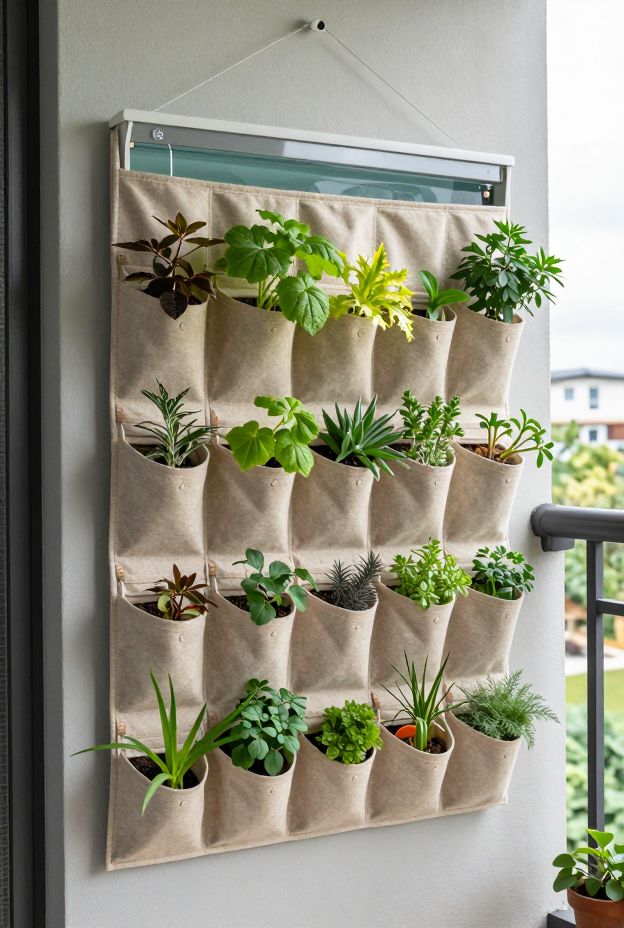
I travel for work sometimes, and these self-watering systems have saved my plants more than once. You fill the reservoir maybe once or twice a week instead of daily watering, and the fabric pockets breathe way better than plastic. Plants actually grow better in these because the roots don’t get waterlogged.
Key features to look for:
- **Reservoir capacity**—bigger is better if you’re forgetful
- **Felt thickness**—cheap thin felt falls apart fast
- **Number of pockets**—more pockets = more plants but heavier when full
- **UV resistance**—essential unless you want faded, deteriorating fabric
14. Slim Vertical Planters—The Tight Squeeze Solution
Got a super narrow space like between your door and railing? **Slim vertical planters** are designed specifically for those awkward tight spots. These tall, skinny units hold multiple plants stacked vertically and fit in spaces as narrow as 12 inches. I squeezed one into the gap between my bistro table and the wall, and it holds five pots.
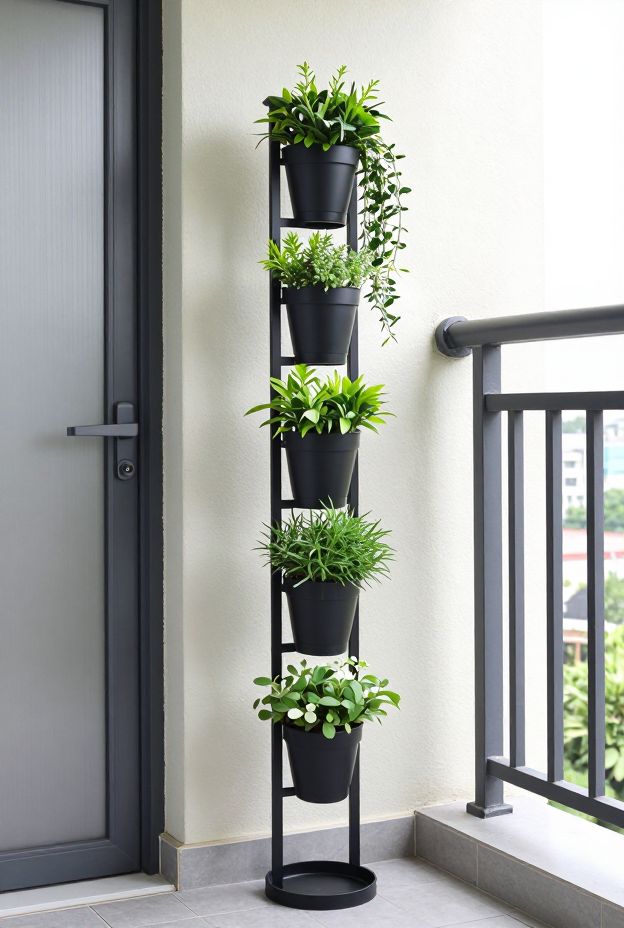
These work brilliantly for herbs, small ornamental plants, or trailing plants that cascade down the sides. The slim design means they don’t dominate your space visually, but you still get multiple levels of greenery without sacrificing precious floor space for walking or furniture.
Wrapping It Up
So there you have it—**14 space-saving balcony garden ideas** that’ll turn even the tiniest urban balcony into a productive, beautiful green space. The secret isn’t having more space; it’s about using the space you have more creatively. Whether you go vertical with wall planters, maximize your railings, or DIY some gutter gardens, there’s definitely a solution here that’ll work for your setup.
Start with one or two ideas that excite you most, test them out, and build from there. My balcony didn’t become a jungle overnight—it evolved as I figured out what worked for my space, light conditions, and (let’s be honest) my tendency to forget about watering sometimes. The point is to start somewhere and adjust as you go.
Now get out there and reclaim that balcony. Your future tomatoes are waiting 🙂