Look, I’ll be straight with you – staring at a bland yard gets old real fast. You know that feeling when you peek outside and see nothing but grass and maybe a sad shrub? Yeah, time to fix that. Creating a flower garden isn’t just about throwing some seeds around and hoping for the best (though I’ve totally tried that approach :/ ). It’s about transforming your outdoor space into something that makes you actually want to spend time there. Whether you’ve got acres to work with or just a tiny balcony, these 15 flower garden ideas will help you build that colorful paradise you’ve been dreaming about.
1. The Classic Cottage Garden
Ever walked past one of those charming, overgrown gardens that looks like it came straight out of a storybook? That’s the cottage garden vibe, and honestly, it’s my personal favorite. This style throws formality out the window and embraces a beautiful chaos of colors and textures.
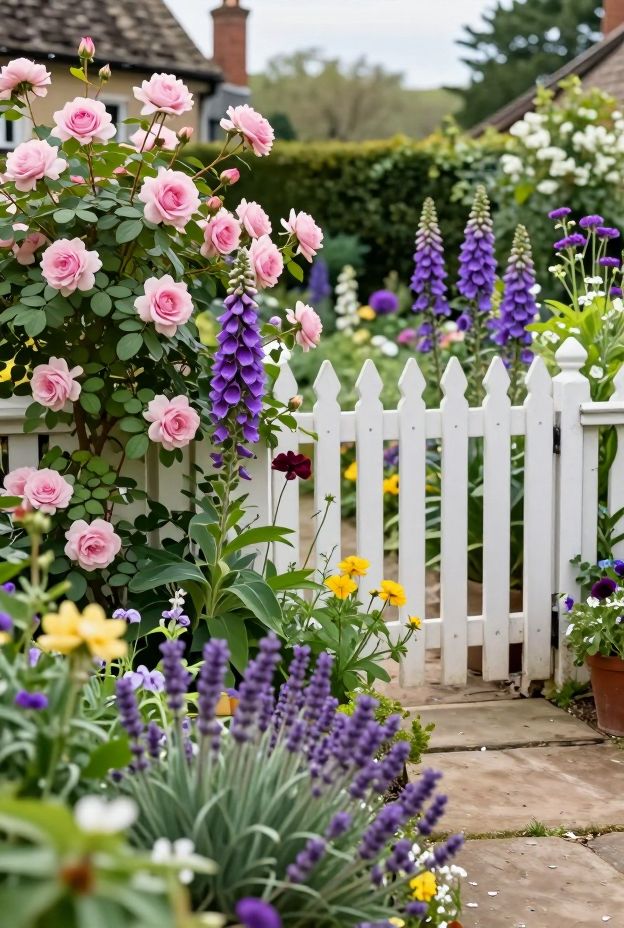
The magic here is mixing perennials and annuals in a way that looks effortless. Think roses climbing over fences, hollyhocks towering in the back, and lavender spilling onto pathways. The best part? Cottage gardens are forgiving. Made a mistake? Nobody will notice because it’s supposed to look a bit wild anyway.
I recommend starting with a base of hardy perennials like foxgloves and delphiniums, then filling gaps with annuals each season. This keeps your garden looking full without breaking the bank every year.
2. Raised Bed Rainbow Garden
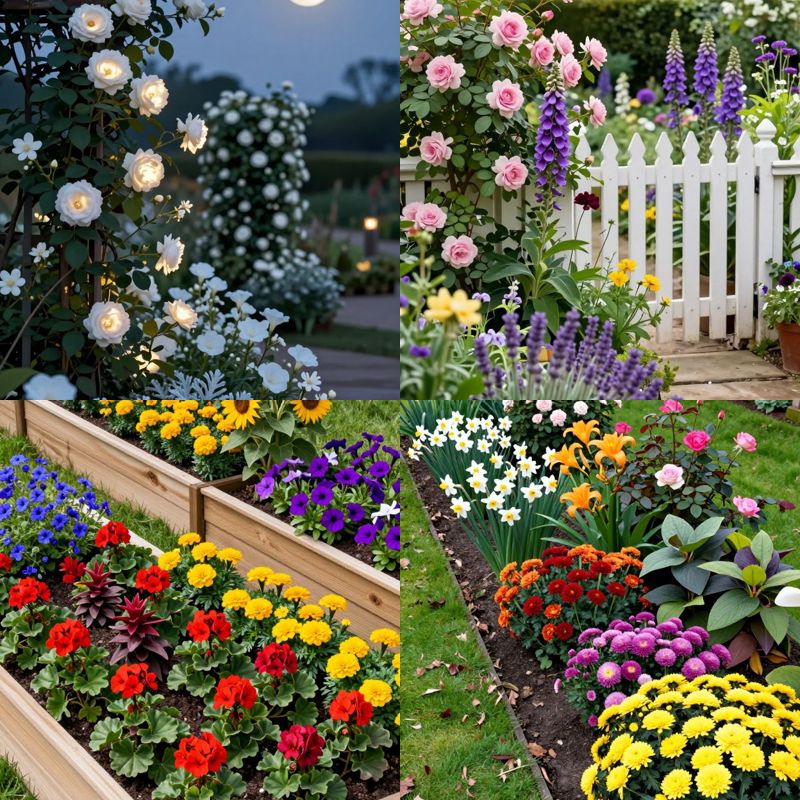
If your soil is terrible (been there), or you just want better control over your growing conditions, raised beds are your best friend. But here’s where it gets fun – instead of the typical wooden rectangles, create multiple raised beds and dedicate each one to a different color family.
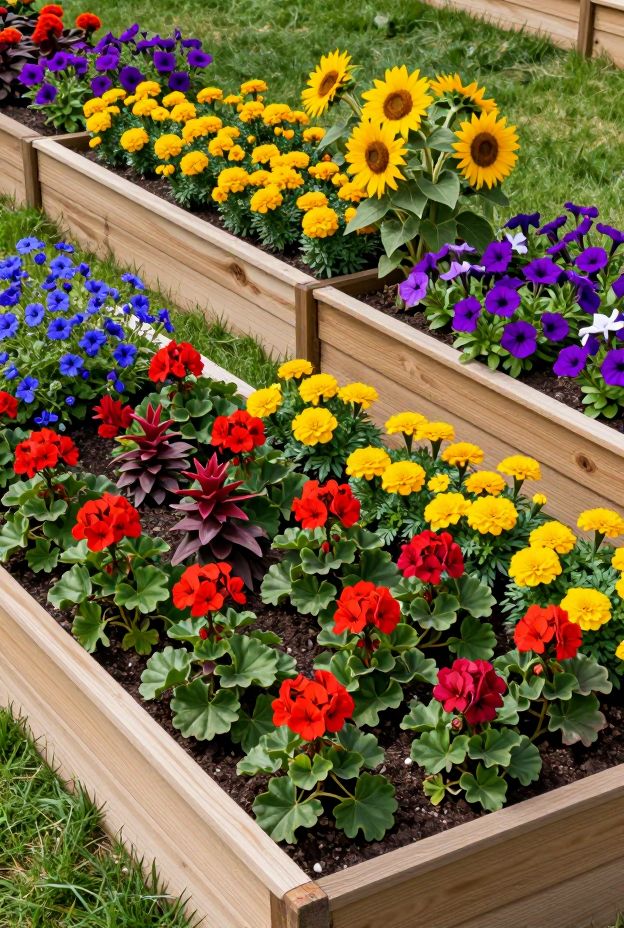
Picture this: one bed bursting with red geraniums and scarlet salvias, another overflowing with yellow marigolds and sunflowers, and a third exploding with purple petunias and blue lobelia. The visual impact is incredible, and it makes maintenance so much easier because you’re grouping plants with similar needs.
Pro tip: Cedar or composite materials last longer than regular wood, and trust me, you don’t want to rebuild these things every few years.
3. Butterfly and Pollinator Paradise
Want to feel good about your garden choices? Create a pollinator paradise. Not only does it look stunning, but you’re also doing actual good for the environment. FYI, this is probably the most rewarding type of garden I’ve ever maintained.
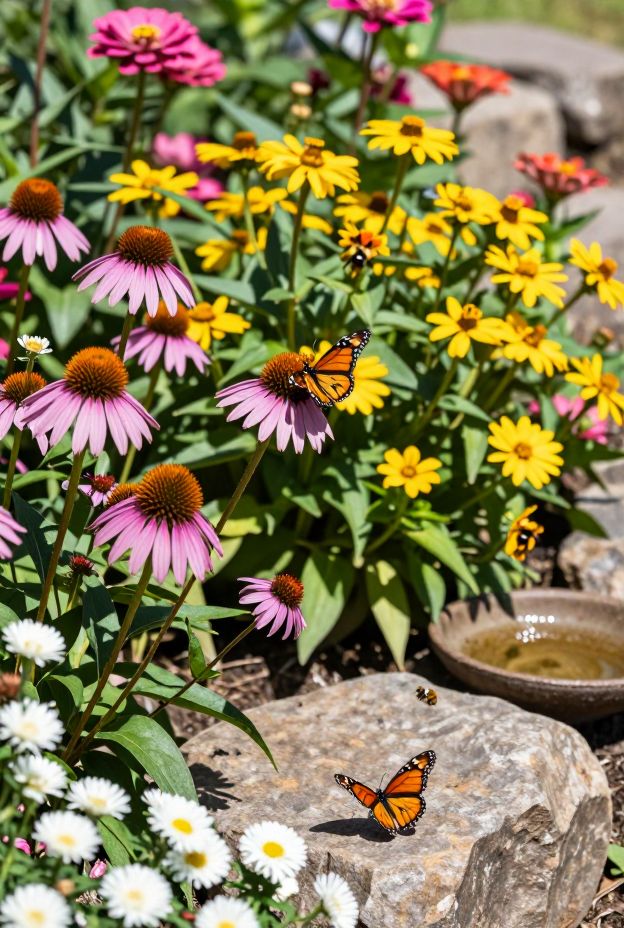
The secret is choosing nectar-rich flowers that bloom at different times throughout the season:
- Early spring: Crocus and primrose
- Summer: Coneflowers, bee balm, and zinnias
- Fall: Asters and sedums
Add some flat stones for butterflies to sun themselves on, include a shallow water source, and watch your garden come alive with activity. It’s like having a nature documentary in your own backyard.
4. Vertical Garden Wall
Got a boring fence or wall? Transform it into a living canvas. Vertical gardens are perfect for small spaces, and they create an absolutely stunning focal point that makes people stop and stare.
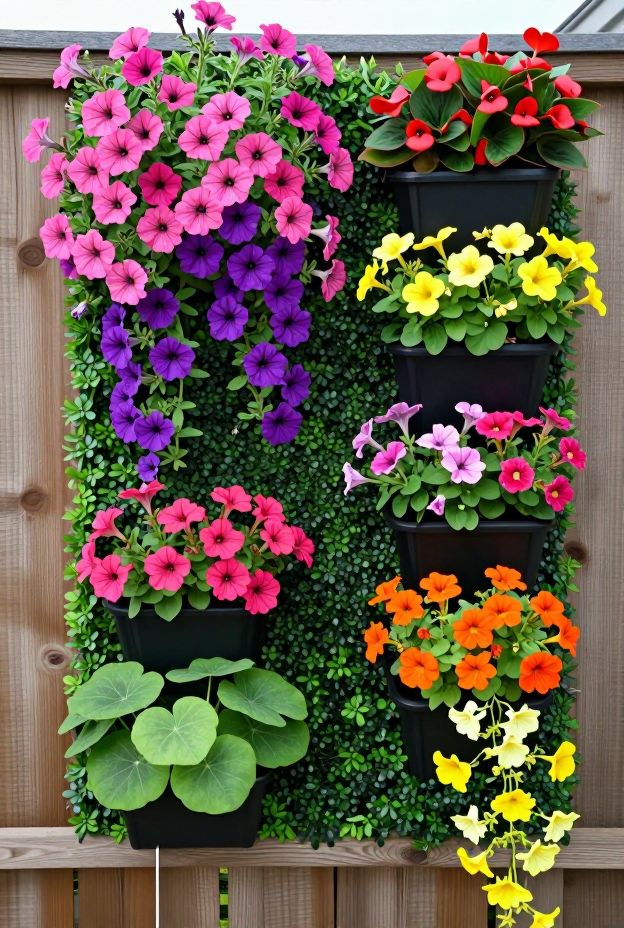
You can use anything from wall-mounted planters to pallet gardens to specialized vertical garden systems. I’ve had success with trailing plants like petunias, nasturtiums, and sweet potato vines that cascade down beautifully. Mix in some upright bloomers like begonias or impatiens for variety.
The key is ensuring proper drainage and choosing plants that match your wall’s sun exposure. A south-facing wall in full sun needs totally different plants than a shaded north-facing one.
5. Moon Garden (For Night Owls)
Here’s something different – a garden designed to be enjoyed after dark. Moon gardens feature white and pale-colored flowers that practically glow under moonlight and outdoor lighting. Plus, many night-blooming flowers have incredible fragrances.
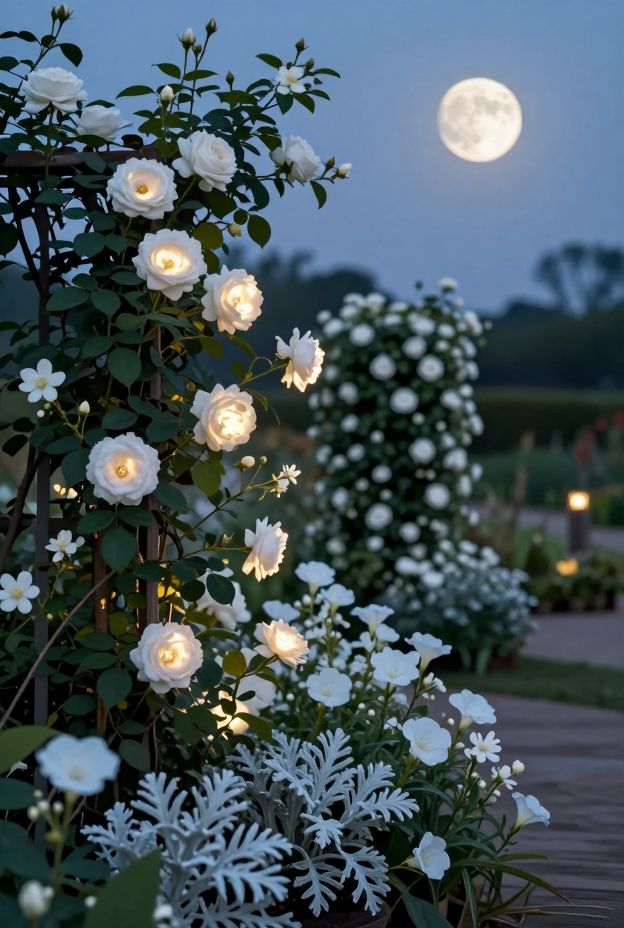
Plant white roses, jasmine, moonflowers, and evening primrose together, and you’ve got yourself a magical nighttime retreat. Add some silver-leafed plants like dusty miller or lamb’s ear for extra reflective qualities.
IMO, this is the most underrated garden style out there. There’s something incredibly peaceful about sitting in your garden at night, surrounded by glowing flowers and sweet scents.
6. Color Block Design
Want drama? Go bold with color blocking. Instead of mixing colors randomly, plant large sections of single colors that sit next to each other. The effect is modern, striking, and surprisingly easy to maintain.
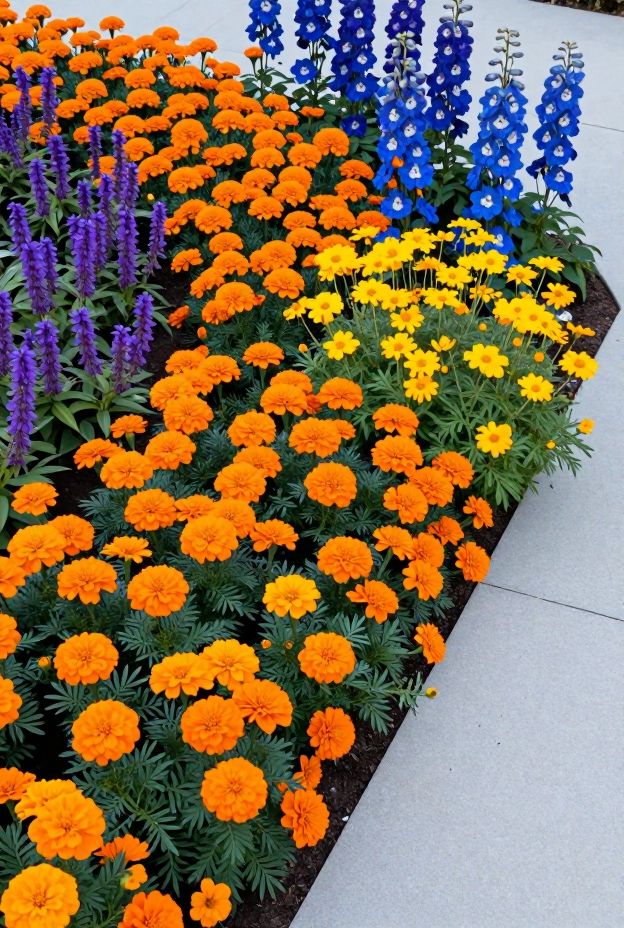
Think about complementary colors that pop against each other – orange marigolds next to purple salvia, or yellow coreopsis beside blue delphiniums. You’re basically creating a living work of abstract art in your yard.
The trick is choosing plants of similar heights within each color block to maintain clean lines. Nobody wants their carefully planned color sections looking messy and overgrown.
7. Cutting Garden
Why should you buy flowers from the store when you can grow your own bouquet garden? A cutting garden is specifically designed to produce flowers for indoor arrangements, and it’s honestly one of the most practical garden ideas out there.
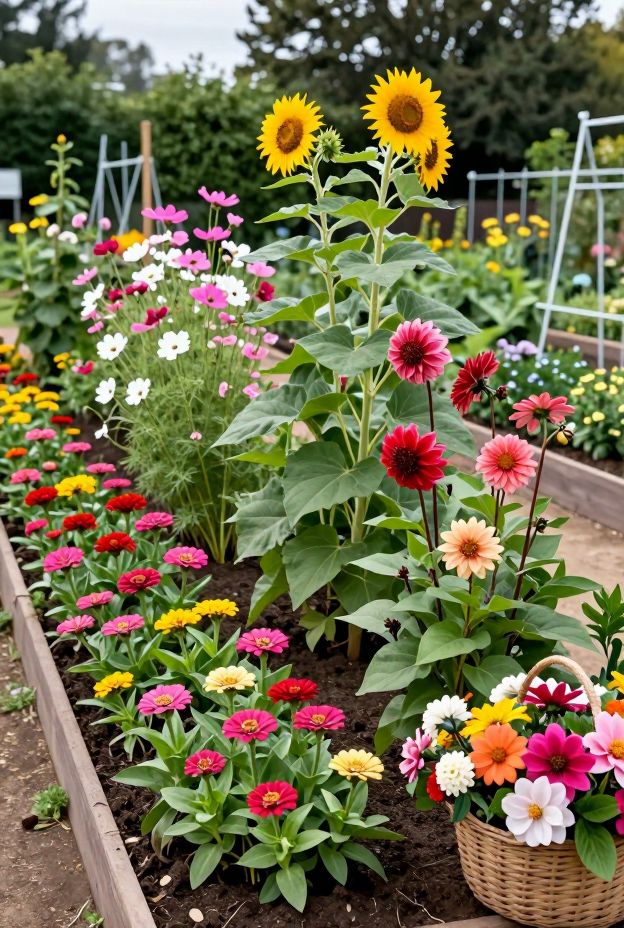
Focus on flowers with long stems and good vase life:
- Zinnias (these are cutting garden superstars)
- Dahlias (stunning but require some effort)
- Cosmos (easiest flowers ever)
- Sunflowers (instant happiness)
- Sweet peas (amazing fragrance)
Plant in rows like a mini farm rather than ornamental patterns. This makes cutting easier and keeps your display garden separate from your production garden.
8. Rock Garden with Alpine Flowers
Got a slope or rocky area that’s tough to maintain? Turn that challenge into an opportunity with a rock garden featuring alpine flowers. These tough little plants thrive in conditions that would make other flowers cry.
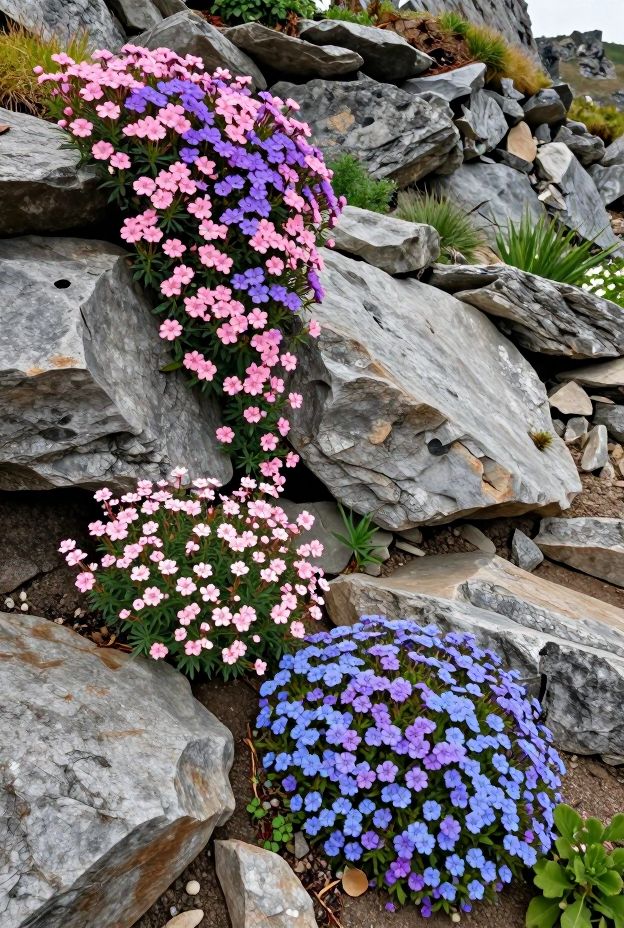
Alpine flowers like creeping phlox, saxifrages, and aubrieta create stunning carpets of color between rocks. They’re low-maintenance, drought-tolerant once established, and they actually prefer the well-drained conditions that rocks provide.
Layer different sized rocks to create natural-looking levels, then tuck plants into the crevices. It looks way harder to create than it actually is, which makes you look like a gardening genius to your neighbors.
9. Container Garden Collection
Renting? Have a patio or balcony? Container gardens are your solution, and they’re way more versatile than people realize. You can create an entire flower paradise using nothing but pots of various sizes.
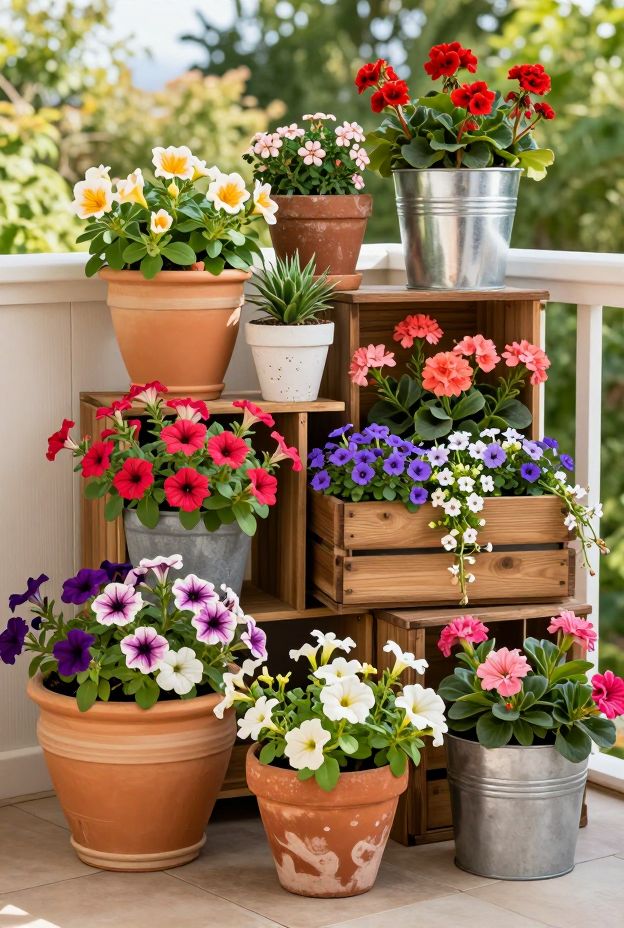
The advantage here is control – you control the soil, the location, and you can literally rearrange your entire garden whenever you want. Move plants to follow the sun, create new arrangements for parties, or hide underperforming plants behind showstoppers.
Mix different container heights and materials for visual interest. Ceramic pots, wooden boxes, metal buckets, even repurposed items can become stunning planters. Just make sure everything has drainage holes (learned this the hard way).
10. Wildflower Meadow
Want a garden that basically takes care of itself? A wildflower meadow might be your answer. This naturalistic approach creates a sea of color while requiring minimal maintenance once established.
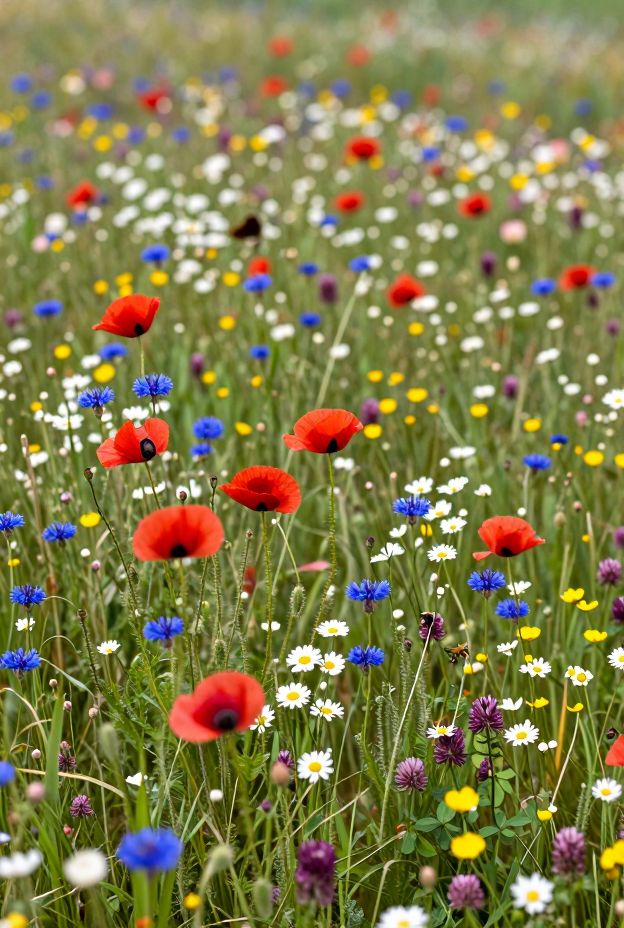
Buy native wildflower seed mixes specific to your region, scatter them over prepared soil, and watch nature do its thing. You’ll get poppies, cornflowers, ox-eye daisies, and whatever else your mix includes, creating that dreamy meadow look.
Real talk though – the first year can look a bit rough while plants establish. But by year two? You’ll have that picture-perfect meadow that looks effortless (even though you definitely put in effort to get it started).
11. Border Garden Framework
Traditional but timeless, border gardens line pathways, fences, or property edges with colorful blooms. The key is creating layers – tall plants in back, medium in middle, short in front. Sounds simple, right? It is, but the impact is anything but basic.
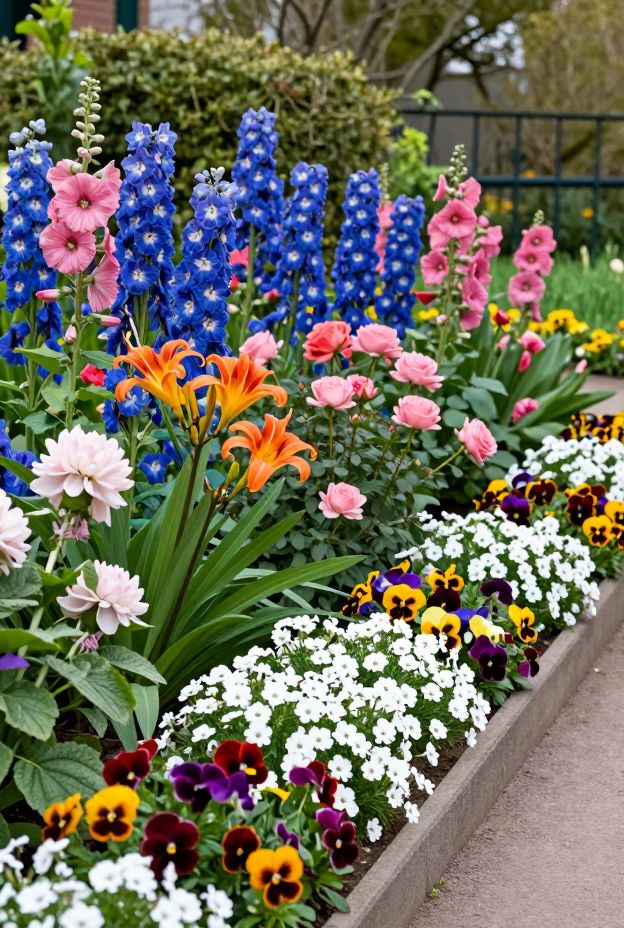
Use delphiniums or hollyhocks for height, roses or daylilies for the middle layer, and alyssum or pansies to edge. This creates depth and ensures something’s always in bloom at every level.
My advice? Plant perennials as your framework, then fill gaps with annuals each season. This gives you reliability plus the flexibility to change things up when you get bored.
12. Four-Season Succession Garden
Why limit yourself to just summer blooms when you can have color year-round? A succession garden plans for flowers in every season, keeping your yard interesting through all twelve months.
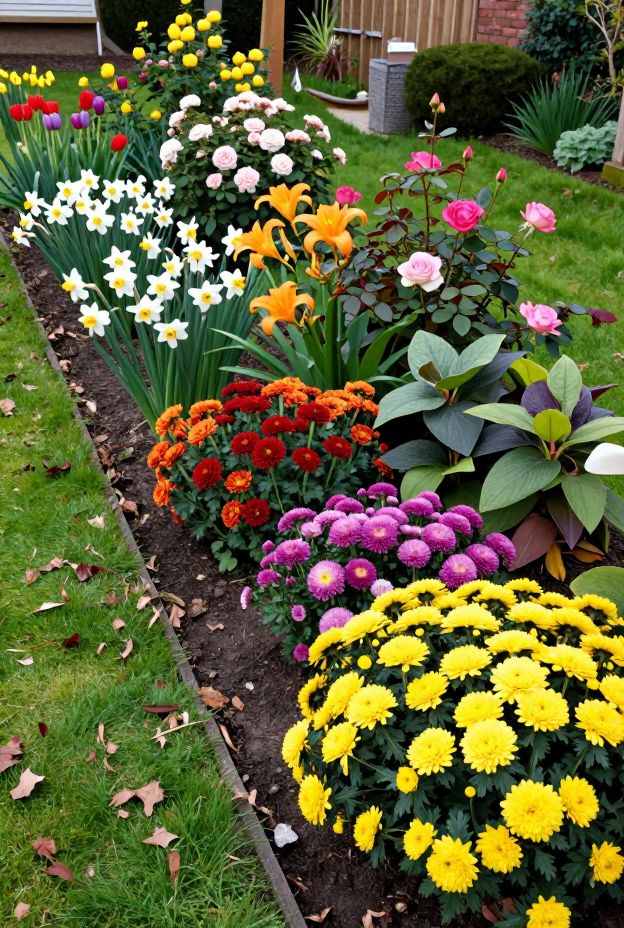
Map out your planting schedule:
- Spring: Tulips, daffodils, hyacinths
- Summer: Roses, daylilies, coneflowers
- Fall: Chrysanthemums, asters, sedum
- Winter: Hellebores, winter jasmine (for mild climates)
This requires more planning upfront, but the payoff is huge. You’ll never have that sad, empty garden phase that makes you question your life choices 🙂
13. Tropical Paradise (Even in Temperate Zones)
Who says you need to live in the tropics to have a tropical garden? With the right flower and foliage combinations, you can create that lush, exotic vibe anywhere. Well, anywhere that’s not actively frozen for eight months a year.
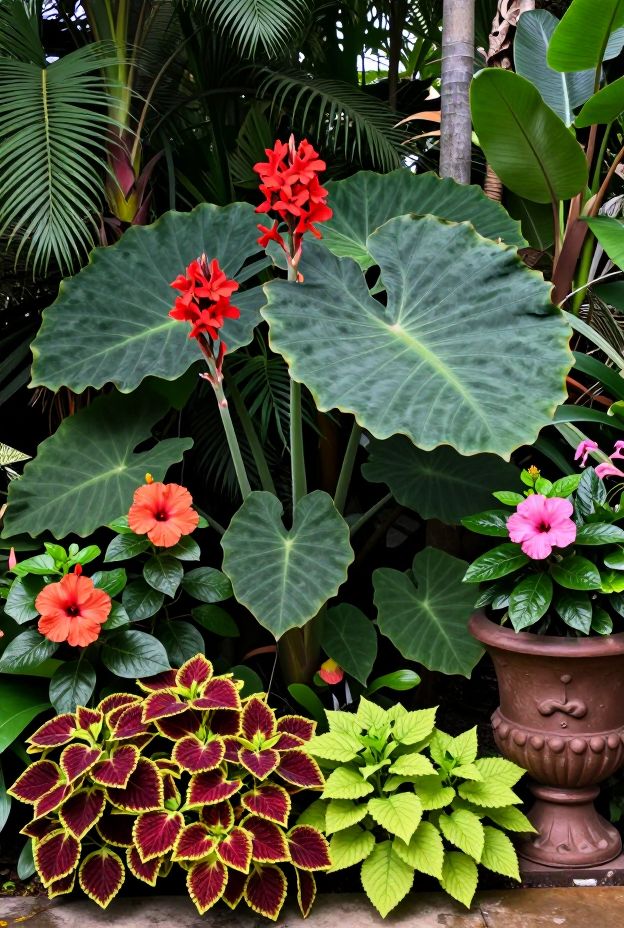
Focus on cannas with huge leaves, elephant ears for drama, bright hibiscus, and colorful coleus. Even though most of these are annuals in cooler climates, the effect is worth replanting each year.
Layer different leaf textures and sizes to create that jungle feel. Add some large decorative pots, maybe a water feature, and suddenly your backyard feels like a vacation destination.
14. Formal Symmetrical Design
If chaos stresses you out, go the opposite direction with a formal, symmetrical garden. This structured approach creates a sense of order and elegance that’s super satisfying to look at.
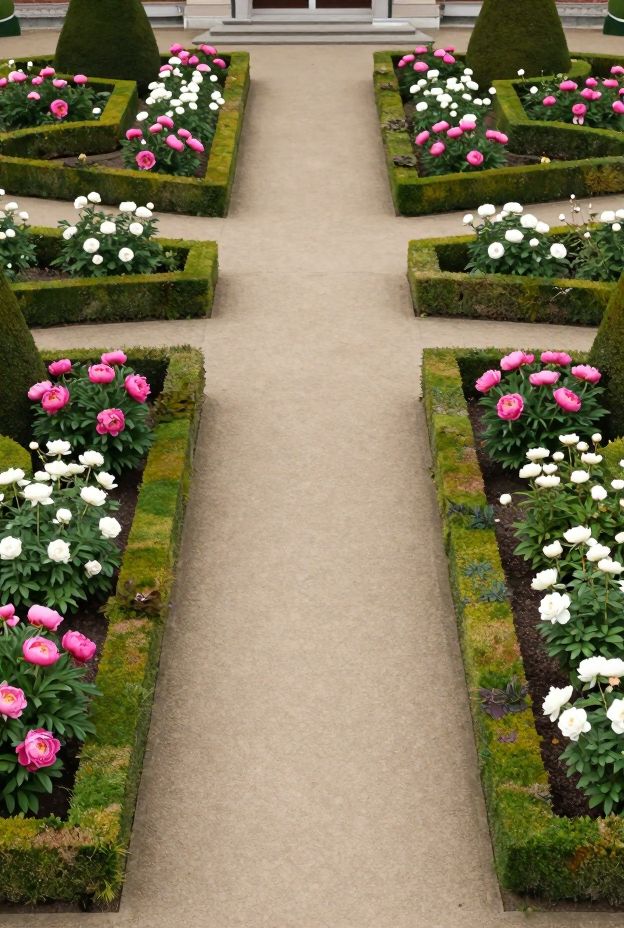
Think matching flower beds on either side of a central pathway, perfectly trimmed hedges, and repeated plantings that mirror each other. Use flowers like roses, peonies, and hydrangeas that have a naturally elegant look.
Fair warning – this style requires more maintenance to keep those clean lines and symmetry looking sharp. But if you’re the type who gets satisfaction from a perfectly organized space, you’ll love maintaining this garden style.
15. Scent Garden for the Senses
Last but definitely not least, create a garden that’s designed primarily for fragrance. Sure, the flowers are beautiful, but the real magic happens when you walk through and get hit with those incredible scents.
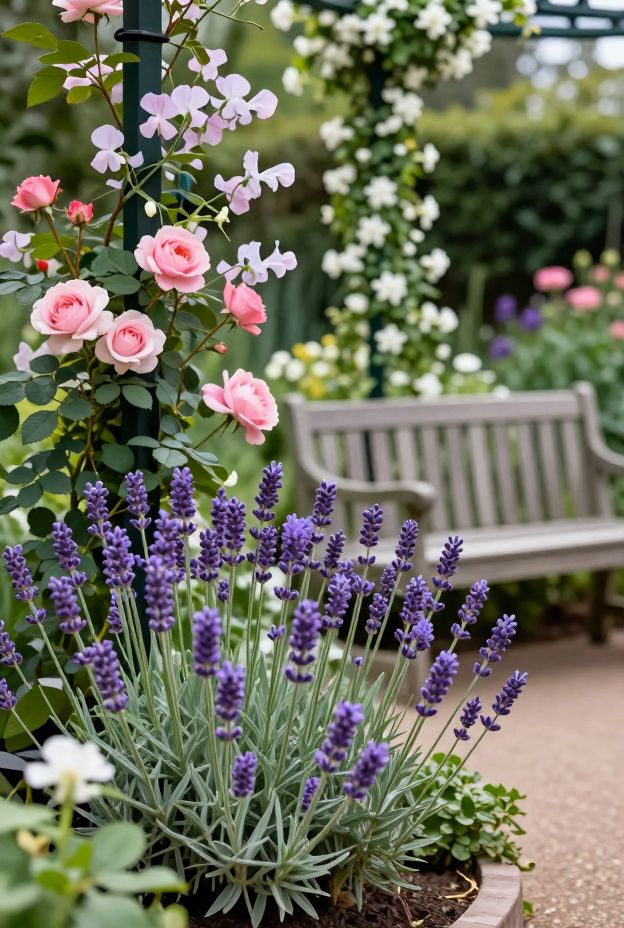
Plant lavender for that calming herbal scent, roses for classic floral fragrance, sweet peas for their honey-like perfume, and jasmine for evening sweetness. Position these near seating areas, along pathways, or by windows so you actually experience the scents regularly.
Consider the bloom times so you have fragrance throughout the season. There’s nothing quite like sitting outside on a summer evening, surrounded by flowers that smell as good as they look.
Your Garden, Your Rules
Here’s the thing about flower gardens – there’s no single “right” way to do it. You can follow one of these ideas exactly, mix and match elements from several, or use them as jumping-off points to create something completely unique. The goal is creating a space that makes you happy and fits your lifestyle.
Start with one area, one idea, and build from there. Gardens are living things that evolve over time, and honestly, that’s part of the fun. Some plants will thrive beyond your expectations, others will mysteriously die despite your best efforts (we’ve all been there), and you’ll discover new favorites along the way.
So grab some seeds or starter plants, get your hands dirty, and start building that colorful paradise. Your future self, sitting in a beautiful garden with a cold drink, will thank you for taking that first step today.