Look, I get it. You stare at your backyard, see a jumbled mess of plants fighting for sunlight, and wonder why your neighbor’s garden looks like it belongs in a magazine while yours… well, doesn’t. Here’s the thing: it’s not about having more space—it’s about using what you’ve got smartly. I’ve spent years rearranging, replanting, and occasionally swearing at my garden beds, and I’ve learned that layout matters way more than square footage. Ready to transform your growing space from chaotic to calculated? Let’s talk about 13 layout ideas that actually work.
1. The Classic Row Garden
This is where most of us start, right? Plant everything in straight rows, walk between them, harvest, repeat. The row garden works because it’s straightforward—no overthinking required. You line up your veggies north to south so they all get equal sun exposure, space them appropriately, and boom, you’ve got a functional garden.
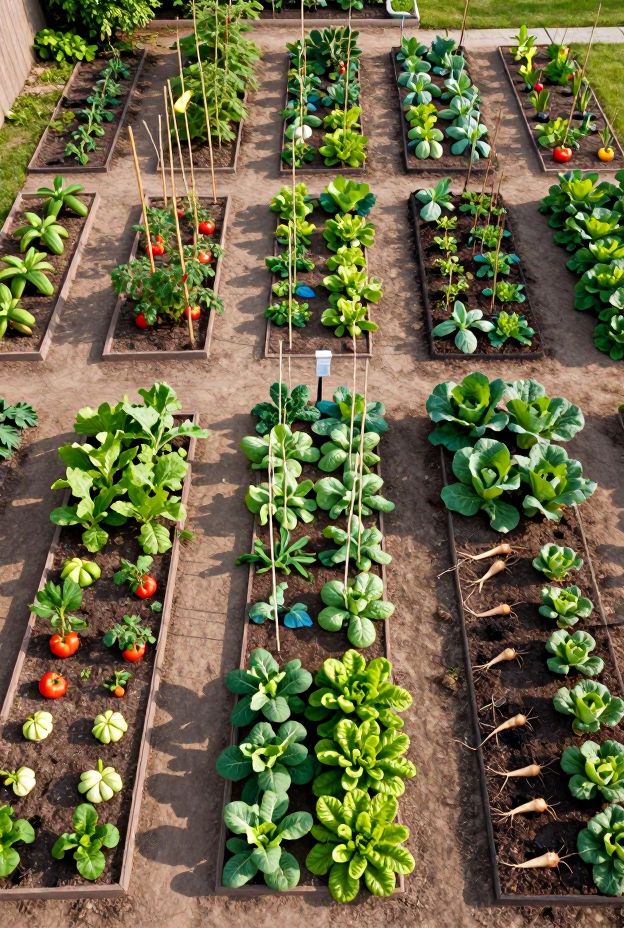
But here’s what I’ve learned: rows work best when you actually measure the space between them. I used to eyeball it (spoiler: bad idea), and ended up with rows so narrow I couldn’t walk through without trampling seedlings. Give yourself at least 18-24 inches between rows for comfortable access. Your back will thank you when harvest time rolls around.
The downside? Rows waste space if you’re not careful. All those walking paths add up, meaning less room for actual plants. That’s why I eventually evolved beyond this method—but hey, if you’re a beginner, rows are your friend.
2. Square Foot Gardening
Ever heard of Mel Bartholomew? This guy revolutionized small-space gardening with the square foot method, and honestly, it’s brilliant for tight spaces. You divide your raised bed into 1-foot squares and plant a specific number of plants in each square based on their size. Radishes? 16 per square. Tomatoes? Just one.
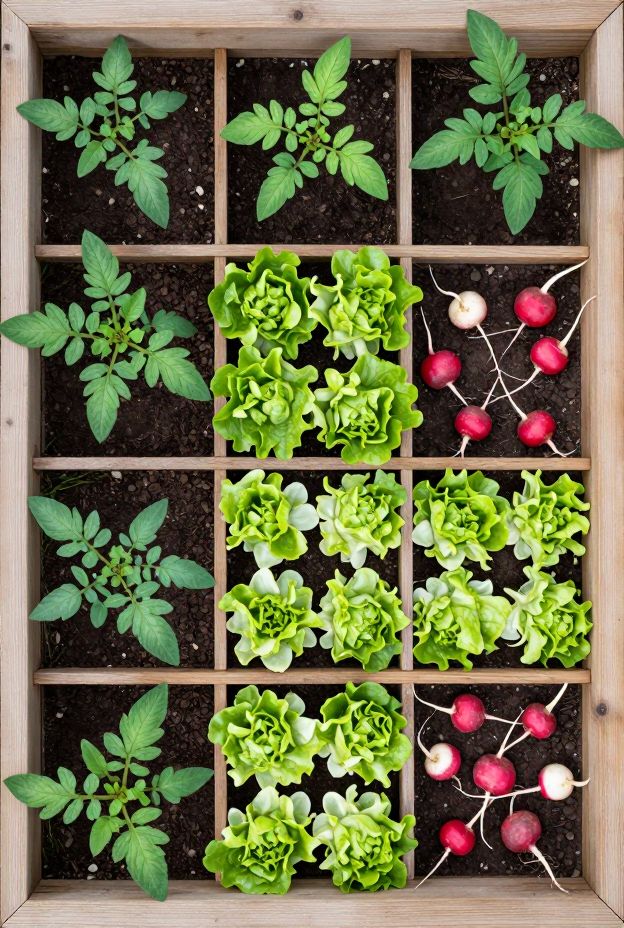
I love this method because it forces you to think about plant density. No more randomly spacing things and wondering why half your bed is empty. FYI, this works especially well with raised beds that are 4×4 feet—you get 16 squares to play with, which is enough variety to keep dinner interesting.
The trick is knowing your spacing requirements. Here’s a quick breakdown:
- Large plants (tomatoes, peppers, cabbage): 1 per square
- Medium plants (lettuce, chard): 4 per square
- Small plants (radishes, carrots, onions): 9-16 per square
3. Keyhole Garden Design
Picture a circular raised bed with a wedge cut out (hence “keyhole”) and a compost basket in the center. Sounds quirky? It is. But it’s also insanely efficient. The design originated in Africa for water-scarce regions, and it maximizes growing space while minimizing water waste.
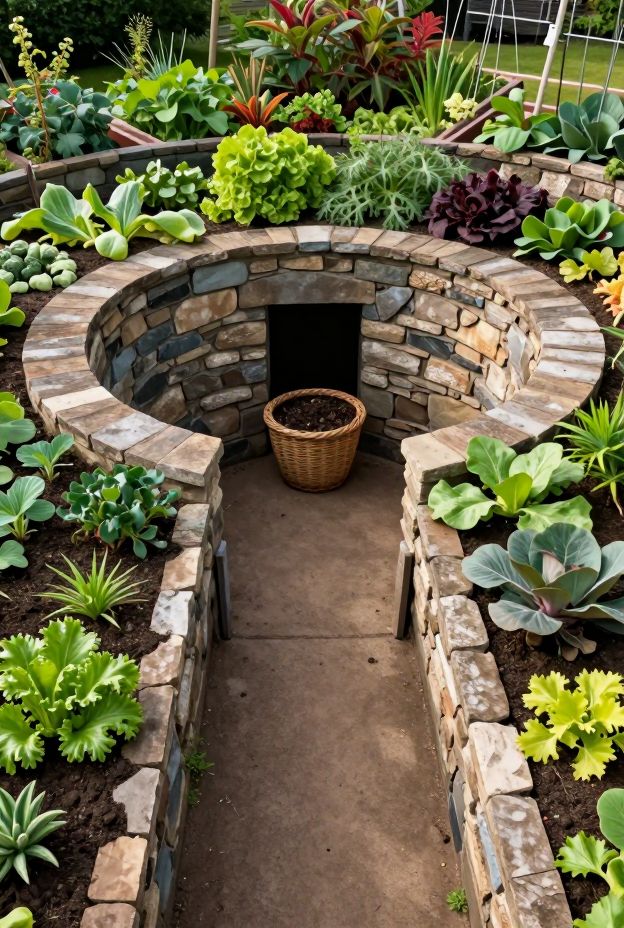
What makes this layout genius is accessibility. You can reach every plant from the outer edge or through the keyhole entrance, so no awkward stretching or accidental plant crushing. Plus, that central compost basket? It feeds nutrients directly to your plants as you water. It’s like having a built-in fertilizer system.
I built one last spring, and I’ll be honest—construction took a weekend and some serious problem-solving. But the payoff? Worth it. My leafy greens grew like they were on steroids (the natural, compost-fed kind).
4. Raised Bed Zones
Instead of one giant raised bed, try creating multiple smaller zones. I’m talking about 3-4 separate raised beds, each dedicated to a specific crop family. One for nightshades (tomatoes, peppers), one for brassicas (broccoli, cabbage), one for root veggies, you get the idea.
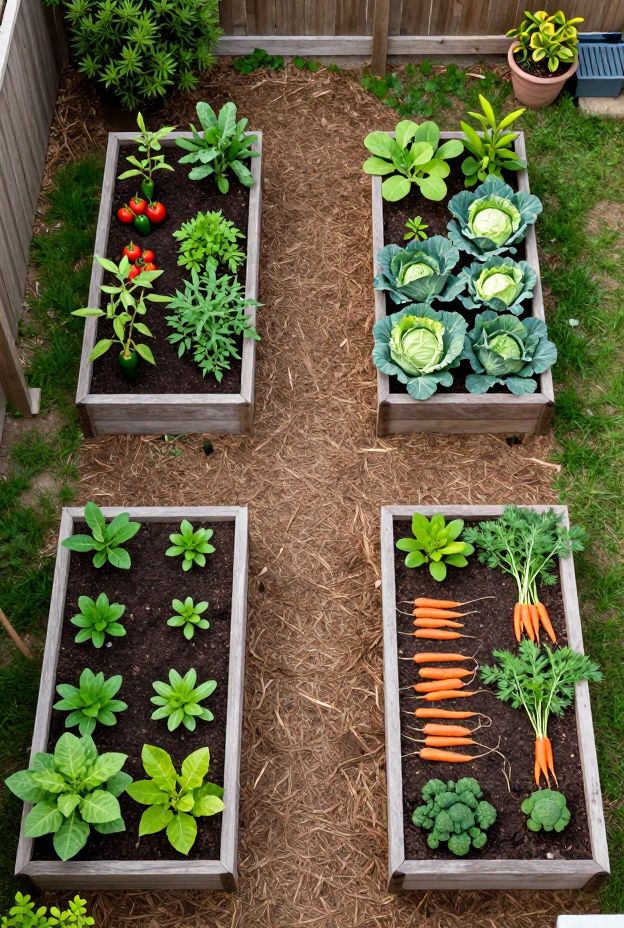
Why bother with zones? Crop rotation, my friend. Pests and diseases target specific plant families, so moving your crops between zones each season keeps problems from building up. It’s like musical chairs for vegetables, except nobody gets eliminated—everyone wins.
The spacing between beds matters too. Leave at least 2-3 feet between each zone so you can walk, wheelbarrow, and weed comfortably. Trust me, future-you will appreciate the accessibility when you’re lugging compost around in August heat.
5. Vertical Tower Garden
Limited ground space? Go up. Vertical tower gardens stack growing pockets on top of each other, letting you grow dozens of plants in the footprint of a single square foot. I’ve seen people grow 50+ lettuce heads in a 2×2 foot space using towers. Wild, right?
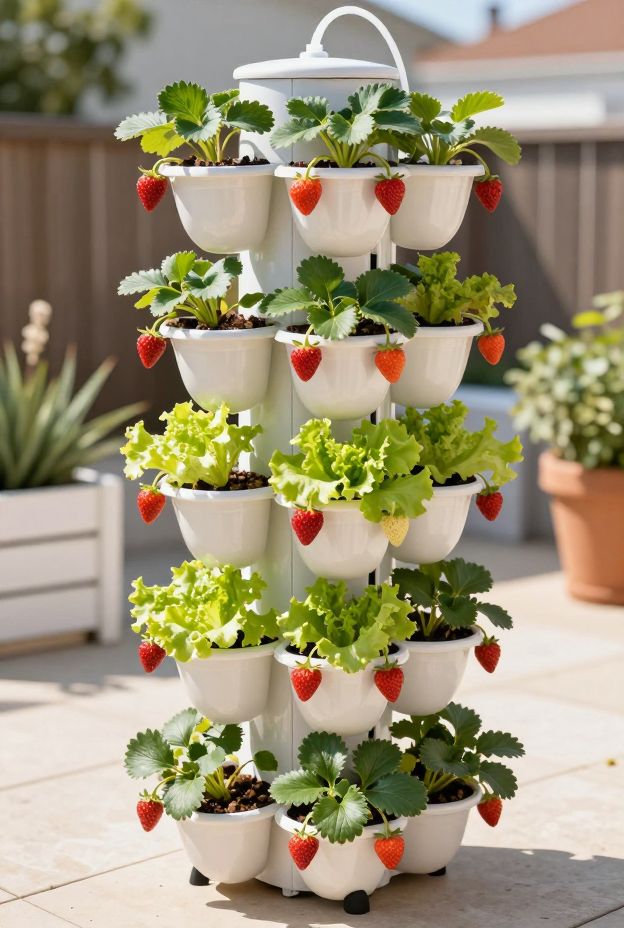
These work best for shallow-rooted plants like strawberries, herbs, and leafy greens. Tomatoes? Not so much—they need deeper root systems. I use mine primarily for salad greens, and I rotate plantings every few weeks for continuous harvests.
One heads-up: watering can be tricky. Top pockets dry out fast, while bottom ones stay moist longer. I installed a simple drip irrigation line at the top that trickles down through all the pockets. Problem solved 🙂
6. Companion Planting Clusters
Forget rigid rows—cluster your plants based on who likes hanging out together. The classic trio? Corn, beans, and squash (the “Three Sisters”). Corn provides support for climbing beans, beans fix nitrogen in the soil, and squash spreads out to shade weeds. It’s nature’s perfect roommate situation.
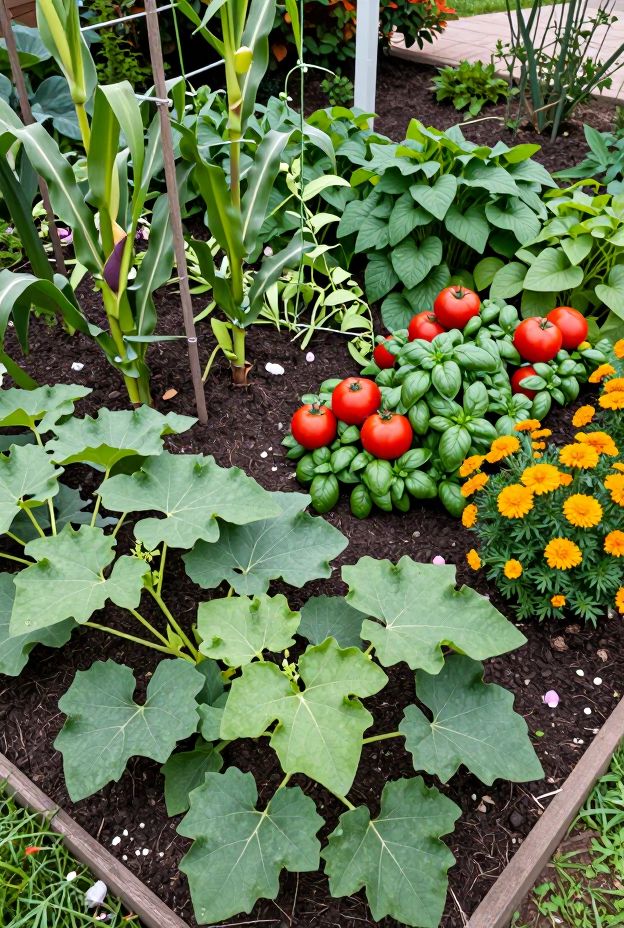
I cluster my tomatoes with basil and marigolds. Why? Basil supposedly repels pests (jury’s still out, but my tomatoes seem happy), and marigolds definitely keep aphids away. Plus, having basil right next to tomatoes makes harvesting for caprese salad ridiculously convenient.
Here are some winning combinations I swear by:
- Carrots + onions: Onions repel carrot flies
- Cucumbers + nasturtiums: Nasturtiums deter cucumber beetles
- Lettuce + tall crops: Provides shade during hot months
7. Spiral Herb Garden
This is where function meets aesthetics. A spiral herb garden is a raised, circular bed that spirals upward, creating different microclimates from bottom to top. The top is drier and sunnier (perfect for Mediterranean herbs like rosemary and thyme), while the bottom stays moister (mint and parsley territory).
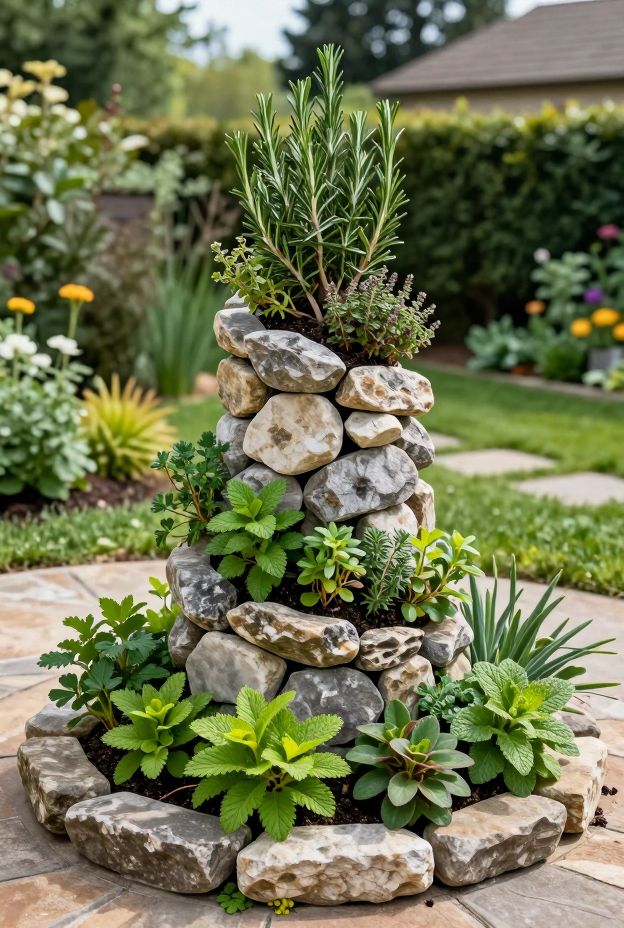
Building one takes some rock-stacking skills, but IMO, it’s the most attractive garden layout out there. Mine sits right outside my kitchen door, and I grab fresh herbs without even stepping into the main garden. Convenience level: chef’s kiss.
The spiral design also maximizes edge space, which means more planting area in a compact footprint. You can fit 15-20 different herbs in a 6-foot diameter spiral. That’s a lot of flavor packed into a small space.
8. Hugelkultur Mounds
This German technique sounds complicated, but it’s basically burying wood under soil mounds. As the wood decomposes, it releases nutrients, retains moisture, and creates air pockets for roots. The mound shape also increases surface area, giving you more planting space.
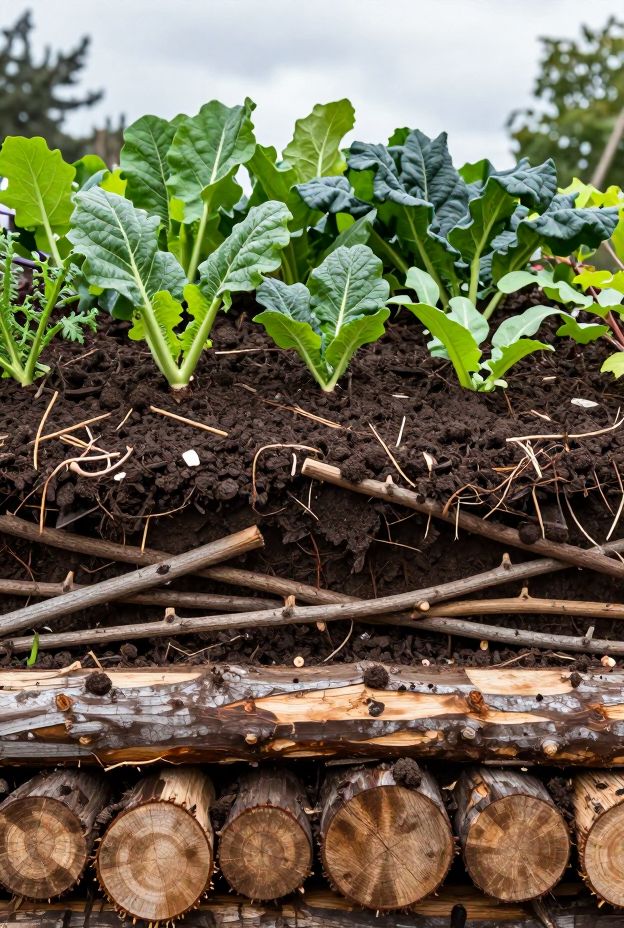
I was skeptical until I built my first hugelkultur bed three years ago. Now? That thing grows vegetables like crazy without me adding fertilizer. The decomposing wood does all the work. Plus, I get to use up branches and logs that would otherwise just sit in a brush pile.
Start small—a 3-foot wide by 6-foot long mound is manageable. Layer logs on the bottom, smaller branches on top, then cover with soil and compost. Plant directly into the mound. Year one is okay, but year two onwards? Chef’s kiss again.
9. Sunken Bed Gardens
The opposite of raised beds, sunken beds sit below ground level. Sounds counterintuitive, but in hot, dry climates, sunken beds are brilliant. They capture water runoff, stay cooler, and protect plants from drying winds. Think of it as giving your plants their own little oasis.
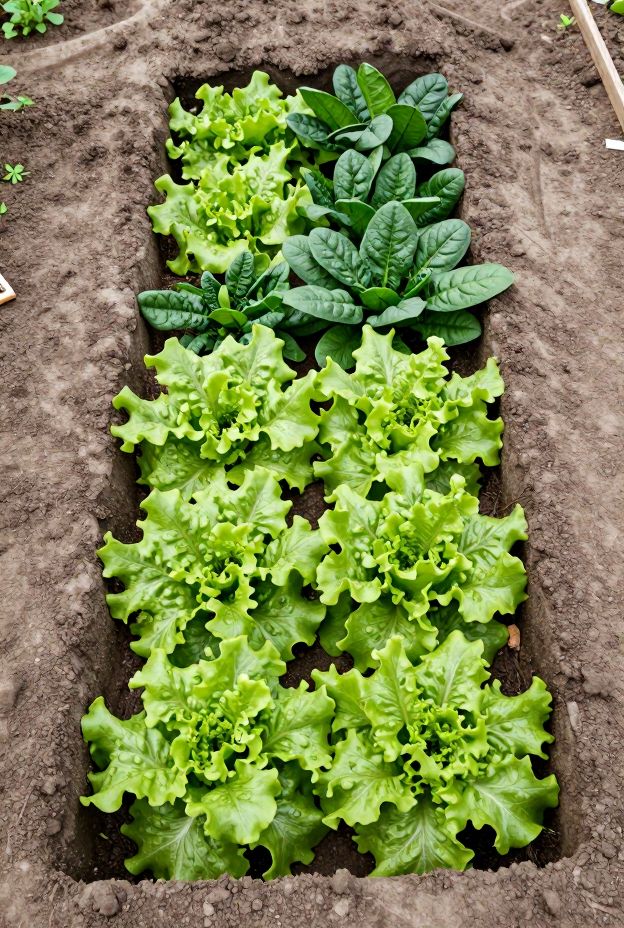
I experimented with sunken beds last summer during a brutal heat wave, and my lettuce actually survived (shocking, considering lettuce usually throws a tantrum when temps hit 85°F). The key is digging about 6-12 inches below ground and amending the soil with lots of organic matter to prevent drainage issues.
Best crops for sunken beds? Water-lovers like lettuce, spinach, and celery. Tomatoes and peppers prefer raised beds where roots stay drier. Match your layout to your plants’ preferences, and you’ll see the difference.
10. Lasagna Gardening (Sheet Mulching)
No, you’re not growing pasta. Lasagna gardening layers organic materials directly on top of grass or weeds to create a new growing bed without tilling or digging. Cardboard or newspaper goes down first (smothers existing vegetation), then layers of compost, straw, leaves, and more compost. The whole thing breaks down over time, creating rich, fluffy soil.
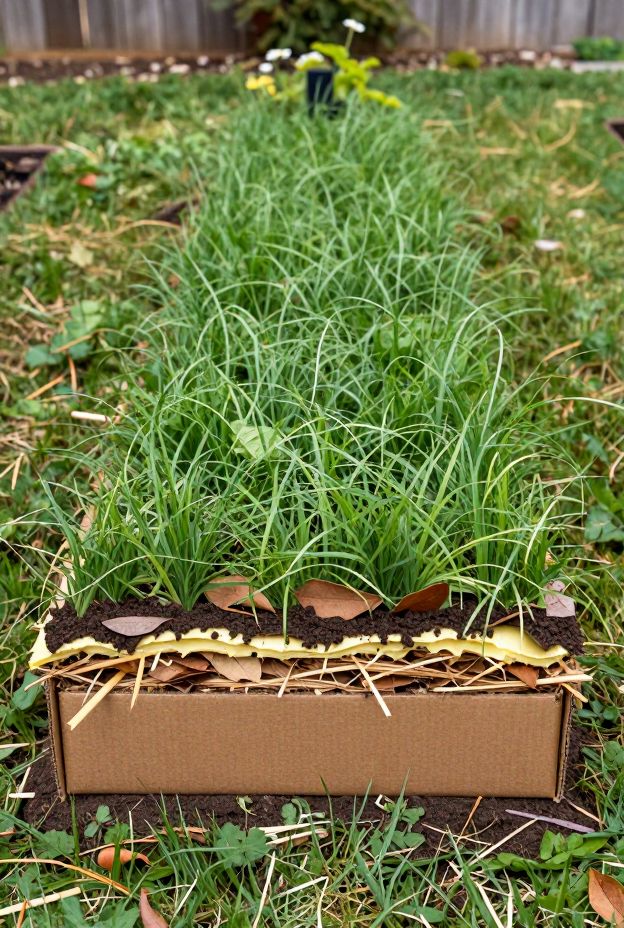
I use this method to expand my garden without killing my back. Last fall, I covered a 10×10 foot section of lawn with cardboard and organic layers, let it sit over winter, and by spring I had gorgeous, weed-free soil ready for planting. Zero digging. Zero tilling. Maximum satisfaction.
The layout is flexible—create any shape you want. I made curving beds that follow my yard’s natural contours. Just keep building those layers until you hit 12-18 inches of depth, and let decomposition work its magic.
11. Pathway Grid System
Think of your garden as a grid with pathways running between growing beds. This layout is all about maximizing accessibility while minimizing wasted space. I use permanent pathways (mulched with wood chips) that are 2 feet wide, with growing beds that are 3-4 feet wide on either side.
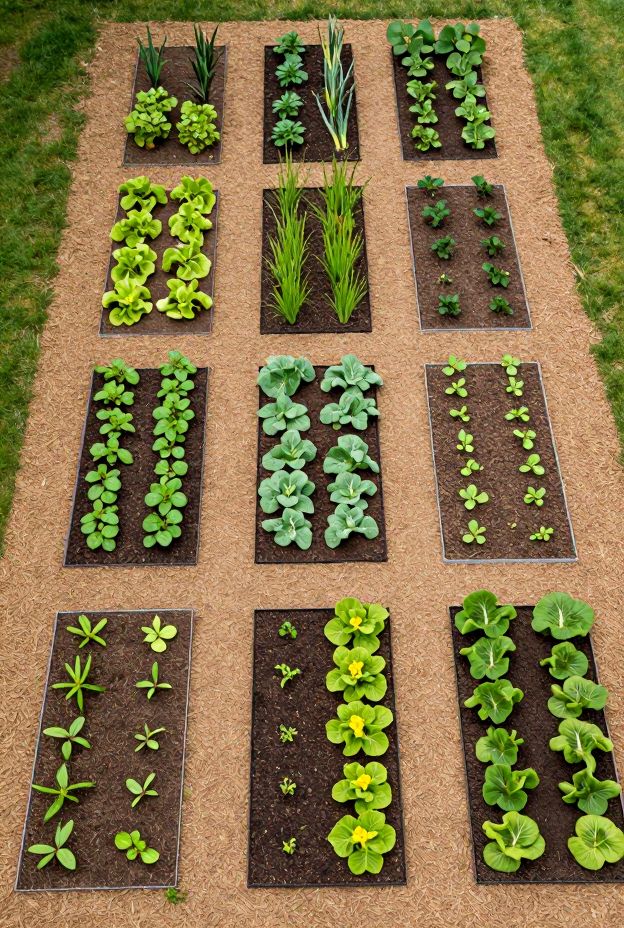
The beauty of this system? You never step on growing soil, which prevents compaction and keeps soil structure healthy. Your plants’ roots can breathe, drainage improves, and you don’t have to constantly fluff up trampled earth. Ever wondered why some people’s gardens just look healthier? Often, it’s because they’re not compacting the soil with their footsteps.
Mark your pathways permanently (I use landscape fabric under wood chips) so you’re not tempted to rearrange every season. Consistency is key.
12. Container Cluster Garden
No in-ground space? No problem. Group containers together in strategic clusters to create microclimates and maximize growing potential. I have a shaded patio corner where I cluster shade-tolerant crops (lettuce, spinach, kale) and a sunny deck spot for my tomatoes and peppers.
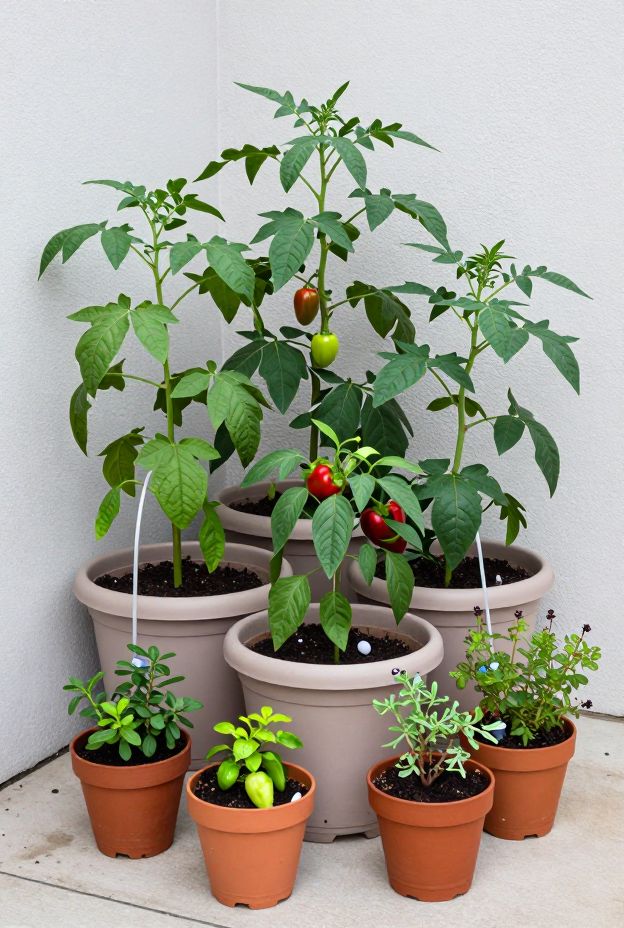
The trick is thinking about height and spacing. Put tall containers in the back, medium in the middle, shorter ones in front. This way, everything gets light, and you create visual depth (bonus: it looks better in photos).
Container clusters also make watering easier—set up a drip irrigation system or hose with a multi-outlet splitter, and you can water everything at once. I learned this after spending 30 minutes every evening hand-watering 15 separate pots. Not fun :/
13. Four-Season Rotation Layout
This is next-level planning, but stick with me. Divide your garden into four quadrants, each dedicated to a different plant family (nightshades, brassicas, legumes, roots/alliums). Every season, rotate each family to the next quadrant. By the time they circle back, it’s been four seasons, which disrupts pest and disease cycles.
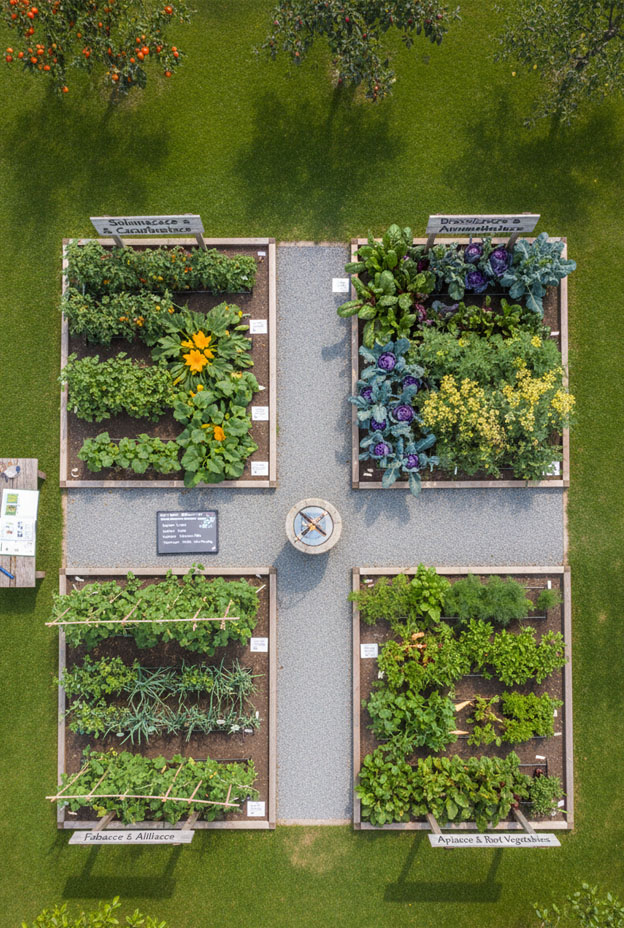
I draw this out on paper each winter because tracking it mentally is impossible. Quadrant 1 gets tomatoes this year? Next year, it gets beans, then carrots, then broccoli, then back to tomatoes. Simple in theory, requires a spreadsheet in practice (or at least some good note-taking).
The payoff? Healthier soil, fewer pests, and better yields year after year. My garden has never been more productive since I started rotating religiously. Plus, I feel like a legit farming strategist, which is fun.
Conclusion
So there you have it—13 ways to rethink your garden layout and actually optimize your growing space. Whether you’re working with acres or just a tiny balcony, smart planning beats sheer square footage every time. I’ve tried most of these layouts (some more successfully than others), and the biggest lesson? There’s no one-size-fits-all solution.
Your best bet? Start with one or two layouts that match your space and skill level. Get comfortable with them. Then experiment. Gardening is all about trial, error, and occasionally laughing at your failures (looking at you, first attempt at keyhole gardens). The point is to keep growing—both your plants and your skills.
Now get out there and optimize that space. Your future harvest is waiting.