Want to turn your garden into something that looks like it came straight out of a fairytale? Cottage gardens are all about that charming, slightly wild vibe that makes you feel like you’ve stumbled into a secret paradise. I’ve been working on my own cottage garden for years, and honestly, there’s nothing quite like walking through those overflowing blooms on a summer morning.
The best part about cottage garden design? There are no strict rules. You can mix, match, and go a little wild with your choices. Ready to create your own whimsical sanctuary?
1. Pack Plants Close Together for That Signature Look
Here’s something that might surprise you: in cottage gardens, crowding is actually a good thing. Traditional cottage gardens feature plant beds packed tight with a mix of perennials, annuals, vegetables, and foliage plants all competing for attention. This informal crowding creates that fascinating, abundant look that defines the style.
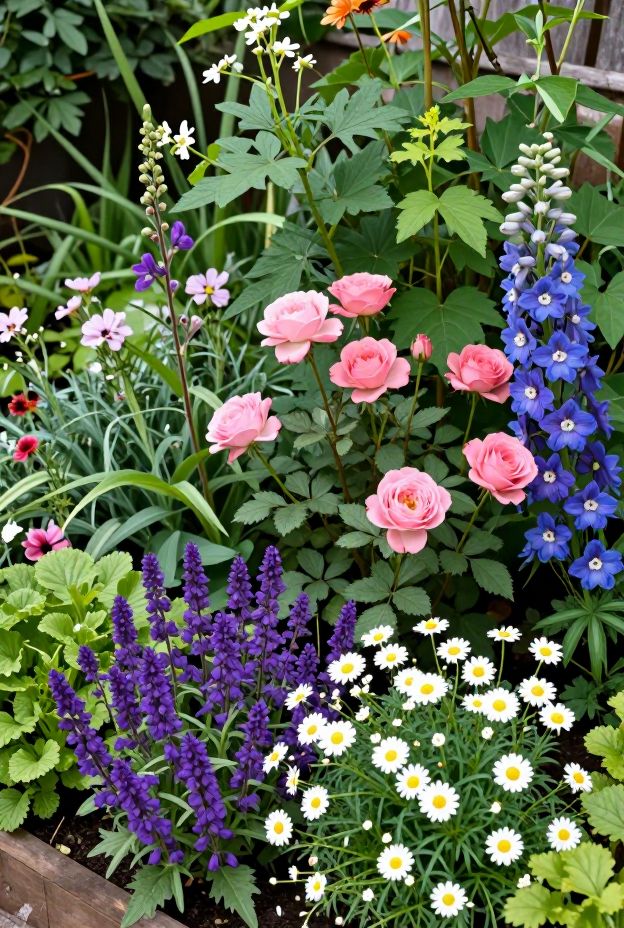
The beauty here is how different plants twine around each other naturally. You’ll see clematis climbing up a fence while nepeta spills over at its base. This layering effect isn’t just pretty; it also helps suppress weeds and keeps the soil moist. Just make sure you’re feeding your soil with plenty of organic matter and mulch to support all that plant life.
2. Create Winding Pathways That Invite Exploration
Straight lines? Not in a cottage garden. Soft, curving pathways add to the homey, whimsical feeling and literally invite people to wander and explore. I love how a curved path makes even a small garden feel bigger because you can’t see what’s around the bend.
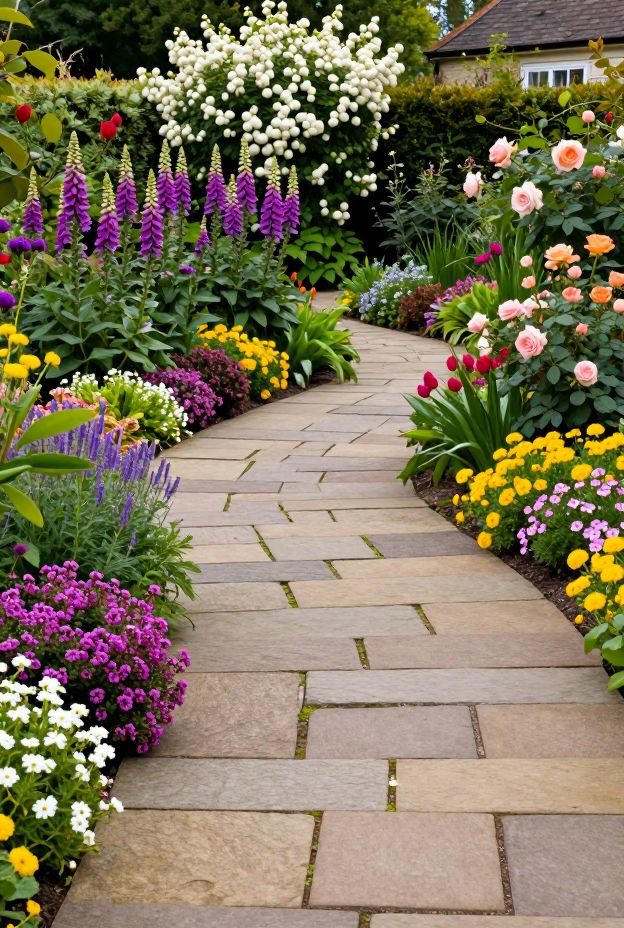
You’ve got tons of material options here. Bluestone, brick, flagstone, or even a combination of old tiles and stone work beautifully. If you’re on a budget, wood chips or gravel are perfect alternatives. Just make sure to edge your pathways properly so those soft materials stay in place and don’t scatter all over your garden beds.
3. Add a Charming Picket Fence or Garden Gate
Every cottage garden needs some kind of enclosure to create that intimate, secret garden feel. Picket fences painted in white or soft pastels are classic choices, but you can also use lattice fences or even living hedges. The key is keeping them low enough that they don’t block views but high enough to define your space.
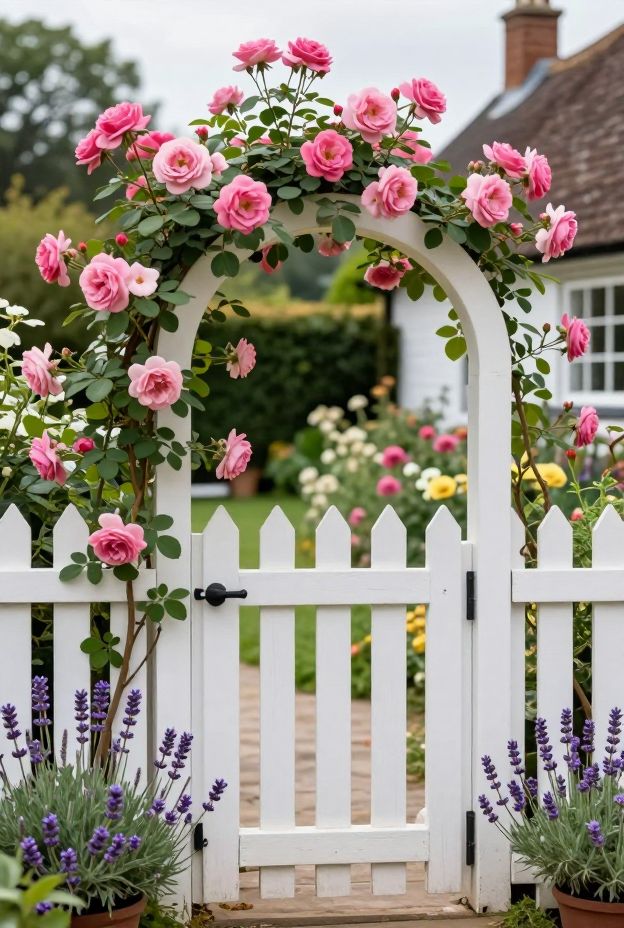
And gates? They’re pure magic. An arched entry with climbing roses creates the perfect entrance to your garden. It doesn’t have to be elaborate; even a simple wooden gate with some clematis or ivy growing over it will make guests feel like they’re entering somewhere special.
4. Layer Plants by Height for Visual Drama
Think of your garden like a stage where every plant has its moment. Tall plants like foxgloves, delphiniums, and hollyhocks go at the back, creating that vertical interest. Mid-height bloomers like roses, salvias, and penstemons fill the middle layer, while ground covers and low-growing plants like heuchera carpet the front.
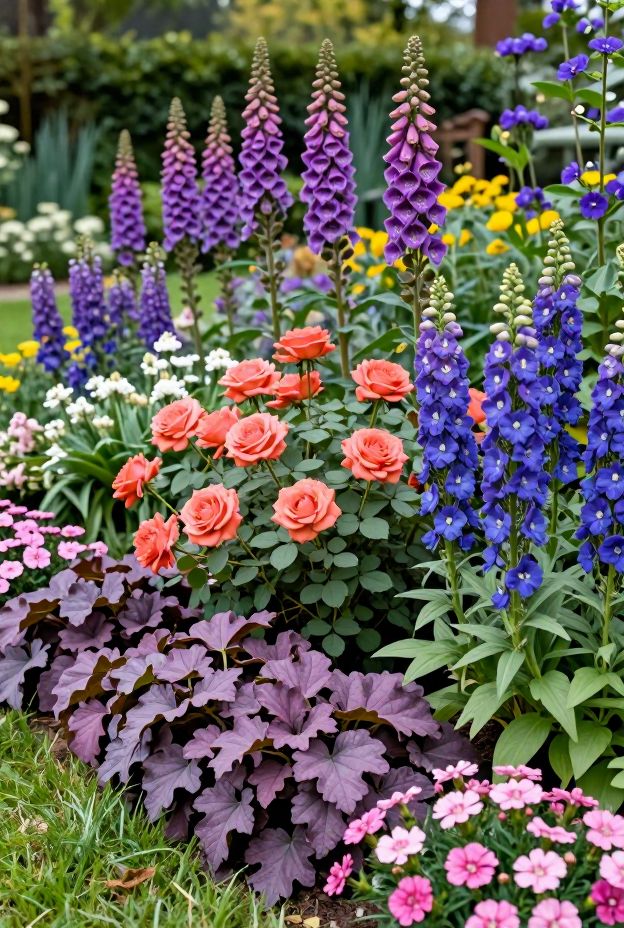
This layering isn’t just about looks. It helps each plant get the light it needs while creating depth and dimension. I learned this the hard way after planting tall cosmos in front of everything else (oops!). Now I always sketch out my height zones before planting anything new.
5. Mix Pastel Colors With Bold Accents
Pastel shades are hallmarks of cottage style, but that doesn’t mean everything needs to be soft and muted. Try unusual color combinations that make your garden pop. Deep red paired with lavender? Absolutely stunning. Pink roses against purple salvia? Chef’s kiss.
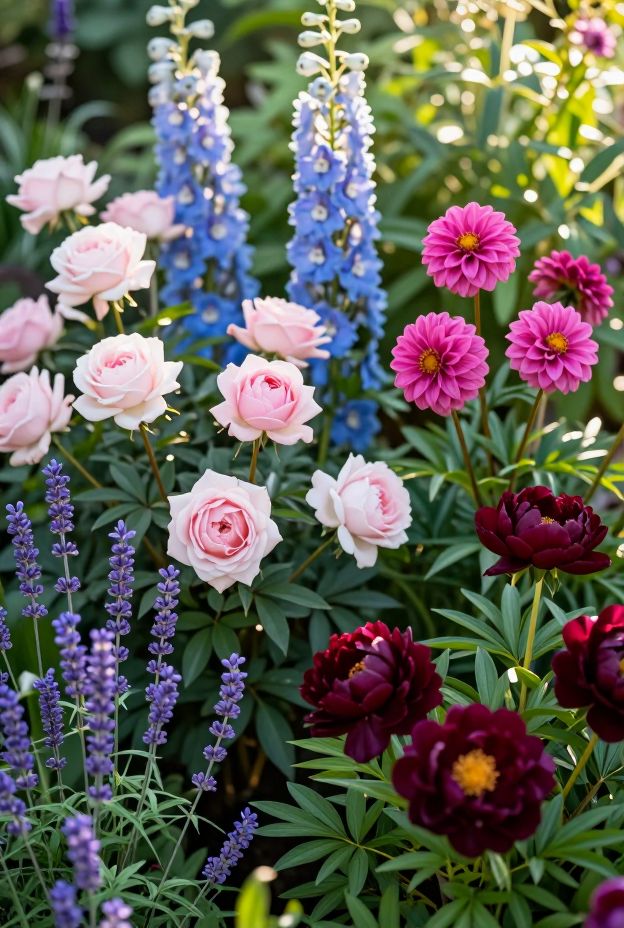
The trick is balancing those romantic pastels with occasional bold splashes. I like to use mostly pinks, blues, and whites, then throw in some hot pink dahlias or deep burgundy peonies for contrast. This keeps the garden from looking washed out while maintaining that dreamy cottage vibe.
6. Include Climbing Plants on Vertical Structures
Vertical elements like arbors, arches, and trellises are essential for a true cottage garden. They add height, create living walls, and give climbing plants somewhere to show off. Clematis, climbing roses, sweet peas, and wisteria are all perfect candidates.
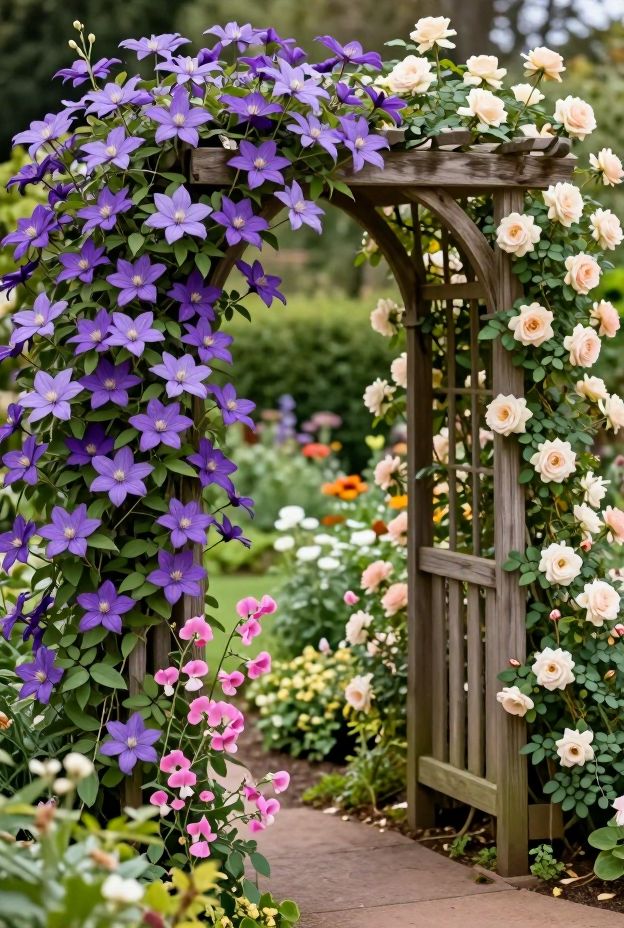
You can position these structures to accent doorways, frame seating areas, or create natural dividers in larger gardens. One of my favorite tricks is placing a simple obelisk trellis right in the middle of a flower bed. It becomes a focal point while providing support for annual vines like morning glories or scarlet runner beans.
7. Incorporate Whimsical Garden Ornaments
This is where you get to have some real fun. 🙂 Cottage gardens are the perfect place for whimsical decorative elements that reflect your personality. Vintage wheelbarrows filled with flowers, moss-covered statuary, old watering cans, ceramic rabbits, bottle trees, or weathered garden tools all work beautifully.
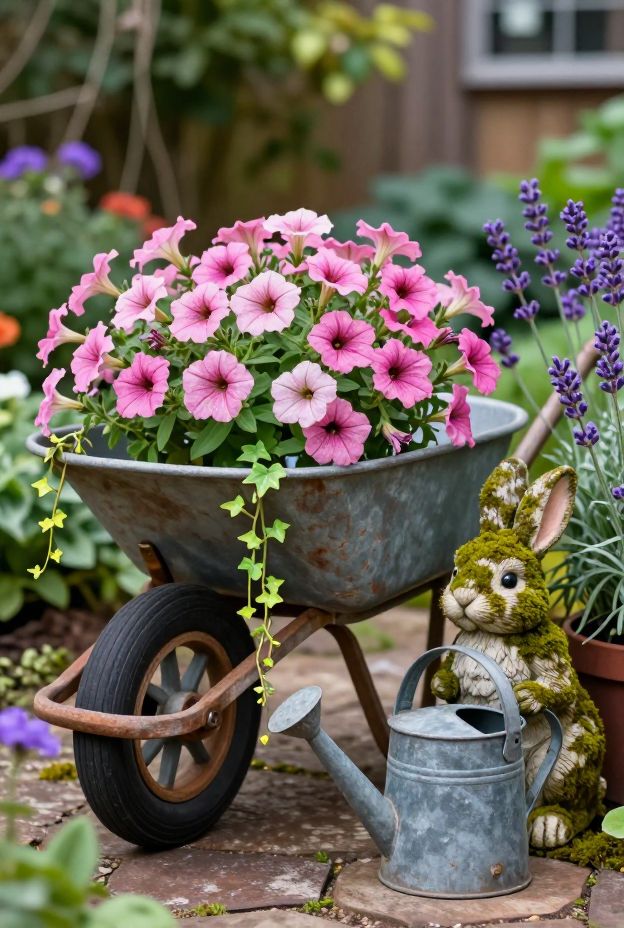
The key is not overdoing it. You want charming surprises scattered throughout the garden, not a cluttered yard sale. I display an old wooden ladder against my shed with potted herbs on each rung, and it’s become one of my favorite features. Think about what makes you smile and incorporate those elements thoughtfully.
8. Plant Fragrant Flowers Throughout
A cottage garden should smell as amazing as it looks. Fragrant flowers like lavender, roses, sweet peas, stock, and phlox are essential. When you walk through your garden on a warm evening and catch those combined scents, you’ll understand why this matters so much.
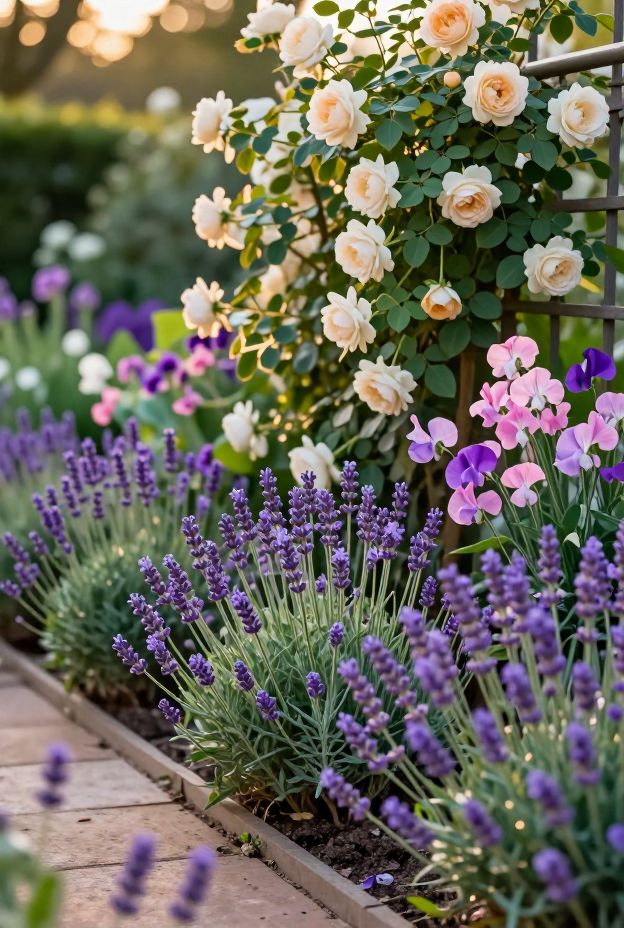
I always plant lavender along pathways so you brush against it while walking. Roses near seating areas mean you can enjoy their perfume while relaxing. And sweet peas? I grow them everywhere because their scent is absolutely intoxicating. FYI, planting fragrant flowers near windows means you’ll enjoy those scents indoors too.
9. Create a Cozy Seating Area
What’s the point of a beautiful garden if you can’t sit and enjoy it? A dedicated seating space turns your cottage garden into a true outdoor retreat. This could be a simple wooden bench under a tree, a bistro set on a small patio, or even a hammock strung between posts.
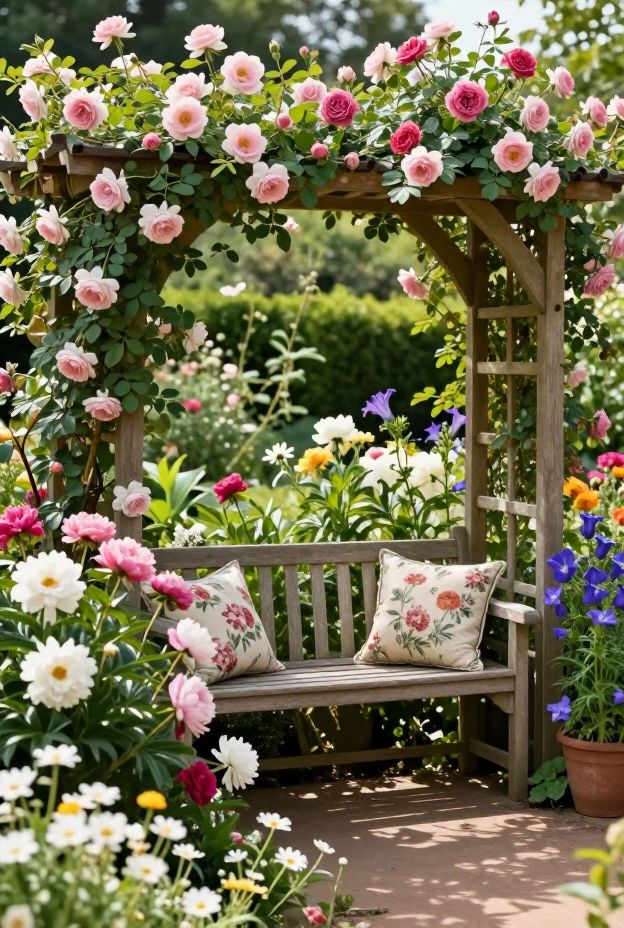
I love placing seating areas where they’re partially hidden by plants. A bench tucked behind a rose-covered arbor or a chair positioned where you can’t quite see it from the house creates that sense of discovery. Add some cushions in floral prints, and you’ve got the perfect spot for morning coffee or evening relaxation.
10. Include a Water Feature for Soothing Sounds
The sound of water adds so much tranquility to a garden. A small fountain, birdbath, or water feature becomes both a visual focal point and an audio backdrop. Even a simple bubbling urn or wall-mounted fountain can transform the atmosphere.
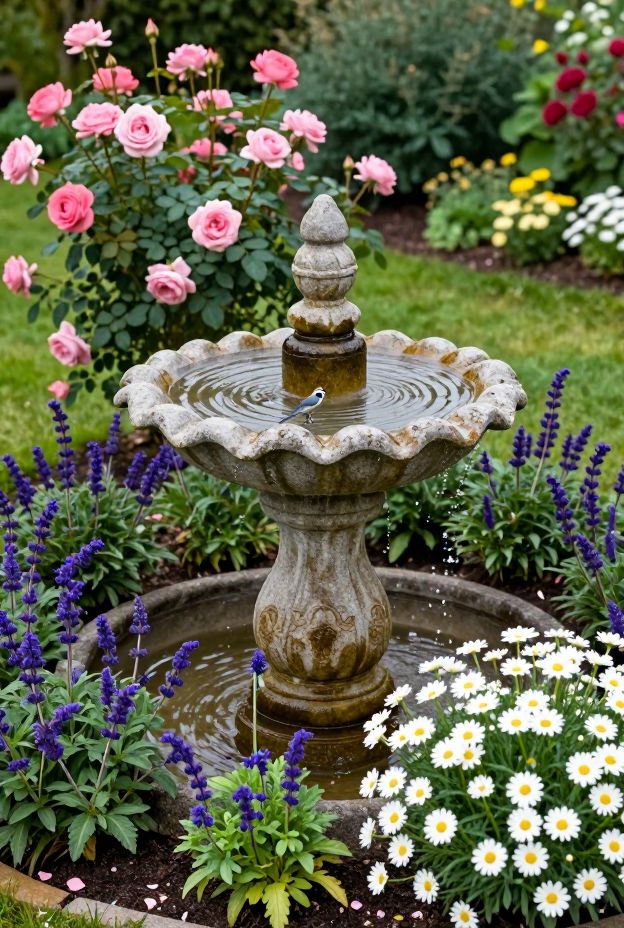
Birdbaths are particularly great for cottage gardens because they attract birds, adding movement and life to your space. I positioned mine near my seating area, and watching birds splash around while I drink my tea never gets old. Just remember to keep the water fresh and clean for your feathered visitors.
11. Grow Old-Fashioned Cottage Flowers
Traditional cottage garden plants are chosen for good reason; they’re reliable, beautiful, and often easy to grow. Peonies, daisies, poppies, hollyhocks, lupins, delphiniums, and roses are all classic choices. These plants have that relaxed, nostalgic look that defines the style.
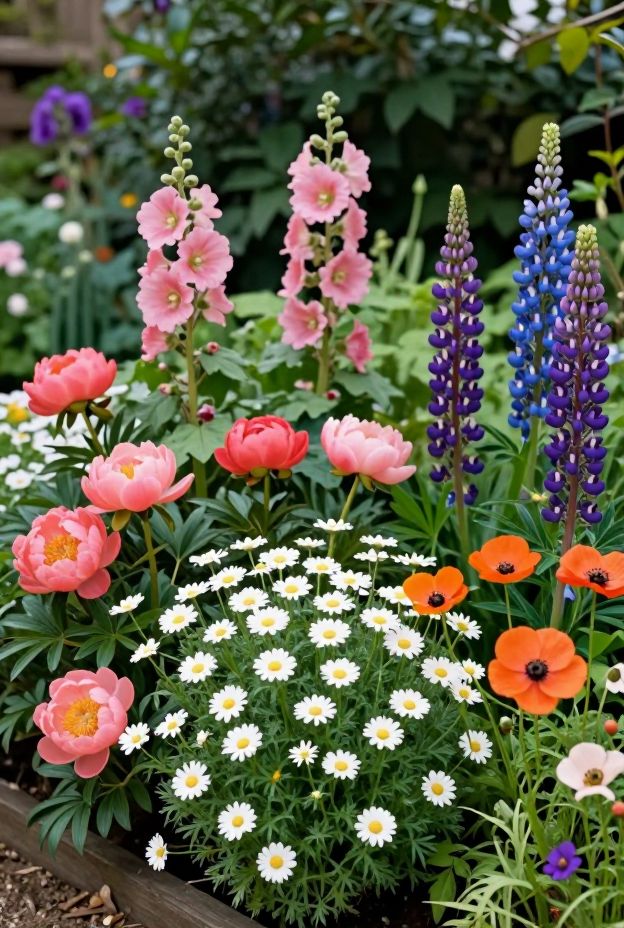
Don’t be afraid to mix in some vegetables and herbs too. Runner beans climbing a trellis are gorgeous, and herbs like rosemary, thyme, and oregano add texture and fragrance. Cottage gardens were originally about beauty and function combined, so embrace that practical side. Your garden can be both stunning and useful.
12. Add Window Boxes and Container Plantings
IMO, overflowing window boxes are one of the easiest ways to add instant cottage charm. Fill them with a mix of trailing petunias, upright geraniums, and some ivy or sweet potato vine cascading over the edges. The overflow effect is exactly what you want.
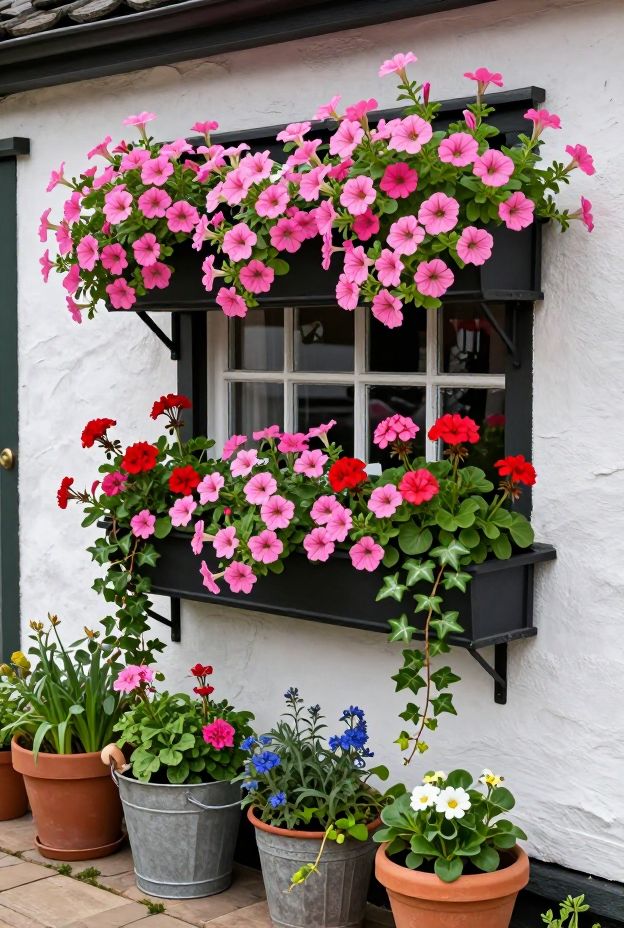
Containers mixed into flower beds add even more variety and flexibility. You can move them around to fill gaps, change colors seasonally, and add height where needed. I use vintage galvanized buckets, ceramic pots, and even old tea cups for tiny plantings. Get creative with your containers; mismatched is perfectly on-brand for cottage style.
13. Plan for Continuous Blooms Throughout Seasons
Ever wondered why some gardens always look amazing while others peak for two weeks then fade? The secret is succession planting. You need flowers blooming from early spring through fall to maintain that abundant cottage garden look year-round.
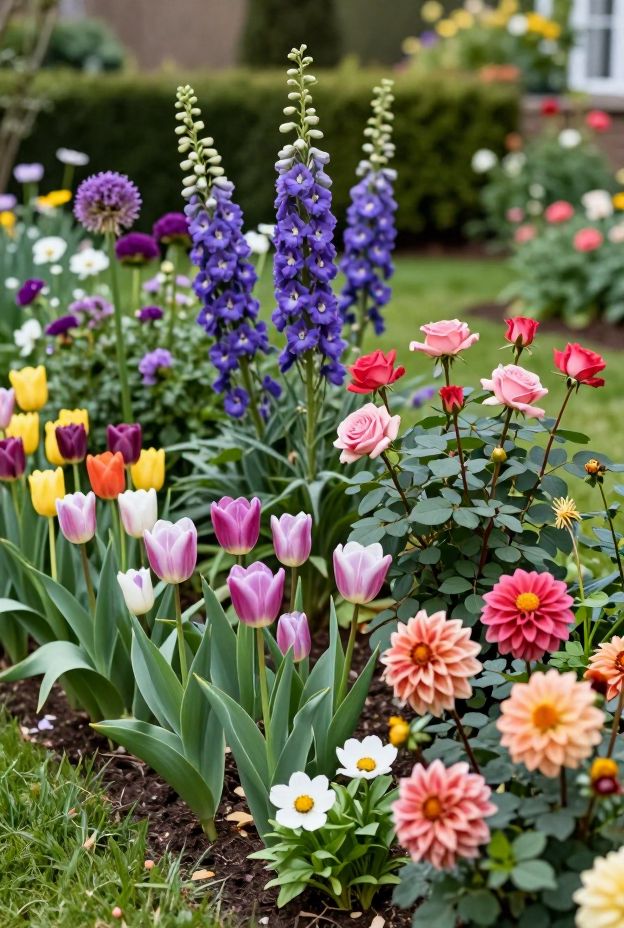
Start with early bulbs like crocuses and tulips, then layer in spring peonies and alliums. Summer brings roses, delphiniums, and cosmos. Fall features dahlias, Japanese anemones, and salvias. Map out your bloom times when planning your garden so you’re never stuck with bare beds. This takes some planning upfront but pays off massively.
14. Embrace Imperfection and Let Plants Self-Seed
Here’s the most important rule: don’t follow all the rules. Cottage gardens are meant to look a little wild and unplanned. Let plants self-seed and pop up in unexpected places. Allow flowers to spill over onto pathways. Skip the perfect edges and rigid spacing.
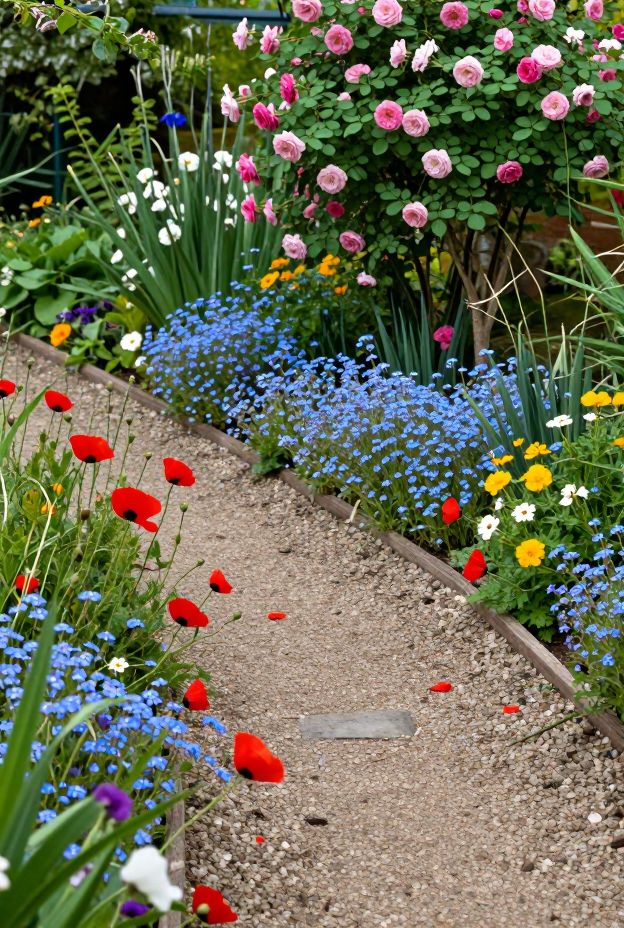
Some of my favorite garden moments happened by accident. Poppies seeded themselves in my gravel path, and now I wouldn’t change it for anything. Forget-me-nots showed up uninvited and created the prettiest blue carpet under my roses. This relaxed approach is what gives cottage gardens their magic. Plant what you love, let nature do its thing, and enjoy the beautiful chaos that results. Trust me, perfection is overrated anyway. :/