You know that moment when you step into your backyard and feel like something’s just… missing? Your garden might be bursting with beautiful plants, but that tired old fence keeps dragging down the whole vibe. I’ve been there, staring at my plain wooden panels wondering why my outdoor space didn’t feel as inviting as I wanted it to be.
Here’s the thing: your fence doesn’t have to be boring. It can be a statement piece, a privacy screen, or even a living work of art. I’m sharing ten garden fence ideas that actually transform spaces, not just fill them.
1. Horizontal Slatted Panels for Modern Vibes
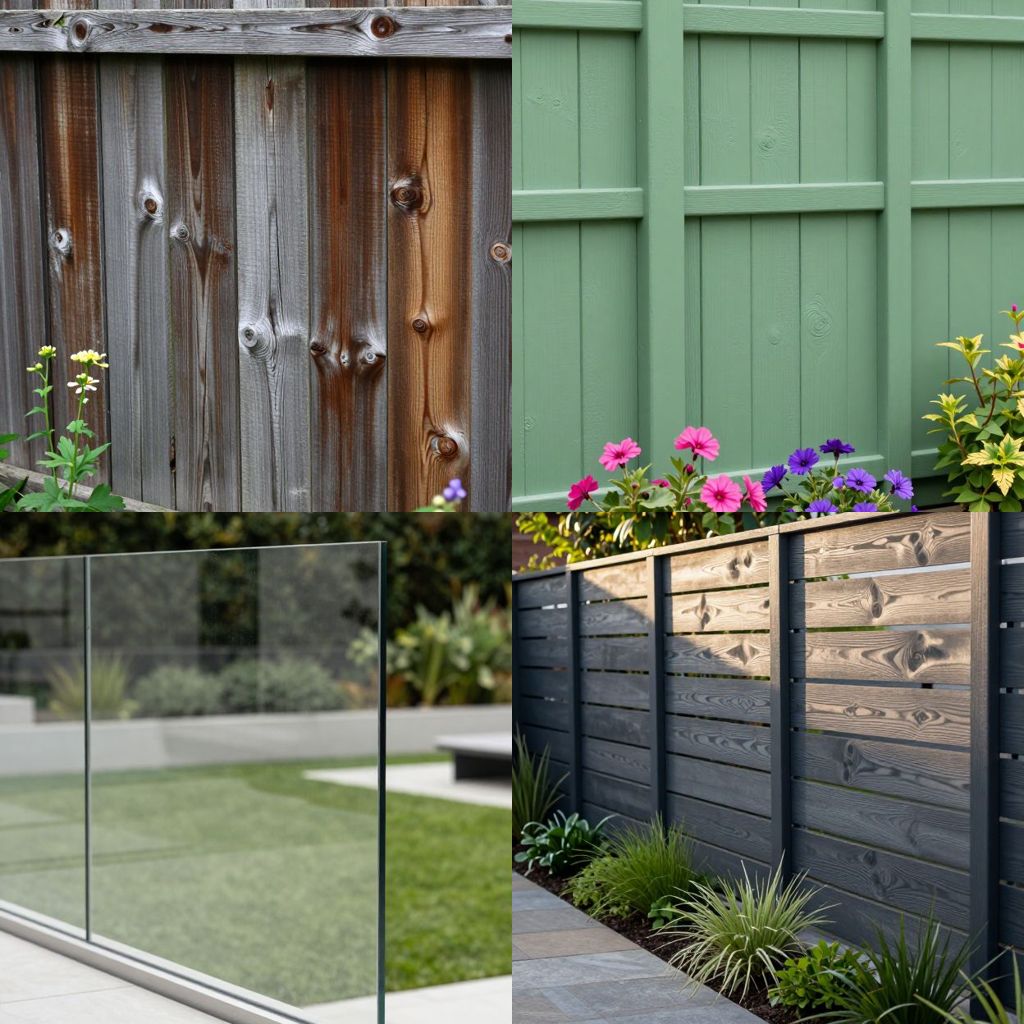
Horizontal fencing has absolutely taken over in recent years, and honestly? I get it. The long, clean lines make your garden feel wider and more open, which works wonders if you’re dealing with a smaller yard. You install the boards horizontally instead of the traditional vertical pattern, and boom—instant modern upgrade.
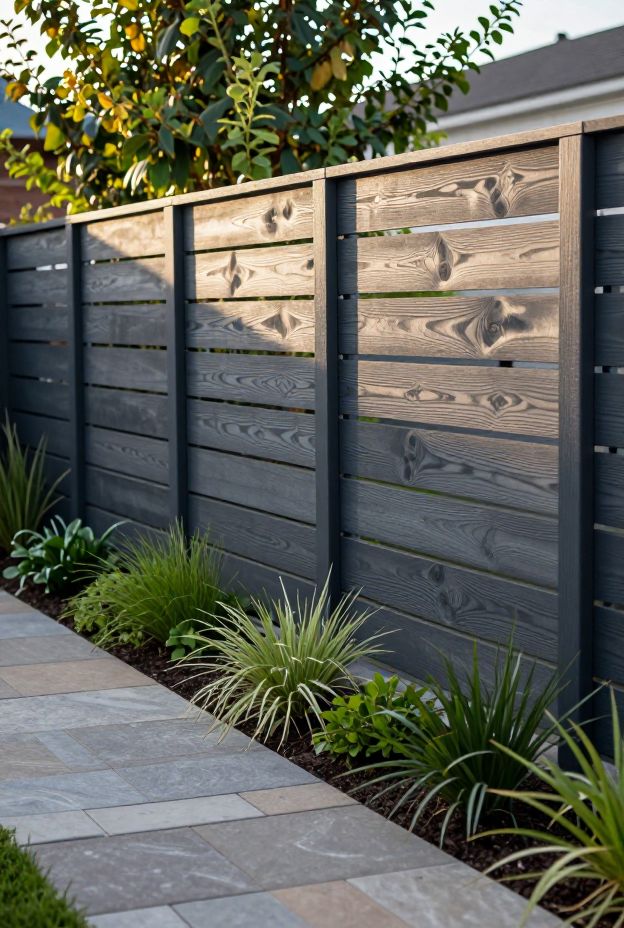
The spacing between slats gives you privacy without feeling boxed in. Light still filters through, and you get that breezy feel that solid walls just can’t match. Paint them in soft grey or keep them natural with a dark stain to complement your paving or deck.
Want to make a small garden feel bigger? This style stretches the eye across the space rather than up and down. It’s simple geometry that actually works in your favor 🙂
2. Living Walls with Vertical Gardens
Why settle for a plain fence when you can have a wall of living greenery? Vertical garden fences blend privacy with plant life, turning your boundary into an actual feature worth looking at. You attach planter boxes or trellises to your fence structure and fill them with whatever makes you happy—herbs, succulents, flowering plants, or trailing vines.
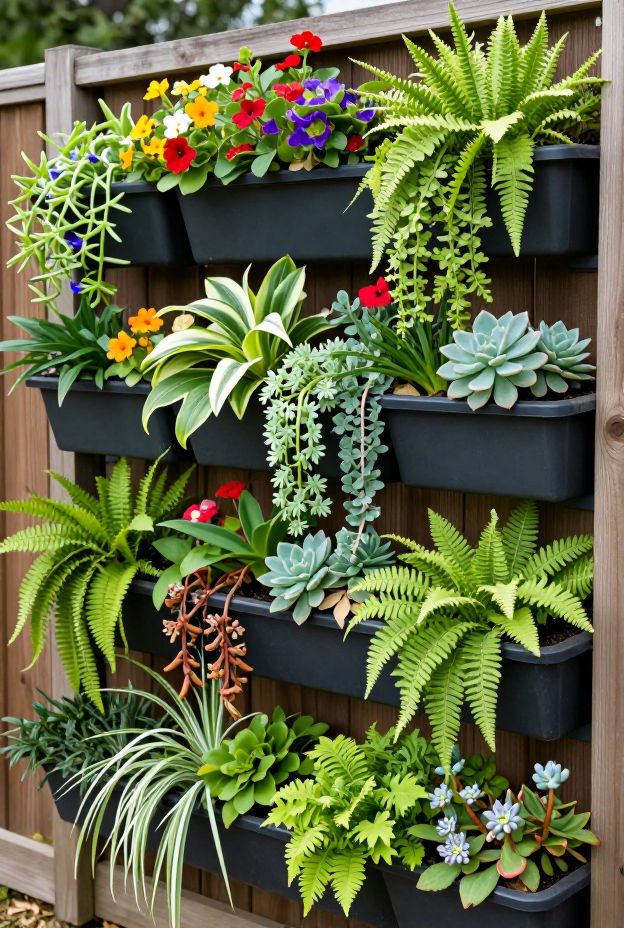
This idea does double duty. You get your privacy screen AND you improve air quality while attracting butterflies and bees. I love how vertical gardens work for tiny spaces too since they maximize your growing area without eating up precious ground space.
The maintenance is easier than you’d think. Choose low-maintenance plants like sedums or pothos if you’re not into constant watering schedules. FYI, this works brilliantly for anyone who wants a garden but doesn’t have much actual garden to work with.
3. Laser-Cut Metal Panels for Artistic Drama
Looking for something that screams contemporary? Laser-cut metal panels give you intricate patterns that filter light in the most gorgeous way throughout the day. You can customize the designs to match your style—geometric patterns, nature motifs, abstract shapes, whatever speaks to you.
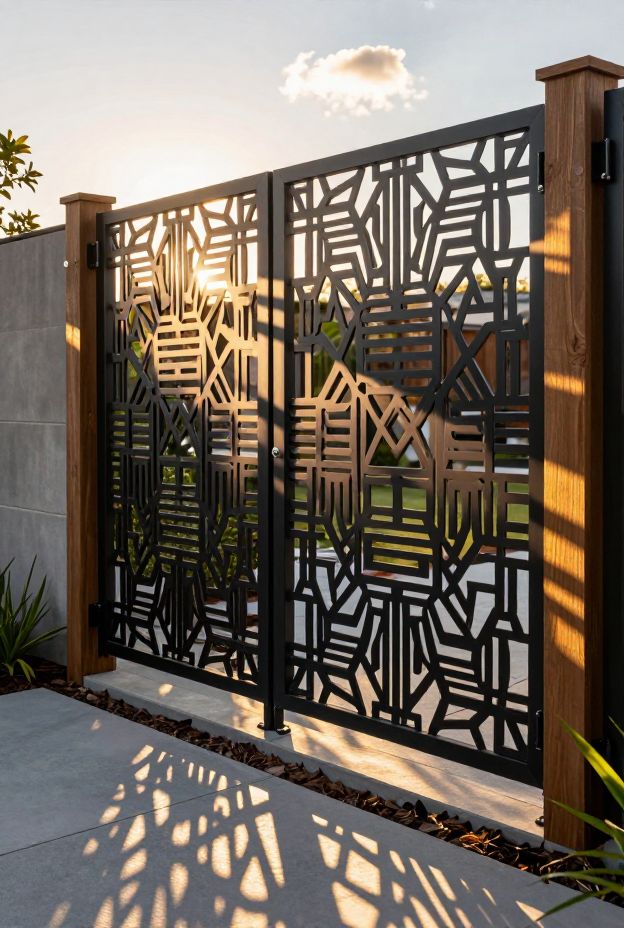
The beauty here is that you get privacy while still maintaining an open feel. Light plays through the cutouts and creates these amazing shadow patterns on your patio or lawn. Combine metal panels with wood or concrete for added contrast and texture.
These panels work particularly well as feature sections rather than running the entire perimeter. Install them behind a seating area or near your entrance for maximum visual impact.
4. Bamboo Fencing for Tropical Warmth
Want to bring vacation vibes to your backyard? Bamboo fencing adds that instant tropical touch that makes you feel like you’re somewhere way more exotic than your actual neighborhood. It’s lightweight but surprisingly durable, and the warm tones work beautifully with lush greenery.
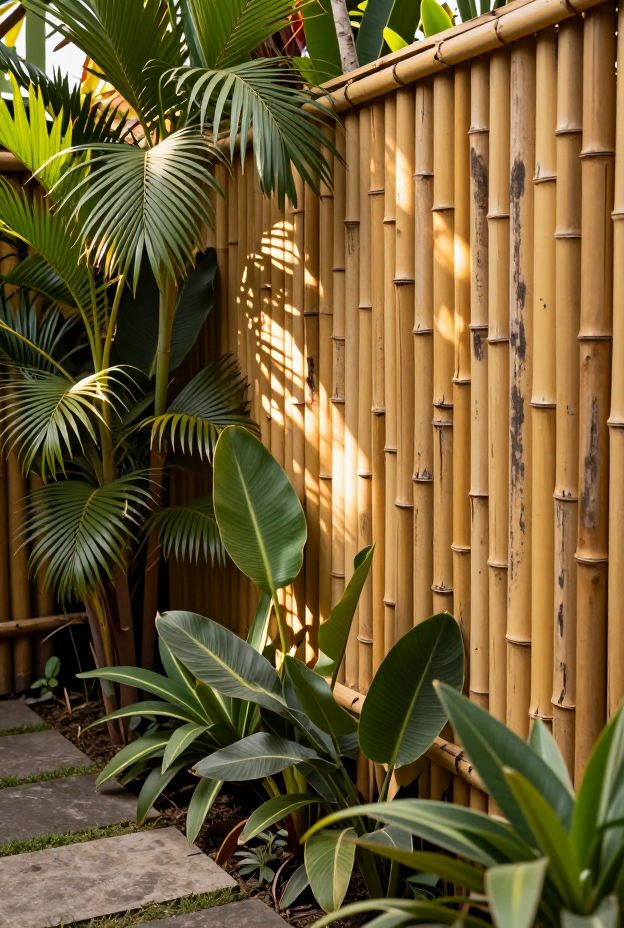
You can choose whole bamboo canes for a more natural look or split bamboo for something neater and more uniform. Either way, you’re getting an organic texture that softens the hard edges of typical fencing. Pair it with palms, ferns, or bold flowering plants for that full resort aesthetic.
Bamboo works especially well in Asian-inspired gardens, but honestly, it fits anywhere you want to add warmth and character. Plus, it’s a sustainable choice if you care about eco-friendly materials.
5. Bold Paint Colors for Instant Personality
Sometimes the simplest solution is the most effective. Grab some exterior paint and transform your boring fence with color. I’m talking bold blues, deep charcoals, sage greens, or even sunny yellows if you’re feeling brave.
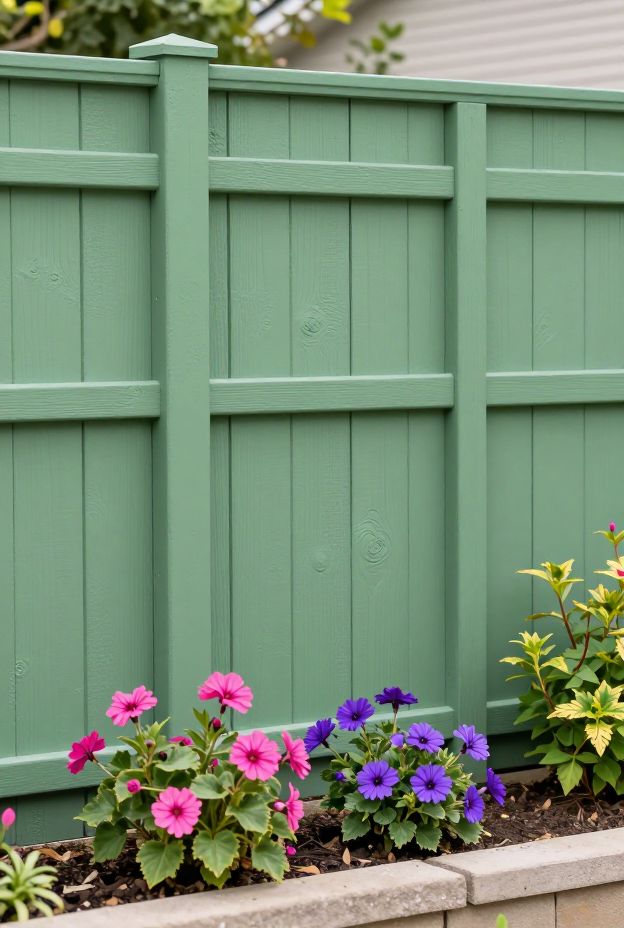
A fresh coat of paint costs way less than replacing your entire fence, but the impact? Huge. Dark colors make plants pop and create a dramatic backdrop for your garden beds. Lighter shades brighten shady areas and make small spaces feel more open.
Ever wondered why garden designers always photograph against painted fences? Because color creates depth and makes everything else look more intentional. You don’t need to be artistic—you just need a paint brush and a weekend.
6. Mixed Materials for Textural Interest
Why commit to just one material when you can have the best of both worlds? Combining wood with metal or stone with timber creates visual interest that single-material fences just can’t achieve. The contrast in textures adds sophistication and breaks up monotony.
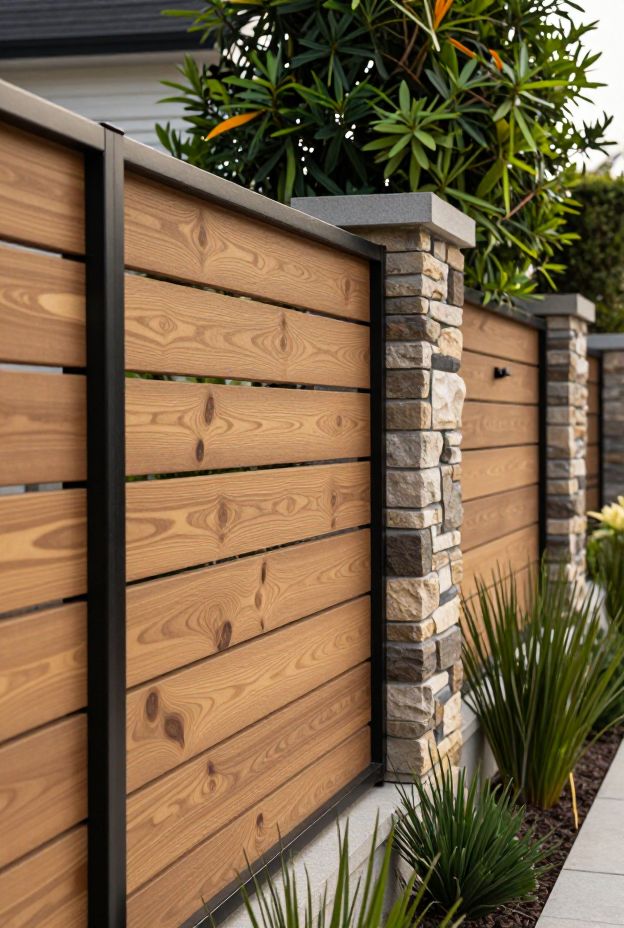
Try horizontal wood slats with metal posts, or alternate sections of timber panels with corten steel. You could even incorporate stone pillars between wooden panels for a more traditional but elevated look. The key is choosing materials that complement each other rather than compete.
Mixed material fences work brilliantly when you want your garden to feel more designed and less cookie-cutter. They signal that you put actual thought into your outdoor space, not just grabbed whatever was on sale at the hardware store :/
7. Glass Panels for Unobstructed Views
Got a view worth keeping? Glass panel fencing gives you defined boundaries without blocking your sightlines. This works incredibly well if you have a garden that overlooks something beautiful, or if you want to maintain an open, airy feel in a smaller space.
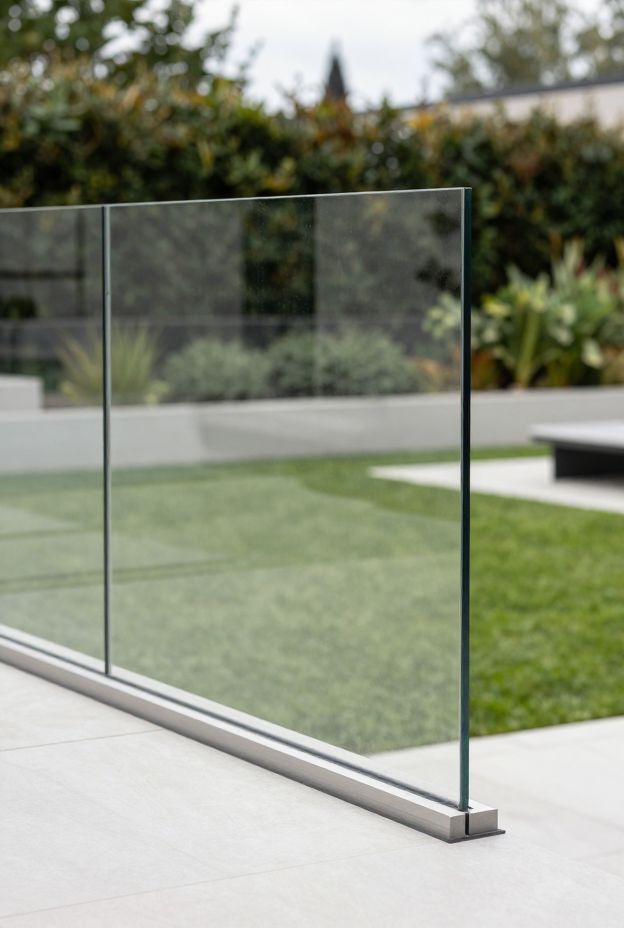
Modern glass fences use tempered panels mounted in metal or wood frames. They’re stronger than you’d think and require less maintenance than you’d expect—just occasional cleaning to keep them looking clear. Small gardens feel instantly bigger when you can see through your boundaries.
You can choose clear glass for full transparency, frosted for privacy with light transmission, or even tinted for a more contemporary edge. IMO, this style works best in modern or minimalist gardens where clean lines are already part of your design language.
8. Reclaimed Timber for Character and Sustainability
There’s something special about reclaimed wood that new materials just can’t replicate. Every board has its own history, texture, and color variation, which gives your fence real depth and personality. Plus, you’re keeping materials out of landfills and reducing demand for new timber.
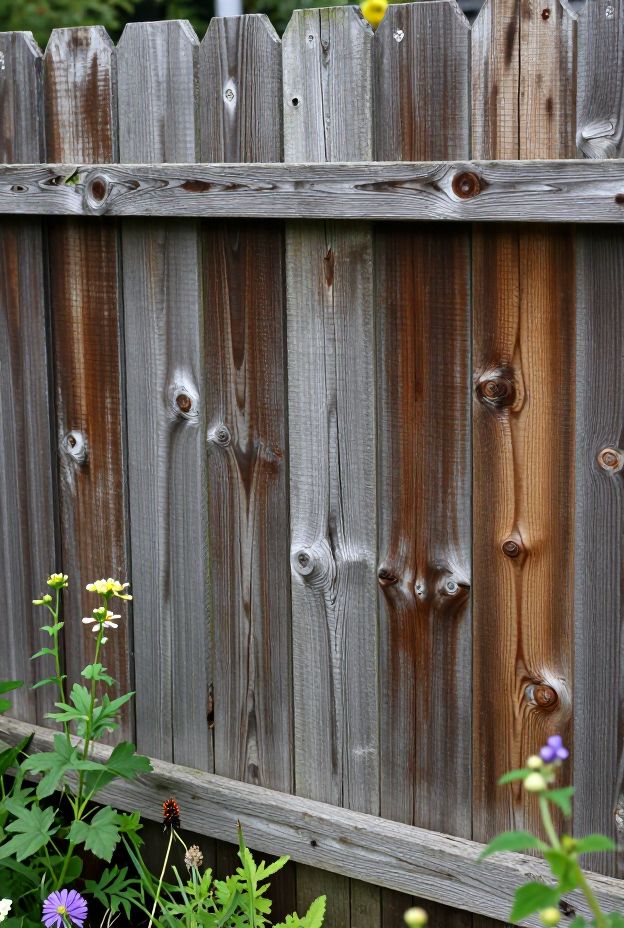
Old barn wood, railway sleepers, or salvaged fence boards all work beautifully. The weathered patina and natural imperfections create a warm, lived-in feel that makes new gardens look instantly more established. You don’t need to treat or paint reclaimed wood—the character is already there.
Can’t find genuine reclaimed materials? Look for FSC-certified timber from responsibly managed forests. You still get the eco-friendly angle without sacrificing the natural, organic vibe that makes this style so appealing.
9. Climbing Plants for Green Coverage
Your fence becomes a living, breathing feature when you train climbing plants along it. This transforms a simple boundary into a lush backdrop that changes with the seasons. Jasmine, clematis, climbing roses, or ivy all work depending on your climate and sun exposure.
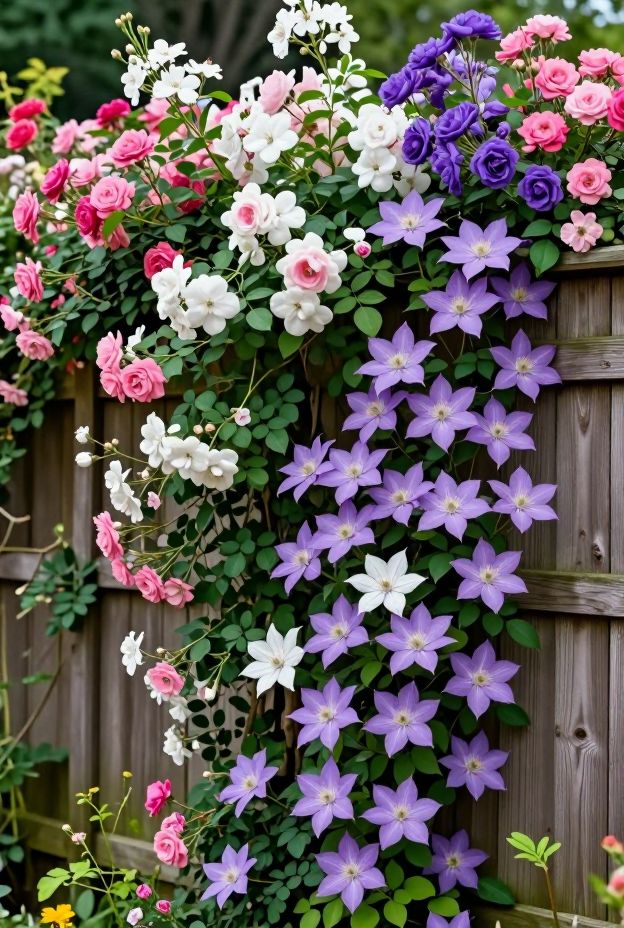
The trick is choosing plants that suit your maintenance level. Wisteria looks stunning but needs regular pruning to stay under control. Ivy grows fast and covers everything but can be invasive. Star jasmine gives you gorgeous fragrance without too much fuss.
Add a trellis or wire framework to help plants climb evenly and create the coverage you want. This approach works particularly well if you’ve inherited an ugly fence from a previous owner and want to cover it up naturally rather than replacing it.
10. Decorative Panels and Fence Toppers
Sometimes you don’t need to replace your whole fence—you just need to dress it up a bit. Decorative panels, fence toppers, or artistic additions can completely change the look without the massive expense or labor of starting from scratch.
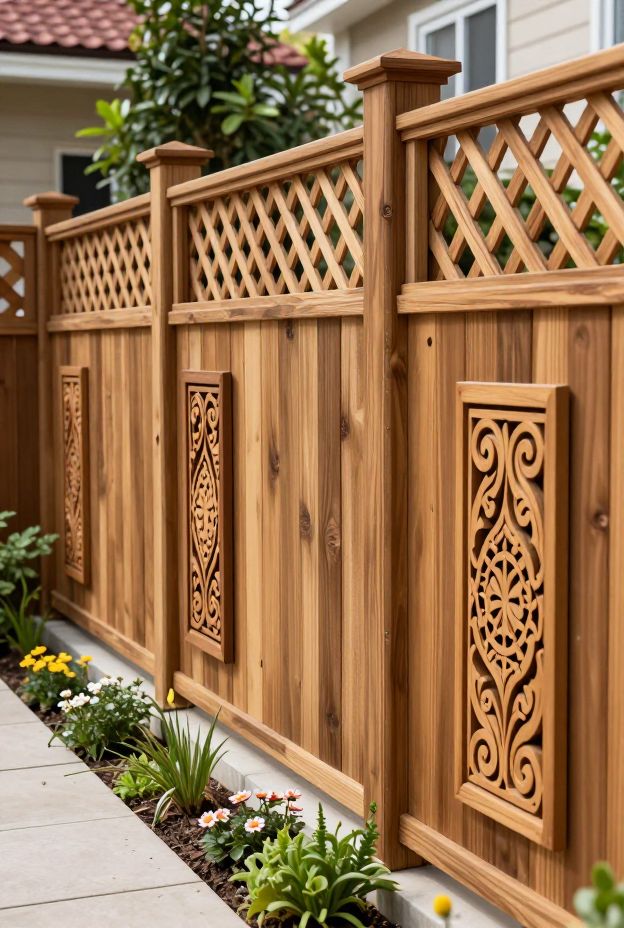
Lattice toppers add height and visual interest while maintaining airflow. Metal silhouettes or carved wooden panels create focal points that draw the eye. You could even repurpose old shutters, doors, or window frames for a quirky, personalized touch that tells your story.
This approach works brilliantly if you’re renting or don’t want to commit to a permanent change. You can remove or update decorative elements whenever your style evolves, keeping your garden fresh without major renovations.
Making Your Choice
Look, your fence is way more than just a boundary marker. It’s a backdrop for your plants, a privacy screen for your family time, and honestly? It’s one of the biggest visual elements in your entire garden. You spend all this time choosing the right plants and furniture, so why settle for a fence that does nothing for your space?
The ideas I’ve shared work for different budgets, styles, and skill levels. Maybe you start with a simple paint job and add climbing plants later. Or perhaps you’re ready to commit to those gorgeous laser-cut panels you’ve been eyeing. Whatever you choose, make sure it actually reflects how you want to use and enjoy your garden.
Your outdoor space should make you want to spend time in it. The right fence helps create that feeling—and that’s worth way more than just marking where your property ends.